Coventry Airport Gigafactory Moves Closer After Key Approval
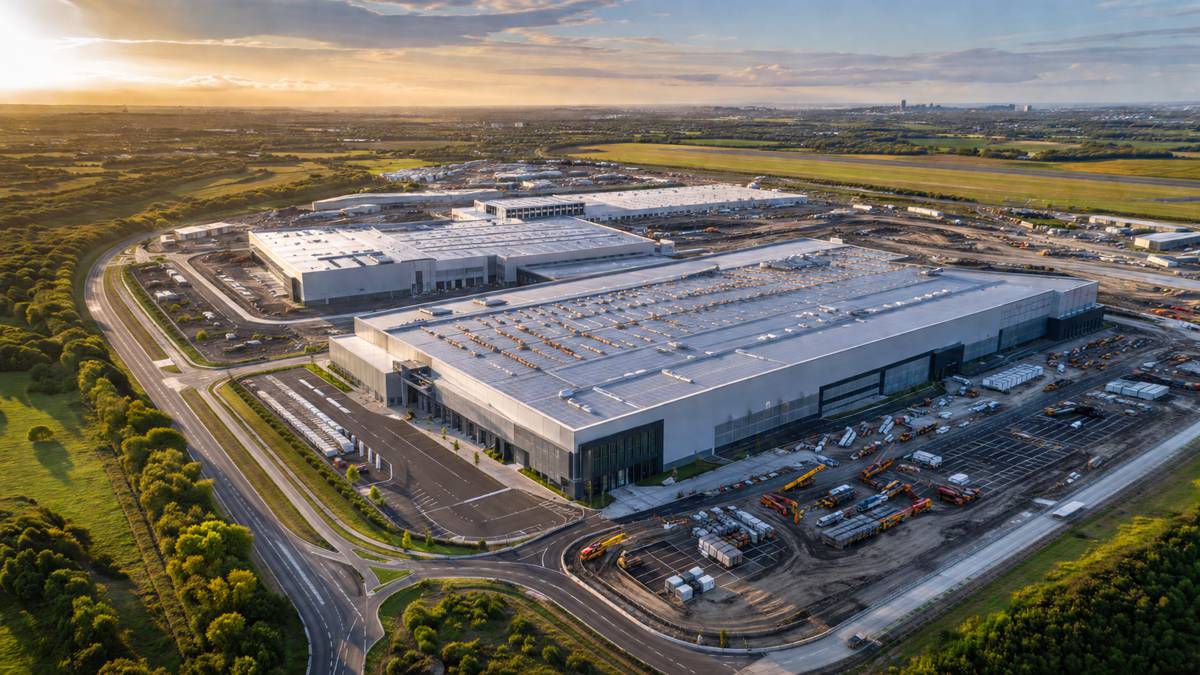
Plans to transform land at Coventry Airport into one of the United Kingdom’s most significant advanced manufacturing clusters have taken a decisive step forward, with Warwick District Council granting approval for a major phase of the GreenPower Park development.
The scheme, led by Coventry City Council in partnership with Rigby Group, centres on a £2.5 billion investment designed to anchor battery manufacturing, clean energy production, and industrial innovation in the Midlands. Approval has now been secured for seven large-scale industrial units, collectively unlocking approximately 4.8 million square feet of floorspace and bringing the project into sharper focus.
This decision builds on outline planning permission granted in 2022 for a large-scale battery facility and shifts the project from strategic ambition to tangible delivery. With detailed proposals now agreed, covering building scale, layout, and environmental integration, the GreenPower Park site begins to take shape as a cornerstone of the UK’s industrial transition.
The scale alone signals intent. Individual units will range from around 69,000 square feet to as much as 1.5 million square feet, placing the development among the largest advanced manufacturing hubs in the region. More importantly, it positions the Midlands within the increasingly competitive race to secure battery gigafactory capacity, a critical requirement for the future of automotive production and energy storage.
Briefing
- Warwick District Council has approved detailed plans for seven major industrial units at GreenPower Park
- The scheme will deliver around 4.8 million square feet of manufacturing space at Coventry Airport
- The project forms part of the Coventry & Warwick Investment Zone, offering fiscal incentives to investors
- Development is led by Coventry City Council in partnership with Rigby Group
- The site is intended to support battery production, clean energy technologies, and advanced manufacturing
Building the Foundations of a UK Battery Ecosystem
The approval arrives at a moment when the UK’s ability to host large-scale battery production is under intense scrutiny. Electrification of transport is accelerating, driven by policy commitments to phase out internal combustion engines and by growing demand for electric vehicles across Europe. Yet manufacturing capacity has struggled to keep pace, with industry leaders warning of supply chain gaps that could undermine domestic vehicle production.
GreenPower Park addresses that concern directly. By creating a dedicated zone capable of supporting gigafactory-scale operations, the development aligns with national efforts to localise battery supply chains. This is not simply about constructing buildings. It is about enabling an ecosystem where raw materials processing, cell manufacturing, assembly, and associated technologies can co-exist within a single industrial cluster.
That clustering effect carries weight. Battery production is capital-intensive, energy-hungry, and logistically complex. Locating facilities close to automotive manufacturing bases reduces transport costs, shortens supply chains, and improves resilience. The Midlands, already home to major automotive operations, offers a strategic advantage that developments such as GreenPower Park are designed to leverage.
Scale, Design and Industrial Capability
With detailed consent now in place, the development moves beyond conceptual masterplanning into deliverable infrastructure. The seven approved units reflect a flexible approach, allowing for a mix of occupiers ranging from specialist component manufacturers to full-scale battery producers.
The largest building, at approximately 1.5 million square feet, is of a scale typically associated with gigafactories currently operating or under development across Europe. Such facilities require extensive floorplates, high ceilings, and robust utilities infrastructure, including significant electrical capacity and advanced environmental controls.
Smaller units within the scheme, starting at around 69,000 square feet, provide an important complement. These spaces can accommodate suppliers, research and development functions, and emerging technology firms. Together, they form a layered industrial environment capable of supporting both large anchor tenants and a wider network of innovators.
Attention has also been given to landscaping and site integration. Large industrial schemes increasingly face scrutiny over environmental impact, particularly where they sit close to existing communities or transport infrastructure. The approved plans include measures aimed at mitigating visual impact and improving site connectivity, reflecting evolving expectations for industrial development.
Investment Zone Incentives and Market Attraction
The project’s inclusion within the Coventry & Warwick Investment Zone adds another dimension to its appeal. Investment zones have been positioned by the UK government as a mechanism to accelerate economic growth by reducing barriers to development and offering targeted fiscal incentives.
For businesses considering relocation or expansion, these incentives can be decisive. Business rates relief, reduced Stamp Duty, and adjustments to national insurance thresholds collectively lower the cost of establishing operations. In sectors such as battery manufacturing, where upfront capital expenditure runs into billions, even marginal cost reductions can influence site selection decisions.
The strategic intent is clear. By combining physical infrastructure with financial incentives, the Investment Zone aims to create a competitive environment capable of attracting global manufacturers. This is particularly relevant as European countries compete to host gigafactory investments, often backed by substantial public support packages.
Strategic Importance for the Midlands and Beyond
The Midlands has long been regarded as the heart of the UK’s automotive industry, with a concentration of manufacturers, engineering expertise, and supply chain capability. Transitioning that industrial base towards electrification is a complex undertaking, requiring new skills, technologies, and infrastructure.
GreenPower Park represents a key piece of that transition. Its proximity to established manufacturing centres provides a logical link between battery production and vehicle assembly. This geographical alignment is essential if the UK is to retain high-value automotive manufacturing as the industry evolves.
Beyond automotive applications, battery technology plays an increasingly important role in energy systems. Grid-scale storage, renewable integration, and distributed energy solutions all depend on advances in battery performance and manufacturing capacity. Developments such as GreenPower Park therefore have implications that extend well beyond transport.
Competition in the Global Gigafactory Race
Across Europe and globally, governments and private investors are racing to establish battery manufacturing capacity. Countries such as Germany, France, and Sweden have already secured major gigafactory projects, often supported by significant public funding and strategic partnerships.
The UK’s position has been less certain, with a limited number of confirmed large-scale facilities. This has raised concerns within the automotive sector about long-term competitiveness, particularly as supply chains become more regionalised.
GreenPower Park contributes to addressing that gap, but it also highlights the scale of the challenge. Securing anchor tenants for large facilities remains a critical next step. Without committed operators, even the most well-planned sites risk underutilisation. The combination of planning approval, infrastructure readiness, and investment incentives is intended to mitigate that risk and accelerate occupancy.
Infrastructure, Connectivity and Site Advantage
Location plays a decisive role in industrial development, and the Coventry Airport site offers several advantages. Its existing transport links, including proximity to major road networks, support efficient logistics for both inbound materials and outbound products.
Airfield land also tends to provide the large, contiguous plots required for gigafactory-scale developments, which are increasingly difficult to assemble elsewhere. This availability of space, combined with existing infrastructure, reduces development complexity and can shorten construction timelines.
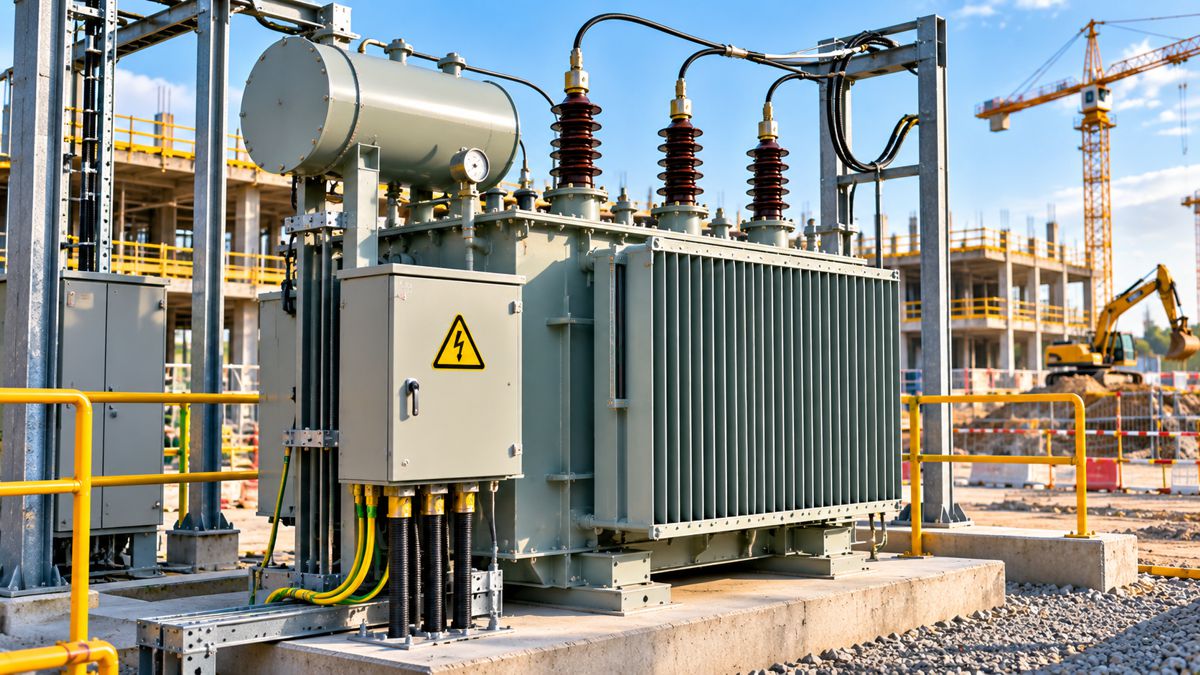
Energy infrastructure is another critical consideration. Battery manufacturing requires substantial and reliable power supply, often at levels that challenge existing grid capacity. While detailed energy plans are not outlined in the approval, developments of this nature typically involve significant upgrades to local energy networks, as well as potential integration of renewable energy sources.
From Planning to Delivery
Planning approval marks a significant milestone, but it is only one stage in a complex development process. The transition from approved plans to operational facilities involves detailed engineering, procurement, and construction activities, as well as the securing of tenants and financing.
Timelines for gigafactory developments can vary, but large-scale facilities often require several years from ground-breaking to full production. The phased nature of GreenPower Park allows for flexibility, enabling different parts of the site to progress at different speeds depending on market demand and investment commitments.
For the construction sector, the project represents a substantial pipeline of work, spanning civil engineering, building construction, utilities installation, and specialist industrial systems. For policymakers, it offers a tangible example of how planning, investment incentives, and industrial strategy can align to support economic transformation.
A Defining Moment for UK Industrial Strategy
The approval of detailed plans for GreenPower Park signals more than the progression of a single development. It reflects a broader shift in how the UK is approaching industrial policy, particularly in sectors linked to decarbonisation and advanced manufacturing.
By focusing on infrastructure that enables emerging industries, rather than solely supporting existing ones, developments such as this attempt to position the UK within future global supply chains. Success will depend on execution, investment, and the ability to attract world-class operators.
What is clear is that the groundwork is being laid. With planning hurdles cleared and incentives in place, GreenPower Park moves into the next phase with momentum. Whether it ultimately delivers on its ambitions will be determined in the years ahead, but the direction of travel is now firmly established.