The Global Tall Buildings Index 2026
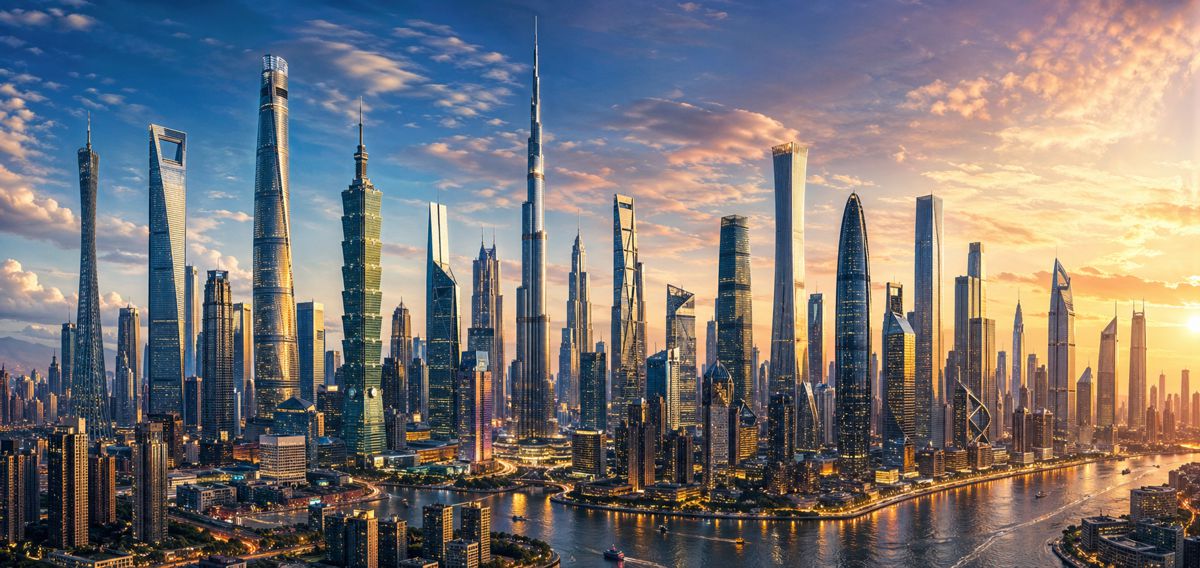
The first generation of skyscrapers was about squeezing more floor space onto expensive urban land. The second was about prestige, global branding and national confidence. By 2026, the third generation has clearly arrived. Today’s tallest buildings are complex financial assets, transport-linked ecosystems, engineering laboratories and symbols of how cities compete for talent and capital.
For the global construction industry, tall buildings remain one of the clearest indicators of market ambition. They absorb huge volumes of steel, concrete, façade systems, lifts, MEP services, digital controls and specialist contracting expertise. They also test planning systems, logistics capability and investor appetite. In short, when towers rise, entire supply chains move with them.
This expanded Highways.Today Global Tall Buildings Index 2026 reviews the top 50 towers on Earth. It goes beyond raw height to consider location, architecture, design intelligence, finance, commercial role and urban significance. Height matters, of course, but so does what a building does for the city around it.
Briefing
- Asia and the Middle East continue to dominate the upper reaches of the ranking.
- Mixed-use towers with diversified revenue streams remain the most resilient model.
- Smart operations and retrofit upgrades are now as important as headline height.
- Premium observation decks and destination tourism generate significant ancillary income.
- Future winners are likely to be smarter, greener and commercially flexible.
The Top 50 Buildings In The World
Each entry follows the same editorial structure: rank, building, location, height, completion year, primary use, structural system and investment note, followed by a concise analysis of design, finance, engineering and urban significance.
Investment figures are included only where widely reported; otherwise the entry states that the project cost has not been publicly disclosed in a reliable form.
1. Burj Khalifa, Dubai, UAE
- Height: 828m
- Completed: 2010
- Use: Office, residential and hotel
- Structure: Steel over concrete
- Investment Note: Widely reported at about US$1.5bn.
Designed by Skidmore, Owings & Merrill, Burj Khalifa remains the world’s defining megatall building. Its buttressed core allowed exceptional height while anchoring Downtown Dubai as a premium mixed-use district. Offices, luxury residences, hospitality, retail spillover and observation tourism turned the tower into a city-making asset rather than a stand-alone trophy.
2. Merdeka 118, Kuala Lumpur, Malaysia
- Height: 679m
- Completed: 2023
- Use: Hotel, serviced apartments and offices
- Structure: Concrete-steel composite
- Investment Note: Public reporting places the wider development in the multibillion-dollar range.
Merdeka 118 links Malaysia’s independence story with a new generation of institutional real estate. Its faceted profile rises beside Stadium Merdeka, giving the tower cultural weight as well as commercial scale. The project strengthens Kuala Lumpur’s premium office, hospitality and visitor economy while reinforcing the city’s role in Southeast Asian finance.
3. Shanghai Tower, Shanghai, China
- Height: 632m
- Completed: 2015
- Use: Hotel and offices
- Structure: Concrete-steel composite
- Investment Note: Frequently reported above US$2bn.
Shanghai Tower is one of the clearest examples of environmental engineering shaping supertall architecture. Its twisting double-skin façade helps reduce wind loads and improves energy performance, while stacked internal zones create vertical neighbourhoods. Located in Lujiazui, it works as both a finance-sector landmark and a demonstration of China’s advanced high-rise delivery capability.
4. Makkah Royal Clock Tower, Mecca, Saudi Arabia
- Height: 601m
- Completed: 2012
- Use: Serviced apartments, hotel and retail
- Structure: Steel over concrete
- Investment Note: Part of the wider Abraj Al Bait complex.
Usually reported as a major multibillion-dollar scheme, its economics differ from conventional office towers because pilgrimage demand drives occupancy, retail flows and hospitality value. The clock faces give it global recognition, while the building adds enormous visitor capacity close to the Grand Mosque.
5. Ping An Finance Center, Shenzhen, China
- Height: 599m
- Completed: 2017
- Use: Offices
- Structure: Concrete-steel composite
- Investment Note: Precise project cost is not consistently disclosed, though the development is widely treated as multibillion-dollar.
Ping An Finance Center represents Shenzhen’s transition from manufacturing base to financial and technology powerhouse. Its highly controlled form, premium floorplates and central location suit institutional occupiers. The tower’s final height was shaped by aviation constraints, a useful reminder that skylines are governed by regulation as much as ambition.
6. Lotte World Tower, Seoul, South Korea
- Height: 555m
- Completed: 2017
- Use: Hotel, residential, office and retail
- Structure: Concrete-steel composite
- Investment Note: Public reports commonly describe the wider project as a multibillion-dollar development.
Lotte World Tower combines retail gravity, tourism, premium offices, hotel space and residences in one vertical district. Its tapered form gives Seoul a recognisable global skyline marker, while the mix of uses reduces dependence on a single property cycle. The building is also a statement of South Korea’s engineering maturity and urban confidence.
7. One World Trade Center, New York City, USA
- Height: 541m
- Completed: 2014
- Use: Offices
- Structure: Concrete-steel composite
- Investment Note: Widely reported above US$3bn.
One World Trade Center carries symbolic, commercial and security significance in equal measure. Its height references 1776, while its reinforced core and security-led design reflect the realities of building on a site of exceptional public meaning. As part of Lower Manhattan’s regeneration, it anchors premium office supply, transport connectivity and a globally recognised civic identity.
8. Guangzhou CTF Finance Centre, Guangzhou, China
- Height: 530m
- Completed: 2016
- Use: Hotel, residential and offices
- Structure: Composite
- Investment Note: Reliable project cost is not publicly disclosed.
Guangzhou CTF Finance Centre is a refined mixed-use tower serving one of China’s most important trade and manufacturing regions. Its programme combines hotel, residential and office functions, spreading risk across multiple income streams. The tower is also known for high-speed lift technology, showing how vertical transport capacity has become central to the commercial viability of supertall buildings.
9. Tianjin CTF Finance Centre, Tianjin, China
- Height: 530m
- Completed: 2019
- Use: Hotel, serviced apartments and offices
- Structure: Concrete-steel composite
- Investment Note: Reliable project cost is not publicly disclosed.
Tianjin CTF Finance Centre uses a softly tapered profile to reduce wind effects and create a smooth skyline presence. It reflects the ambition of China’s major secondary cities to compete for finance, corporate headquarters and premium hospitality. Its value sits in mixed-use resilience and in the wider positioning of Tianjin as a northern economic hub.
10. CITIC Tower, Beijing, China
- Height: 528m
- Completed: 2018
- Use: Offices
- Structure: Concrete-steel composite
- Investment Note: Reliable project cost is not publicly disclosed.
CITIC Tower, widely known as China Zun, is Beijing’s tallest building and a landmark in the capital’s central business district. Its form references a traditional ritual vessel, giving the tower cultural identity without sacrificing modern office efficiency. In a city with tight planning controls, its height and location make it a rare strategic corporate asset.
11. Taipei 101, Taipei, Taiwan
- Height: 508m
- Completed: 2004
- Use: Offices
- Structure: Composite
- Investment Note: Widely reported at about US$1.8bn.
Taipei 101 remains one of the world’s most respected skyscrapers because its engineering had to answer both typhoon and seismic risk. The visible tuned mass damper became part of the visitor experience and a lesson in structural resilience. Its stacked, pagoda-inspired form continues to give Taipei a skyline identity that reaches far beyond height rankings.
12. Shanghai World Financial Center, Shanghai, China
- Height: 492m
- Completed: 2008
- Use: Hotel and offices
- Structure: Concrete-steel composite
- Investment Note: Often reported above US$1bn.
Shanghai World Financial Center remains one of Pudong’s most recognisable towers, largely because of its distinctive aperture crown and strong position within Lujiazui. The tower offers premium commercial space with hotel uses above, giving it both corporate and hospitality value. It helped bridge Shanghai’s first wave of skyline ambition with today’s denser financial cluster.
13. International Commerce Centre, Hong Kong
- Height: 484m
- Completed: 2010
- Use: Hotel and offices
- Structure: Concrete-steel composite
- Investment Note: Stand-alone cost is not consistently disclosed within the wider Union Square programme.
ICC shows how transport infrastructure can unlock vertical value. Built above Kowloon Station and facing Victoria Harbour, it links offices, hotel uses, retail and rail access in one high-value location. Its performance rests not only on height, but on connectivity, scarcity and Hong Kong’s role as a regional finance centre.
14. Wuhan Greenland Center, Wuhan, China
- Height: 476m
- Completed: 2023
- Use: Hotel, serviced apartments and offices
- Structure: Concrete-steel composite
- Investment Note: Reliable project cost is not publicly disclosed.
Wuhan Greenland Center is notable because its final height reflects China’s evolving controls on extreme skyscrapers. Originally proposed taller, it was adapted to fit a changing policy environment. The result is still a major mixed-use tower, but one that illustrates how government priorities, aviation safety, urban form and capital discipline increasingly shape supertall delivery.
15. Central Park Tower, New York City, USA
- Height: 472m
- Completed: 2020
- Use: Residential and retail
- Structure: All-concrete
- Investment Note: Public reports place the development in the multibillion-dollar luxury category.
Central Park Tower is a height-driven residential finance model. On Billionaires’ Row, elevation, views and scarcity convert directly into saleable value. Its slim form and premium positioning show how New York’s supertall market can be led by private wealth, luxury apartments and retail anchoring rather than traditional corporate office demand.
16. Lakhta Center, St Petersburg, Russia
- Height: 462m
- Completed: 2019
- Use: Offices
- Structure: Concrete-steel composite
- Investment Note: Reliable project cost is not consistently disclosed.
Lakhta Center shifted St Petersburg’s tallest commercial development away from the historic core and towards a new waterfront business zone. Its twisting profile creates a strong corporate identity while reducing the visual bulk of the tower. The project is an example of how a headquarters building can also be used to redirect urban growth.
17. Vincom Landmark 81, Ho Chi Minh City, Vietnam
- Height: 461m
- Completed: 2018
- Use: Hotel and residential
- Structure: Concrete-steel composite
- Investment Note: Reliable tower-specific cost is not publicly disclosed.
Landmark 81 became a symbol of Vietnam’s rapid urban and consumer-market growth. As part of a broader mixed-use district, it brings together luxury apartments, hotel functions, retail and leisure. The tower’s importance lies in what it says about Ho Chi Minh City: a market moving quickly into premium real estate, tourism and international capital visibility.
18. The Exchange 106, Kuala Lumpur, Malaysia
- Height: 454m
- Completed: 2019
- Use: Offices
- Structure: Concrete-steel composite
- Investment Note: Reliable tower-specific project cost is not consistently disclosed.
The Exchange 106 is a core commercial asset within the Tun Razak Exchange district, Malaysia’s planned international financial centre. Its value depends on the wider district’s ability to attract institutions, professional services and cross-border investment. Architecturally restrained, it is less about spectacle and more about reinforcing Kuala Lumpur’s financial infrastructure.
19. Changsha IFS Tower T1, Changsha, China
- Height: 452m
- Completed: 2018
- Use: Hotel and offices
- Structure: Concrete-steel composite
- Investment Note: Reliable project cost is not publicly disclosed.
Changsha IFS Tower T1 demonstrates how China’s inland cities have moved into premium high-rise development. Anchored by retail and supported by office and hotel functions, it is part of a broader commercial ecosystem rather than a lone tower. Its role is to strengthen Changsha’s position as a regional services, consumer and business hub.
20. Petronas Twin Tower 1, Kuala Lumpur, Malaysia
- Height: 452m
- Completed: 1998
- Use: Offices
- Structure: Concrete-steel composite
- Investment Note: The twin-tower complex is widely reported at about US$1.6bn.
Petronas Tower 1 helped transform Malaysia’s global image when completed. Its Islamic geometric influences, stainless-steel cladding and skybridge connection created a highly recognisable corporate landmark. Although newer towers now exceed its height, it remains one of the most commercially and culturally successful examples of skyline branding in modern infrastructure.
21. Petronas Twin Tower 2, Kuala Lumpur, Malaysia
- Height: 452m
- Completed: 1998
- Use: Offices
- Structure: Concrete-steel composite
- Investment Note: Included within the widely reported twin-tower complex cost of about US$1.6bn.
Petronas Tower 2 reinforces the paired composition that made the development globally famous. Together with Tower 1, it created a business address, tourist destination and national symbol in one project. The twin format gave Kuala Lumpur a distinctive skyline identity that single-tower schemes rarely achieve.
22. Suzhou IFS, Suzhou, China
- Height: 450m
- Completed: 2019
- Use: Hotel, office and serviced apartments
- Structure: Concrete-steel composite
- Investment Note: Reliable project cost is not publicly disclosed.
Suzhou IFS reflects the wealth and industrial depth of one of China’s most productive regional economies. Its mixed-use programme supports executives, corporate tenants and hospitality demand in a city known for manufacturing, technology and trade. The tower shows how supertall investment has spread from national capitals into commercially powerful regional centres.
23. Zifeng Tower, Nanjing, China
- Height: 450m
- Completed: 2010
- Use: Hotel and offices
- Structure: Concrete-steel composite
- Investment Note: Reliable project cost is not publicly disclosed.
Zifeng Tower brought a major vertical landmark to Nanjing, combining offices and hotel uses in a compact mixed-use format. Its angular form and taper give it a strong skyline silhouette without relying on excessive ornament. The project helped signal Nanjing’s emergence as a major commercial and administrative centre within the Yangtze River Delta.
24. Wuhan Tower, Wuhan, China
- Height: 443m
- Completed: 2019
- Use: Hotel, residential and offices
- Structure: Concrete-steel composite
- Investment Note: Reliable project cost is not publicly disclosed.
Wuhan Tower adds another major vertical asset to a city that has repeatedly used high-rise development to express regional ambition. Its combination of office, residential and hotel functions gives the building broader market exposure. The tower’s relevance lies in supporting a maturing urban economy with business space, visitor accommodation and premium residential capacity.
25. Willis Tower, Chicago, USA
- Height: 442m
- Completed: 1974
- Use: Offices
- Structure: All-steel
- Investment Note: Historic cost was about US$150m, before later reinvestment and inflation effects.
Formerly Sears Tower, Willis Tower remains one of the great engineering milestones of the skyscraper age. Its bundled-tube structural system influenced high-rise design worldwide. Recent modernisation, retail upgrades and tenant improvements show how legacy towers can protect value through reinvestment rather than relying only on historic status.
26. KK100, Shenzhen, China
- Height: 442m
- Completed: 2011
- Use: Hotel and offices
- Structure: Concrete-steel composite
- Investment Note: Reliable project cost is not publicly disclosed.
KK100 was one of the towers that announced Shenzhen’s move into the top tier of Chinese business cities. Its slender profile, hotel component and office floors support a premium commercial address in a fast-growing urban market. The building remains important because it sits within a city driven by finance, technology, logistics and entrepreneurial capital.
27. Guangzhou International Finance Center, Guangzhou, China
- Height: 439m
- Completed: 2010
- Use: Hotel and offices
- Structure: Concrete-steel composite
- Investment Note: Reliable project cost is not publicly disclosed.
Guangzhou IFC helped establish Zhujiang New Town as a serious finance and business district. Its triangulated diagrid-style exterior gives the building structural clarity and visual distinction. With hotel and office uses stacked vertically, the tower shows how high-value districts use mixed occupancy to support activity beyond standard office hours.
28. 111 West 57th Street, New York City, USA
- Height: 435m
- Completed: 2021
- Use: Residential
- Structure: Steel over concrete
- Investment Note: Development cost has been widely reported in the multibillion-dollar class.
111 West 57th Street is one of the world’s most slender residential towers, turning engineering difficulty into market value. Its location near Central Park and its Steinway Hall base give it heritage context and luxury appeal. The project reflects New York’s ultra-prime residential model, where views, scarcity and design pedigree underpin pricing.
29. One Vanderbilt Avenue, New York City, USA
- Height: 427m
- Completed: 2020
- Use: Offices
- Structure: Concrete-steel composite
- Investment Note: Widely reported at about US$3.3bn.
One Vanderbilt is a rare example of a supertall office tower closely tied to public-realm and transit improvements. Built beside Grand Central Terminal, it combines premium workspace, observation income and major infrastructure commitments. Its commercial strength comes from transport connectivity, high-specification offices and the ability to command modern rents in a constrained Midtown market.
30. 432 Park Avenue, New York City, USA
- Height: 426m
- Completed: 2015
- Use: Residential
- Structure: All-concrete
- Investment Note: Reliable total project cost varies across public reporting, with development widely treated as a multibillion-dollar luxury scheme.
432 Park Avenue became a defining tower of Manhattan’s slender residential era. Its strict grid façade and square plan create a minimalist identity, while the business model depends on high-altitude views and luxury scarcity. It remains commercially significant despite public debate around ultra-tall housing.
31. Marina 101, Dubai, UAE
- Height: 425m
- Completed: 2017
- Use: Residential and hotel
- Structure: All-concrete
- Investment Note: Reliable project cost is not publicly disclosed.
Marina 101 reflects Dubai Marina’s dense vertical lifestyle model, where residential towers are supported by waterfront amenities, tourism and expatriate demand. The inclusion of hotel space broadens its commercial base beyond apartments. Its scale shows how Dubai translated global investor appetite into one of the world’s most concentrated high-rise residential districts.
32. Trump International Hotel and Tower, Chicago, USA
- Height: 423m
- Completed: 2009
- Use: Residential and hotel
- Structure: All-concrete
- Investment Note: Reliable total cost is not consistently disclosed.
Trump International Hotel and Tower uses its riverfront position to combine hospitality, branded residences and skyline visibility. Its stepped form responds to neighbouring urban heights, creating a layered relationship with Chicago’s historic skyline. Commercially, it relies on luxury accommodation, residential ownership and one of the strongest high-rise locations in the American Midwest.
33. JPMorgan Chase World Headquarters, New York City, USA
- Height: 423m
- Completed: 2025
- Use: Offices
- Structure: Concrete-steel composite
- Investment Note: Widely reported as a multibillion-dollar headquarters redevelopment.
JPMorgan Chase World Headquarters represents a new wave of high-performance corporate towers in Manhattan. Replacing an older office building, it reflects the market’s shift towards energy efficiency, large modern floorplates and strong transport access. Its importance lies less in height alone and more in the reinvention of prime office stock for post-pandemic tenant expectations.
34. Minying International Trade Center T2, Dongguan, China
- Height: 423m
- Completed: 2021
- Use: Offices
- Structure: Concrete-steel composite
- Investment Note: Reliable project cost is not publicly disclosed.
Minying International Trade Center T2 gives Dongguan, a major manufacturing city, a high-rise commercial marker more often associated with larger financial centres. The tower supports the city’s move towards services, headquarters activity and higher-value business functions. Its presence shows how vertical development follows industrial wealth when regional economies seek stronger corporate infrastructure.
35. Jin Mao Tower, Shanghai, China
- Height: 421m
- Completed: 1999
- Use: Hotel and offices
- Structure: Concrete-steel composite
- Investment Note: Historic project cost is widely reported around US$500m plus.
Jin Mao Tower remains one of Shanghai’s most elegant skyscrapers, blending traditional Chinese design cues with modern structural systems. Before the arrival of taller neighbours, it defined Pudong’s skyline. Its hotel atrium, office floors and enduring architectural quality give it long-term value as both a working commercial asset and a design landmark.
36. Zijin Financial Building, Nanjing, China
- Height: 417m
- Completed: 2025
- Use: Hotel and offices
- Structure: Concrete-steel composite
- Investment Note: Reliable project cost is not publicly disclosed.
Zijin Financial Building strengthens Nanjing’s position within China’s increasingly competitive regional finance and services landscape. Its office and hotel mix follows the proven supertall formula of combining business floors with visitor accommodation. As a recent completion, it also reflects the continuing, though more selective, appetite for tall-building investment in Chinese cities.
37. Princess Tower, Dubai, UAE
- Height: 413m
- Completed: 2012
- Use: Residential
- Structure: Steel over concrete
- Investment Note: Reliable project cost is not publicly disclosed.
Princess Tower was once the tallest residential building in the world and remains a key part of Dubai Marina’s skyline. Its commercial story is tied to apartment demand, waterfront lifestyle branding and international buyers. The building captures a period when Dubai used vertical residential density to create recognisable districts with global investor appeal.
38. Al Hamra Tower, Kuwait City, Kuwait
- Height: 413m
- Completed: 2011
- Use: Offices
- Structure: All-concrete
- Investment Note: Public estimates often place the project near the US$1bn scale.
Al Hamra Tower is notable for its sculpted, asymmetrical form and stone-clad expression, which help reduce solar gain while creating a strong architectural identity. As a premium office tower, it modernised Kuwait City’s skyline and showed how Gulf high-rise design could respond to climate, image and corporate demand together.
39. Two International Finance Centre, Hong Kong
- Height: 412m
- Completed: 2003
- Use: Offices
- Structure: Concrete-steel composite
- Investment Note: Reliable tower-specific cost is not consistently disclosed.
Two International Finance Centre remains one of Asia’s most valuable office addresses. Its harbourfront location, connection to Central’s financial ecosystem and proximity to rail and airport links support strong institutional appeal. The tower’s importance rests on liquidity, tenant quality and the scarcity of large premium floorplates in Hong Kong’s core business district.
40. LCT The Sharp Landmark Tower, Busan, South Korea
- Height: 412m
- Completed: 2019
- Use: Hotel and residential
- Structure: All-concrete
- Investment Note: Reliable tower-specific cost is not publicly disclosed.
LCT The Sharp Landmark Tower gives Busan a globally recognisable high-rise presence outside Seoul. Its coastal location and hotel-residential mix connect it to tourism, luxury living and waterfront regeneration. The project shows how regional cities use tall buildings to reposition themselves for visitors, investors and higher-value urban lifestyles.
41. Ningbo Center Tower 1, Ningbo, China
- Height: 409m
- Completed: 2025
- Use: Hotel, residential and offices
- Structure: Concrete-steel composite
- Investment Note: Reliable project cost is not publicly disclosed.
Ningbo Center Tower 1 adds a major mixed-use marker to one of China’s important port and manufacturing cities. Its programme spreads demand across work, accommodation and living uses, improving resilience compared with a single-use office tower. The project reflects Ningbo’s ambition to deepen its business-services infrastructure alongside logistics, trade and industrial strength.
42. Guangxi China Resources Tower, Nanning, China
- Height: 403m
- Completed: 2020
- Use: Hotel and offices
- Structure: Concrete-steel composite
- Investment Note: Reliable project cost is not publicly disclosed.
Guangxi China Resources Tower brings a major corporate and hospitality asset to Nanning, a gateway city for trade with Southeast Asia. Its height gives the city a stronger commercial symbol, while the office-hotel mix supports business travel and institutional tenancy. The tower is part of a broader pattern of vertical investment in strategic regional capitals.
43. Guiyang International Financial Center T1, Guiyang, China
- Height: 401m
- Completed: 2020
- Use: Hotel and offices
- Structure: Concrete-steel composite
- Investment Note: Reliable project cost is not publicly disclosed.
Guiyang International Financial Center T1 demonstrates how high-rise investment has reached China’s inland provincial capitals. The building supports finance, business services and hospitality demand in a city known for rapid urbanisation and data-centre development. Its main value is not just height, but the statement that Guiyang is competing for higher-value commercial activity.
44. Iconic Tower, Cairo, Egypt
- Height: 394m
- Completed: 2024
- Use: Hotel, residential and offices
- Structure: Concrete-steel composite
- Investment Note: Part of Egypt’s New Administrative Capital programme, with wider district investment running into many billions of dollars.
Iconic Tower is Africa’s tallest building and a central symbol of Egypt’s new capital strategy. Its mixed-use programme supports government relocation, commercial development and urban branding. The tower’s significance lies in continental visibility and in the infrastructure-led attempt to create a new administrative and business centre.
45. China Merchants Bank Global Headquarters Main Tower, Shenzhen, China
- Height: 393m
- Completed: 2025
- Use: Offices
- Structure: Composite
- Investment Note: Reliable project cost is not publicly disclosed.
China Merchants Bank Global Headquarters Main Tower strengthens Shenzhen’s finance-sector skyline with a purpose-built corporate asset. Its value comes from institutional identity, efficient office planning and proximity to one of China’s most dynamic business ecosystems. The tower reflects the continuing demand for headquarters-grade space in markets where finance, technology and logistics intersect.
46. China Resources Tower, Shenzhen, China
- Height: 393m
- Completed: 2018
- Use: Offices
- Structure: Concrete-steel composite
- Investment Note: Reliable project cost is not publicly disclosed.
China Resources Tower, often nicknamed the Spring Bamboo, is a corporate headquarters tower with a distinctive tapered profile. It forms part of a wider mixed-use district in Shenzhen Bay, where offices, retail and public space work together. The building’s appeal sits in corporate branding, waterfront positioning and Shenzhen’s continuing rise as a global innovation city.
47. 23 Marina, Dubai, UAE
- Height: 392m
- Completed: 2012
- Use: Residential
- Structure: All-concrete
- Investment Note: Reliable project cost is not publicly disclosed.
23 Marina is part of Dubai’s high-density residential story, where tall apartment towers became investment products as well as homes. Its scale, private amenities and marina location helped target affluent residents and international buyers. The tower illustrates how Dubai’s vertical housing market was built around lifestyle infrastructure, water views and global property capital.
48. CITIC Plaza, Guangzhou, China
- Height: 390m
- Completed: 1996
- Use: Offices
- Structure: Concrete-steel composite
- Investment Note: Historic project cost is not consistently disclosed.
CITIC Plaza was one of China’s early supertall milestones and helped announce Guangzhou’s commercial rise long before the current generation of towers. Although newer buildings now dominate height rankings, it remains important as a legacy office asset. Its role is historical as well as commercial, marking an earlier phase of China’s urban transformation.
49. CITYMARK CENTRE, Shenzhen, China
- Height: 388m
- Completed: 2022
- Use: Residential and offices
- Structure: Concrete-steel composite
- Investment Note: Reliable project cost is not publicly disclosed.
CITYMARK CENTRE reflects Shenzhen’s continuing ability to absorb dense mixed-use development. By combining residential and office functions, it responds to a city where working, living and commuting patterns are tightly compressed. The tower’s significance is practical rather than symbolic: it adds high-value capacity to one of the world’s fastest-evolving urban economies.
50. Shum Yip Upperhills Tower 1, Shenzhen, China
- Height: 388m
- Completed: 2020
- Use: Hotel and offices
- Structure: Concrete-steel composite
- Investment Note: Reliable project cost is not publicly disclosed.
Shum Yip Upperhills Tower 1 completes the top 50 with another Shenzhen project, underlining the city’s remarkable vertical concentration. Its hotel and office mix supports business travel, corporate leasing and district regeneration. The tower sits within a wider mixed-use development, showing how modern tall buildings increasingly function as components of urban ecosystems rather than isolated monuments.
Regional And Continental Patterns
China dominates the list, not simply because of population scale, but because regional cities have used high-rise development to signal economic maturity, attract corporate tenants and support mixed-use districts. Shenzhen alone appears repeatedly, which says a great deal about its transformation from special economic zone to global technology and finance centre.
The Middle East remains highly influential through Dubai, Mecca and Kuwait City, where tall buildings are closely tied to tourism, hospitality, religious travel, commercial branding and sovereign-backed urban development. North America’s entries, by contrast, are concentrated in New York and Chicago, where scarcity, capital markets and premium locations shape tower economics.
Investment Cost Caveat
Tall-building cost data is uneven. Some projects disclose headline development figures, some report wider district or complex costs, and others release no reliable public figure at all. For this reason, the index separates clearly between widely reported figures, wider programme costs and undisclosed costs.
That distinction matters for investors and policymakers. A tower’s published cost rarely captures land acquisition, financing, tenant incentives, public-realm obligations, transit works, district infrastructure or later retrofit expenditure. The true economic footprint of a supertall building is almost always larger than the construction contract alone.
Finance Behind The Skyline
Tall towers demand patient capital. Construction periods are long, borrowing costs matter enormously and pre-leasing often determines lender confidence. Many successful schemes now rely on several revenue sources including hotels, retail, observation decks, residences and premium offices.
That shift is important. Single-use towers are more exposed to market cycles, while mixed-use assets can rebalance income streams over time. Investors increasingly favour flexibility over vanity.
Sustainability And Retrofit Pressure
The next growth market may not be new towers at all. It may be upgrading older ones. Across New York, Hong Kong, London and Singapore, owners are investing in façade improvements, electrification, HVAC modernisation and occupancy analytics to defend asset values.
For contractors and suppliers, that means decades of retrofit opportunity sitting inside existing skylines.
The Future Is Smarter Not Just Taller
The world’s skyline race has matured. Height still captures headlines, but resilience, operational efficiency, tenant experience and carbon performance are becoming the true measures of success.
The towers that lead the next decade may not always be the tallest. They may simply be the best run.