Panasonic Tough Command Reshaping Connected Fleet Intelligence
Fleet operations across construction, utilities, emergency response and transport are becoming increasingly data-driven, yet many organisations are still managing fragmented in-vehicle technology ecosystems held together by layers of disconnected hardware and software. Rugged laptops, telematics modules, GPS trackers, vehicle diagnostics systems, IoT sensors and communication tools often operate independently, creating operational blind spots while inflating costs and maintenance requirements.
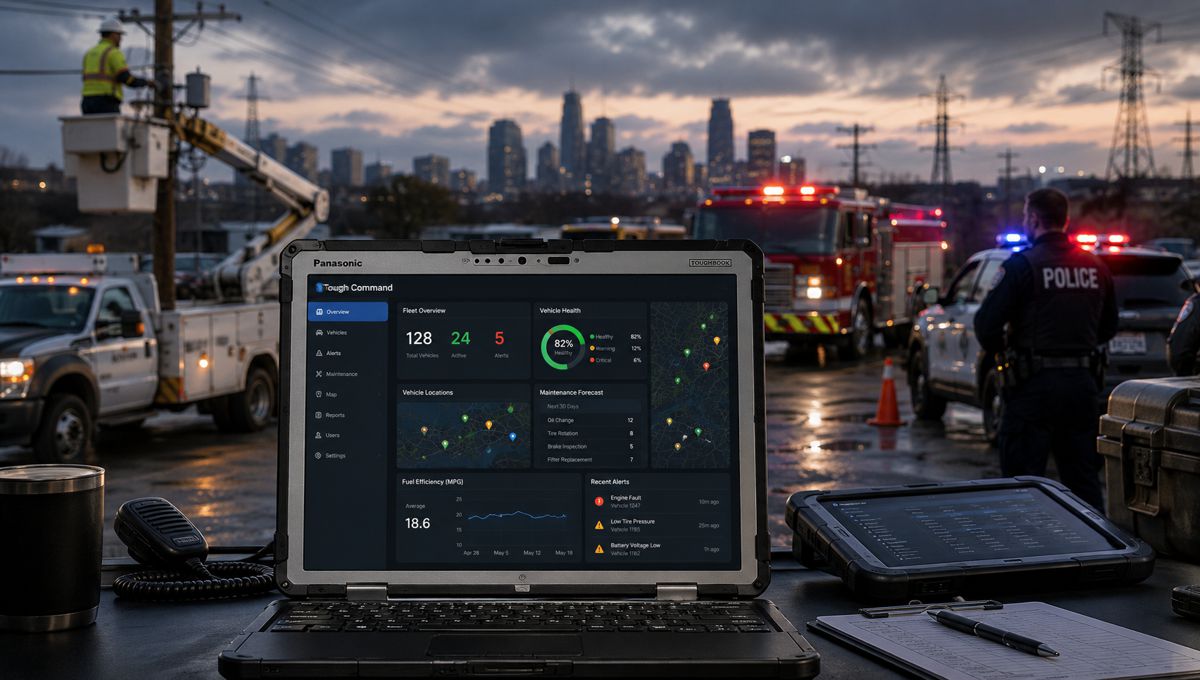
Panasonic Connect has now introduced Tough Command, a software-centric fleet intelligence platform designed to consolidate connected vehicle operations into a single edge-to-cloud ecosystem.
The launch reflects a much broader shift occurring across the infrastructure and industrial sectors. Fleet operators are no longer simply looking for rugged hardware capable of surviving harsh environments. They increasingly want intelligent operational platforms capable of transforming vehicle fleets into live data networks that support predictive maintenance, route optimisation, equipment monitoring, compliance tracking and operational coordination in real time.
For infrastructure operators, public safety agencies and utilities managing geographically dispersed assets, the commercial implications are substantial. Downtime, vehicle failures and communication delays can have immediate consequences for productivity, public safety and operational resilience. Software-defined fleet ecosystems are now emerging as a strategic operational layer rather than merely a supporting IT function.
Briefing
- Panasonic Connect has launched Tough Command, a software-first connected fleet intelligence platform
- The system transforms existing TOUGHBOOK devices into centralised fleet management hubs
- Tough Command consolidates data from vehicles, IoT devices and infrastructure into a unified cloud platform
- The platform targets utilities, emergency services, enterprise fleets and public sector operations
- The launch reflects growing industry demand for edge computing and software-defined fleet ecosystems
The Rising Importance of Software Defined Fleet Operations
Connected fleet management has evolved dramatically over the past decade. Earlier vehicle telematics systems focused primarily on location tracking and basic diagnostics. Modern fleet ecosystems now integrate operational analytics, AI-driven maintenance forecasting, edge computing, sensor fusion and live infrastructure monitoring.
This evolution is particularly significant within infrastructure-heavy industries. Construction fleets, utility response vehicles, emergency service units and transport operators all generate enormous quantities of operational data. However, accessing and interpreting that information often remains cumbersome because legacy systems were never designed to communicate seamlessly with one another.
Many fleet operators still rely on layered hardware deployments involving separate telematics gateways, dedicated MDTs, proprietary sensors and third-party analytics tools. This fragmented approach increases procurement costs while complicating cybersecurity, maintenance and system integration.
Tough Command attempts to address this challenge by repositioning rugged mobile computing devices as the operational nerve centre of connected fleets. Instead of adding more hardware into already crowded vehicle environments, the platform leverages the processing power, GPS functionality and connectivity already embedded within deployed TOUGHBOOK devices.
That approach aligns closely with broader industry trends toward software-defined infrastructure, where operational capability increasingly comes from software orchestration rather than additional physical components.
Edge Computing Moves Into Fleet Infrastructure
One of the most notable aspects of Tough Command is its edge-to-cloud architecture. Edge computing has become increasingly important in infrastructure operations because it enables data processing closer to where information is generated rather than relying entirely on distant cloud systems.
In fleet environments, that distinction matters enormously. Emergency response vehicles, utility fleets and construction operations often work in locations where network coverage may be intermittent or unreliable. Edge processing allows critical operational data to continue flowing and being analysed even when connectivity is degraded.
By functioning as a secure edge gateway, Tough Command captures data from vehicles, IoT devices and surrounding infrastructure before transmitting information into a centralised cloud environment for broader analysis.
This architecture reflects wider developments occurring throughout industrial digitalisation. Analysts at the International Data Corporation and Gartner have repeatedly identified edge computing as one of the fastest-growing enterprise technology sectors because organisations increasingly need real-time decision-making capabilities at the operational edge.
For fleet operators, this translates into quicker diagnostics, reduced latency, improved situational awareness and more resilient operational continuity.
Public Safety and Utility Fleets Under Growing Pressure
The sectors targeted by Panasonic Connect reveal where connected fleet intelligence is becoming most commercially urgent.
Public safety fleets are under growing operational pressure as emergency services face increasing call volumes, ageing infrastructure and rising expectations for rapid response times. Police, fire and EMS vehicles have effectively become mobile command centres packed with communication equipment, surveillance systems, sensors and operational software.
Yet many agencies continue operating siloed systems that complicate coordination and reduce visibility across fleets.
Tough Command aims to centralise those operational layers into a single management environment. Dispatchers and fleet managers can monitor vehicle health, identify operational issues and coordinate regional response activity more effectively through live data integration.
Utilities face similar challenges. Electricity, water and telecom infrastructure operators increasingly depend on field fleets to maintain ageing networks while responding to climate-related disruptions, storm damage and rising infrastructure demand.
Vehicle downtime during emergency repair operations can have cascading consequences for regional infrastructure resilience. Real-time visibility into vehicle performance and equipment readiness therefore becomes commercially valuable rather than simply operationally convenient.
Reducing Fleet Complexity and Technology Sprawl
One of the most persistent challenges facing enterprise fleets today is technology sprawl. Over time, fleets often accumulate multiple overlapping systems from different vendors, each solving one operational problem while creating additional integration burdens elsewhere. That fragmentation becomes expensive.
Fleet operators frequently pay for redundant connectivity contracts, separate maintenance agreements, overlapping hardware deployments and multiple software subscriptions. Managing updates, cybersecurity compliance and interoperability across these systems consumes significant internal resources.
Panasonic Connect is positioning Tough Command as a consolidation platform intended to reduce this operational fragmentation. The platform integrates data collection, analytics, dashboards and reporting into a unified environment while supporting mixed-device ecosystems rather than requiring a complete hardware replacement cycle.
That vendor-agnostic positioning could prove commercially important. Many organisations remain cautious about becoming locked into proprietary ecosystems, particularly in sectors where fleets may remain operational for a decade or more.
Infrastructure operators increasingly prioritise interoperability because technology procurement cycles now move much faster than vehicle replacement schedules.
Data Analytics Becoming Operationally Critical
Fleet management is increasingly shifting from reactive maintenance toward predictive operational intelligence.
Modern vehicles generate huge quantities of diagnostic data covering engine performance, braking systems, fuel consumption, idle times, vibration patterns, battery performance and equipment usage. Historically, much of this information remained underutilised because analysing it required specialised systems and manual oversight.
Platforms such as Tough Command seek to change that equation by aggregating operational data into cloud-based analytics environments capable of identifying trends and inefficiencies automatically.
This has potentially significant implications for infrastructure-heavy industries where vehicle downtime directly impacts productivity and project delivery schedules.
Predictive maintenance models can reduce unexpected failures, improve asset utilisation and extend equipment life cycles. Route optimisation analytics can lower fuel consumption while improving response times. Automated reporting also simplifies regulatory compliance and operational auditing.
The construction and utility sectors are particularly likely to benefit because many organisations still operate highly decentralised fleets spread across large geographic regions.
Cybersecurity and Operational Resilience
As fleets become more connected, cybersecurity concerns are rapidly intensifying.
Vehicle systems increasingly communicate with cloud platforms, dispatch centres, mobile devices and infrastructure networks. This connectivity improves operational visibility but also expands the potential attack surface for cyber threats.
Public infrastructure operators are especially vulnerable because cyber incidents affecting emergency services, utilities or transport fleets can disrupt essential services.
Panasonic Connect describes Tough Command as a secure edge-to-cloud platform, an increasingly important requirement as governments tighten cybersecurity expectations around critical infrastructure operations.
Across Europe and North America, regulatory scrutiny surrounding connected infrastructure security continues to increase. The European Union Agency for Cybersecurity and the Cybersecurity and Infrastructure Security Agency have both highlighted operational technology cybersecurity as a growing national resilience priority.
For fleet operators, cybersecurity is no longer purely an IT concern. It has become directly linked to operational continuity and public trust.
The Shift Towards Intelligent Operational Ecosystems
The launch of Tough Command illustrates a broader transition underway across industrial technology markets.
Rugged devices were once viewed primarily as durable hardware designed to survive harsh environments. Increasingly, however, they are becoming gateways into larger operational intelligence ecosystems.
The future of fleet management will likely depend less on isolated hardware deployments and more on software platforms capable of connecting vehicles, infrastructure, sensors, personnel and cloud analytics into unified operational environments.
This transformation mirrors changes already occurring across smart infrastructure, industrial IoT and intelligent transportation systems. Infrastructure operators are moving toward integrated operational visibility where decisions are increasingly informed by live data rather than periodic reporting cycles.
Panasonic Connect’s latest platform therefore represents more than another fleet management product launch. It reflects the continuing convergence of edge computing, rugged mobility, cloud analytics and operational intelligence across industries where uptime, safety and coordination remain mission critical.
Quietly, beneath dashboards and behind rugged screens, fleet operations are becoming fully connected digital infrastructure systems in their own right.