Greenstone Adds Eight Volvo A40 Haulers to its Philippine Gold Fleet
When a gold producer commits to eight 39-tonne articulated haulers in a single order, the decision says as much about the economics of moving rock as it does about any one machine.
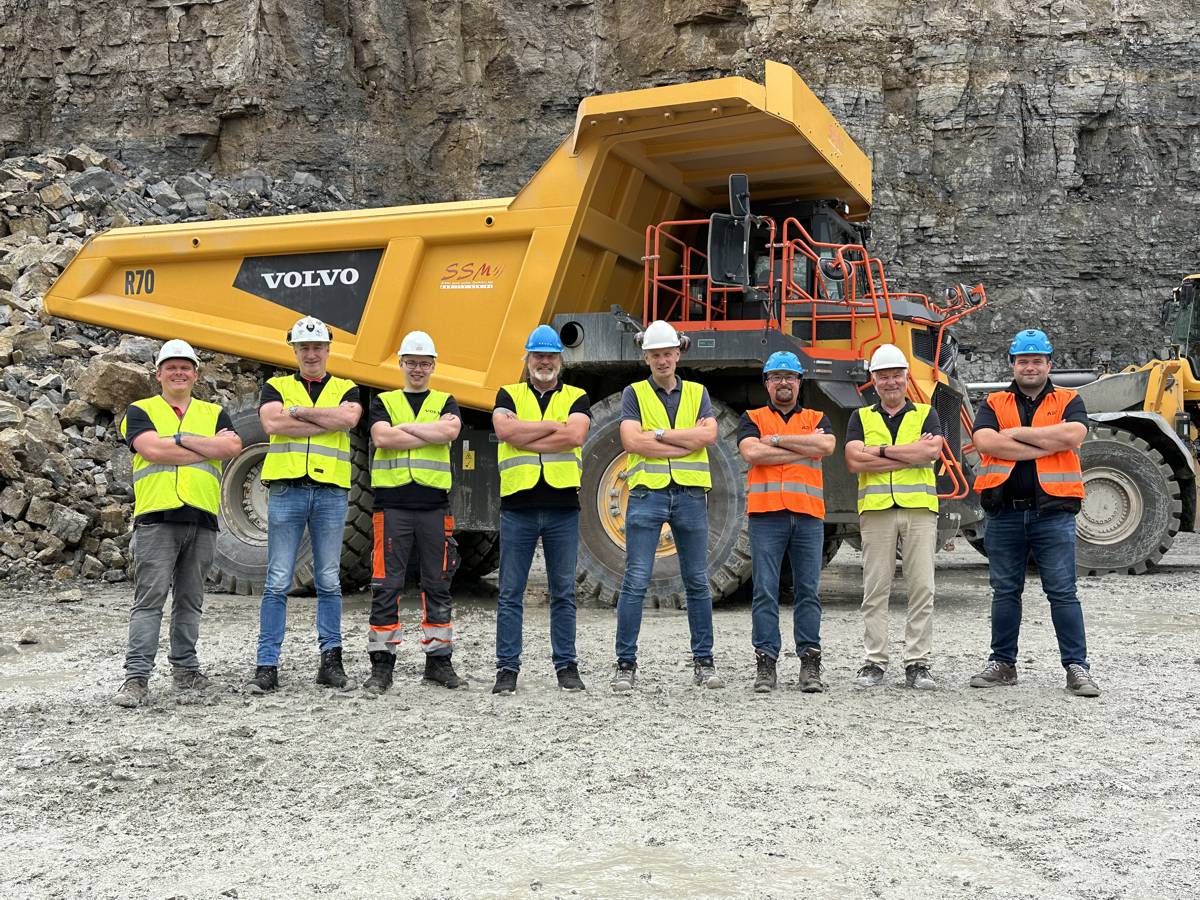
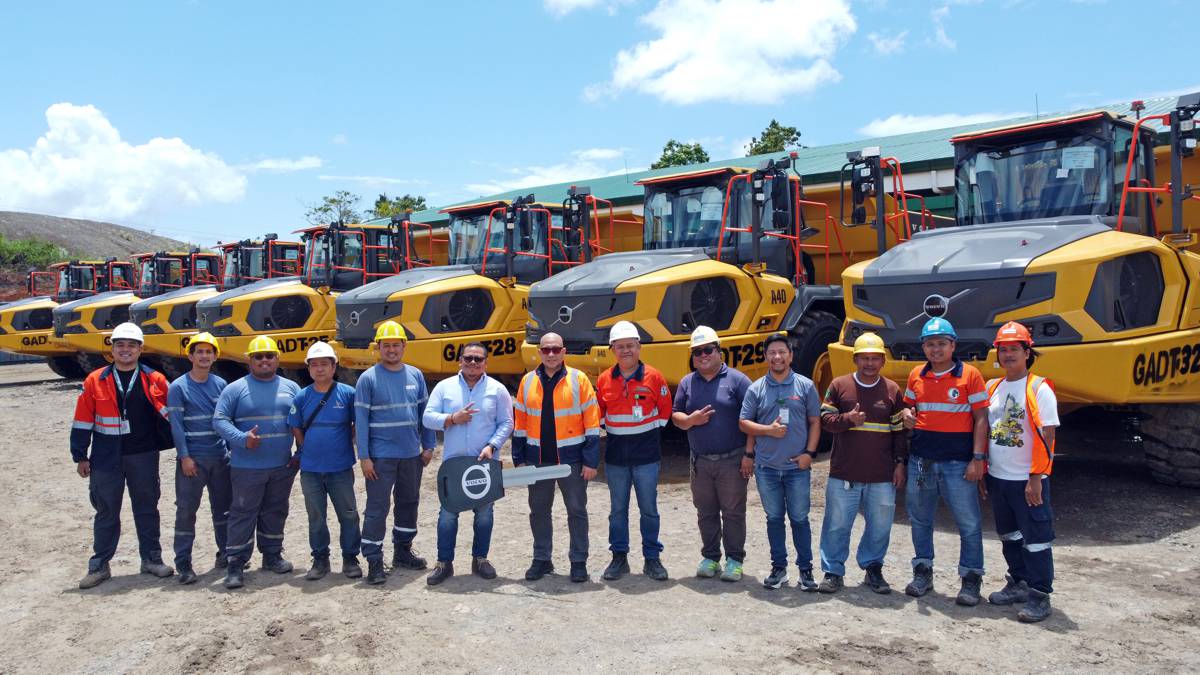
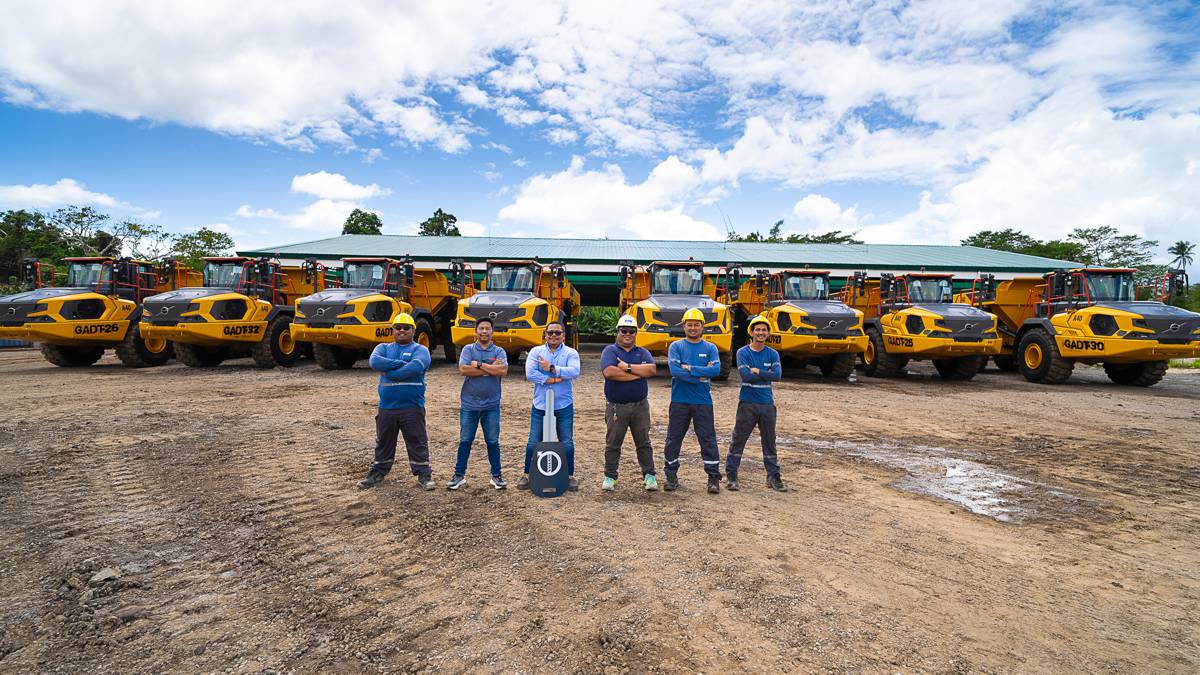
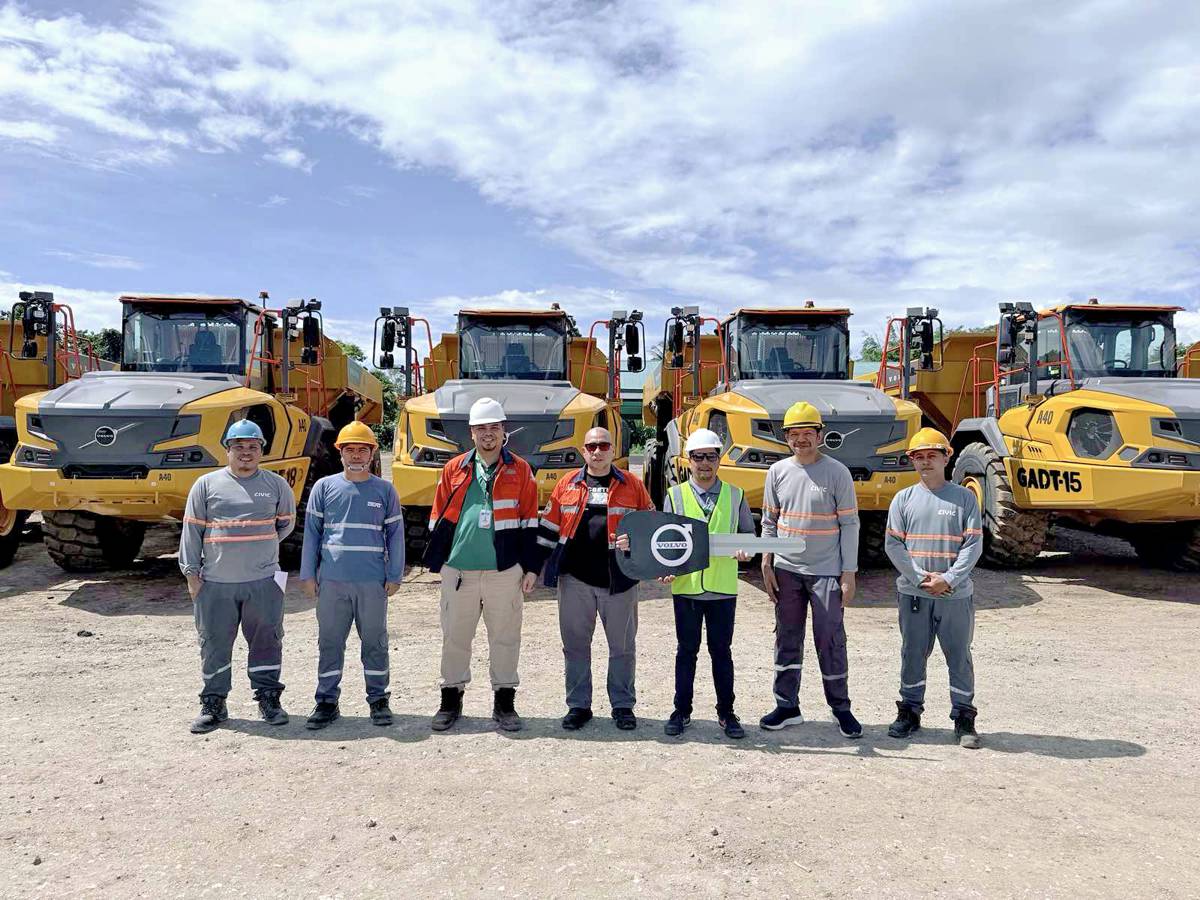
Greenstone Resources Corporation has taken delivery of eight New Generation Volvo A40 articulated haulers for its operations in the Philippines, supplied by Volvo Construction Equipment through its exclusive local dealer, Civic Merchandising. The company runs the Siana Gold Project in Surigao del Norte, in the mineral-rich Caraga region of north-eastern Mindanao in the Philippines, and the expansion reinforces a haulage fleet that sits at the centre of its material-movement cycle.
For a mid-scale producer, a purchase on this scale is a capital commitment weighed carefully against fuel burn, machine availability and the cost of shifting every tonne of ore and waste out of the pit.
The timing is not incidental. Gold climbed to successive record highs through 2024 and into early 2026 before easing back from its January peak, yet prices remain far above the levels that framed mine planning only a few years ago. Higher metal prices tend to pull more material into the production schedule, and the equipment that carries that material becomes a direct lever on margin.
Greenstone’s investment reflects a calculation familiar across the sector: when the value of output rises, operators look to move more of it, more cheaply, without surrendering the reliability that keeps a remote mine running. Seen in that light, the order is less a routine fleet top-up than a statement about where a producer expects its cost base to sit over the next several years.
Briefing
- Greenstone Resources Corporation has added eight New Generation Volvo A40 articulated haulers, supplied through Volvo CE’s exclusive Philippine dealer, Civic Merchandising.
- The 39-tonne-payload A40 forms part of Volvo CE’s New Generation range, built around fuel economy, on-board weighing and extended service intervals.
- The machines support the Siana Gold Project in Surigao del Norte, within the Caraga region that consistently leads Philippine minerals output.
- Greenstone has established a dedicated support structure of four on-site mechanics and six reserve technicians to protect fleet availability.
- The order arrives as historically high gold prices and a proposed mining fiscal regime reshape the investment case for Philippine producers.
The economics behind the order
The commercial logic of the deal turns on a single metric that governs any bulk earthmoving operation: cost per tonne. Fuel is typically the largest controllable expense in a hauling fleet, and any consistent reduction in litres burned per load flows straight to the bottom line across thousands of cycles a year. Greenstone’s own evaluation of the A40 centred on fuel economy, durability and the longer-term advantages of ownership rather than on headline horsepower, which is the assessment a fleet manager makes when a machine has to justify itself over a full working life rather than a demonstration shift.
Rakesh Ramgopal, Head of Market Philippines, Taiwan and Brunei at Volvo CE, framed the purchase in exactly those terms, noting: “Customers are looking for equipment that can help them improve productivity while controlling operating costs. The New Generation Volvo A40 combines proven fuel economy, operator comfort, and reliable performance to help customers lower their cost per tonne. We are delighted to support Greenstone Resources with this latest fleet expansion and look forward to contributing to its continued success.”
That focus carries particular weight in a gold operation, where the grade of the ore sets a hard ceiling on how much can be spent moving each tonne before the economics unravel. Standardising on a single hauler model of proven payload also simplifies the wider operation, allowing spare-parts holdings, operator training and maintenance routines to be pooled rather than fragmented across mismatched machines. For an eight-unit fleet working a defined haul profile, those efficiencies compound quickly.
The decision to buy rather than rent, and to buy in volume, further signals confidence that the material-movement task at Siana will remain steady enough to reward long-term capital deployment over shorter, more flexible arrangements.
Inside the New Generation A40
The A40 is the largest hauler in Volvo CE’s articulated range, rated at a 39-tonne payload with a heaped body volume of roughly 24 cubic metres and driven by an engine of around 350 kilowatts, or some 476 horsepower. It sits within the New Generation line-up that emerged from what Volvo CE has described as its largest product renewal in decades, a programme that refreshed a substantial share of the company’s portfolio and reworked haulers around productivity, fuel efficiency and safety. For a customer such as Greenstone, the headline capacity matters less than how consistently that capacity can be filled and moved, which is where the machine’s digital layer becomes relevant.
Central to that layer is on-board weighing, delivered through the Haul Assist suite and the integrated Volvo Co-Pilot display. Real-time payload data allows operators to load to target rather than by eye, reducing both the carry-back of underused capacity and the overloading that accelerates wear and inflates fuel burn. Extended service intervals reinforce the ownership case, with greasing intervals stretched to 250 hours and engine oil and filter changes pushed to 1,000 hours, cutting the volume of consumables a fleet gets through over a machine’s life.
John Gerald Nofuente, Equipment Manager at Greenstone Resources Corporation, reported that the early results have tracked those design intentions, observing: “The Volvo A40 has proven to be a valuable addition to our fleet. We have seen strong results in fuel consumption, machine reliability, and hauling capability. The machines are helping us move materials more efficiently while delivering excellent value for our business.” Taken together, the payload data, longer intervals and drivetrain refinements are aimed squarely at the two numbers a mine watches most closely: fuel per tonne and hours lost to the workshop.
Uptime built into the operating model
Buying capable machines is only half of the availability equation; the other half is the structure put in place to keep them turning. Greenstone has paired the fleet with a dedicated maintenance organisation comprising four on-site mechanics focused on repairs and six reserve technicians assigned to preventive servicing, a division of labour that separates the scheduled work protecting the fleet from the reactive work that inevitably arises.
That distinction matters in mining, where an unplanned hauler stoppage can idle an entire loading and hauling chain rather than a single machine. The company has also drawn on the regular condition and performance reporting supplied by Civic Merchandising to sharpen its maintenance planning, turning fleet data into a scheduling tool rather than a retrospective record.
Operator experience feeds the same objective from a different direction. Greenstone reports that its operators value the comfort of the Volvo cab over long shifts, and reduced fatigue translates directly into steadier output and fewer errors across a working day. In a fleet cycling continuously between load point and dump, consistency of operation is itself a productivity input, not a soft benefit.
The combination of a structured maintenance team, dealer-supplied reporting and a cab designed for extended shifts points to an operation that treats availability as an engineered outcome rather than a matter of chance, which is precisely the discipline that separates a profitable haulage fleet from an expensive one.
A deepening Volvo CE footprint in the Philippines
The order also reflects the strength of the local distribution and support network that underpins any equipment sale into a remote mining region. Civic Merchandising has served the Philippine market since 1974 and acts as the exclusive dealer for Volvo Construction Equipment nationwide, backing its machines with parts, service and operator training through a countrywide footprint. For a mine site far from major urban centres, that after-sales reach is often the decisive factor, since even the most efficient hauler earns nothing while it waits for a component.
Gabriel Nicolai Serquina, Product Manager at Civic Merchandising, tied the sale to a longer pattern of local confidence in the brand, noting: “As part of Civic Merchandising, the exclusive distributor of Volvo Construction Equipment in the Philippines, I am proud to witness the continued trust and confidence of Filipino customers in the Volvo CE brand. The recent purchase of the Volvo A40 by Greenstone is a testament to how customers value the quality, engineering excellence, and reliability of a Swedish brand with a global reputation.”
That continuity is visible in the wider group behind Greenstone, which operates the Siana Gold Project as part of the TVI Resource Development Philippines portfolio. The group has featured among Volvo CE’s recent Philippine customers, having taken New Generation excavators through the same dealer channel during the manufacturer’s local product rollout in 2025.
For Volvo CE, repeat business across a customer group is a stronger endorsement than any single transaction, because it suggests the total-cost-of-ownership case has held up in the field rather than only on paper. It also entrenches the manufacturer’s position in a mining market where competition from established rivals is intense and where switching costs, once a fleet and its support structure are standardised, run high.
What the order signals for Philippine mining
Beyond the individual transaction, the purchase is a small but telling data point in a Philippine mining sector navigating both opportunity and policy change. The country is already the world’s second-largest nickel producer and a modest but persistent contributor to global gold output, and the Caraga region where Siana sits routinely ranks as its leading minerals-producing area.
With gold trading at historically elevated levels and analysts having pointed to continued strength across the metal through the decade, producers face a clear incentive to lift output while the price environment rewards it, and fleet renewal is one of the more direct ways to convert that incentive into tonnes. Investment in efficient haulage is, in effect, a bet that the favourable price backdrop will outlast the depreciation schedule of the machines.
Set against that opportunity is a shifting fiscal and regulatory landscape. Proposals to overhaul the mining fiscal regime, including margin-based royalties on large-scale operations, would raise the effective tax on production even as the government works to streamline a permitting process that has historically stretched over many years. In that context, controlling operating costs is not merely good practice but a hedge against policy risk, since a lower cost base absorbs a heavier fiscal burden more comfortably.
Greenstone also flagged the reduced fuel consumption of the new fleet as a contributor to lower emissions, aligning the purchase with sustainability commitments that increasingly shape access to finance and social licence in the sector. The order will not move national production figures on its own, but the priorities it encodes — cost per tonne, guaranteed uptime and a measured step towards lower-carbon operation — map closely onto the pressures now defining how Philippine miners choose to invest.