Krandienst Süderau Strengthens Heavy Lifting Capability with Tadano AC 5.250L-2
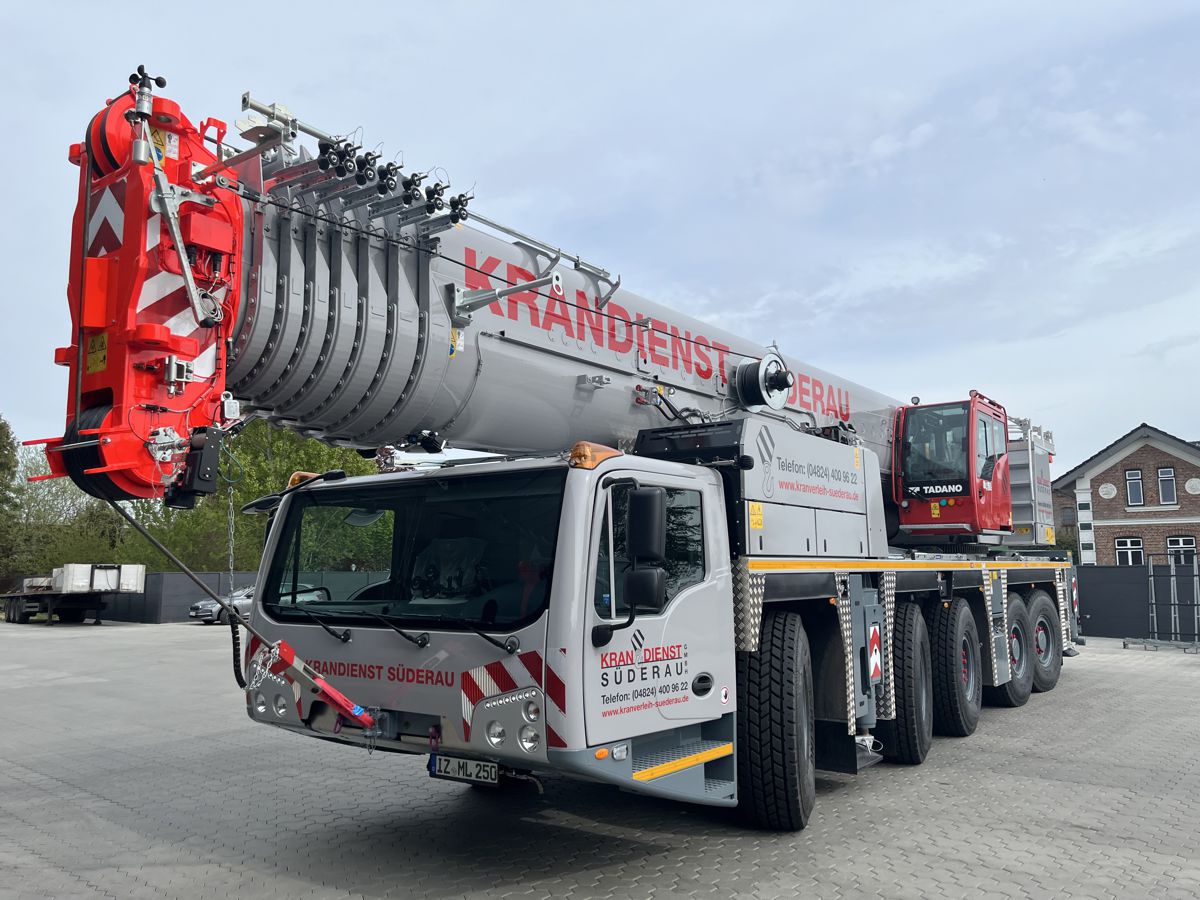
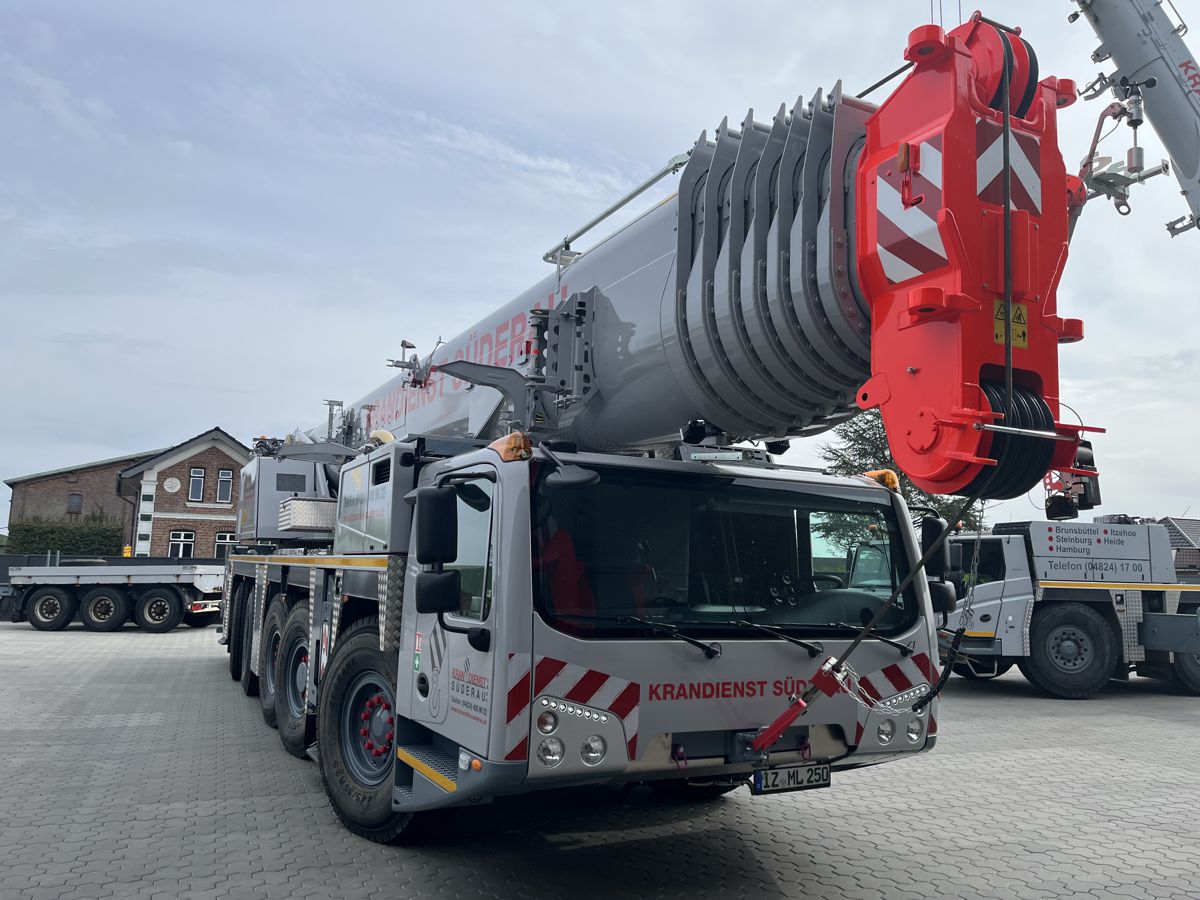
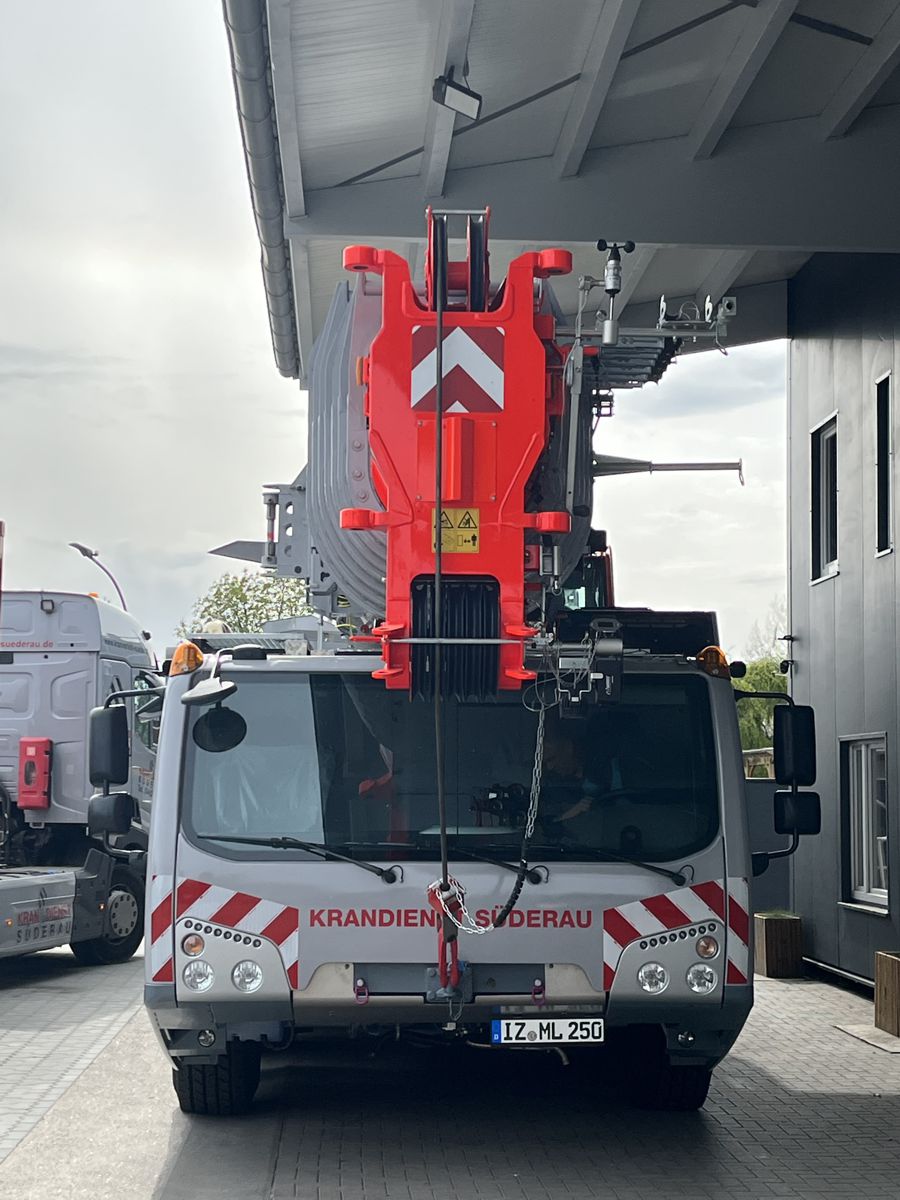
When Krandienst Süderau took delivery of a Tadano AC 5.250L-2 at the manufacturer’s carrier plant in Lauf an der Pegnitz, the transaction looked, on paper, like a routine fleet swap: a 15-strong family firm in Northern Germany trading up from an ageing 220-tonne machine to a 250-tonne-class replacement.
Read more closely, the purchase is a useful window into how buyers in the mid-range all-terrain segment now reach their decisions, and why capability on the load chart is no longer the only thing that closes a sale. Süderau’s management framed the choice plainly: “We regularly modernize our fleet and were looking for a replacement for our existing 220-tonne Tadano crane. We had our eye on the AC 5.250L-2 from the start and ultimately chose it because of its many advantages.”
That “from the start” is worth dwelling on. Süderau runs a fleet built almost entirely on Tadano equipment, and the decision to stay within the marque reflects a calculation that reaches well beyond any single lift.
For a rental business that hires its cranes out exclusively with operators, standardising on one manufacturer compresses training time, simplifies parts inventory and keeps operators fluent across the fleet, advantages that rarely surface on a spec sheet but weigh heavily on a small firm’s margins.
The more instructive part of the story is what tipped the balance towards this particular model, and it comes down to three things: reach, running costs, and the safety technology now built into the cab.
Briefing
- Krandienst Süderau, a family-run operated-hire firm in Northern Germany, has replaced a 220-tonne crane with a five-axle Tadano AC 5.250L-2, the long-boom variant of Tadano’s 250-tonne all-terrain platform.
- The crane’s 79-metre main boom is the longest in the five-axle class; ordered with a 12-metre jib and a heavy-lift attachment, it is configured for lifts requiring height or reach over obstructions.
- Süderau singled out the single-engine concept, one power unit for both travel and lifting, as the key to lower acquisition and maintenance costs.
- Safety specification shaped the order: a boom-mounted load-monitoring camera and Tadano’s six-camera Surround View system, which maps outrigger spread and tail-swing radius on a dedicated cab display.
- The AC range is Demag-derived; Tadano bought Demag Mobile Cranes from Terex in 2019 for around $215 million and folded the line fully under its own name by 2021.
The economics beneath the load chart
Süderau’s clearest reasoning was financial, and it settled on the crane’s drivetrain: “In our view, the modern single-engine concept makes this crane particularly efficient; it not only reduces acquisition costs but also lowers maintenance requirements.”
The AC 5.250L-2 uses a single Mercedes-Benz engine, rated at 530 horsepower, EU Stage V compliant and cleared for HVO renewable diesel, to drive both the carrier on the road and the crane on site. That replaces the two-engine layout still common across the all-terrain segment, where a second power unit sits in the superstructure purely to run the lifting functions. Removing that second engine strips weight, cost and an entire maintenance stream out of the machine, which is precisely the sum a rental operator does when a crane has to earn across years of hire.
Tadano stacks fuel-saving features on top, including an Eco Mode that matches output to demand, a start-stop function that shuts the engine at the touch of a button without dropping the control software, and hill-start assist as standard.
The single-engine approach is a signature of the Demag-derived AC range rather than a Tadano-wide default, which gives the model a distinct cost position against two-engine rivals in the 200-to-300-tonne bracket. That bracket is the commercial heart of the European all-terrain market: large enough to cover the bulk of industrial, energy and construction lifts, yet compact enough to travel between sites within road-legal axle limits and rig without a convoy of support vehicles.
Buyers here weigh purchase price, transport flexibility and lifetime servicing at least as heavily as peak capacity, and it is on those terms that Süderau built its case. For a firm where every machine must justify itself on quoted day rates, lower running costs and a lighter servicing burden feed straight through to competitiveness.
A 79-metre boom built for height and obstructions
At the centre of the specification is the crane’s 79-metre main boom, the longest in the five-axle class and the feature that gives the “L” variant its purpose. Every main-boom extension self-erects, and with a jib fitted the system reaches a maximum length of 109 metres, pushing tip height beyond 110 metres, the kind of envelope suited to urban work where a load must clear a building or drop into a tight footprint from height.
Süderau specified the machine to stretch that envelope further: “We also ordered the crane with a 12 meter jib extension — including a heavy-lift attachment — so we can extend its reach even further when needed. This makes the powerful crane, with its 80-tonne counterweight, extremely versatile and suitable for lifts involving great heights or requiring the load to be moved over obstructions.” Behind the reach sits a load moment among the strongest in the class, while the optional heavy-lift attachment lifts short-boom capacity towards 138 tonnes, giving the crane a dual character: long and light at the top of the boom, heavy and short when the job demands it.
The lifting side is underpinned by an 80-tonne counterweight, supplemented in Süderau’s order by a 30.4-tonne auxiliary counterweight for the heaviest duties. Just as important for an operated-hire fleet is the way that ballast is handled, with the counterweight divided so that no single element is too heavy for a smaller truck, keeping the crane road-mobile between jobs. That transport flexibility is not a footnote for a business whose machines are constantly on the move. A crane that can reach site within axle limits and rig itself quickly spends more of its day earning and less of it waiting for escorts, which is exactly the productivity maths a small fleet lives or dies by.
Cameras that decide where the crane parks
Süderau’s order sheet says as much about site safety as it does about lifting, and the choices are telling. The specification included a boom-mounted load-monitoring camera and Tadano’s Surround View system, which uses six cameras to show the operator, on a dedicated cab display, both the outrigger positions across every support base and the counterweight’s tail-swing radius for the crane’s current set-up. In practice that strips much of the guesswork out of siting the machine, letting the operator see whether the chosen position allows the outriggers to extend far enough and the superstructure to slew clear, rather than measuring, repositioning and trying again.
On the congested or confined sites where the compact five-axle class earns its keep, that shortens set-up and cuts the risk of the errors behind the most serious crane incidents.
Beneath the cameras sits the IC-1 Plus control system, which calculates available capacity in real time for each boom position according to the superstructure’s slewing angle, unlocking more capacity in particular arcs rather than defaulting to the most conservative figure. Taken together, the camera package and the control software reflect a wider shift in how these machines are sold: set-up and safety technology has moved from the options list to the centre of the buying decision, because it directly affects how quickly and how safely a hired crane can be put to work. For an operator whose entire proposition rests on supplying cranes with skilled crews, that technology forms part of the service being sold, not merely a feature of the hardware.
A small firm, a big-league platform
Krandienst Süderau has operated in Northern Germany since 2002, running a fleet of mobile and crawler cranes from 40 to 400 tonnes and hiring them out only with experienced operators, alongside the rigging, lift planning, road-closure coordination and heavy transport that surround any serious lift. It is a deliberately lean operation, built on around 15 staff, short decision chains and tailored service, and that shape is precisely why a purchase like this one carries weight for the firm.
A single crane represents a substantial slice of both capital and capacity, so the specification has to be right first time. The AC 5.250L-2 went to work almost immediately after Thorsten Dietzel, Tadano’s regional sales manager for Northern Germany, handed it over at Lauf, loading and repositioning heavy-duty containers at a power plant site on its first assignment.
The machine Süderau bought carries a longer industrial lineage than its badge suggests. The AC all-terrain range descends from Demag, the German crane maker Tadano acquired from Terex in 2019 for around $215 million and folded entirely under its own name by 2021, marrying Japanese production discipline to a German heavy-crane pedigree built in Zweibrücken and Lauf.
For Tadano, repeat orders from established fleets such as Süderau’s are the clearest evidence that the integration has held, since loyalty in the crane business is won lift by lift and lost the moment support falters. For the wider market, a purchase like this reads as a quiet but useful signal: in the mid-range all-terrain segment, buyers are increasingly settling decisions on running costs, transport economics and cab technology, with peak lifting capacity treated as the price of entry rather than the thing that wins the order.