Graitec Stakes its AECO AI Strategy on Accountability and Sign-Off
Graitec, the French-headquartered structural software developer and one of the world’s largest Autodesk partners, has set out an artificial intelligence strategy that deliberately reframes the debate now running through the architecture, engineering, construction and operations (AECO) sector.
While much of the industry is racing to bolt generative tools and conversational assistants onto design software, the company is arguing that the binding constraint in engineering is not how quickly a model can produce an answer, but whether that answer can be trusted, audited and signed off by the professional whose name sits on the calculation. The distinction carries real weight, because liability in construction does not move at the speed of software.
Every structural calculation carries a signature, every fabrication detail drives production downstream, and an AI output that cannot satisfy engineering codes and company rules is, on the company’s reading, unusable at the scale that live projects demand.
That positioning has arrived alongside a cluster of concrete product releases rather than as a standalone vision statement, and it is the shipping that gives the claim its credibility for customers and investors weighing where the AECO software market is heading.
Graitec has paired its roadmap with a new release of its flagship structural analysis platform, a unified steel delivery offering, and an updated set of Revit productivity tools, each intended to show that the strategy is already in production rather than aspirational. For a business that builds heavily on Autodesk platforms while competing on the specialist engineering and fabrication layers above them, the move doubles as a competitive statement about where a domain specialist can still add value as the platform giants push hard into generative design.
Briefing
- Graitec has published a three-horizon AI roadmap, structured around assistance, automation and generation, that embeds intelligence inside existing engineering and fabrication workflows rather than adding standalone chatbots, with all three horizons said to be in development in parallel.
- Advance Design 2027, the latest version of the company’s finite element structural analysis software, introduces an Open API for custom automation and parametric studies, alongside an embedded Graitec Assistant that can reference a firm’s own documents through SharePoint.
- A new unified product, Graitec STEEL, connects designers, detailers, fabricators and engineers across Autodesk Advance Steel and Inventor, with one customer reporting savings of 20 to 30 man-hours on an average job.
- The strategy leans on deterministic calculation and detailing engines to produce auditable results, confining AI to preparation, interaction and interpretation while engineers retain sign-off.
- The releases land as Autodesk, whose platforms Graitec builds on and resells, advances its own generative ambitions, sharpening the question of where specialist developers differentiate.
Three Horizons Built To A Single Bar
The roadmap itself is organised around three horizons that Graitec says are being developed and delivered at the same time rather than in sequence. The first embeds AI inside existing tools to provide contextual guidance, knowledge access and task acceleration for structural engineers, BIM managers, detailers and fabricators, with productivity gains positioned as immediate.
The second hands repetitive tasks, coordination workflows and the flow of data between design, fabrication and site over to automation, with the aim of cutting manual effort and tightening consistency. The third, and the most ambitious, moves from design intent to optimised, code-compliant, fabrication-ready solutions generated in minutes, while keeping architects, engineers, fabricators and project teams fully accountable for every decision that results.
What separates the strategy from the broader rush is less the horizons than the test applied to them. Graitec describes an approach grounded in structural codes, fabrication norms and company-specific rules, in which proven calculation and detailing engines produce the auditable results and AI is restricted to preparation, interaction and interpretation around them. That architecture keeps a deterministic spine inside an otherwise probabilistic technology, which is the difference between a tool an engineer can certify and one they cannot.
Emmanuel Leroy, the company’s Chief Product and Strategy Officer, framed the threshold directly, arguing that “In AECO, AI can generate, but generating without accountability is not enough. The real challenge is ensuring what gets generated can be trusted, audited, and signed off on real projects. That’s the bar we are building to.”
Underpinning that pitch is the claim that domain expertise, rather than raw model capability, is the scarce ingredient. Graitec, founded in 1986 and now operating across more than a dozen countries with software used by upwards of a hundred thousand construction professionals, leans on four decades of accumulated engineering logic as its differentiator.
Leroy made the point in commercial terms, suggesting that “We have 40 years of domain expertise embedded in our software. AI doesn’t replace that; it unlocks it. That’s the difference between adding AI and harnessing it.” The argument is convenient for an incumbent with a deep back catalogue of code-compliant engines, but it is not therefore wrong, since the value of a generative system in a regulated discipline rests almost entirely on the rules and reference data it is constrained by.
The Flagship Test: Advance Design 2027 And Its Open API
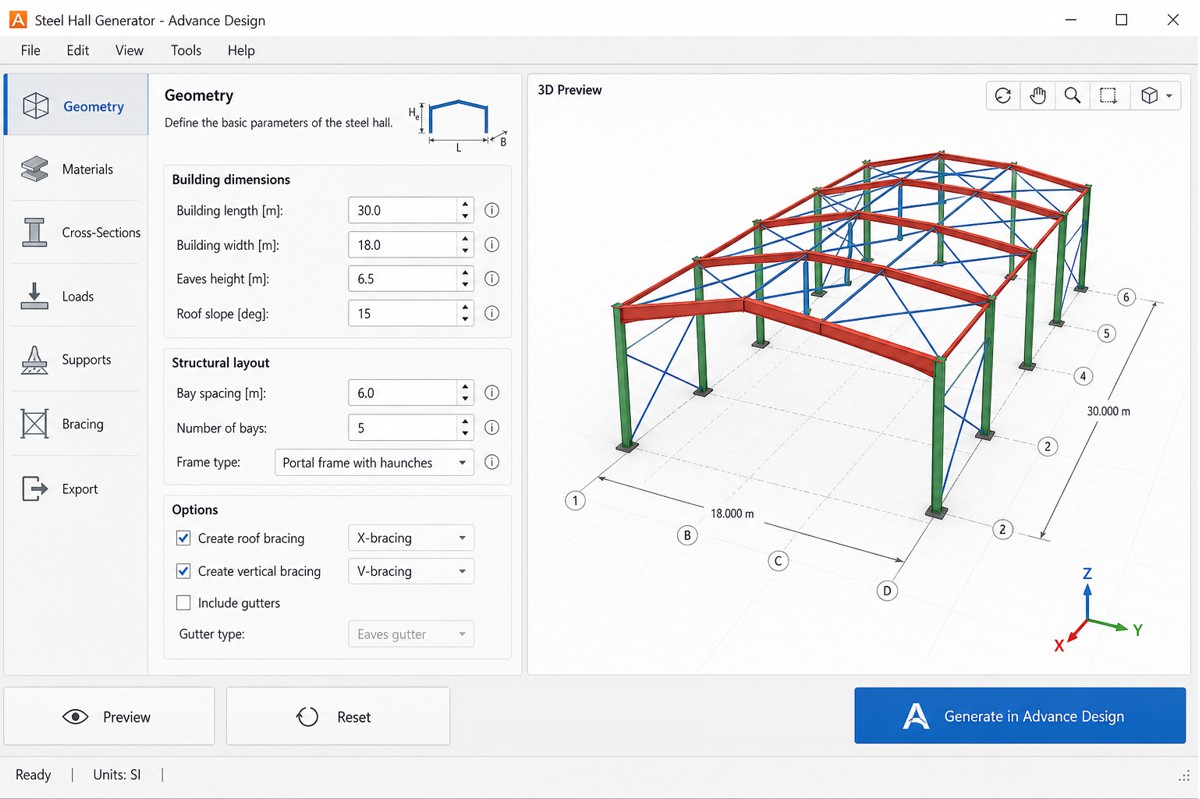
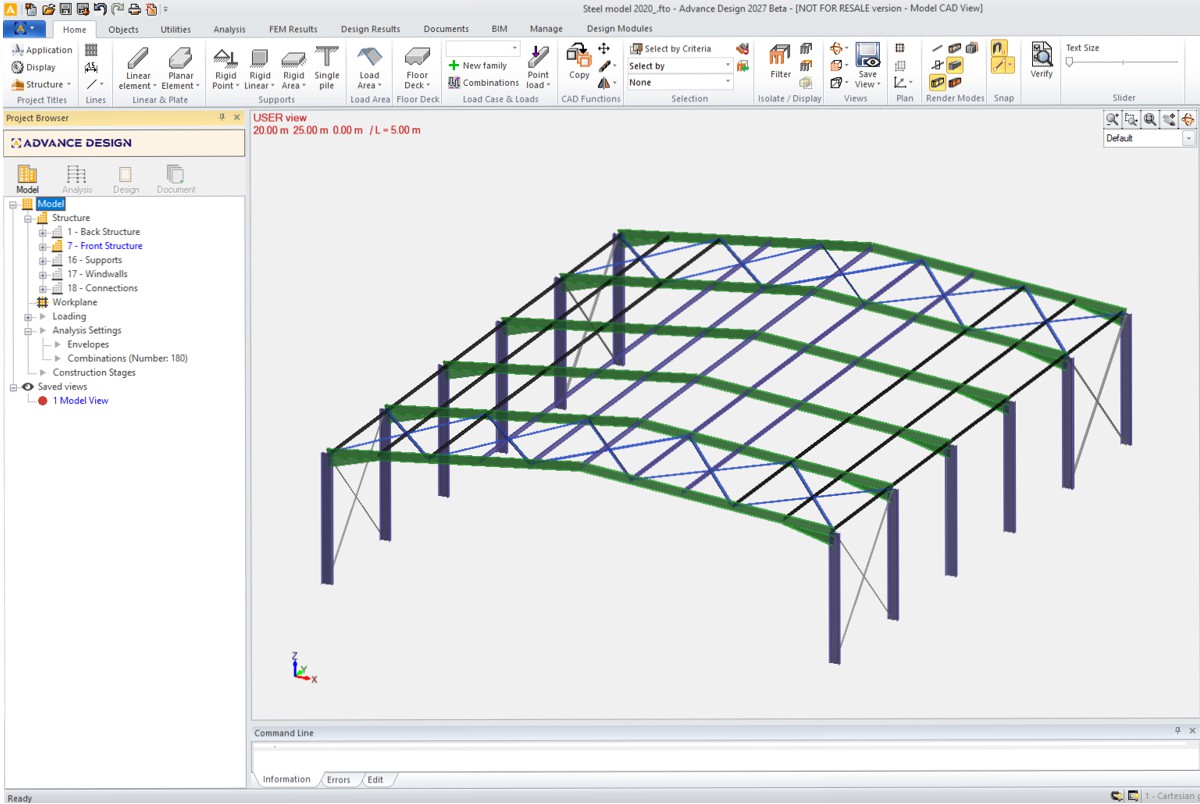
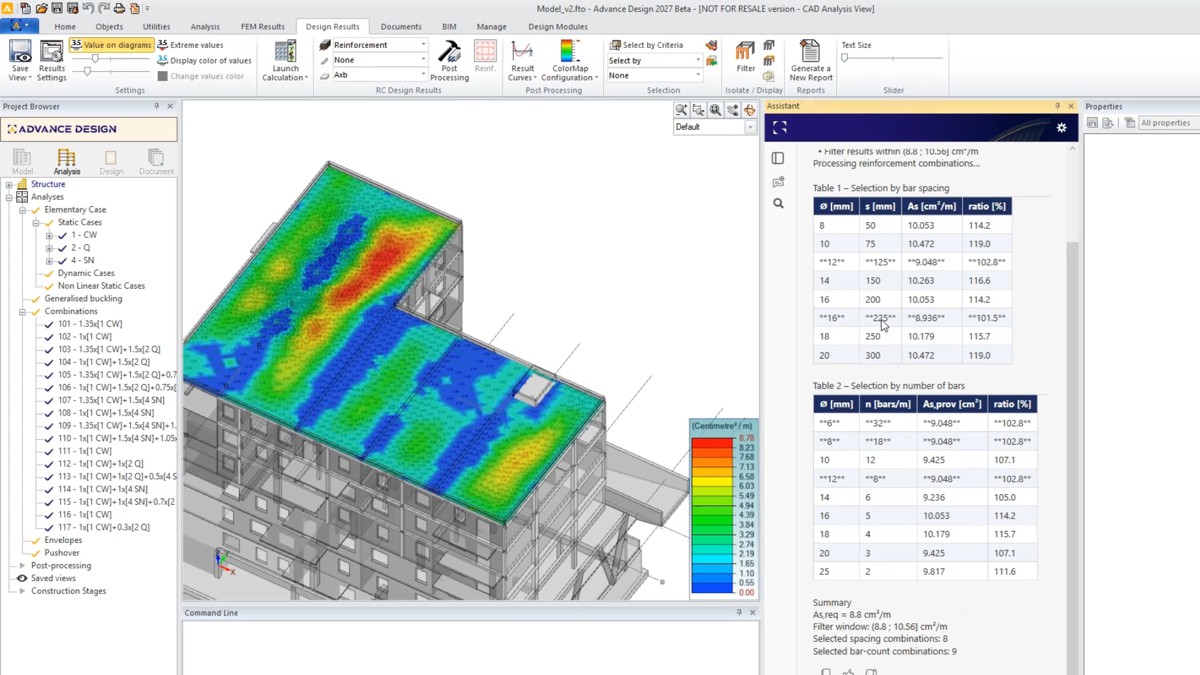
The clearest evidence for the strategy is Advance Design 2027, the newest version of Graitec’s finite element analysis and design platform, which follows the 2026 release issued in mid-2025 in the company’s annual cadence. Two changes anchor the update. The first is a new Open API that supports integration with common development environments and lets engineering teams build custom workflows, automate repetitive modelling and run parametric studies with less manual intervention. That capability matters beyond convenience, because an open interface turns a closed analysis package into a platform that customers and partners can extend, which is the operational expression of the open ecosystem the wider strategy describes.
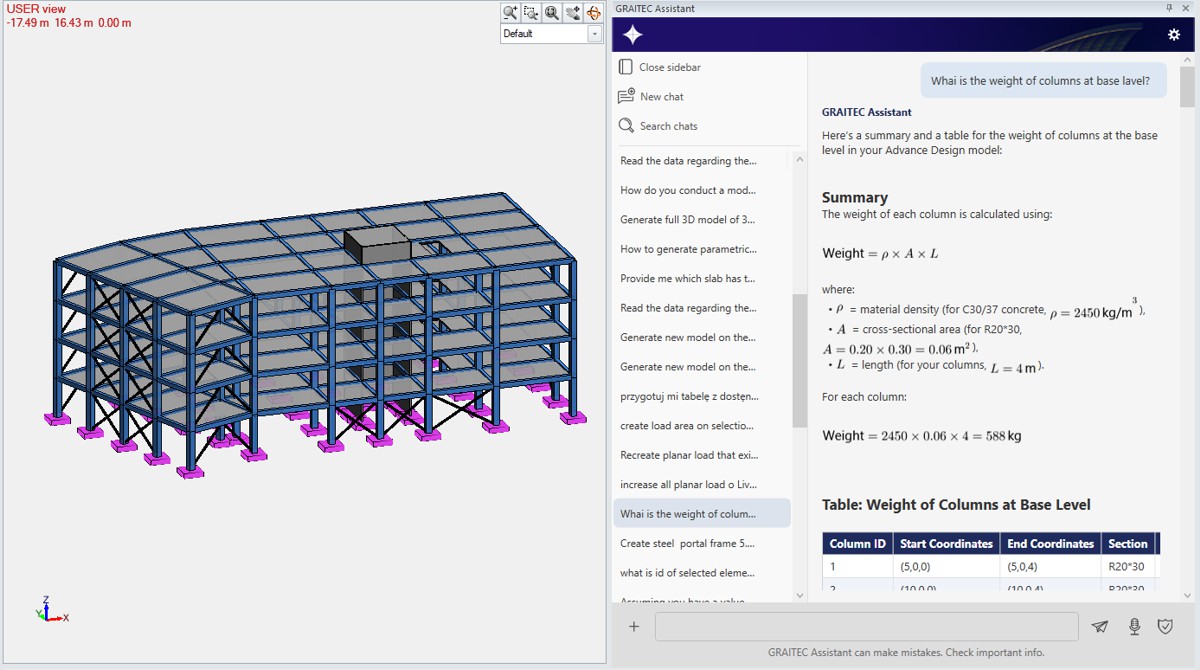
The second is the Graitec Assistant, embedded in the software and aware of the user’s model and context, which the company positions as a working aid rather than a novelty. Beyond surfacing guidance drawn from the software’s logic and documentation, the Assistant can be grounded in a firm’s own knowledge by connecting to SharePoint, so that answers reflect the organisation’s actual standards and documents rather than generic responses. It can also act within the model, supporting tasks such as creating elements, defining loads, retrieving results and validating model data, with reusable structured workflows the company calls Skills intended to standardise practice and deliver repeatable outcomes.
Rawad Assaf, a Solution Line Vice President at the company, tied the two threads together, noting that “Advance Design 2027 represents an important step toward more connected, automated, and intelligent structural design workflows,” and adding that combining open automation with AI-assisted engineering is meant to let engineers cut manual effort and concentrate on higher-value decisions.
The release is not purely an AI story, which is worth stating plainly given how much vendor messaging now treats everything else as an afterthought. Advance Design 2027 also adds new layered shell modelling, integrated cross-laminated timber design to Eurocode 5, a standalone reinforced concrete retaining wall module, improved structural analysis format workflows and timber section optimisation for North American codes. Those are the unglamorous capabilities that determine whether the platform earns daily use on complex projects, and their presence alongside the headline automation features signals that the engineering substance has not been hollowed out to make room for the assistant.
Closing The Steel Loop: Graitec STEEL
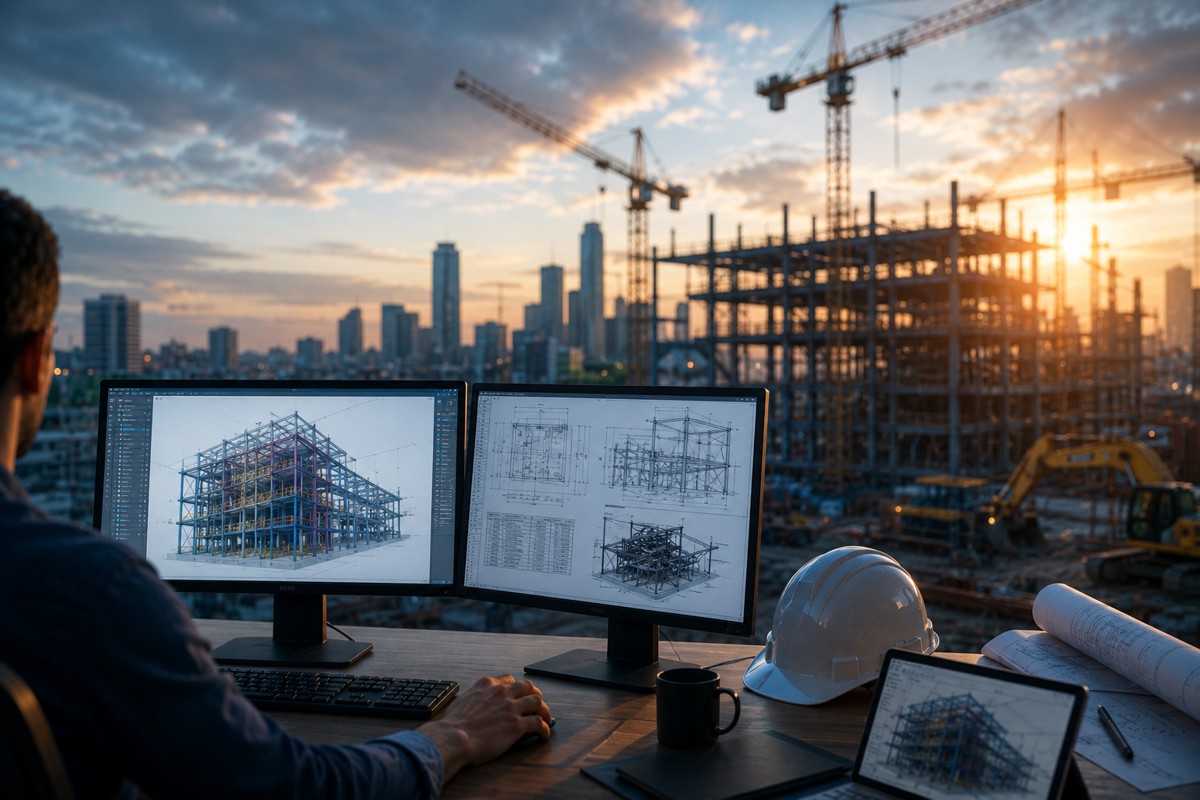
If Advance Design demonstrates the strategy in structural analysis, Graitec STEEL is the attempt to prove it across an entire delivery chain. The new multi-platform offering connects designers, detailers, fabricators and engineers in a single environment and is built to carry consistent data from design through fabrication, with the explicit aim of reducing rework, closing communication gaps and ensuring design intent survives the handover to the workshop. It brings together established Graitec technologies, including PowerPack for Advance Steel, PowerPack for Inventor, Stairs and Railings for Advance Steel and a new Stairs and Railings module for Inventor, and integrates with Autodesk Advance Steel and Inventor so teams can stay inside their preferred environments. The detail that gives this commercial heft is lineage, since Graitec is the original developer of Autodesk Advance Steel, which places it unusually close to the toolset it is now wrapping in a unified product.
The pitch is fragmentation, and the proposed remedy is integration. Brandon Ionata, Solution Line Vice President for Fabricate, framed the product against the silos that slow steel work, stating that “Graitec STEEL is built to break down the silos that slow steel projects today,” and describing a goal of helping teams collaborate more seamlessly, reduce errors and move from design to delivery faster.
The more persuasive line for a sceptical buyer is the customer figure attached to it, with Richard K. Hood LLC reporting that “It literally saves me anywhere from 20 to 30 man-hours on the average job.” A single testimonial is not a market study, yet a concrete hours-saved figure on routine work is the kind of operational metric that procurement teams can test against their own jobs, which is precisely why it carries more weight than abstract efficiency claims.
The steel release also exposes one of the few inconsistencies across the announcements, which is worth flagging rather than smoothing over. The fabrication materials state that the Graitec Assistant is currently available only within Autodesk Advance Steel, while the Advance Design 2027 release describes the same Assistant being introduced into the structural analysis platform.
The most coherent reading is one of staged rollout, with the Assistant reaching the fabrication line first and now extending into structural analysis, so that availability is widening across products rather than fixed to one. Readers tracking the practical reach of the tool should treat the exact product coverage as a moving target and confirm it against the release notes for the version they intend to deploy.
An Open Ecosystem And A Faster Delivery Cadence
The strategic logic running beneath the individual products is an open ecosystem that integrates with the platforms, tools and data environments customers already run, Autodesk foremost among them, so that firms can compose their own workflows and embed AI into their existing stack rather than migrating to a closed alternative. Sitting alongside it is what the company calls a shift-left approach, bringing intelligence as early as possible into the project lifecycle so that options can be generated, simulated and validated upstream, before decisions harden and become expensive to unpick. The promise is the familiar one of less rework, fewer fabrication errors and fewer surprises on site, and the credibility of that promise rests on whether the early-stage tooling is genuinely usable rather than a demonstration feature.
The most concrete proof of delivery cadence comes from a quieter release, the updated Ideate Software bundle and Ideate Automation tools for Revit 2023 to 2027, which Graitec acquired as part of its expansion in the Revit add-in market.
The headline addition is Ideate ExportHub, which centralises export workflows with parameter-based or saved sheet and view sets, repeatable multi-format exports, scheduled off-hours runs and shareable naming conventions, while extending scripted automation to new file types including DXF, DWF, DWFx and FBX. The release also improves interoperability with Forma, OneDrive, cloud-synced environments, Excel and Revit Sheet Collections, and reports performance gains on large models.
None of this is dramatic in isolation, but the steady tightening of model health, deliverable consistency and export reliability is exactly the unglamorous groundwork that an automation-led strategy depends on, since AI riding on inconsistent data and messy deliverables produces inconsistent results.
What It Means For The AECO Market
The competitive backdrop explains why Graitec is choosing accountability as its banner rather than speed. Autodesk, whose platforms Graitec both builds on and resells, has been advancing aggressive generative ambitions, including a new category of generative foundation models its leadership has suggested could automate a large share of routine design tasks. Even there, the platform giant has stressed that professionals remain the arbiters and that humans stay firmly in the loop for accountability, which tells its own story about where the industry’s anxieties now sit.
Independent commentary on 2026 construction technology trends has converged on the same themes of transparency, governance and human oversight, and Autodesk’s own research has found strong leadership conviction that AI will reshape the sector while ranking productivity and informed design options as the leading use cases. Graitec is, in effect, building toward the part of that consensus that the loudest generative claims tend to gloss over.
For investors and operators, the more interesting question is structural rather than rhetorical. Graitec sits under majority ownership by the private equity firm Seven2 and has grown through a long run of acquisitions, which gives it both the consolidated portfolio to attempt an end-to-end story and the commercial incentive to convert that portfolio into recurring, automation-led value.
The risk in the specialist position is real, because if platform owners succeed in pushing generative capability deep into their own stacks, the room above them narrows. The counter-argument, and the one Graitec is effectively staking the strategy on, is that regulated engineering and fabrication reward depth, auditability and trusted sign-off in ways that horizontal platforms struggle to match, and that a specialist with deterministic engines and decades of codified rules is well placed to own that layer.
Where This Leaves Engineers
The strategy is coherent, the releases are tangible, and the framing around accountability is better calibrated to how construction actually works than much of the noise surrounding AI in the sector. What remains untested is execution at the third horizon, where generated, code-compliant and fabrication-ready solutions are the prize and where the gap between a convincing demonstration and a certifiable deliverable is widest.
The assistive and automation layers are easier to believe because they sit close to existing, proven engines, and the early evidence, from a concrete hours-saved figure on steel work to the practical engineering additions in Advance Design 2027, points in a credible direction.
For engineers, detailers and fabricators weighing the roadmap, the sensible posture is to judge it on the same terms Graitec has set for itself. The questions worth holding the company to are whether the deterministic spine genuinely keeps outputs auditable as the AI does more, whether the open ecosystem materialises as real extensibility rather than marketing, and how far the Assistant spreads across the product range over the coming releases.
The company has promised further product announcements in short order, and the value of those will lie less in how much they generate than in how much of what they generate a professional can confidently put their name to.