JCB Hydromax Turns Land Speed Bid into a Hydrogen Engine Showcase
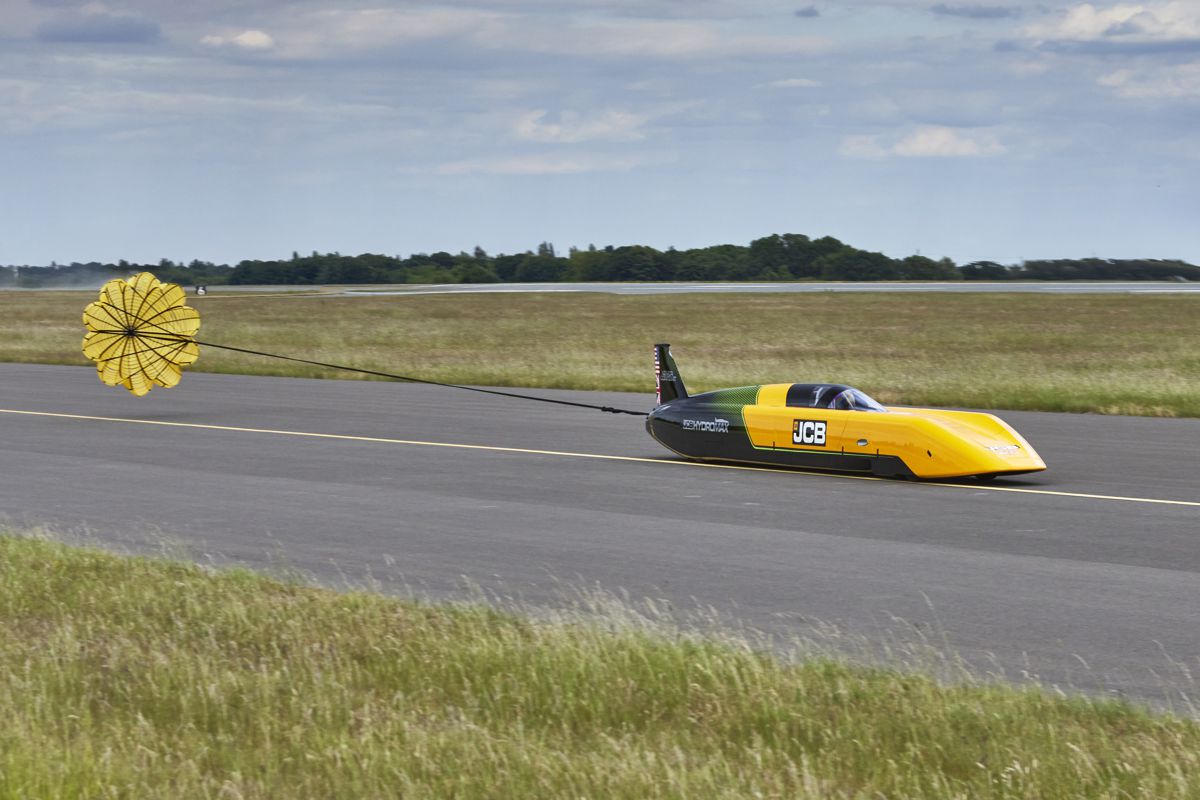
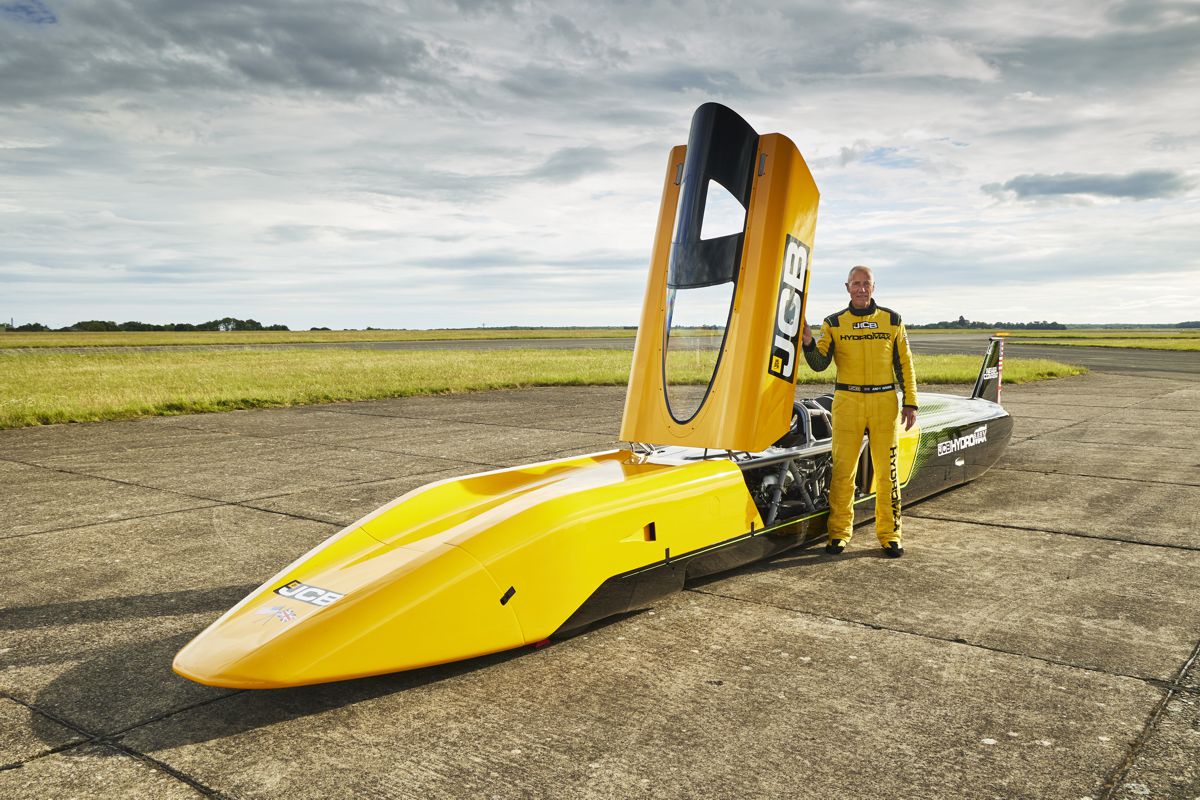
British equipment maker JCB has finished the United Kingdom phase of its hydrogen land speed programme, with the Hydromax car reaching 208mph at RAF Wittering in Cambridgeshire before it is crated and flown to the United States for a record attempt at the Bonneville Salt Flats in August. The figure is eye-catching, yet the more consequential detail for the construction and off-highway sector sits beneath the bodywork.
The two engines driving the 32-foot streamliner are tuned versions of the same hydrogen internal combustion units that JCB has already moved into series production for its diggers, which makes the salt-flat run less a publicity exercise than a high-stress proving ground for a powertrain the company is now selling.
That distinction matters because hydrogen combustion has spent years on the margins of the zero-carbon debate, overshadowed by battery-electric drivetrains and fuel cells. JCB has taken the contrarian position that a diesel-derived engine burning hydrogen offers the off-highway market a more practical route to lower emissions, preserving familiar servicing, rapid refuelling and the torque characteristics that heavy machinery depends on.
A land speed car cannot settle that argument by itself, but it can stress durability, thermal behaviour and refuelling discipline at an intensity no construction site would ever impose, and it does so in front of an audience the industry tends to watch closely.
Briefing
- The Hydromax reached 208mph at RAF Wittering, up from 177mph earlier in the programme, completing UK testing ahead of an August record bid at the Bonneville Salt Flats in Utah.
- The car runs two production-based hydrogen combustion engines tuned to 800hp each, 1,600 bhp combined, derived from the same units now fitted to JCB’s hydrogen diggers.
- The 208mph test figure already exceeds the existing hydrogen-combustion vehicle benchmark of around 185.5mph, although unofficially, as it was not recorded at a sanctioned event.
- JCB’s wider hydrogen programme, backed by a £100 million investment, has reached commercial production, with the 3CX Hydrogen backhoe loader in full manufacture and EU Stage V approval secured across ten European countries.
- The record attempt is timed to coincide with the planned opening of JCB’s $500 million San Antonio factory, the largest investment in the company’s history, with production due to begin in October 2026.
A Land Speed Run Built On A Production Engine
The engineering genealogy is the part of this story that should hold the attention of plant buyers and investors. Each of the two power units in the Hydromax has been tuned to 800hp, but they share their architecture with the 4.8-litre hydrogen combustion engine that JCB fits to production excavators rated at a far more modest 74hp.
The company has spent roughly five years and £100 million bringing hydrogen combustion from a research concept to a saleable product, and that work has now crossed into commercial reality rather than remaining a statement of intent. Hydrogen diggers have been coming off JCB production lines since earlier this year, and the 3CX Hydrogen backhoe loader, billed as the first production hydrogen-powered construction machine of its kind, has entered full manufacture.
Regulatory progress underpins the commercial claim. JCB secured EU Stage V type approval for its hydrogen combustion engines across ten European countries during 2025, the kind of certification milestone that turns a prototype into something a fleet operator can actually specify and finance. Set against that backdrop, the Bonneville bid reads as a deliberate piece of timing rather than a vanity project, engineered to put the technology in front of the wider market at the moment it is ready to sell at volume.
JCB Chairman Anthony Bamford framed the UK testing outcome in confident terms, saying: “The UK testing programme has given us everything we had hoped for and more. We have a car that runs, a crew that knows it inside out and a wealth of real-world data that no amount of theory could ever provide. The team has done a magnificent job and our focus now turns entirely to the Salt Flats and a new world hydrogen land speed record.”
What 208mph Actually Demonstrates
The headline speed conceals a more interesting engineering detail, which is that the engines were not run flat out in Utah’s rehearsal. During the UK shakedown and the early Bonneville SpeedWeek runs the units are held to around 600hp each, some 200hp below their ceiling, with full power reserved for the officially timed record attempts that follow. Reaching 208mph on a restricted output, on a damp and gusty 1.7-mile runway rather than a long salt course, tells the team a great deal about how the car behaves under load before the stakes rise.
The shakedown also exposed the harder operational problem of refuelling, where turnaround times between runs can determine whether a sanctioned attempt is even attempted, because the salt-flat rulebook impounds a car between its two timed passes and allows only a tight window for servicing.
The supplier roster behind the project reads like a who’s who of British motorsport engineering, with Prodrive responsible for the car build, Ricardo handling the engine tune and Xtrac supplying the transmission that splits 1,600 bhp across all four wheels through a twin-clutch arrangement. That all-wheel-drive layout marks a clear step on from the rear-driven Dieselmax of two decades ago and reflects the difficulty of putting so much power down on a low-grip surface.
Engineering Director Ryan Ballard, who is leading the project, was clear that the value of the exercise lay in the rehearsal rather than the speed, saying: “Reaching 208mph is a tremendous result, but the real value of these tests is what we have learned. We now understand how the car behaves under load, we have refined our hydrogen refuelling, and we have built the teamwork and communication that will be decisive at Bonneville. Every refuel, run and tyre change we have rehearsed here is one we won’t be doing for the first time on the salt. We will arrive fully prepared, with a car and a crew that know exactly what they are doing.”
The Records Standing In Hydromax’s Way
The competitive landscape Hydromax is entering is more layered than a single number suggests, because hydrogen land speed records fracture along the lines of how the energy is converted. The benchmark for a hydrogen internal combustion vehicle sits at roughly 185.5mph, which the Hydromax has notionally beaten already in testing, while the broader hydrogen record of around 303mph belongs to a fuel cell machine, the student-built Venturi Buckeye Bullet, which has held the mark since 2009.
Add an electric vehicle figure that JCB cites at around 342mph and the picture becomes one of a company aiming not merely to set a niche combustion record but to outrun every other hydrogen approach and the electric class besides. The stated ambition is to pass 350mph, the threshold that would also eclipse JCB’s own diesel record.
The route to ratification runs through two distinct events. The team will first run at SpeedWeek, the long-established meeting organised by the Southern California Timing Association, before pursuing an officially recognised record under the rules of the Fédération Internationale de l’Automobile.
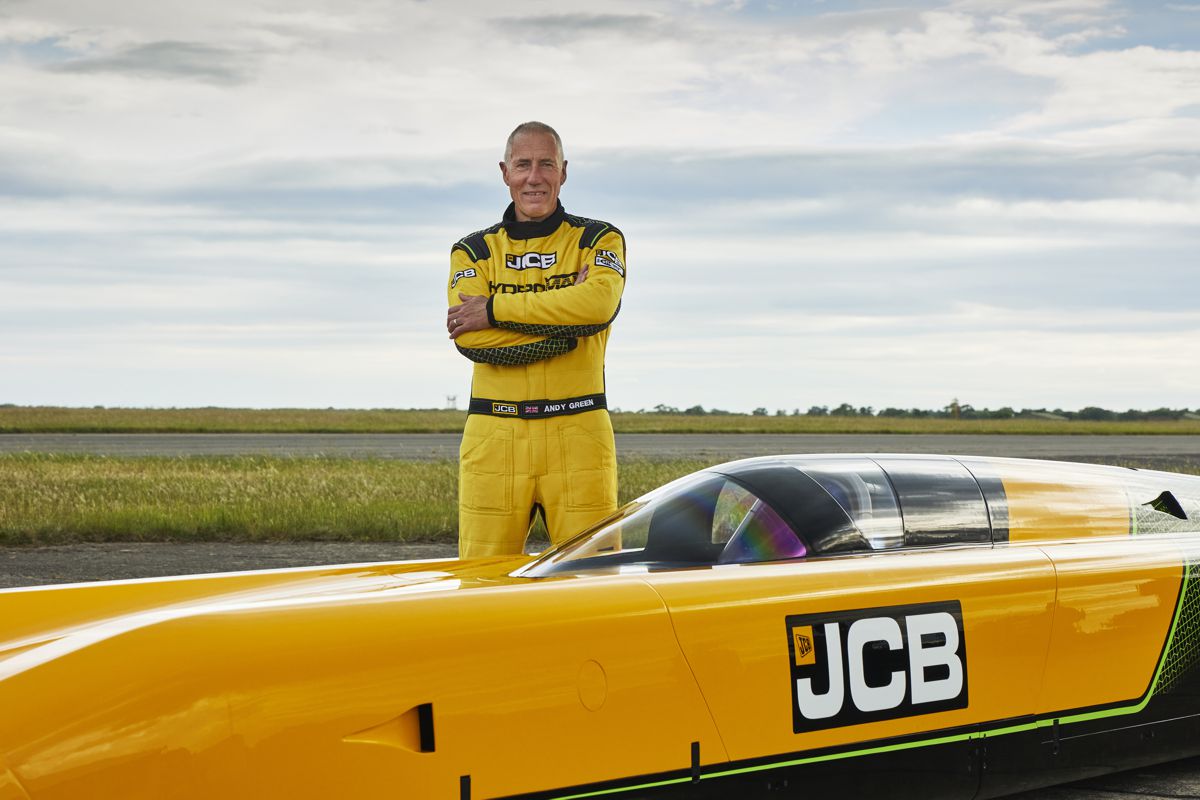
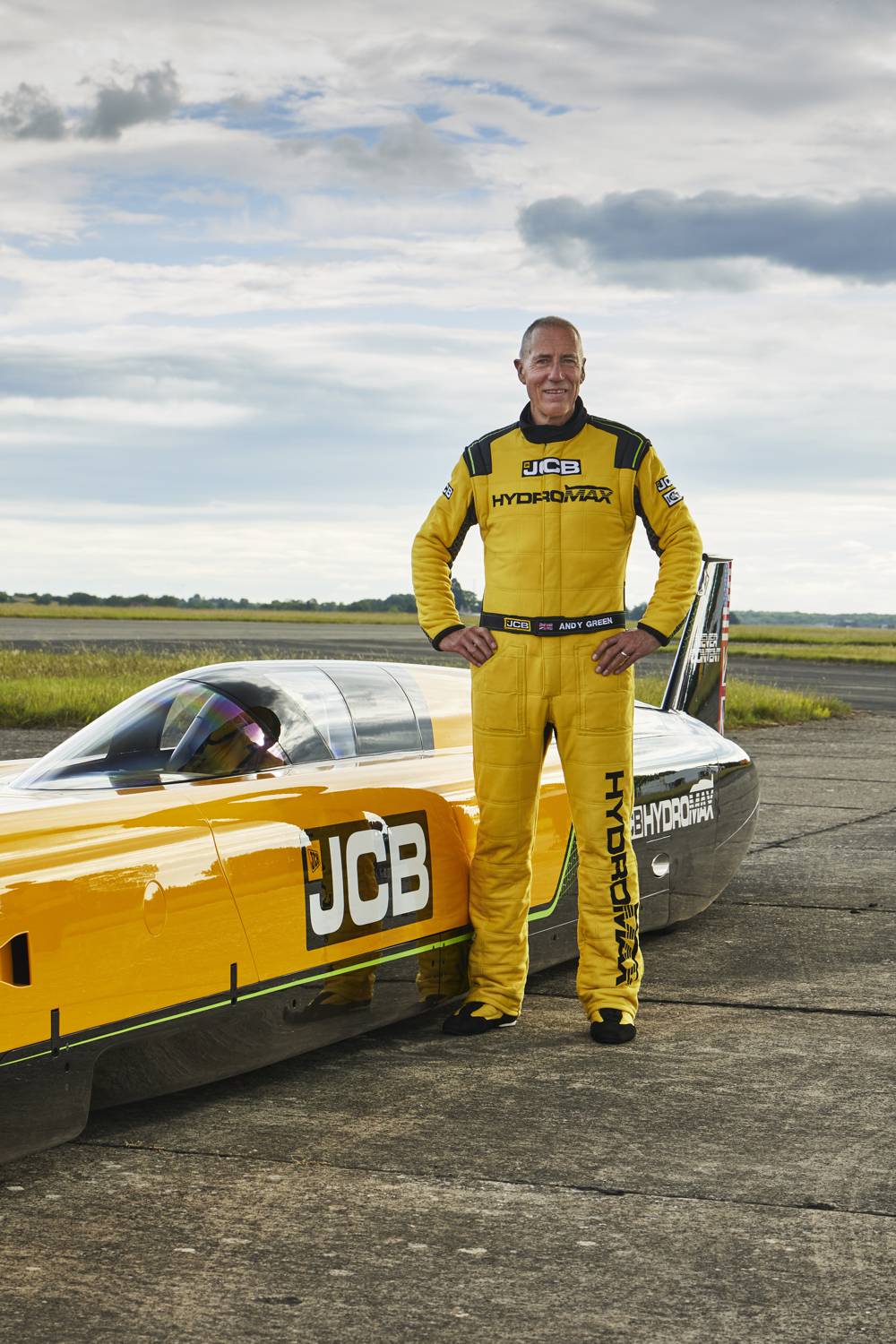
Andy Green, who is coming out of retirement for the attempt and remains the only person to have broken the sound barrier on land, set the tone for the harder phase ahead, saying: “To run JCB Hydromax up to 208mph here in the UK is hugely encouraging. The car feels strong and the team has gelled brilliantly. Now comes the real challenge – Bonneville, the spiritual home of the World Land Speed Record. I can’t wait to get out on the salt.” Success on the salt, as the crew readily acknowledges, will depend as much on weather and surface condition as on machinery, given how often Bonneville meetings have been disrupted by flooding and shortened courses.
Why The Timing Points West
The decision to chase the record on American soil is bound up with the largest commercial commitment in JCB’s history. The company is building a $500 million factory in San Antonio, Texas, a project it doubled in scope to one million square feet after the United States introduced fresh tariffs on imported goods, and production of Loadall telescopic handlers and aerial access equipment is scheduled to begin there in October 2026.
The plant is expected to create 1,500 jobs over five years and to shift JCB’s North American supply position from roughly four-fifths imported toward the great majority being built locally, a reshoring move that carries both political resonance and balance-sheet logic in the current trade climate. A hydrogen land speed record set in Utah, with American media watching, arrives at a useful moment for a manufacturer trying to establish itself as a domestic producer rather than a foreign importer.
For policymakers and investors the San Antonio build signals something larger than one company’s expansion plans. It points to a structural relocation of capital-intensive off-highway manufacturing toward the markets it serves, driven by tariff exposure but unlikely to reverse if those tariffs ease.
JCB is layering a powertrain narrative on top of that geographic one, presenting hydrogen combustion as a credible decarbonisation path for heavy equipment at the same time as it plants its most automated factory in the United States. Whether the two strands reinforce one another will depend on how quickly North American customers adopt hydrogen machinery, which remains an open commercial question rather than a settled outcome.
Speed As A Shop Window For Engineering
JCB’s habit of building record cars is best understood as a sustained marketing strategy for its engine division rather than a sideline. The Dieselmax took an FIA diesel record of 350.092mph at Bonneville in 2006, with Green at the wheel and two JCB engines under the bonnet, and that mark still stands two decades later.
The pattern continued with the Fastrac, certified by Guinness World Records as the fastest modified tractor at 135.191mph in 2019, and the JCB GT backhoe loader, which reached 72.58mph in 2014. Each project took a piece of working machinery, or the engine that powers it, and pushed it to a speed that made the underlying engineering impossible to ignore.
Hydromax extends that logic into the energy transition, and the commercial test is more demanding than the sporting one. Setting a hydrogen record would generate the publicity JCB clearly wants as its production engines reach the market and its Texas factory comes online, but the durable measure of the programme will be whether off-highway operators accept hydrogen combustion as a serious alternative to batteries and fuel cells for the duty cycles that define construction work.
The salt flats will deliver a verdict on the car in August. The verdict on the technology will be written more slowly, on building sites and quarry floors, long after the Utah meeting has packed up.