America’s Mine Waste Could Become its Next Critical Minerals Resource
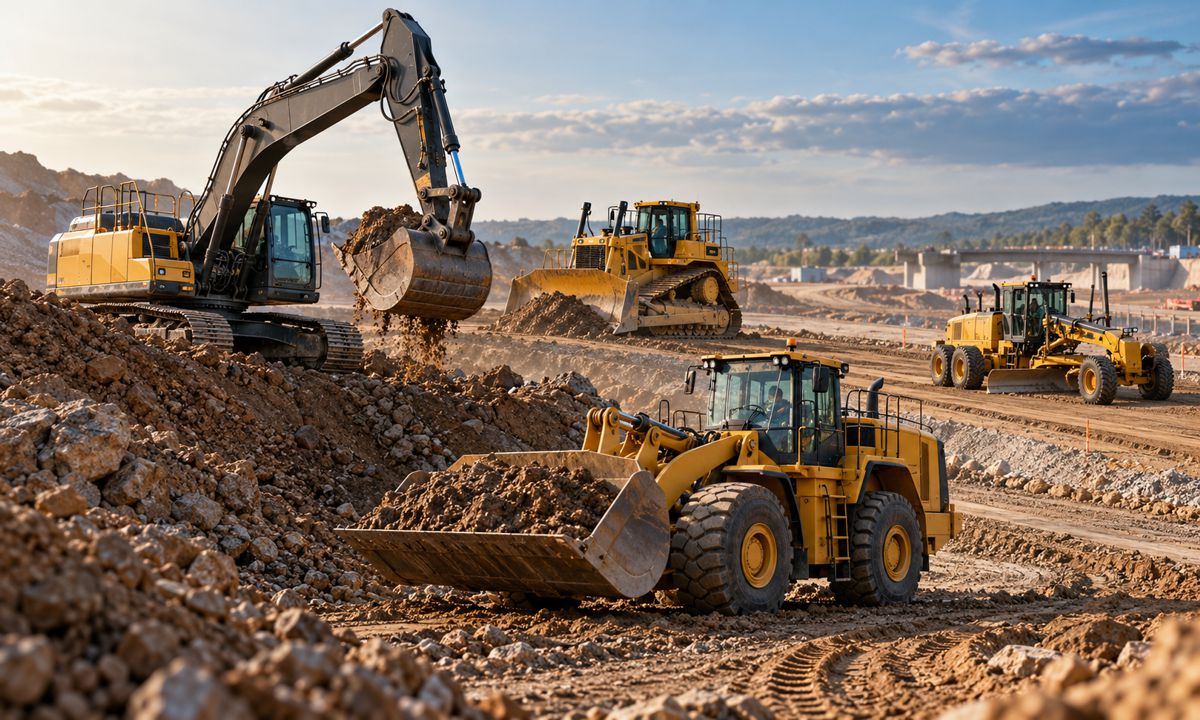
The most commercially interesting shift in critical minerals is not taking place at the bottom of a new pit. It is happening on top of the waste that more than a century of mining has already produced, crushed and concentrated, then left behind. Arizona State University researchers are among those testing the technologies that would let industry treat that waste as an asset rather than a permanent liability, and the timing gives their work far more weight than a routine campus research update would normally carry.
Washington is now putting substantial public money behind the recovery of critical minerals from unconventional feedstocks, tailings prominent among them, at exactly the moment when the wider industry is being forced to rethink where its raw materials come from.
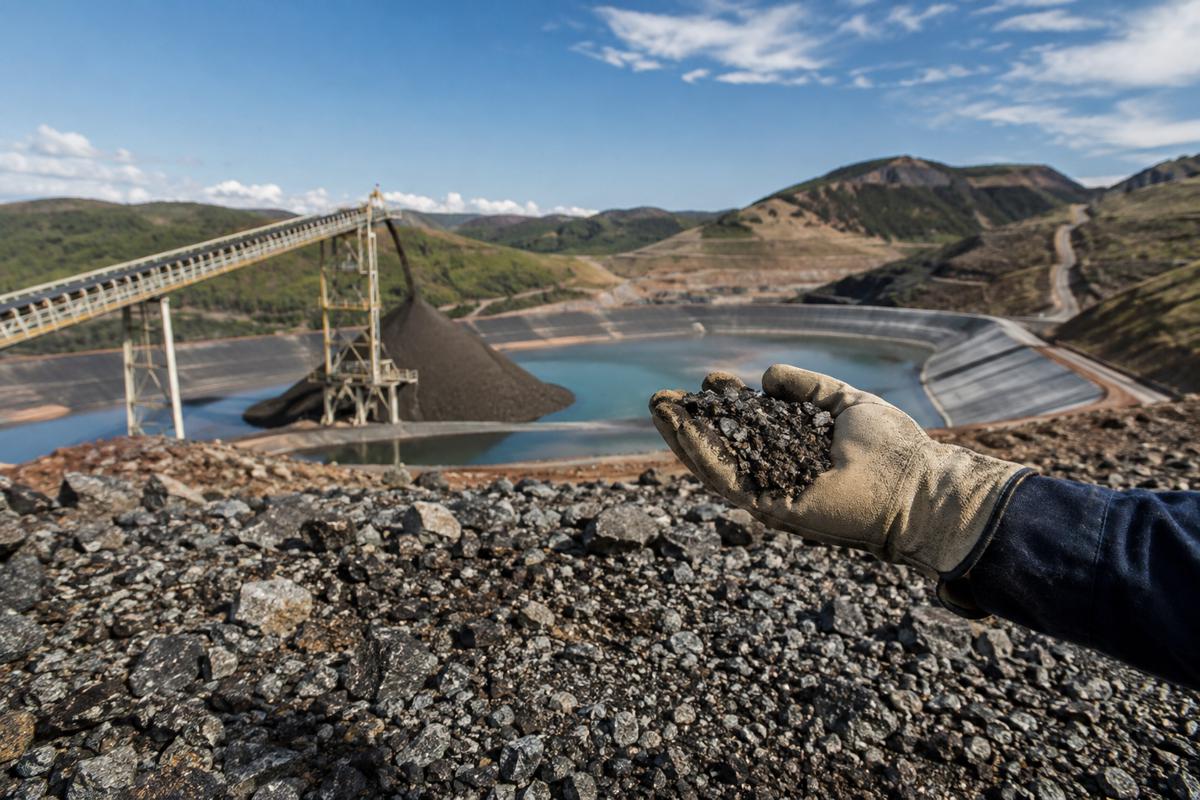
The strategic argument is simple enough to state and difficult to ignore. A large share of the copper, gold, silver, rare earth elements and associated metals that modern manufacturing and defence now depend on has already been dug out of the ground, milled to a fine grain and discarded, because the extraction technology of the day could not economically recover everything of value.
What was worthless a few decades ago is often critical today. That material sits at surface, already liberated from hard rock, distributed across thousands of legacy sites concentrated in the western United States. The commercial question is no longer whether the resource exists but whether it can be stabilised, characterised, extracted and, where recovery is not viable, safely converted into construction materials at a cost that makes sense.
The ASU Mining Innovation Initiative, led by Hamed Khodadadi Tirkolaei of the School of Sustainable Engineering and the Built Environment, is building the practical toolkit for precisely that sequence. The work spans stabilising waste so it stops contaminating water and generating dust, quantifying and extracting the critical minerals still locked inside it, recovering dissolved metals from mine water using biotechnology, and researching how the residue can be folded into cement and concrete systems.
Read individually, each project is a discrete piece of applied engineering. Read together, and against the backdrop of federal industrial policy, they describe an emerging business model in which remediation and mineral supply stop being separate cost centres and start reinforcing one another.
Briefing
- Arizona State University’s Mining Innovation Initiative is developing bio-based methods to stabilise mine waste, recover critical minerals and reuse residues in construction materials, testing enzyme-based stabilisation at the abandoned Cash Mine near Prescott with support from the Arizona Department of Environmental Quality.
- The US Department of Energy signalled its intent in August 2025 to invest close to one billion dollars across the critical minerals supply chain, with subsequent funding rounds explicitly targeting recovery from mine tailings and other byproduct feedstocks rather than only new extraction.
- Global mine tailings inventories are estimated at roughly 282 billion tonnes across some 8,500 facilities, with contained metal value put above 2.5 trillion dollars, making legacy waste one of the largest pre-processed mineral resources on the planet.
- Chinese export controls tightened repeatedly through 2025 across rare earths, gallium, germanium and antimony, sharpening the commercial and national-security case for domestic and allied supply from any credible source, including reprocessed waste.
- Declining supplies of conventional supplementary cementitious materials such as fly ash are opening a parallel market for treated tailings and mineral residues in concrete, connecting mine-waste remediation directly to the construction materials supply chain.
Washington Puts Real Money Behind Waste-Derived Minerals
The reason a stabilisation trial at a disused Arizona gold mine matters to infrastructure and investment audiences is that federal policy has moved decisively in its direction. Following executive orders in March 2025 aimed at increasing domestic mineral production and unleashing American energy, the Department of Energy announced in August 2025 that it intended to commit close to one billion dollars to advance and scale mining, processing and manufacturing technologies across the supply chain. What distinguishes the resulting programmes from earlier initiatives is how explicitly they name secondary and unconventional feedstocks, including mine tailings, as targets rather than treating them as a marginal curiosity.
The specifics have arrived quickly. A 275 million dollar Mines and Metals Capacity Expansion programme is aimed at piloting byproduct critical mineral recovery at domestic industrial facilities, with mine tailings, coal combustion residuals, spent catalysts and slag named among eligible feedstocks. A separate Rare Earth Elements Demonstration Facility programme, valued at 134 million dollars, is designed to fund plants that produce between 150 and 1,000 tonnes of rare earth elements a year from feedstock other than conventional mining, specifically citing mine tailings and electronic waste.
By mid-2026 the Department had already awarded 75 million dollars to five projects focused on coal and coal-based feedstocks, and had opened a further accelerator of up to 69 million dollars for innovative processing technologies. The Environmental Protection Agency, meanwhile, has prioritised critical mineral recovery at contaminated mine sites within its Brownfields programme, aligning cleanup funding with resource recovery.
For infrastructure owners, materials suppliers and investors the signal in this spending is more important than any single grant. Public capital is being used to buy down the technical and commercial risk of recovering minerals from feedstocks that private balance sheets would previously have avoided. That changes the calculus for anyone weighing whether to develop reprocessing capacity, invest in the specialist chemistry and biotechnology involved, or partner with the academic groups doing the early characterisation work.
When government cost-share and demonstration funding sit behind a technology, the path from laboratory result to bankable project shortens considerably, and the companies that position themselves early tend to capture the resulting supply agreements and intellectual property.
A Resource Measured In Billions Of Tonnes
The scale of the opportunity is what elevates this from a remediation story to a supply story. Industry estimates put the global inventory of accumulated mine tailings at around 282 billion tonnes held across roughly 8,500 facilities, with the contained metal value exceeding 2.5 trillion dollars and the stored volume large enough to fill a cube some six kilometres on each side.
Each year the world adds more than ten billion tonnes of fresh tailings and around ninety billion tonnes of waste rock, according to engineering consultancy GHD. These are not exotic numbers at the edge of the market; they describe a pre-extracted resource base that dwarfs many conventional deposits and that is already sitting at surface, fully liberated from host rock.
The economics of reworking this material differ fundamentally from greenfield mining. There is no exploration cost, no need to sink a new shaft or strip a new pit, and no decade-long lead time to first production, because the ore has already been mined and milled. In the United States the individual prizes are substantial.
Analysis compiled for national laboratories has identified single impoundments such as the North Block tailings in Nevada, estimated at more than 500 million tonnes with indium as a principal byproduct, and the Fort Knox tailings in Alaska, of comparable size and carrying germanium, cobalt and indium. Historical operators simply discarded elements they could not sell, and many of those elements are now on federal critical minerals lists.
Major producers have already begun to move. Rio Tinto has established a collaboration known as Regeneration to explore re-mining and reprocessing of nickel tailings, waste rock and mine water for critical minerals, while Hindustan Zinc has been scaling tailings reprocessing as part of a broader shift toward what the sector increasingly calls circular mining.
Regulators are adapting in parallel, with jurisdictions such as Ontario introducing mineral recovery permitting designed to speed approvals for tailings reprocessing. The direction of travel is consistent across companies, governments and research institutions, and it points toward legacy waste being reclassified, both technically and commercially, as a working part of the mineral supply chain.
Stabilisation As The Commercial Precondition
None of the recovery upside is accessible if the waste itself cannot be handled safely and affordably, which is why the stabilisation work at the front of the ASU programme is more strategically significant than it first appears. Tailings are the largest waste stream in mining, typically stored as slurry in ponds and dams or dry-stacked in mounds, and they often carry deleterious elements such as arsenic and lead. The team’s enzyme-based method uses a process that forms natural mineral bonds within the material to create a protective surface crust, immobilising harmful substances and cutting the erosion and airborne dust that carry contaminants toward rivers and groundwater. As Khodadadi Tirkolaei describes it: “By using an enzyme-based process to form natural mineral bonds within the soil, we can create a protective crust that helps limit erosion and dust generation while avoiding more chemically intensive treatments.”
The commercial appeal lies in how the treatment is deployed as much as in what it does. Conventional remediation of remote or abandoned sites is often defeated by access and logistics, since heavy machinery and specialist plant are expensive to mobilise and sometimes impossible to bring in. The ASU approach is designed to sidestep that constraint, with the researcher noting that: “The treatment solution can be prepared on site and implemented without the need for specialized equipment or heavy machinery, making it readily deployable in remote areas, including many abandoned mine sites, where conventional solutions may be difficult or impractical to implement.”
The initiative has also developed a plant-based biopolymer for wastes where enzyme activity would be suppressed by high heavy-metal concentrations, giving operators a second technique for the more hostile material that dominates many legacy sites.
Framed against the funding landscape, stabilisation is best understood as the de-risking layer that makes everything above it possible. A tailings facility that no longer sheds dust and does not threaten nearby watercourses is a safer asset to hold, a cheaper one to insure and monitor, and a far more attractive candidate for reprocessing investment.
The same treatment that satisfies an environmental regulator also prepares the ground for a recovery operation, which is precisely the convergence that turns a compliance obligation into the first step of a value chain. For infrastructure owners and mining operators carrying long-tail remediation liabilities on their books, that dual purpose is the point at which the numbers begin to work.
Turning Fine Tailings And Mine Water Into Recoverable Value
Once waste is stabilised, the question becomes what can be pulled back out of it, and ASU is pursuing that on two fronts. The first is characterising and quantifying the critical minerals held in copper tailings, work led by environmental engineering professor Matthew Fraser with molecular sciences colleague Pierre Herckes. The objective is to establish, with analytical rigour, how much recoverable value actually sits in material that has long been treated purely as a hazard.
In Fraser’s framing, the team is working to quantify the critical minerals in these tailings in order “to turn a liability into a resource,” a phrase that captures the commercial logic driving the entire field. Reliable quantification matters because it is the foundation of any investment case; no operator commits capital to recovery without a credible measure of grade and volume.
The second front addresses the water rather than the solids. Regents Professor Bruce Rittmann, director of the Swette Center for Environmental Biotechnology, is using a Membrane Biofilm Reactor in which bacteria transform dissolved mineral ions from mining, ore processing and recycling streams into recoverable nanoparticles. The reactor can act on lithium, copper, gold and rare earth elements, converting dissolved metal that would otherwise be lost into a harvestable form.
As Rittmann puts it: “Periodically harvesting some of the biofilm recovers the valuable critical minerals in easy-to-process forms.” This matters commercially because mine water is both a persistent environmental burden and, at many sites, a genuinely concentrated source of dissolved metal, so a technology that treats the water and yields saleable product at the same time attacks cost and revenue from both sides.
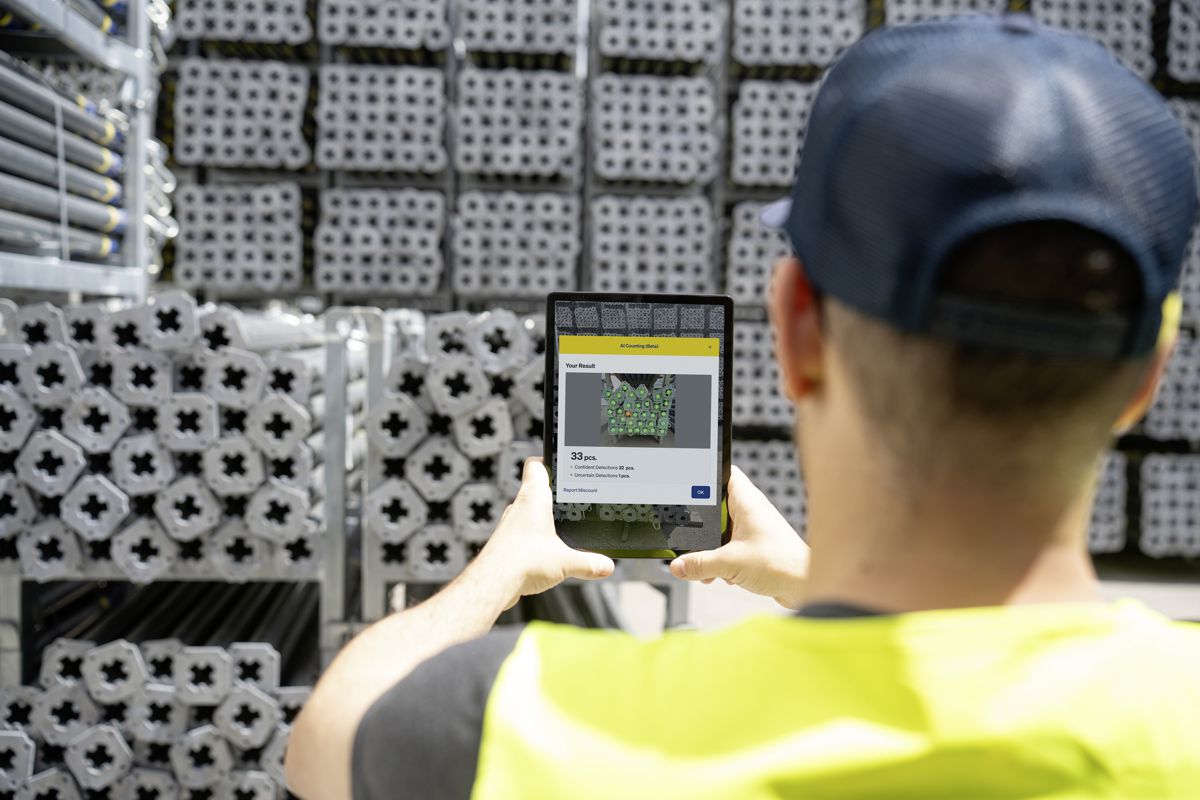
Biotechnology and analytics of this kind sit squarely within where the wider sector is heading. Across the industry, artificial intelligence is being used to pinpoint valuable fractions within tailings, advanced separation to lift recovery rates, and biological methods to extract metals with less energy and chemistry than traditional hydrometallurgy.
The significance for investors and operators is that recovery from waste is no longer a single technique but a stack of maturing tools that can be combined and matched to the specific chemistry of a site. That modularity lowers the barrier to entry and allows projects to be scaled and de-risked incrementally, which is exactly the profile that demonstration funding is designed to support.
Where The Residue Meets The Concrete Supply Chain
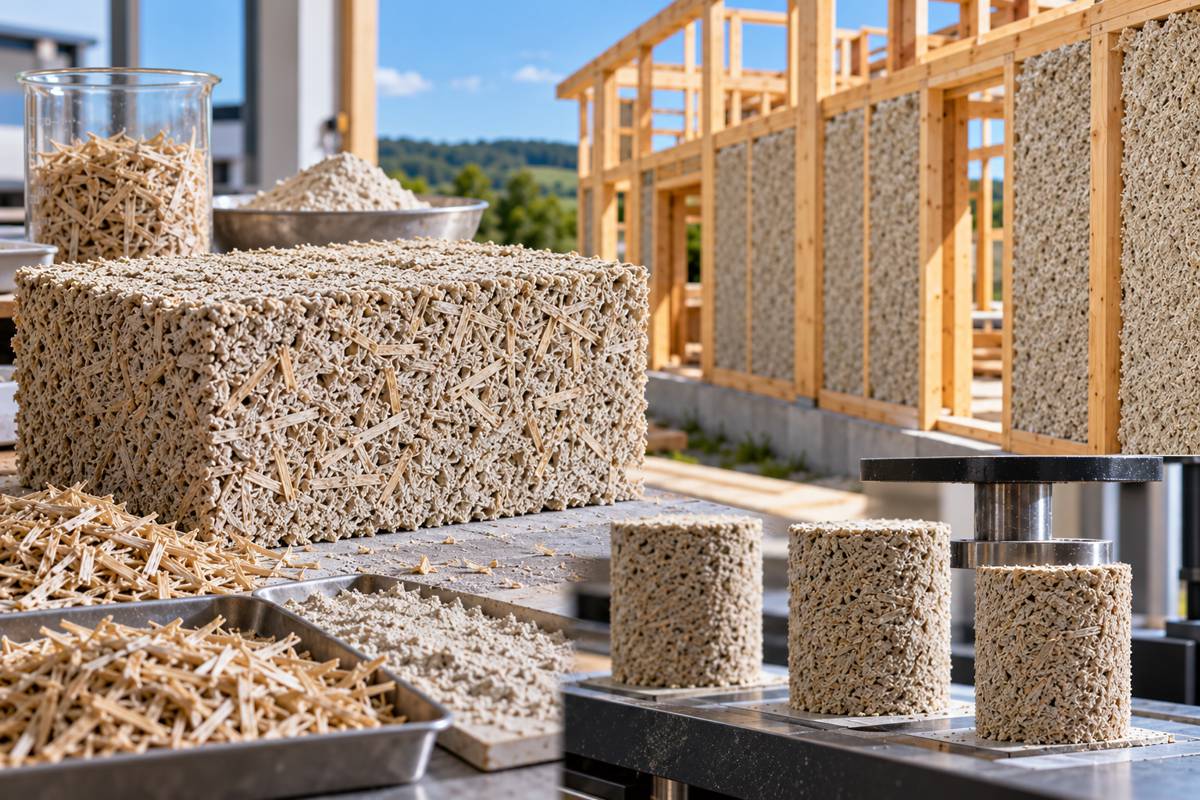
For a construction and infrastructure readership the most immediately relevant thread is what happens to the material that remains after minerals have been recovered, and here the market has developed a genuine appetite. Fulton Professor of Structural Materials Narayanan Neithalath is researching how mine waste and industrial byproducts can be safely incorporated into cementitious systems, improving the chemistry, microstructure and performance of concrete while lowering the carbon footprint of the finished material.
Cement production accounts for roughly eight per cent of global carbon dioxide emissions, and substituting a share of clinker with supplementary cementitious materials is one of the most practical levers available for reducing that figure. The difficulty is that the supply of conventional supplements is shrinking fast.
That squeeze is the commercial hook that ties mine waste to the concrete supply chain. Fly ash, long the workhorse supplementary cementitious material, is declining as coal-fired power stations retire; European scenario analysis projects fly ash availability falling from around 8.5 million tonnes in 2025 toward as little as a fraction of that by the 2040s, with granulated blast furnace slag following a similar downward path as steelmaking decarbonises.
State transport departments in the United States are already modifying specifications, importing material and harvesting old ash from landfills to cope. Into that widening gap step alternative sources including treated mine tailings, copper slag and other mineral residues, which research has shown can carry pozzolanic or cementitious properties when properly processed and activated.
The convergence this creates is what makes the ASU programme coherent as a commercial proposition rather than a set of unrelated experiments. Consultancy GHD, working within a supported international initiative, is pursuing exactly this full-chain outcome, recovering critical metals from waste while repurposing the remaining residue into geopolymers, aggregates, precast concrete and bricks.
A single tonne of legacy tailings can therefore yield a stabilised surface, a stream of recovered critical minerals, and a construction-grade residue, with each output carrying its own market. For infrastructure owners facing both carbon-reduction obligations and tightening supplies of proven concrete admixtures, a domestically sourced, waste-derived supplement that also advances remediation is a proposition with unusually broad appeal.
An Industrial Playbook Taking Shape In Arizona
What gives the Arizona work durability is that industry has helped shape it, and industry is already pulling on it. Mining companies, consultants and technology providers have fed research priorities, sustainability needs and workforce requirements into the Mining Innovation Initiative, and the interest is practical rather than ceremonial.
When Travis Snider, vice president of sustainability and external relations at the Arizona Sonoran Copper Company, learned of the stabilisation work through a contact at the state environmental regulator, he arranged a laboratory visit and came away convinced. “Once he showed me how they were developing ways to reduce blown dust from tailings and haul roads, I knew that this was the right fit for our industry,” Snider recalled, adding that he had long hoped the university would deepen its support for the mining sector in the state. Arizona is a natural setting for this, sitting at the centre of American copper production and home to producers of the scale of Freeport-McMoRan.
The initiative is also building the human capital the sector will need if waste-derived supply is to scale. Faculty have begun developing training programmes aligned with the evolving needs of the mining and critical minerals sector through the university’s continuing education arm, while outreach efforts introduce younger students to mining careers and to the link between raw materials and the phones, vehicles, energy systems and infrastructure they use.
Researchers, including molecular sciences doctoral student Crystal Davis, have taken emerging recovery approaches directly to policymakers at events such as the Arizona Mining Association’s Mining Day at the Capitol, closing the loop between laboratory work and the people who set policy and permitting.
The wider message for the industry is confident and forward-looking, and it reflects where value in the sector is beginning to concentrate. Carolina Navia Vasquez, a mine engineer with Freeport-McMoRan, captures the tone of an industry that increasingly sees itself as a solutions provider rather than a legacy problem, describing mining as “an innovative, sustainable and developing industry that can play a huge role in our future” and observing that today’s decisions are about “the future of sourcing the raw material necessary to run our planet.”
Reprocessed waste will not replace conventional mining, and it does not need to. What the Arizona model demonstrates is that a meaningful slice of future critical mineral demand, and a useful share of future construction materials, may come from resources that were mined long ago, and that the operators, materials suppliers and investors who understand this early will be the ones setting the terms as the market matures.
Key Industry Questions
- Why are mine tailings suddenly being treated as a mineral resource rather than a waste problem? Three forces have converged. Rising demand for critical minerals has coincided with declining ore grades and long lead times for new mines, making already-processed material at surface more attractive. Chinese export controls across rare earths and other minerals have sharpened the case for domestic and allied supply from any credible source. And improved analytics, separation and biotechnology have made recovery from low-grade, fine-grained waste technically viable where it once was not. Because tailings are already mined and milled, reprocessing avoids exploration and extraction costs and shortens time to production. Governments have reinforced the shift with funding and permitting reforms, so material long carried as a liability is now being reassessed as a pre-extracted asset with measurable commercial value.
- What has the US federal government actually committed to funding? Following 2025 executive orders on domestic mineral production, the Department of Energy signalled its intent to invest close to one billion dollars across the critical minerals supply chain. Specific programmes followed, including a 275 million dollar Mines and Metals Capacity Expansion effort naming mine tailings and other byproducts as eligible feedstocks, and a 134 million dollar Rare Earth Elements Demonstration Facility programme aimed at plants producing rare earths from non-conventional feedstock such as tailings and electronic waste. By mid-2026 the Department had awarded 75 million dollars to five coal-feedstock projects and opened a further processing accelerator. The Environmental Protection Agency has separately prioritised mineral recovery at contaminated mine sites within its Brownfields programme, aligning cleanup money with resource recovery.
- How large is the tailings resource in practical terms? Industry estimates put global accumulated tailings at roughly 282 billion tonnes across around 8,500 facilities, with contained metal value exceeding 2.5 trillion dollars. The world adds more than ten billion tonnes of tailings and around ninety billion tonnes of waste rock each year. Individual sites can be significant in their own right; analysis for national laboratories has identified single US impoundments exceeding 500 million tonnes carrying byproducts such as indium, germanium and cobalt. Not all of this is economically recoverable, and grades vary widely by site and commodity. The point is that the resource base is vast, sits at surface, and has already been liberated from host rock, which changes the cost structure of accessing it compared with conventional mining.
- Why does stabilisation come first, and what does it change commercially? Recovery is only possible if the waste can be handled safely and affordably. Tailings often contain arsenic, lead and other harmful elements, and they generate dust and erosion that carry contaminants into water. Stabilising the surface immobilises those substances and reduces environmental risk, which lowers the cost of holding, insuring and monitoring a site. Crucially, a stabilised facility is a more attractive candidate for reprocessing investment, so the same treatment that satisfies regulators also prepares the asset for recovery. Approaches that can be deployed without heavy machinery are particularly valuable at remote and abandoned sites where conventional remediation is impractical, turning a standalone compliance cost into the first stage of a potential value chain.
- What is the connection between mine waste and the concrete supply chain? After minerals are recovered, the remaining residue can be used in construction materials. This matters because conventional supplementary cementitious materials, especially fly ash from coal power, are declining sharply as coal plants retire, while cement remains responsible for around eight per cent of global carbon emissions. Treated tailings, copper slag and other mineral residues can carry pozzolanic or cementitious properties and are being investigated as substitutes, alongside uses as geopolymers, aggregates, precast concrete and bricks. For infrastructure owners facing both carbon targets and tightening supplies of proven admixtures, a domestically sourced, waste-derived supplement that also advances remediation addresses several problems at once, which is why the reuse pathway is central rather than incidental.
- How mature is the technology, and what is still experimental? The field spans a range of readiness levels. Stabilisation techniques such as enzyme-induced treatments and biopolymers are being tested at real sites, including the abandoned Cash Mine near Prescott. Biotechnology for recovering dissolved metals from mine water and analytics for quantifying mineral content in tailings are advancing but generally remain at pilot or demonstration scale. Federal demonstration funding exists precisely because the step from laboratory result to commercial plant is where most projects need support. Investors should treat individual technologies on their merits rather than assuming the whole chain is proven. The encouraging trend is that recovery is now a stack of complementary tools that can be matched to a site’s specific chemistry and scaled incrementally.
- Who is best placed to capture value from this shift? Several groups stand to benefit. Mining companies holding remediation liabilities can convert obligations into recovery opportunities, as producers such as Rio Tinto and Hindustan Zinc are exploring. Materials and chemistry specialists that develop stabilisation, separation and biotechnology can secure intellectual property and supply agreements. Construction materials suppliers gain a new source of scarce supplementary cementitious material. Investors backing demonstration projects benefit from government cost-share that reduces early risk. Academic groups doing characterisation and process development, such as those at ASU, sit at the front of the pipeline. The common thread is that early positioning matters, because supply agreements, permitting precedents and proven process designs tend to be locked in by those who move first.
- Does reprocessing waste reduce the need for new mines? It supplements rather than replaces conventional mining. Reprocessed tailings can meet a meaningful share of demand for certain minerals and provide construction materials, but the volumes and grades will not cover total requirements for most commodities. Its strategic value lies in adding domestic and allied supply quickly, using resources already at surface, while simultaneously reducing environmental liabilities. For minerals subject to export controls or concentrated foreign processing, even a partial domestic contribution improves resilience and bargaining position. The most realistic view is that waste recovery becomes one pillar of a diversified supply strategy alongside new mines, recycling and international partnerships, rather than a single solution that removes the need for primary extraction.
Strategic Takeaways
- Legacy mine waste is being repositioned from environmental liability to pre-extracted mineral asset, and the operators and materials suppliers that understand this shift early will set the commercial terms as reprocessing capacity scales.
- Federal funding aimed explicitly at tailings and byproduct feedstocks is buying down the technical and commercial risk of recovery, shortening the path from laboratory result to bankable project and rewarding those who position ahead of the awards.
- Stabilisation is the de-risking layer that unlocks everything else, because a facility that no longer threatens water or generates dust is cheaper to hold and far more attractive to reprocessing investors.
- The decline of fly ash and other conventional supplementary cementitious materials creates a durable market for treated tailings and mineral residues, tying mine-waste remediation directly to the concrete and infrastructure supply chain.
- Recovery from waste is now a stack of complementary technologies rather than a single method, allowing projects to be matched to site chemistry and scaled incrementally, which lowers the barrier to entry for new commercial entrants.