The Mid-Sized Excavator is Being Re-Specified as a Multi-Tool Platform
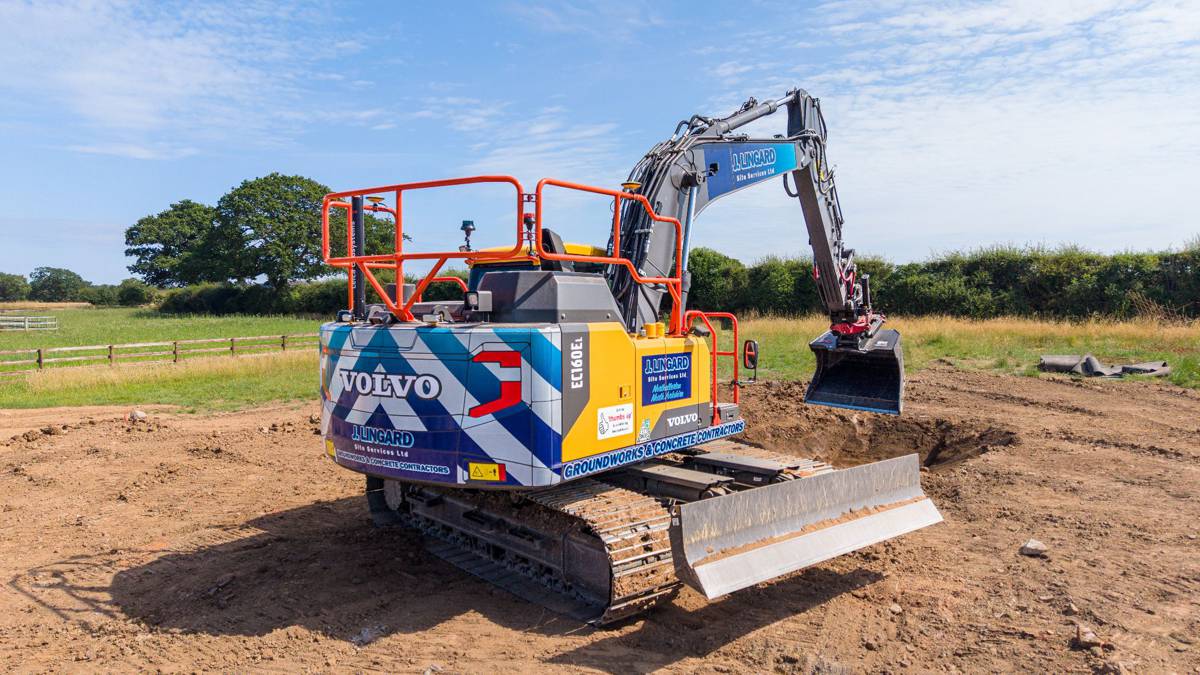
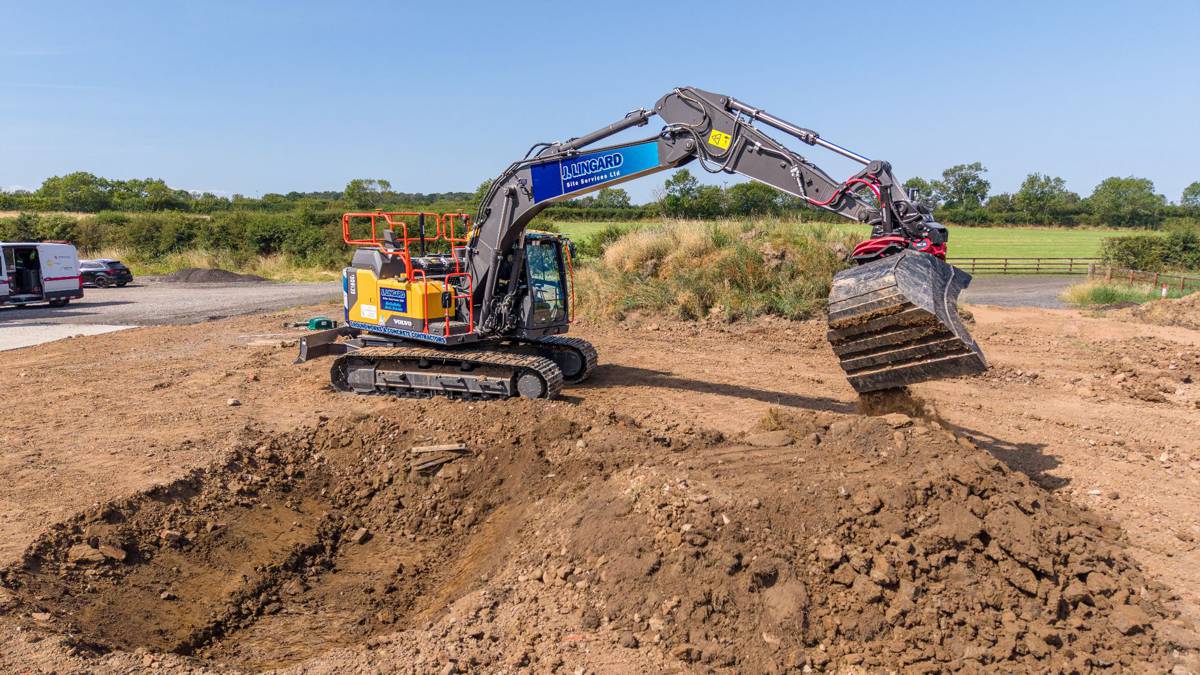
A North Yorkshire groundworks contractor quietly re-equipping one excavator is not, on its own, a market event. When J Lingard Site Services fitted a Rototilt RC5 tiltrotator to a new 16-tonne Volvo EC160E, complete with Leica machine control, an in-cab hydraulic tool-change system and active coupler safety, it repeated a decision thousands of contractors are now making across northern Europe.
The significance sits above the transaction. A conventional mid-sized excavator, once a single-purpose digging machine, is increasingly being ordered and built as a precision tool carrier, and the commercial logic behind that shift is now strong enough to pull the integration upstream into the factory itself.
That is the real story behind the J Lingard investment. The company’s second Rototilt, following five years of steady use with an earlier R3 unit, is a demand signal at ground level. What makes it worth the attention of fleet owners, plant hire managers and infrastructure contractors is that the same integration J Lingard bought as an aftermarket package is, from late 2025 and into 2026, becoming a factory-order option on machines from Komatsu, Hitachi and Volvo.
When a capability moves from the retrofit yard onto the original manufacturer’s specification sheet, the economics of owning the base machine change, and the point at which value is captured in the excavator supply chain moves with it.
Briefing
- J Lingard Site Services has fitted a Rototilt RC5 tiltrotator, Leica machine control and a full attachment package to a new 16-tonne Volvo EC160E, its second Rototilt after five years running an R3 model.
- The commercial substance is the wider migration of tiltrotator integration from aftermarket retrofit into factory specification, with Komatsu offering factory-prepared Rototilt integration from September 2025 and Hitachi Construction Machinery Europe signing an OEM agreement effective early 2026.
- The RC5 combines up to 200 kNm of breakout torque, pressure-compensated hydraulics and roughly a quarter more tilting torque than its predecessor, turning a standard 16-tonne excavator into a far more adaptable tool carrier.
- Active coupler safety is now a purchasing standard rather than an option, with Rototilt’s SecureLock system engineered to meet the EN 474 and ISO 13031 requirements that govern quick-coupler locking.
- The distributor, in this case SJ Pigg of North East England, remains the practical point of sale for specification, installation, calibration and aftersales, even as factory integration expands.
From Aftermarket Option to Factory Order Sheet
For most of the tiltrotator’s history, the decision to fit one has been made after the excavator was bought. A contractor specified a machine, then approached a distributor to add a coupler, tiltrotator and control system as a separate purchase and installation. That model is now being challenged by the original equipment manufacturers themselves.
From September 2025, Komatsu began offering its new PC220LC and PC220LCi-12 excavators factory-prepared for plug-and-play integration with Rototilt tiltrotators, with programmable control levers carrying integrated tiltrotator functionality as standard and the machine’s intelligent Machine Control 3.0 handling attachment orientation automatically.
Rototilt described this as the first time it had been integrated at the factory with a manufacturer of that scale, and Rob Macintyre, product manager at Komatsu Europe, framed it as part of a broader direction of travel, saying the collaboration was “an important step in Komatsu’s broader strategy to support integrated solutions that enhance productivity and flexibility for customers.”
The Komatsu arrangement is not an isolated case. Rototilt confirmed an OEM agreement with Hitachi Construction Machinery Europe coming into force in early 2026, allowing Hitachi to supply excavators with factory-fitted couplers, tiltrotators and control systems, and Volvo already offers Rototilt integration through its Smart Connect option, ordered from the factory or as an aftermarket kit.
Stefan Bergström, vice-president of sales and marketing at Rototilt Group, pointed to the underlying demand when the Hitachi deal was announced, noting “record interest among machine manufacturers in excavators that are factory-prepared for plug-and-play tiltrotator installation.” For infrastructure contractors, the practical consequence is that the integrated tool carrier is becoming a catalogue choice rather than a bespoke build, which tends to compress installation risk, standardise warranty coverage and shorten the path from delivery to productive work on site.
The Economics of One Machine Doing More Work
The reason this integration is being pulled upstream is that it changes the return a contractor earns from a single machine. A tiltrotator allows the operator to rotate an attachment through a full circle and tilt it to either side, which means the excavator can work at angles and reach into positions that would otherwise require it to be repositioned, or to be swapped for a second machine.
On the varied groundworks, drainage, site clearance and concrete work that J Lingard handles across the Northallerton area, including foundations for poultry units, cattle buildings and muck stores, that flexibility translates directly into fewer machine movements, less idle time and more work completed per shift.
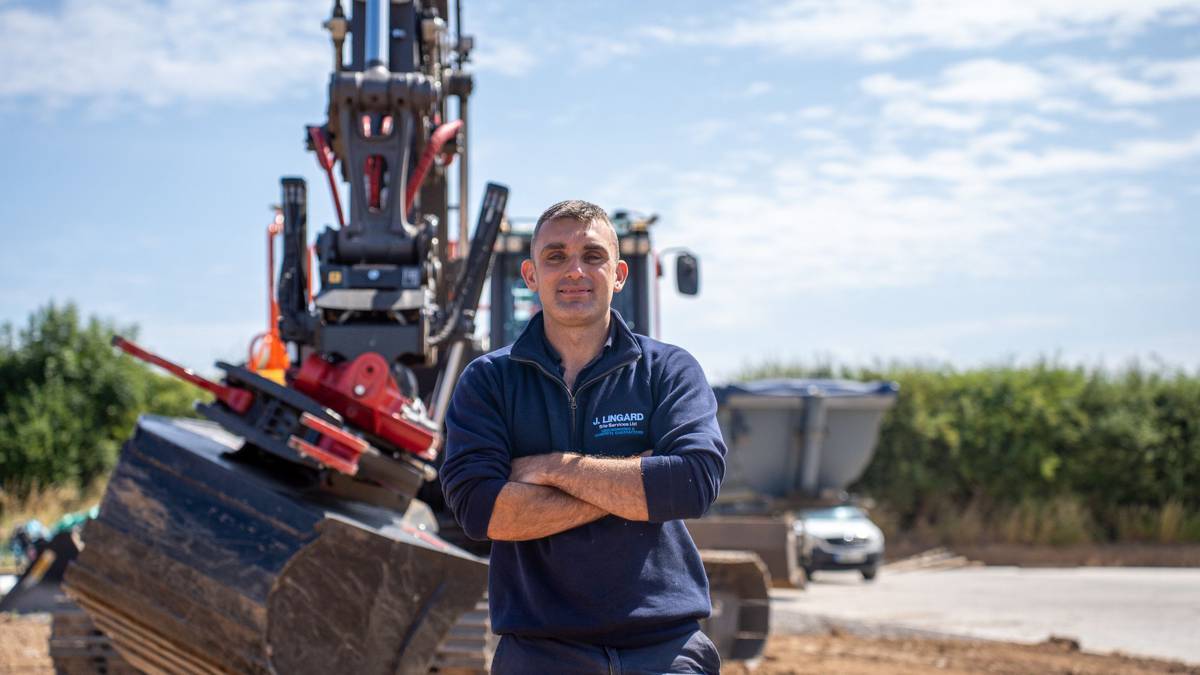
Managing director Jonny Lingard put the operational case plainly, drawing on the company’s earlier unit: “We’ve been operating one of our excavators with a Rototilt R3 for the past five years. During that time, we have come to appreciate the many benefits of the tiltrotator, including savings on labour and machine track wear, as well as improved operator comfort. It was a no-brainer to fit our new Volvo excavator with a Rototilt RC5.”
Those savings are not soft benefits. Reducing how often a machine has to track and reposition cuts fuel burn, undercarriage wear and operator fatigue at the same time, and the undercarriage in particular is one of the more expensive lifecycle costs on any excavator. The commercial weight of this is concentrated in exactly the class of machine J Lingard bought.
Analysts consistently identify medium excavators in the 10 to 25 tonne band as the dominant segment for tiltrotator adoption, because that size sits at the intersection of enough hydraulic power to justify the attachment and enough deployment variety, in urban civils, utilities and rural groundworks, to reward versatility. A 16-tonne machine equipped this way is doing the work of a less flexible fleet, which is a straightforward argument for contractors weighing capital outlay against utilisation.
What the RC5 Package Actually Changes
The technical specification matters here only in so far as it widens the range of jobs the machine can profitably take on. The RC5 is designed for excavators in the 14 to 19 tonne class and engineered to handle breakout torques of up to 200 kNm, with pressure-compensated hydraulics that allow tilt and rotation to be controlled independently and around a quarter more tilting torque than the earlier R5 it succeeds.
In practical terms, that additional torque and finer hydraulic control mean the operator can hold a loaded attachment steady at awkward angles and run tools that demand higher hydraulic flows, which extends the machine into grading, trenching and material handling work that a less capable unit would struggle with. Paired with the Volvo’s Leica machine-control system, the excavator gains the ability to grade to design levels with the tiltrotator managing attachment posture, closing much of the gap between a general-purpose digger and a dedicated grading machine.
The rest of the J Lingard package reinforces the same point about breadth of use. Rototilt’s QuickChange system lets the operator change hydraulic attachments without leaving the cab, the RG800 gripper adds a material-handling capability for moving pipes and site materials, and an additional roller on the RC joysticks gives blade control without the operator taking their hands off the controls.
Each of these removes a reason to stop, dismount or switch machines, and the cumulative effect is a single excavator that can dig, grade, sort, grab and place across a working day with minimal downtime. That is the substance behind the description of the modern tiltrotator as a way to turn an excavator into a tool carrier, and it is why the attachment is increasingly treated as core specification rather than an accessory.
Safety Has Become a Purchasing Standard, Not a Feature
More attachment changes and more time spent working at unconventional angles raises the stakes on the connection between machine and tool, and the industry has responded by hardening the safety requirement into standards. A dropped or incorrectly coupled attachment is one of the more serious hazards on an excavator, and the EN 474 and ISO 13031 standards now set explicit safety requirements for quick-coupler locking functions.
Rototilt’s SecureLock, fitted as standard on the RC series and included with QuickChange, is built around sensors in the safety lock that continuously monitor whether the tool is correctly connected and warn the operator visually and audibly the moment a problem arises. Rototilt states that the system is engineered to meet both EN 474 and ISO 13031, and the company has been credited with a German Innovation Award for the underlying design.
The commercial reading of this is that active coupler safety is the enabler of the multi-tool model rather than an add-on to it. A machine that changes attachments many times a shift, and that works with tools held at full tilt, needs a coupling system that fails safe and can be trusted without the operator dismounting to check. By meeting the recognised standards as standard equipment, an integrated tiltrotator system removes a category of risk that would otherwise sit with the contractor and, through the contractor, with the principal designer and client on regulated infrastructure sites.
For fleet owners specifying machines, the presence of certified active safety is quietly becoming a procurement filter, and manufacturers building tiltrotator preparation into the factory line are effectively baking that compliance in from the start.
Standards, Interoperability and the Contest for the Interface
As integration deepens, the question of who controls the interface between machine, tiltrotator and tool becomes strategically important. A contractor investing in a fully automatic quick-coupler system is, in effect, committing to an ecosystem, and the risk of being locked into a single supplier’s closed interface is real. Rototilt and its Swedish rival Steelwrist addressed this in 2020 by launching Open-S, an open standard for fully automatic quick couplers managed by the independent Open-S Alliance and built on the established S Standard developed by the Swedish machine suppliers’ trade association.
The stated intent is that couplers, tiltrotators and tools from any compliant manufacturer will work together, and Rototilt Group chief executive Anders Jonsson framed the philosophy directly at launch, saying “we don’t want to lock customers into a closed interface.”
That openness carries more weight now than it did five years ago, precisely because factory integration is arriving. When a Komatsu or Hitachi excavator leaves the line prepared for a specific tiltrotator brand, the interoperability standard is what protects the contractor’s freedom to choose tools and future attachments without being tied to one supply chain.
The wider tiltrotator market remains concentrated among a small group of Swedish specialists, with Rototilt, Steelwrist and Engcon dominating supply and Europe, led by Sweden, Germany and the United Kingdom, leading adoption. In a market that structured, an open interface is both a competitive gesture and a defence against fragmentation, and it is likely to become a genuine point of comparison for buyers as OEM integration spreads across more machine ranges.
The Distributor Remains the Real Point of Sale
Even as manufacturers move integration into the factory, the transaction that actually delivers a working system to a contractor still runs through the distributor, and the J Lingard case makes that clear. The RC5 was supplied, installed and calibrated by SJ Pigg, Rototilt’s approved distributor for North East England, whose principal Steve Pigg handled specification through to commissioning.
Jonny Lingard was unambiguous about the value of that service: “We cannot fault the service and support from Steve Pigg. It has been brilliant. He delivered the Rototilt to our yard, fitted it to the Volvo excavator and calibrated it, making sure everything was working perfectly and that we were getting the very best from the unit.” Calibration and setup are not trivial on a system that blends hydraulics, sensors, machine control and safety electronics, and a poorly commissioned unit will underdeliver regardless of its specification.
This is where the aftermarket channel finds its durable role. Factory preparation shortens installation and standardises the base integration, but the work of matching the system to a contractor’s specific tools, calibrating it, training operators and supporting it over its life still sits with a capable distributor. For the tiltrotator manufacturers, the strength of that distributor and service network is becoming as much a competitive asset as the hardware, because a contractor’s experience of the product is largely shaped by whoever fits and supports it.
As integration grows more sophisticated, the distributors who can commission and maintain increasingly software-defined systems will hold a stronger position, not a weaker one.
Where the Value Is Migrating
The through-line connecting J Lingard’s second Rototilt to the Komatsu and Hitachi agreements is a shift in where value sits in the excavator. It is moving away from the bare machine and towards the integrated system that surrounds it: the tiltrotator, the machine control, the coupler, the safety electronics and the standard that ties them together.
A 16-tonne excavator specified as a multi-tool platform earns its keep across a wider range of work than the same machine bought plain, and manufacturers now understand that offering that capability from the factory is a way to protect margin and differentiate ranges that are otherwise hard to tell apart. For contractors and fleet owners, the practical implication is that the specification conversation is broadening from engine, hydraulics and reach to include which integration, which interface standard and which support network come with the machine.
For infrastructure and construction leaders, three things follow. The mid-sized excavator should increasingly be evaluated on total deployable capability rather than raw digging performance, because a versatile machine displaces the need for additional plant. Interface standards such as Open-S deserve attention at the procurement stage, since they determine how freely a fleet can mix tools and suppliers over a decade of ownership.
And the distributor relationship, far from being commoditised by factory integration, is becoming a more important part of the purchase, because the value of these systems is realised in calibration, support and uptime. The J Lingard investment is a small transaction, but it points squarely at how the economics of owning a working excavator are being redrawn.
Key Industry Questions
- Why are excavator manufacturers now offering factory-fitted tiltrotators? Manufacturers are responding to demand that has outgrown the aftermarket. Komatsu began offering factory-prepared Rototilt integration on its PC220LC and LCi-12 excavators from September 2025, and Hitachi Construction Machinery Europe signed an OEM agreement effective early 2026. Building integration into the production line lets manufacturers standardise the coupler, tiltrotator and control interfaces, reduce installation risk and offer a plug-and-play machine that reaches productive work faster. It also lets them differentiate broadly similar excavators on integrated capability rather than base specification, which protects margin. For the tiltrotator suppliers, factory partnerships open access to markets beyond Scandinavia where adoption is still growing.
- What does a tiltrotator actually change about how an excavator works? A tiltrotator sits between the excavator’s arm and the attachment, allowing the tool to rotate through a full circle and tilt to either side. The operator can therefore work at angles and reach positions that would otherwise require repositioning the machine or swapping to another. In practice this reduces machine movements, which cuts fuel consumption, undercarriage wear and operator fatigue, while increasing the amount of work completed per shift. Combined with machine control, the excavator can also grade to design levels with the attachment posture managed automatically. The result is a single machine that handles digging, grading, sorting and material handling across a working day.
- Why does the 14 to 19 tonne class matter so much for this technology? Medium excavators, broadly the 10 to 25 tonne band, are consistently identified as the dominant segment for tiltrotator adoption. That size carries enough hydraulic power to justify the attachment and enough deployment variety, across urban civils, utilities, drainage and rural groundworks, to reward the added versatility. Below this class, machines often lack the flow to run demanding tools; above it, work becomes more specialised. A 16-tonne excavator such as the Volvo EC160E fitted by J Lingard sits at the centre of that sweet spot, which is why the RC5, engineered for 14 to 19 tonne machines, is aimed squarely at the highest-volume part of the market.
- How significant is coupler safety, and what standards apply? It is central rather than incidental. A dropped or incorrectly connected attachment is a serious hazard, and the risk rises when a machine changes tools frequently and works at unconventional angles. The EN 474 and ISO 13031 standards set explicit safety requirements for quick-coupler locking functions. Rototilt’s SecureLock, standard on the RC series, uses sensors in the safety lock to monitor the connection continuously and warn the operator if a tool is not properly coupled. The company states the system meets both standards. For contractors on regulated sites, certified active safety increasingly functions as a procurement filter rather than an optional extra.
- What is Open-S and why should contractors care about it? Open-S is an open standard for fully automatic quick couplers, launched by Rototilt and Steelwrist in 2020 and managed by the independent Open-S Alliance. It builds on the established S Standard and is intended to let couplers, tiltrotators and tools from any compliant manufacturer work together. As factory integration ties specific machines to specific tiltrotator brands, the standard protects a contractor’s freedom to mix tools and suppliers over the life of a fleet rather than being locked into one closed interface. For buyers, checking Open-S compliance at the procurement stage helps preserve flexibility and can affect resale and future tool purchases.
- Does factory integration make the distributor redundant? No, and arguably the opposite. Factory preparation standardises the base integration and shortens installation, but the work of specifying the right system, calibrating it, training operators and supporting it over its life still runs through the distributor. In the J Lingard case, SJ Pigg supplied, installed and calibrated the RC5 and provides ongoing aftersales support. As these systems become more software-defined, blending hydraulics, sensors, machine control and safety electronics, the distributors capable of commissioning and maintaining them become more valuable. The channel is shifting from straightforward supply towards technical support and uptime, which is a stronger position, not a weaker one.
- What does this mean for fleet procurement decisions? The specification conversation is broadening. Rather than assessing an excavator mainly on engine, hydraulics and reach, buyers increasingly need to weigh total deployable capability, which integration and interface standard the machine supports, and the strength of the local support network. A versatile machine can displace additional plant, changing the capital-versus-utilisation calculation in its favour. Interface standards such as Open-S determine how freely a fleet can mix tools and suppliers over a decade of ownership. The practical advice is to evaluate the integrated system and its support, not just the base machine, when comparing options.
- Is tiltrotator adoption still concentrated in Scandinavia? It originated there and remains strongest in the Nordic region, but adoption is spreading. Europe leads globally, with Sweden, Germany and the United Kingdom among the highest-penetration markets, and Rototilt has pointed to steady growth across Europe, Asia and other regions. Supply is still concentrated among a small group of Swedish specialists, principally Rototilt, Steelwrist and Engcon. The move by major manufacturers to offer factory integration is itself a mechanism for widening adoption, because a plug-and-play option on a mainstream excavator lowers the barrier for contractors in markets where the aftermarket route was less familiar.
Strategic Takeaways
- Tiltrotator integration is migrating from aftermarket retrofit into factory specification, with Komatsu, Hitachi and Volvo now offering plug-and-play options, which signals that value in the excavator is shifting from the bare machine to the integrated system around it.
- The mid-sized excavator, particularly the 14 to 19 tonne class, is increasingly best evaluated on total deployable capability, since a versatile machine can displace the need for additional plant and reshape the capital-versus-utilisation case.
- Certified active coupler safety, meeting EN 474 and ISO 13031, is becoming a procurement standard rather than an optional feature, and it is the practical enabler of a working model built on frequent attachment changes.
- Interface standards such as Open-S will grow in importance as factory integration ties machines to specific tiltrotator brands, and contractors should treat interoperability as a procurement criterion that protects fleet flexibility over a decade of ownership.
- Distributor capability in specification, calibration and aftersales is becoming a stronger competitive asset as these systems turn more software-defined, so the local support network deserves as much scrutiny as the hardware itself.