LANDCROS Signals Hitachi’s Shift from Machinery to Construction Intelligence
Hitachi Construction Machinery has opened its LANDCROS Innovation Studios Challenge to Europe for the first time, inviting startups to submit ready-to-test solutions between 31 July and 30 September 2026 and pitch to the company and its partners at a Demo Day in Amsterdam on 3 December 2026. Read as a standalone announcement, it looks like a conventional corporate accelerator, one more open-innovation scheme in a sector that has produced many. Read against the company’s own strategy, it is something more deliberate.
The challenge is the external sourcing arm of a plan to move revenue and margin away from selling excavators and towards owning the intelligence, services and lifecycle decisions that surround them, and it is being staged under the LANDCROS name precisely because the manufacturer is about to become that brand.
The timing is the tell. Hitachi Construction Machinery will change its trade name and corporate brand to LANDCROS on 1 April 2027, and its current medium-term management plan already carries the LANDCROS 2028 label. That plan sets a target for value chain business, meaning everything other than new machine sales, to exceed half of consolidated revenue. The three themes at the centre of the European challenge, covering autonomous operations, site intelligence and lifecycle decision intelligence, map almost exactly onto the parts of that value chain where the company wants to grow fastest.
For contractors, quarry operators, rental houses and infrastructure owners, the significance is not that a Japanese OEM is courting startups. It is that one of the world’s largest equipment manufacturers is publicly co-designing its future services layer with the firms that buy its machines, and doing so before it has finished redrawing its own corporate identity.
Briefing
- Hitachi Construction Machinery has brought its LANDCROS Innovation Studios Challenge to Europe for the first time, following earlier editions in the United States and Australia, with applications open from 31 July to 30 September 2026 and a Demo Day in Amsterdam on 3 December 2026.
- The three challenge themes, autonomous operations, site intelligence and planning, and lifecycle decision intelligence, align directly with the company’s stated ambition to lift value chain business, meaning parts, services, rental and used equipment, above 50% of consolidated revenue under its LANDCROS 2028 medium-term plan.
- The programme is validated and supported by CRH, Ferrovial, Loxam and Leonard, VINCI’s innovation platform, giving it a coalition that spans building materials, major contracting, equipment rental and infrastructure operations, and putting the demand side inside the design of the intelligence layer.
- Selected startups receive access to Hitachi Construction Machinery experts and a data pool, the prospect of a paid pilot, and exposure to European decision-makers, with applications free of charge and no equity or commission required, a deliberately founder-friendly structure aimed at a scarce pool of autonomy and AI talent.
- The rebrand to LANDCROS in April 2027 follows Hitachi Ltd reducing its stake in the business to around a quarter in 2022, and the open-innovation push reflects a wider industry shift in which autonomy, software and recurring revenue, rather than iron alone, increasingly decide competitive position.
From Iron to Intelligence: The Value-Chain Thesis Behind the Challenge
The clearest way to understand the European challenge is to place it alongside Hitachi Construction Machinery’s own financial targets rather than its innovation messaging. The company reported consolidated sales revenue of 1,405.5 billion yen for the fiscal year ended March 2026, with an overseas sales ratio of 84% across a business of roughly 25,000 employees. Underneath that headline, the strategically important figure is the value chain ratio, the share of revenue that comes from parts, services, specialised parts and service work, rental and used equipment rather than the sale of new machines.
That ratio has climbed towards the high forties in recent reporting, against a medium-term goal of 50% or more, and parts and service revenue rose by more than a third across the three years to March 2025. The direction of travel is unambiguous. Hitachi Construction Machinery wants a larger portion of each machine’s economic life to accrue to it as recurring, data-driven revenue rather than as a one-off capital sale.
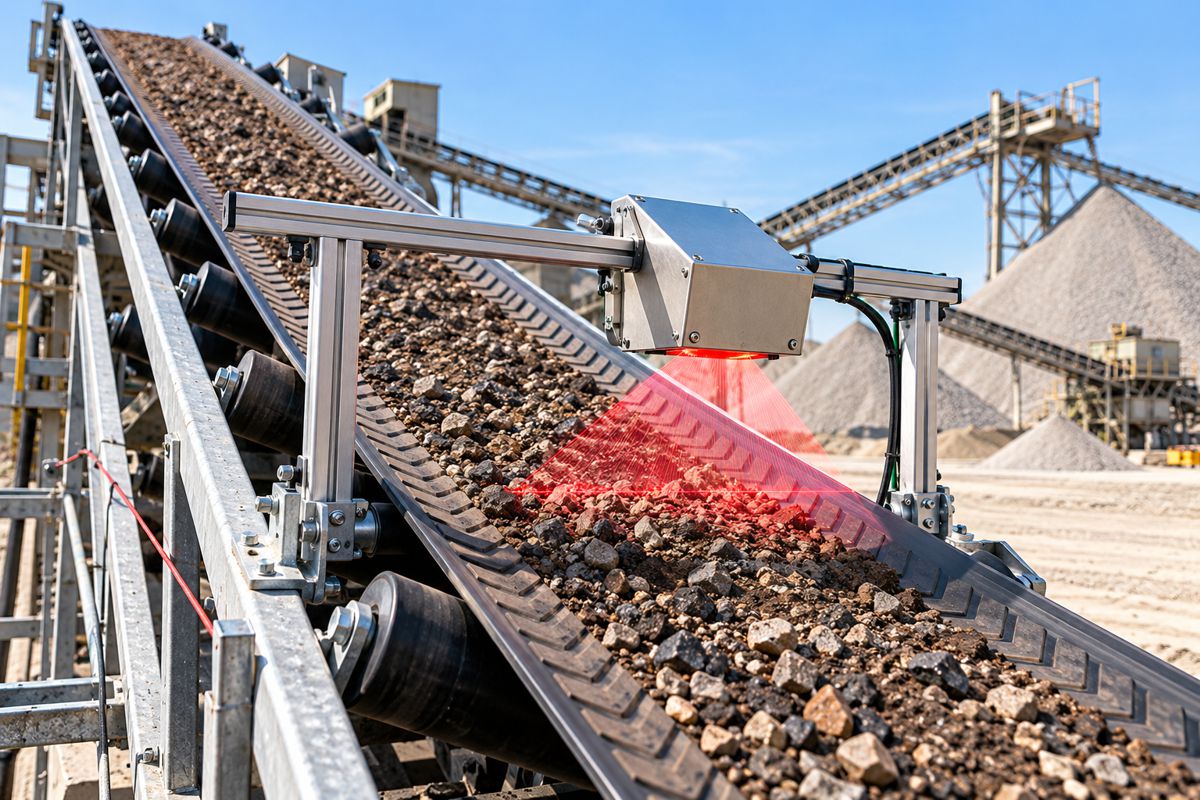
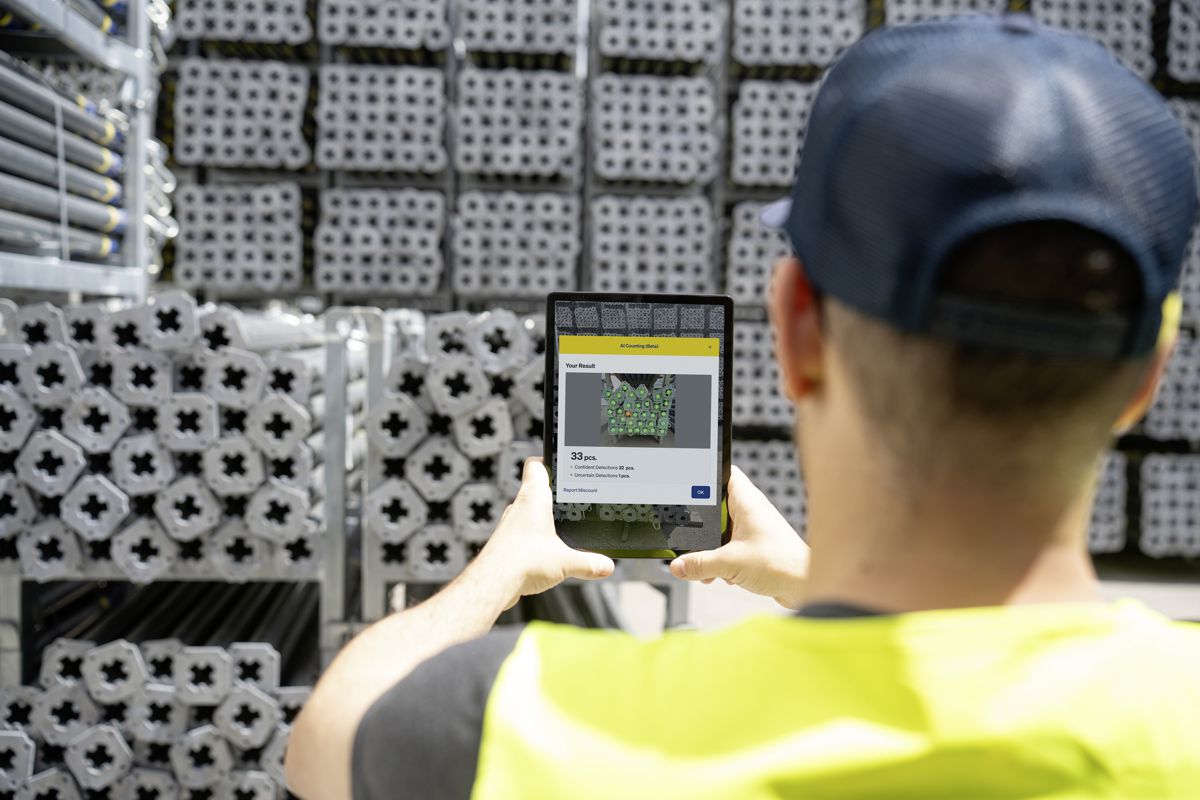
That is what makes the three challenge themes so revealing. Autonomous operations addresses labour dependency, operational variability and safety, all of which translate into machine utilisation and uptime, the raw material of a services business. Site intelligence and planning turns operating data into simulation, decisions and reduced rework, which is where planning software and connected fleets generate ongoing fees.
Lifecycle decision intelligence, framed by the company as helping customers buy better, operate smarter and replace at the right time, sits directly on top of its stated aim to extend the product lifecycle by roughly one and a half times. Each theme is a service margin waiting to be built, and each depends on capabilities, in physical AI, simulation and predictive analytics, that a hardware manufacturer is unlikely to develop fast enough on its own. The challenge is therefore best understood not as philanthropy towards founders but as a procurement mechanism for the software and analytics that the value chain strategy requires.
Why an Ownership Change Made an Open Strategy Almost Inevitable
The decision to run this under the LANDCROS banner, and to make openness a defining feature, has roots in the company’s shareholder register. In 2022 Hitachi Ltd sold roughly half of its 51% holding in the construction machinery business to the trading house Itochu and the investment fund Japan Industrial Partners, cutting its stake to around a quarter and turning the unit from a consolidated subsidiary into an equity-method affiliate. Because Hitachi Ltd reserves the Hitachi name for majority-owned companies, that reduction set a clock running on the brand itself.
The rebrand to LANDCROS, effective April 2027, is in large part the consequence of a corporate parent stepping back, and the company has described the shift as affording it more independent and self-reliant management alongside a broader shareholder base.
Independence changes incentives. A business that is no longer a subsidiary of a diversified industrial conglomerate has both more freedom and more need to build its own capability in software, autonomy and data, areas a parent might once have supplied. The LANDCROS name itself encodes the intended posture, combining land with the words customer, reliable, open and solutions, and the challenge gives that abstract branding an operational meaning.
Francesco Quaranta, President and CEO of Hitachi Construction Machinery (Europe) N.V., put the logic plainly, saying: “We want to grow as a true solutions provider, and we believe some of the best ideas for our machines and sites are already out there. Bringing this challenge to Europe is a direct way to find the startups behind those ideas and build with them.” The statement reads less as marketing than as an admission that the intelligence layer of the future machine will not be built entirely in-house, and that an independent, rebranded company needs external partners to build it in time.
The Partner Coalition Signals Where Purchasing Power Sits
The most instructive detail in the announcement is the identity of the four validating partners, because they are not technology suppliers but customers and asset owners. CRH is one of the world’s largest building materials groups, active across aggregates, quarrying and mining. Ferrovial is a major international contractor and infrastructure operator. Loxam is Europe’s largest equipment rental company. Leonard is the innovation and foresight platform of VINCI, among the largest construction and concessions groups globally.
Their participation means the themes were not written by an OEM in isolation and then presented to the market. They were shaped and validated by the firms that operate quarries, run civil-engineering sites, manage rental fleets and finance long-lived infrastructure, and those firms will help select startups, sit on the Demo Day panel and may co-pilot proofs of concept.
That structure matters commercially because it pulls the demand side into the design of the intelligence layer before a single product exists. Rental economics make the point sharply. A rental leader such as Loxam lives or dies by utilisation, residual values and maintenance cost across large mixed fleets, which is precisely the territory of lifecycle decision intelligence, so a solution validated with rental input is far more likely to survive contact with real operations.
Murari Perumalsamy, Head of CRH Ventures, framed the appeal in terms of scouting and speed, saying the group is “pleased to partner with the Hitachi Construction Machinery to scout high-potential startups developing innovative solutions for quarrying and mining operations, with a view to identifying and fast-tracking opportunities that can deliver real-world impact across CRH’s business, whilst reinforcing our position as an active driver of innovation in the building materials sector.”
Ferrovial cast the exercise as ecosystem building, with Luis Amorim, Head of Open Innovation at Ferrovial Construction, saying the company looks forward to “working with Hitachi Construction Machinery, startups and industry partners to accelerate solutions in areas such as safety, automation, sustainable equipment, connected fleets and digital innovation that can help transform the future of construction.” The recurring theme across the coalition is field validation, the hardest step for any construction-technology startup, and the partners are effectively lending their sites as proving grounds.
Autonomy Has Become a Software and Recurring-Revenue Contest
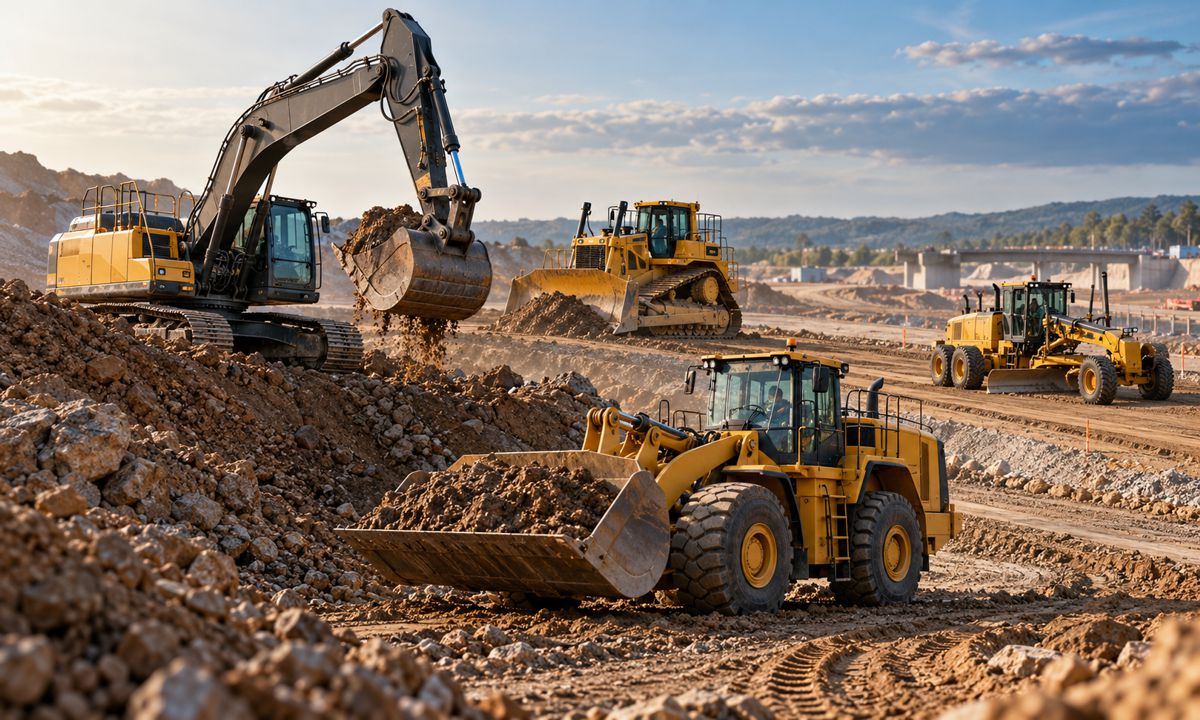
The autonomous operations theme lands in the middle of the most active competitive front in heavy equipment, where the decisive assets are increasingly software, autonomy performance and the recurring revenue they unlock rather than the machines themselves. Komatsu has pushed hardest on integration, pairing its EARTHBRAIN Smart Construction platform with a partnership with AIM Intelligent Machines on physical AI for bulldozers and excavators, while operating a fleet of more than 650 autonomous haul trucks and targeting a parts and services mix approaching half of segment sales.
Caterpillar has taken a largely in-house route, extending Cat Command autonomy, integrating on- and off-highway data through VisionLink, adding a Cat AI Assistant and demonstrating an autonomous soil compactor, supported by a long-range LiDAR collaboration with Luminar. The pattern across both leaders is consistent, with the machine becoming the platform and the margin migrating to the intelligence running on top of it.
The venture market has read the same signal. Bedrock Robotics closed a Series B in early 2026 that lifted its total funding above 350 million US dollars as it pushes towards operator-less excavators, AIM raised around 50 million US dollars in 2025 and won a United States defence contract for autonomous airfield repair, and Gravis Robotics has taken its physical AI platform from live deployments at Manchester Airport and Holcim quarries into a United States expansion while working with Develon and Hitachi. That last point underlines why the challenge structure makes sense for an OEM.
Hitachi Construction Machinery already engages autonomy startups on specific deployments, and a standing programme with a data pool, expert access and paid pilots gives it a repeatable way to identify and test the next Gravis or Bedrock before a rival locks that team into an exclusive tie-up. In a contest increasingly decided by access to scarce robotics and AI talent, a European challenge with named contractor and materials partners is as much a talent-acquisition funnel as an innovation showcase.
The Paid-Pilot Model Is a Deliberate Bid for Scarce Talent
The commercial mechanics of the programme deserve closer attention than they usually receive, because they are unusually founder-friendly by the standards of corporate venturing. Applications are free, and the company is explicit that it takes no equity and charges no commission. Selected startups gain access to Hitachi Construction Machinery experts and a data pool, the prospect of a paid pilot tailored to their proposal, and exposure to decision-makers across the European construction and mining industries.
That combination inverts the usual accelerator bargain, in which a corporate takes a stake or imposes exclusivity in return for access. Here the manufacturer is paying for pilots and offering data rather than demanding ownership, which lowers the cost of engagement for founders who can raise venture capital on their own terms and have no shortage of suitors.
The strategic reasoning is straightforward once the talent contest is in view. If the deciding factor in autonomy and site intelligence is access to a small number of capable teams, then the OEM that offers the most attractive route to real-world validation, paid work and eventual scale has an advantage over one that leads with equity terms.
A paid pilot on a live European site, supported by CRH, Ferrovial, Loxam or VINCI operations, is a more compelling proposition to a Series A robotics company than a small cheque and a logo. The trade-off is realism about conversion. Open-innovation pilots frequently stall between promising demonstration and commercial deployment, and the value of this programme to Hitachi Construction Machinery will ultimately be measured not by application numbers or Demo Day theatre but by how many pilots become products embedded in its value chain. The structure is sound, but the proof will sit in the pilot-to-scale ratio over the two years to the 2028 plan horizon.
Data Is the Asset Actually Being Contested
Beneath the themes and the partner list sits the resource that gives the whole exercise its value, which is fleet operating data. Site intelligence, predictive maintenance and lifecycle decisions all depend on knowing how machines are used, how components wear and where rework originates, and that information is generated continuously across a manufacturer’s installed base.
Hitachi Construction Machinery calculates expected parts demand from operating data and replacement schedules, which is how a value chain business grows predictable rather than cyclical. Offering startups access to a data pool is therefore not a minor perk but the central inducement, and it reflects a calculated bet that opening data to develop applications will generate more services revenue than guarding it would protect.
The competitive stakes around data are visible elsewhere in the sector. Caterpillar has extended VisionLink to manage mixed fleets that include non-Caterpillar assets, and Komatsu has positioned EARTHBRAIN as an open platform that other companies can build on, both moves designed to make the manufacturer’s software the layer through which a customer sees and runs an entire site.
Whoever owns that layer captures the pull-through of parts, services and future autonomy features. By recruiting external developers to build on its own data, Hitachi Construction Machinery is competing for the same position, using the challenge to seed applications that make its platform the default operating environment for its machines and, ideally, for the wider job site. The risk is that opening data invites dependence on partners the company does not control, but the larger risk in this market is ceding the intelligence layer entirely, and the programme is a considered response to that danger.
Reading the Signal Before Amsterdam
For construction and infrastructure leaders, the practical value of this announcement lies in what it forecasts about how they will buy and operate equipment over the next decade. The convergence of the LANDCROS 2028 plan, the 2027 rebrand and a partner-validated open-innovation programme points to a market in which the leading OEMs compete on outcomes, uptime and lifecycle economics rather than on spec sheets, and in which the distinction between buying a machine and subscribing to a capability continues to blur.
Carmen Rouanet, Head of Partnerships and Development at Leonard, captured the operational ambition, saying the platform joined the challenge to explore how innovation can make on-site operations “more intelligent, efficient and sustainable — from site planning, logistics, machinery and equipment to resource efficiency and life-cycle decision-making,” and to “connect startups with real operational challenges and accelerate solutions that can make construction sites safer, more productive and more sustainable.” That framing describes a procurement environment defined by data and services as much as by horsepower.
Contractors, quarry operators and infrastructure owners have concrete reasons to watch the Amsterdam Demo Day on 3 December 2026 beyond curiosity about which startups win. The programme indicates where Hitachi Construction Machinery intends to concentrate its value chain investment, and by extension where its future pricing, warranty and software packages are likely to focus. Firms that already generate rich operating data have leverage in that world, since their fleets are the proving grounds and their requirements shape the roadmap, which is precisely the position the four partners have secured.
The broader lesson for the industry is that the machine is becoming the least contested part of the equation. The value, the competition and the purchasing power are moving towards the intelligence, the data and the lifecycle decisions layered on top, and a European startup challenge staged on the eve of a corporate rebrand is one of the clearer public markers of that shift.
Key Industry Questions
- Why is Hitachi Construction Machinery rebranding as LANDCROS, and how does the startup challenge relate to it? The rebrand, effective 1 April 2027, follows Hitachi Ltd reducing its stake in the business to around a quarter in 2022, which meant the unit could no longer rely indefinitely on the Hitachi name, reserved by the parent for majority-owned companies. LANDCROS combines land with customer, reliable, open and solutions, signalling a shift towards services and solutions. The challenge gives the openness in that identity operational form. By recruiting startups to build autonomy, site intelligence and lifecycle applications, the company is assembling the external capability an independent, services-focused manufacturer needs, and doing so under the new brand before the formal changeover.
- What are the three challenge themes and why do they matter commercially? The themes are autonomous operations, site intelligence and planning, and lifecycle decision intelligence. Each corresponds to a source of recurring, data-driven revenue rather than one-off machine sales. Autonomy improves utilisation, uptime and safety, the foundations of a services business. Site intelligence turns operating data into planning and rework reduction, generating ongoing software value. Lifecycle decision intelligence supports the company’s stated aim of extending machine lifecycles by roughly one and a half times through smarter buying, operating and replacement decisions. Together they target the value chain, the parts, services, rental and used-equipment revenue that Hitachi Construction Machinery wants to push above half of its consolidated total under its LANDCROS 2028 plan.
- What do CRH, Ferrovial, Loxam and Leonard bring to the programme? They bring the demand side into the design of the intelligence layer. CRH represents building materials, quarrying and mining, Ferrovial major contracting and infrastructure operations, Loxam European equipment rental, and Leonard the innovation platform of VINCI. Beyond promotion, they helped validate the themes, will take part in selection and the Demo Day, and may co-pilot proofs of concept on their own operations. That gives startups access to live sites for validation, the step that most often defeats construction-technology firms. It also means the solutions that emerge are shaped by the requirements of real operators rather than by an equipment maker working in isolation.
- How does this compare with what Komatsu and Caterpillar are doing? All three are moving margin from hardware towards software, autonomy and recurring services. Komatsu pairs its EARTHBRAIN Smart Construction platform with a physical-AI partnership and runs a large autonomous haulage fleet, while targeting a services-heavy revenue mix. Caterpillar has largely built autonomy in-house, extending Cat Command, integrating fleet data through VisionLink and adding an AI assistant, supported by a LiDAR collaboration. Hitachi Construction Machinery’s open-challenge model sits between the integrated and in-house approaches, using external startups and paid pilots to source capability. The shared direction is that the machine is becoming a platform, and competitive advantage is shifting to the intelligence and data running on it.
- Why does the programme take no equity, and what is the catch for startups? Free applications, no equity and no commission make the programme unusually founder-friendly, which is a deliberate response to a competitive market for scarce robotics and AI talent. Rather than buying a stake, the company offers paid pilots, expert access and a data pool, lowering the cost of engagement for teams that can raise capital elsewhere. The genuine consideration for founders is conversion. Open-innovation pilots often stall between demonstration and deployment, so the practical questions are how many pilots reach commercial scale, how data rights are handled, and whether a pilot leads to a durable commercial relationship rather than a one-off trial with limited follow-through.
- What is the value chain business, and why is it central to the strategy? Hitachi Construction Machinery defines value chain business as all revenue other than new machine sales, including parts and services, specialised parts and service work, rental and used equipment. It is central because it is more recurring and less cyclical than machine sales and captures more of each machine’s economic life. The company has lifted the value chain ratio towards the high forties against a target above 50%, with parts and service revenue rising by more than a third across three recent years. The startup challenge feeds this strategy directly, since autonomy, site intelligence and lifecycle applications are the tools that make value chain revenue larger and more predictable.
- What should infrastructure owners and contractors do with this information? They should treat it as a forecast of how equipment procurement is evolving. Leading manufacturers are moving towards competing on uptime, outcomes and lifecycle cost rather than specifications alone, and the line between buying a machine and subscribing to a capability is blurring. Owners with rich operating data hold leverage, because their fleets become proving grounds and their requirements shape product roadmaps, as the four partners have demonstrated. Practical steps include clarifying data ownership in equipment contracts, assessing how autonomy and lifecycle analytics affect total cost of ownership, and engaging early with OEM innovation programmes to influence the tools that will define future site operations.
- When and where can startups apply, and what happens next? Applications for the LANDCROS Innovation Studios Challenge Europe 2026 are open from 31 July to 30 September 2026 through the programme’s official application form, free of charge. Selected applicants will be invited to a Demo Day in Amsterdam on 3 December 2026 to pitch to Hitachi Construction Machinery and its partners. Successful startups can expect access to company experts and a data pool, a paid pilot tailored to their proposal, and exposure to decision-makers across European construction and mining. The European round follows earlier editions in the United States and Australia, the latter a mining-focused challenge, indicating a programme the company intends to run repeatedly across regions and sectors.
Strategic Takeaways
- The European challenge is best read as the sourcing arm of a value chain strategy, with the LANDCROS 2028 plan targeting more than half of revenue from parts, services, rental and used equipment, so the real story is margin migrating from machines to the intelligence around them.
- The 2027 rebrand is a consequence of Hitachi Ltd stepping back to a minority stake, and an independent, services-focused manufacturer has both the freedom and the need to build autonomy and data capability through open partnership rather than in isolation.
- Involving CRH, Ferrovial, Loxam and Leonard puts the demand side inside the design of the intelligence layer, giving startups live sites for validation and giving asset-rich operators influence over the tools that will shape future site operations.
- Autonomy has become a contest over software, physical AI and recurring revenue in which access to scarce talent is decisive, and a paid-pilot, no-equity model is a calculated bid to win that talent against Komatsu’s integrated approach and Caterpillar’s in-house build.
- For infrastructure owners and contractors, the practical priorities are securing data rights in equipment contracts and reassessing total cost of ownership as procurement shifts towards outcomes, uptime and lifecycle economics rather than specifications alone.