The Humanoid Economy: From Physical AI to Industrial Reality
At BMW’s Spartanburg plant in South Carolina, a humanoid robot spent approximately 1,250 operating hours handling sheet metal components for vehicle production. During a ten-month pilot in 2025, Figure 02 moved more than 90,000 parts and supported the production of over 30,000 BMW X3 vehicles, working within an established automotive manufacturing operation.
The figures, reported by BMW following the trial, offer a more revealing measure of humanoid robotics than the elaborate demonstrations that have become commonplace online. Figure 02 was assigned a repetitive production task, positioning components for subsequent welding operations. Its performance could be measured in operating hours, handling accuracy and completed work, while the manufacturer could assess how the machine fitted into existing production processes.
The pilot also exposed some of the less glamorous requirements of industrial robotics. Safety arrangements, communications infrastructure and integration with factory systems needed attention before the technology could progress towards wider deployment. BMW has since pursued a further humanoid robotics pilot at its Leipzig plant in Germany, extending its evaluation of how mobile robots might fit into automotive production.
Humanoid robotics is attracting investment because it offers the possibility of automating activities that have proved difficult to address with conventional equipment. Factories, warehouses and workshops contain countless tasks involving movement between workstations, handling irregular objects or using tools designed for people. Installing dedicated automation for every activity can be expensive or impractical, particularly when the work changes frequently.
A mobile robot capable of moving between these tasks could offer an alternative. Whether it can do so economically is a more demanding question, involving everything from mechanical reliability and battery life to manufacturing costs, safety certification and the availability of technicians capable of keeping the machines working.
Briefing
- BMW’s Figure 02 humanoid completed approximately 1,250 operating hours and handled more than 90,000 components during a production pilot.
- The International Federation of Robotics recorded 542,000 new industrial robot installations worldwide in 2024, overwhelmingly involving conventional industrial systems.
- Commercial humanoid deployments are emerging in automotive manufacturing and logistics, although applications remain concentrated on defined tasks.
- Physical AI combines perception, decision-making and physical movement, introducing engineering challenges beyond those encountered in software-based AI.
- Large-scale adoption will depend on productive utilisation, manufacturing economics, safety compliance and dependable maintenance and support arrangements.
Industrial Automation Meets the Humanoid Machine
Industrial robotics is already a mature global business. According to the International Federation of Robotics (IFR), approximately 4.66 million industrial robots were operating worldwide in 2024, with 542,000 new installations during the year. Asia accounted for 74% of new installations, compared with 16% in Europe and 9% in the Americas.
Most of these machines bear little resemblance to the humanoid robots now attracting public attention. Articulated robotic arms, welding cells, palletising equipment and automated handling systems have become commercially successful because they perform well-defined tasks within carefully engineered environments. Their movements are predictable, their operating conditions are controlled and their performance can be measured against established production requirements.
Humanoid developers are attempting something more flexible. Rather than designing a machine around a particular operation, they are building mobile platforms capable of performing different activities using tools, equipment and access arrangements originally intended for human workers.
The engineering compromises are considerable. Walking requires continuous balance control, numerous powered joints and complex coordination between sensors and actuators. A wheeled platform is generally more efficient on a suitable floor, while a fixed industrial arm can provide greater precision and payload capacity without the mechanical demands of locomotion.
Human proportions nevertheless offer practical advantages in environments where machinery and workstations have already been designed around human reach, movement and manipulation. A robot capable of using existing doors, stairs, tools and workbenches could potentially move between activities without extensive modifications to the surrounding facility.
That flexibility will have to justify the additional complexity. In a factory where a conventional robot can complete the same operation faster, more accurately and at lower cost, the humanoid form offers little commercial advantage.
Teaching Machines to Operate in the Physical World
The artificial intelligence behind humanoid robotics faces problems that differ substantially from those encountered by systems generating text, analysing documents or recognising images.
Physical AI must connect perception with movement. A robot needs to identify an object, determine its position and orientation, decide how to approach it and apply sufficient force to manipulate it without losing balance or damaging the object. These decisions must account for incomplete sensor information, changing surroundings and the unpredictable behaviour of physical materials.
Handling a metal component in a factory provides a relatively controlled example. Its dimensions, weight and expected position can be established in advance, while cameras and force sensors guide the operation. Retrieving an unfamiliar tool from a crowded workbench, handling a flexible cable or moving across loose gravel introduces considerably more uncertainty.
Training these systems presents another difficulty. Software AI can learn from enormous collections of digital information, but robots require data describing movement, contact forces, friction, balance and the behaviour of real objects. Simulation allows developers to practise tasks without risking physical equipment, although differences between simulated and actual conditions remain a persistent engineering problem.
A robotic hand may successfully manipulate an object thousands of times in simulation, only to encounter unexpected friction, deformation or positioning errors when handling the real component. The control system must recognise those differences and respond without creating unsafe movements.
Developers are consequently combining simulation, teleoperation, reinforcement learning and data collected from physical robots. Improvements in computing and AI models are expanding what machines can attempt, but mechanical design and the quality of operational data remain fundamental constraints.
The challenge becomes greater when software improvements are distributed across an entire fleet. A change that improves performance in one environment may introduce unexpected behaviour elsewhere, requiring testing, validation and controlled deployment procedures.
Commercial Deployment Moves Beyond Demonstrations
BMW’s Spartanburg programme provides an early example of humanoid technology being evaluated through sustained industrial work. Figure 02 handled components associated with vehicle body production, allowing BMW and Figure to examine the robot’s performance within an established manufacturing process.
The pilot demonstrated that a humanoid could perform useful repetitive work, but it did not establish that the technology was ready for unrestricted deployment across automotive manufacturing. Its tasks were defined, the operating environment was managed and the manufacturer retained control over how the robot interacted with the production system.
In logistics, GXO and Agility Robotics signed a multi-year commercial agreement in 2024 to deploy Agility’s Digit humanoid robot at a facility handling SPANX products near Atlanta.
Digit was introduced into an existing automated warehouse operation, working alongside established material-handling systems. Agility also developed its Arc platform to manage robotic deployments, coordinate workflows and support fleet operations.
The arrangement is particularly interesting because it treats the robot as part of a managed industrial service rather than an isolated piece of equipment. Customers need machines that can be incorporated into existing operations, monitored remotely and maintained without creating disproportionate demands on their workforce.
Neither deployment establishes that humanoids are commercially competitive across a wide range of industrial tasks. Publicly available information remains concentrated on particular facilities and applications, while detailed comparisons of lifecycle costs, intervention rates and long-term maintenance expenditure are limited.
The next stage of commercial development will depend increasingly on this operational evidence. Manufacturers can demonstrate that a robot performs a task, but customers must determine whether it performs that task reliably enough, frequently enough and cheaply enough to justify the investment.
The Economics of a Robotic Workforce
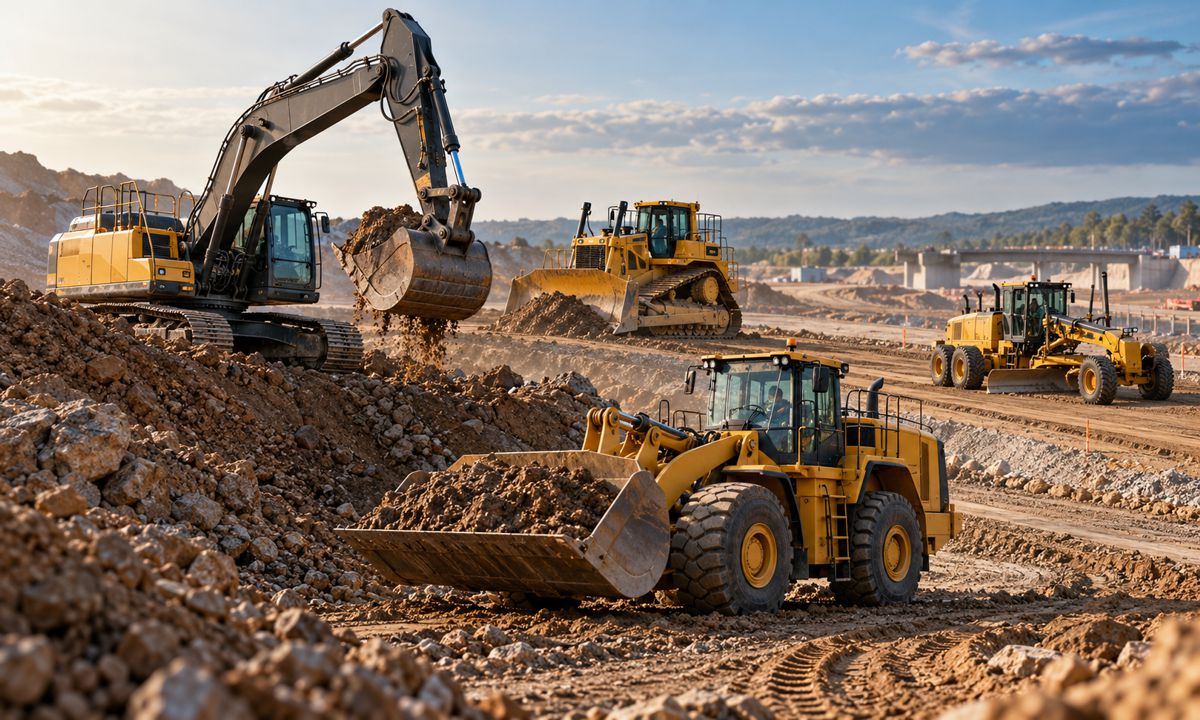
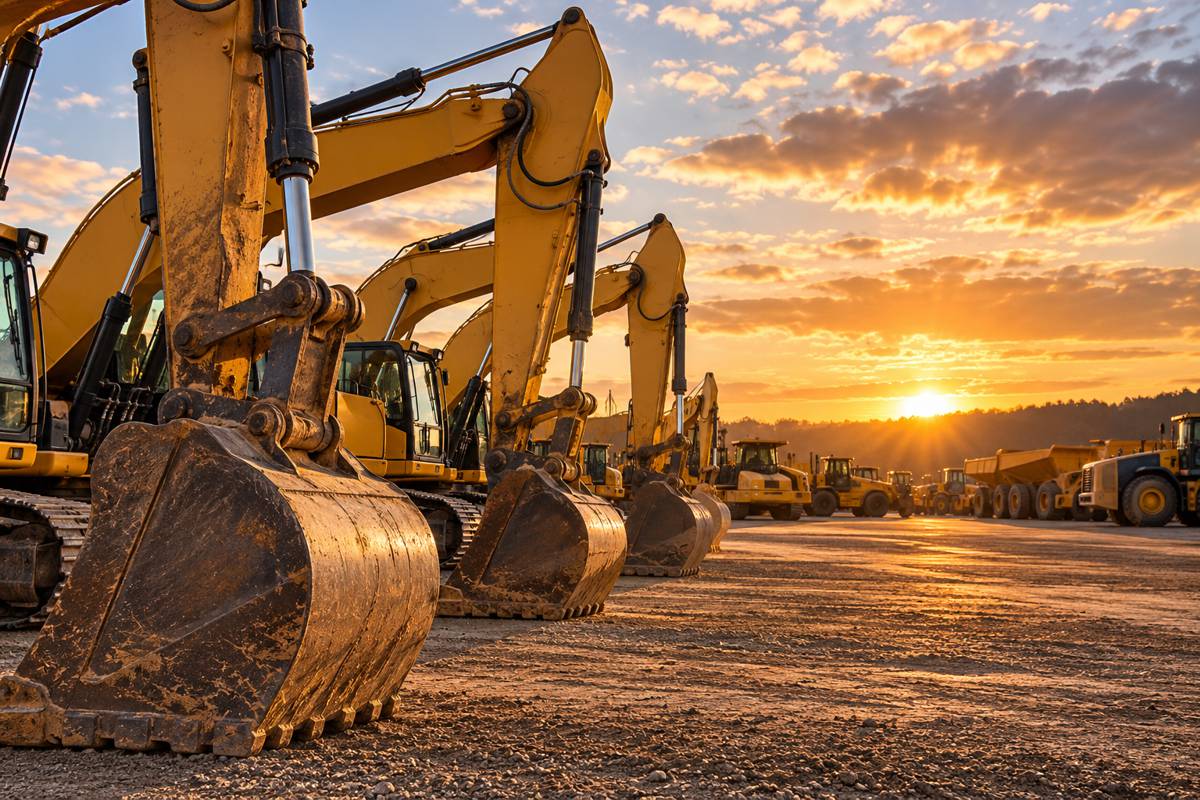
Construction equipment owners are familiar with the difference between buying a machine and making money from it. An excavator’s purchase price is only one element of its operating cost. Depreciation, financing, maintenance, transport, fuel, insurance and utilisation all influence the return it generates.
Humanoid robots will face a similar calculation, with additional considerations involving software subscriptions, integration, charging infrastructure, specialist servicing and human supervision.
Productive utilisation is particularly important. A robot may remain operational for eight hours without completing eight hours of commercially useful work. Time spent charging, changing tasks, recovering from errors or waiting for human assistance reduces the output available to offset its costs.
Consider a purely illustrative humanoid costing £80,000, operating over five years and completing 2,000 productive hours annually. Its acquisition cost alone would amount to £8 per productive hour, before maintenance, energy, software, financing, insurance or integration. If productive utilisation fell to 1,000 hours annually, that capital component would increase to £16 per hour.
The £80,000 figure is a hypothetical modelling assumption, not a representative market price. The calculation demonstrates how sensitive operating economics can be to utilisation, even before the considerable uncertainties surrounding maintenance costs and useful service life are considered.
A robot capable of performing several different tasks might appear more attractive than one restricted to a single operation. However, switching between activities could involve retraining, changing end effectors, repositioning equipment or introducing additional supervision. Flexibility has commercial value only when it translates into productive work.
Manufacturers face a related challenge in scaling production. Larger manufacturing volumes can reduce component costs and improve supply-chain efficiency, but industrial customers may be reluctant to commit substantial capital until reliability and operating costs are established. Robotics developers must therefore finance expensive manufacturing programmes while the size and timing of commercial demand remain uncertain.
Robots-as-a-Service offers one possible route through this problem. Rather than purchasing equipment outright, customers pay for access to robotic capability under a service arrangement, potentially incorporating maintenance, software and technical support.
GXO’s agreement with Agility Robotics illustrates how this model can be applied to industrial humanoids. It may reduce the customer’s initial capital commitment and transfer some operational responsibilities to the supplier, although the underlying costs still have to be recovered through service payments.
Such arrangements also place considerable pressure on robotics manufacturers. A supplier responsible for maintaining a fleet must manage spare parts, remote diagnostics, technician availability and equipment replacement. Machines that require frequent intervention can quickly undermine the economics of a service contract.
The development of a dependable support network may prove as commercially important as further improvements in robotic dexterity.
Construction and the Limits of Human-Shaped Machines
Construction provides a demanding test of the assumptions behind humanoid robotics. Many activities remain labour-intensive, involving material handling, tool use, inspection and work in locations where fixed automation is impractical. Yet construction has already developed several approaches to physical automation without relying on human-shaped machines.
Autonomous haulage systems move materials across mining operations using vehicles designed specifically for the task. Robotic total stations and automated surveying equipment perform precise measurement work without requiring hands or legs. Modern machine control systems combine positioning data, sensors and computing to guide excavators, graders and other equipment through demanding earthmoving operations.
These technologies succeed by adapting automation to the machinery and working environment rather than attempting to reproduce human movement.
An autonomous haul truck has no reason to walk, while a robotic surveying instrument gains little from being mounted on a humanoid body. Excavators, cranes and telehandlers already provide mechanical capabilities far beyond human strength and reach.
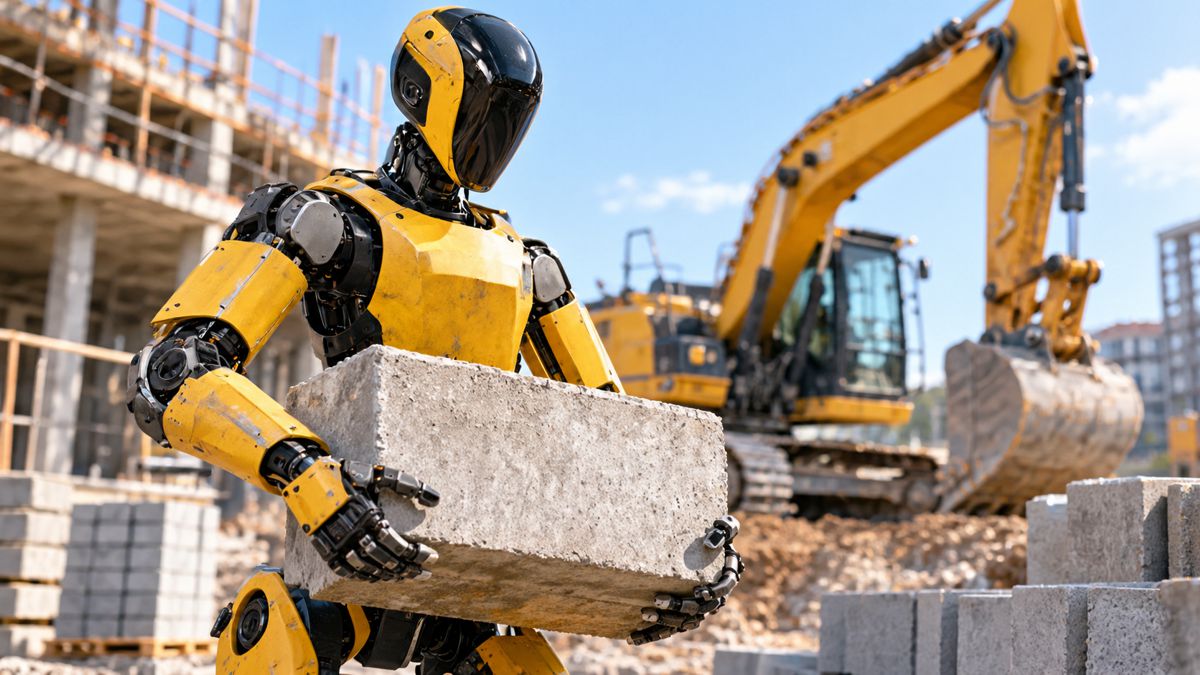
Humanoids may find opportunities where the task requires movement through human-sized spaces, manipulation of existing tools or frequent changes between activities that would not justify dedicated automation.
Equipment maintenance workshops offer one possibility. A mobile robot might eventually retrieve tools, transport small components, conduct visual inspections or assist with repetitive preparation tasks. Precast concrete factories, modular construction facilities and controlled materials-processing operations could provide similar opportunities.
These environments retain many of the physical activities associated with construction while offering more predictable operating conditions than an active building site.
Outdoors, the difficulties increase substantially. Ground surfaces change continuously, access routes become obstructed and materials arrive in inconsistent shapes and sizes. Weather affects sensors and traction, while work areas are reorganised as projects progress.
A humanoid carrying tools across a construction site must recognise moving equipment, temporary excavations, suspended loads, unstable surfaces and the unpredictable movements of workers. Dust, rain, vibration and accidental impacts place additional demands on mechanical protection and sensor reliability.
The energy required for walking and maintaining balance also needs to be considered. Wheeled or tracked robots can often move more efficiently across suitable terrain, while specialised machines remain preferable for lifting, digging and transporting substantial loads.
For infrastructure maintenance, humanoids might eventually prove useful in facilities designed around human access, including certain plant rooms, service corridors and equipment installations. Their ability to navigate stairs, operate existing controls or manipulate standard tools could reduce the need to redesign an entire facility around automation.
Such applications would still require extensive testing. A robot capable of climbing stairs in a demonstration must be able to repeat the operation safely while carrying equipment, encountering obstacles and operating under less predictable conditions.
The earliest commercially successful construction applications may consequently be found away from the most visible parts of the jobsite, in workshops, factories and controlled maintenance environments where flexibility can be exploited without exposing machines to the full complexity of outdoor construction.
Safety, Regulation and Operational Responsibility
Industrial robotics has developed around established principles of machinery safety, risk assessment and controlled interaction between people and equipment. Traditional robots frequently operate behind physical guarding or within defined work cells, while collaborative applications require protective measures appropriate to their operating conditions.
Humanoid robots introduce combinations of hazards that can be more difficult to manage. A mobile machine may lose balance, collide with a worker, drop a carried object or make an unexpected movement while manipulating equipment. Its behaviour may also depend on software systems that are updated or retrained during its working life.
The revised ISO 10218-1:2025 standard addresses safety requirements for industrial robots, while ISO 10218-2:2025 covers industrial robot applications and robot cells. Their applicability depends on the machine’s intended use and the scope of the standards; they should not be treated as a complete safety framework for every category of mobile humanoid robot.
In the European Union, the Machinery Regulation (EU) 2023/1230 will generally apply from 20 January 2027, replacing the existing Machinery Directive framework. It introduces updated requirements relevant to machinery incorporating digital technologies and safety-related software, alongside established obligations concerning conformity assessment and risk reduction.
The EU AI Act may impose additional requirements where an AI system falls within its regulated categories, including certain safety components of products covered by EU harmonisation legislation. The precise obligations depend on the system’s classification, intended purpose and applicable implementation dates.
For manufacturers, these requirements raise practical questions about validation, software updates, documentation and responsibility for changes to machine behaviour. For employers and system integrators, they reinforce the need to assess how robots interact with workers, equipment and the surrounding environment.
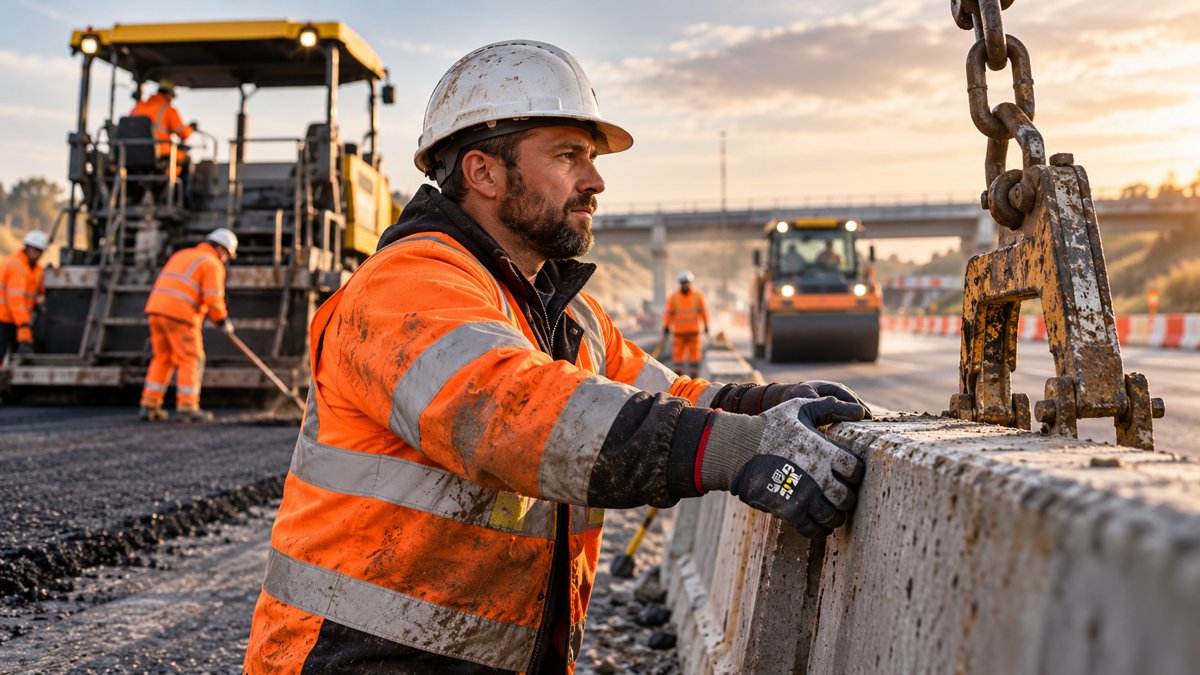
Construction presents additional complications because operating conditions change frequently. A risk assessment suitable for a controlled workshop may not remain adequate when a robot is moved into an active construction area containing mobile plant, temporary structures and constantly changing access routes.
Insurance, liability and incident investigation will also require attention. Where a robot’s actions involve decisions made by an adaptive control system, manufacturers and operators will need reliable records of machine behaviour, software versions, operating conditions and human interventions.
The development of accepted testing methods and clear responsibilities will be essential if humanoids are to move beyond carefully supervised trials.
Manufacturing Capacity and the Global Supply Chain
Humanoid robots draw on technologies already used in automotive manufacturing, industrial automation, consumer electronics and precision engineering. Their production depends on electric motors, gearboxes, actuators, batteries, sensors, processors and structural components manufactured to demanding tolerances.
The mechanical systems are particularly important. A humanoid requires numerous joints capable of delivering controlled movement while managing loads, heat, power consumption and repeated mechanical stress. Precision reducers, motor assemblies and force-sensing components can have a substantial influence on cost, durability and performance.
Manufacturing these components at scale presents challenges familiar to established machinery producers. Tolerances must remain consistent, suppliers need dependable production capacity and components must withstand extended operating cycles without excessive maintenance.
China possesses substantial experience in industrial automation and manufacturing. According to IFR figures, the country accounted for approximately 54% of global industrial robot installations in 2024, while domestic suppliers have increased their presence in its industrial robotics market.
Those figures demonstrate the scale of China’s existing automation market, although they do not establish equivalent leadership in commercial humanoid deployments.
The United States has a strong position in AI research, robotics software and venture-backed development, while Japan, South Korea and European manufacturers contribute expertise in precision engineering, motion control and industrial machinery.
Humanoid production is likely to draw on capabilities distributed across these markets. A machine assembled in one country may incorporate motors, reducers, batteries, processors and sensors manufactured elsewhere.
The economics of component production could have a substantial influence on the eventual price of humanoid systems. Improvements in AI may expand the tasks a robot can perform, but high component costs, limited production yields or unreliable mechanical assemblies could still restrict commercial deployment.
Established industrial equipment manufacturers understand these constraints. Manufacturing scale is valuable only when accompanied by consistent quality, dependable suppliers and machines that can be serviced economically throughout their working lives.
Building the Humanoid Economy
The wider industrial and economic questions surrounding humanoid robotics are explored in The Humanoid Economy: What Physical AI Means for Investment, Industry, and the Future of Work, published by Wiley in October 2026.
Its author, Silicon Valley investor and Humanoids Summit founder Modar Alaoui, examines the manufacturing, financing, regulatory and social systems that would need to develop alongside the technology if humanoid robots are to become a substantial commercial industry.
“The next phase of the humanoid economy is less about what a robot can do once for a camera, and more about what it can do every day for a business,” Alaoui said at the book’s launch.
The observation captures a problem familiar to manufacturers of construction equipment and industrial machinery. Technical performance attracts attention, but sustained commercial success depends on reliability, serviceability, operating costs and the availability of support throughout a machine’s working life.
Humanoid robotics will require much of the same industrial infrastructure. Fleet management software, maintenance networks, technical training, replacement parts, financing and insurance could become substantial markets if deployment volumes increase.
The consequences for employment are less certain. Robots may eventually undertake repetitive, physically demanding or hazardous activities, while creating additional requirements for technicians, systems integrators and operational supervisors. The balance between workforce substitution and new employment will vary by application, industry and the economics of deployment.
For now, the evidence remains concentrated in relatively controlled environments. BMW’s manufacturing trials and GXO’s logistics deployment demonstrate that humanoids can undertake useful industrial work, but the available operating record is still limited compared with the decades of experience accumulated by conventional automation.
As deployments expand, manufacturers and customers will have more information on completed tasks, productive hours, intervention rates, component failures and lifetime expenditure. Those figures will provide a more dependable basis for investment than demonstrations or distant market forecasts.
The robot’s appearance may attract attention, but its operating record will determine whether customers continue paying for it.
Key Industry Questions
- What is physical AI? Physical AI refers to artificial intelligence systems capable of perceiving and interacting with the physical world, allowing robots and other machines to make decisions and perform physical actions.
- How do humanoid robots differ from conventional industrial robots? Humanoids are generally designed for mobility and manipulation in environments built around human activities. Conventional industrial robots are usually optimised for specific operations within controlled production systems.
- Are humanoid robots already being used commercially? Yes. Early deployments include Agility Robotics’ Digit in GXO logistics operations, while Figure has undertaken industrial production trials with BMW. Commercial adoption remains limited compared with established industrial automation.
- Why would a factory use humanoids instead of conventional robots? Humanoids may offer advantages where tasks vary frequently or equipment and access arrangements are designed for people. Dedicated automation generally remains preferable for predictable, repetitive operations that can be performed more efficiently by specialised machinery.
- Could humanoid robots work on construction sites? Potentially, although changing ground conditions, weather, moving equipment and complex safety requirements create substantial difficulties. Workshops, prefabrication facilities and controlled maintenance environments may provide more practical early applications.
- What determines the operating cost of a humanoid robot? Acquisition or leasing costs, productive utilisation, maintenance, energy, software, financing, integration, supervision and useful service life all contribute to total operating expenditure.
- What is Robots-as-a-Service? Robots-as-a-Service is a commercial model in which customers obtain robotic equipment or capability through a service agreement, potentially including maintenance, software and technical support, rather than purchasing the equipment outright.
- Which regulations apply to humanoid robots in Europe? Requirements depend on the robot’s intended use and classification. Machinery safety legislation, applicable industrial robot standards, workplace safety obligations and potentially the EU AI Act may all be relevant.
- Will humanoid robots replace construction workers? Some activities may become automated, but the extent of workforce substitution remains uncertain. Cost, technical capability, site conditions and the need for skilled supervision will influence adoption.
- What will determine whether humanoid robotics becomes a major industry? Manufacturing costs, reliable performance, productive utilisation, safety, service infrastructure and demonstrable economic advantages over existing alternatives will be central to commercial adoption.
Strategic Takeaways
- Productive utilisation will determine economic performance. Acquisition costs alone provide little indication of value without dependable operating hours and measurable output.
- Specialised machinery retains important advantages. Humanoid flexibility must compensate for the additional complexity of walking, balancing and manipulating objects.
- Controlled environments offer the clearest initial opportunities. Factories, warehouses, workshops and maintenance facilities provide more predictable conditions than active construction sites.
- Support infrastructure will influence commercial adoption. Maintenance, spare parts, software management, financing and technical services will become increasingly important as fleets expand.
- Operating records will carry greater weight than demonstrations. Reliability, intervention rates, safety performance and lifecycle costs will provide the evidence needed for sustained industrial investment.