Glasses-Free 3D Technology Expands Across Six Display Categories for CES 2027
Visual Semiconductor and INCERGO are preparing to demonstrate glasses-free three-dimensional displays across six product categories at CES 2027 in Las Vegas, extending a development programme that has already included public demonstrations of televisions, computer monitors and mobile devices.
The companies will present their GF3D immersive display technology from 6–9 January 2027 at the Las Vegas Convention Center. The system uses proprietary plenoptic display technology to create a three-dimensional viewing experience without special glasses or eye-tracking cameras, while artificial intelligence processes conventional two-dimensional content for 3D presentation.
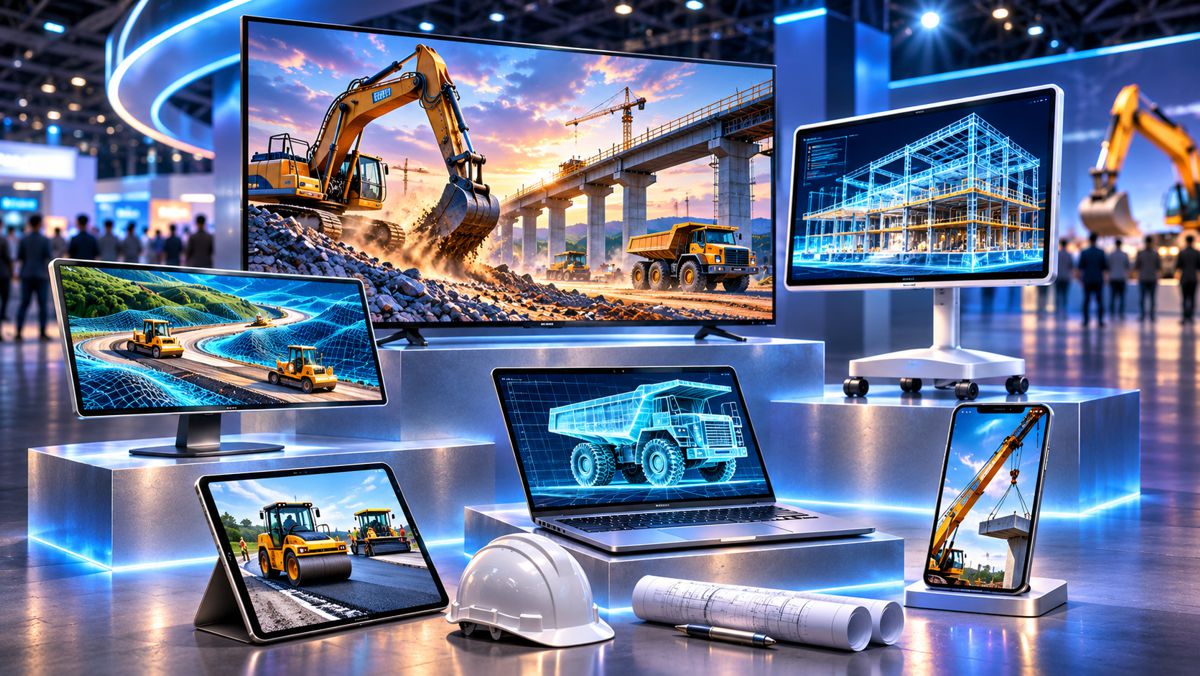
The planned demonstrations cover televisions, rolling displays, monitors, laptops, tablets and smartphones. Although the immediate emphasis is on consumer entertainment, the development also has potential relevance to professional visualisation, where engineers, designers and technical specialists increasingly work with complex three-dimensional models.
Briefing
- Visual Semiconductor and INCERGO will demonstrate GF3D technology at CES 2027 in Las Vegas from 6–9 January.
- Six product categories are planned, covering televisions, rolling displays, monitors, laptops, tablets and smartphones.
- The proprietary plenoptic system is designed to support multiple viewers without glasses or eye-tracking cameras.
- AI processing converts supported 2D content into 3D and enhances material already produced in three dimensions.
- Earlier demonstrations and development partnerships provide a foundation for commercialisation, although production volumes, pricing and retail availability remain unconfirmed.
Engineering a Three-Dimensional Viewing Experience
Conventional displays reproduce images on a flat surface, with the appearance of depth largely dependent on perspective, shading and other visual cues within the content. Stereoscopic systems go further by presenting different images to the viewer’s left and right eyes, allowing the brain to interpret the separation as a three-dimensional scene.
Glasses-free systems must achieve that separation through the display itself. In plenoptic or light-field imaging, the direction of light becomes part of the information presented, allowing viewers at different positions to receive different perspectives of the same scene. The approach creates opportunities for three-dimensional viewing without requiring each person to wear specialised equipment.
Visual Semiconductor describes GF3D as a proprietary implementation capable of presenting immersive content across a wide viewing zone. Unlike systems that use cameras to identify the position of a viewer’s eyes and adjust the image accordingly, the company says its technology accommodates multiple people without active eye tracking.
Light-field displays must distribute visual information across several viewing directions while preserving brightness, image quality and sufficient detail for practical use. Increasing the number of perspectives introduces competing demands on the optical arrangement and available display resolution, particularly when several viewers are expected to experience the image simultaneously.
Independent researchers continue to investigate these limitations. Research published in Nature in 2025 demonstrated a large-scale glasses-free 3D display with full parallax and a viewing angle exceeding 100 degrees. Although that research concerned a separate experimental system, it provides useful context for the technical work involved in combining wide viewing coverage with detailed three-dimensional imagery.
Visual Semiconductor has not provided independently verified measurements of GF3D’s effective resolution in 3D mode, viewing characteristics or optical performance in its latest CES announcement. Such information will be valuable when comparing the system with other glasses-free display technologies.
From Exhibition Demonstrations to Product Development
The forthcoming CES presentation follows earlier public demonstrations by Visual Semiconductor, including appearances at CES 2026 and Japan’s CEATEC exhibition.
At CEATEC 2026 in October, the company showcased five display categories, including a 65-inch 8K television, a 27-inch 5K monitor, a 15.6-inch laptop panel, a 6.58-inch smartphone display and its FreeRange Rolling Display. The CES 2027 programme extends the range to six categories, with tablets now explicitly included.
Development work has also involved commercial partners. In August 2026, Visual Semiconductor, INCERGO and Cystar announced collaboration on a 65-inch 8K glasses-free television, followed in September by plans for a range of next-generation computer monitors.
The monitor programme is particularly interesting because it extends the intended applications beyond entertainment. Proposed models covering 4K, 5K, 6K and 8K resolutions include products aimed at professional users in areas such as CAD, engineering, scientific visualisation and medical imaging, where the ability to examine spatial information may offer advantages over conventional flat displays.
Moving between product categories nevertheless involves different engineering requirements. A large television provides considerable space for optical components and processing hardware, while laptops and smartphones impose tighter restrictions on thickness, weight, heat generation and energy consumption. The display must also remain useful for conventional two-dimensional content, which is still likely to account for much of its everyday operation.
The companies have demonstrated several device formats and announced development partnerships, but the latest CES material does not establish confirmed retail launch dates, production volumes or consumer pricing. Manufacturing arrangements and the ability to reproduce consistent viewing performance across different screen sizes will determine how readily the technology can progress from exhibition displays to commercial products.
Artificial Intelligence and Existing Content
The availability of suitable content has long complicated the commercial development of three-dimensional displays. Films, television programmes, games and professional applications are predominantly produced for conventional screens, while material specifically prepared for stereoscopic viewing represents a comparatively limited part of the available catalogue.
Visual Semiconductor intends to address this through AI-assisted processing that converts supported two-dimensional content into a three-dimensional presentation in real time. The system is also designed to enhance material already produced in 3D, allowing both existing and purpose-built content to take advantage of the display.
Converting a conventional image requires software to estimate depth relationships, distinguish foreground objects from their surroundings and generate a consistent representation as scenes change. Complex motion, transparent surfaces and overlapping objects can make those estimates more difficult, particularly when the processing must operate continuously during video playback or interactive applications.
Latency is another consideration for gaming and professional visualisation, where changes to the image must follow user input without noticeable delay. The company’s latest announcement does not include detailed benchmarks for conversion accuracy, processing latency or compatibility with individual content formats, leaving these aspects to be assessed through demonstrations and further technical disclosure.
If effective, the conversion system would allow manufacturers to introduce glasses-free 3D without depending entirely on a new library of specially produced material. Existing content could remain accessible while applications developed specifically for spatial viewing take advantage of the additional capability.
Engineering and Industrial Visualisation
Although the CES presentation concentrates on entertainment, the technology has potential applications in engineering environments where understanding the spatial relationships between components is an everyday requirement.
Construction and infrastructure design increasingly relies on detailed digital models, including building information modelling, civil engineering design systems and three-dimensional representations of industrial facilities. Engineers generally examine these models on conventional monitors, using perspective and movement through the virtual environment to interpret depth.
A glasses-free display could provide another way to review complex geometry, particularly where several specialists need to examine the same model together. Reinforcement arrangements, underground utility corridors, mechanical assemblies and construction sequencing are among the applications where depth information could be useful during design discussions.
The proposed Cystar monitor range provides a more direct connection with professional engineering applications. High-resolution displays are already central to CAD and technical visualisation workflows, and the ability to present spatial information without headsets could be attractive in design offices where multiple people regularly review drawings and digital models.
Machinery design and technical training offer other possible applications. Three-dimensional representations of hydraulic systems, drivetrains or equipment assemblies could support the examination of component layouts and maintenance procedures, while training environments could present spatial information without requiring each participant to wear viewing equipment.
There are practical distinctions between creating an impression of depth and providing the dimensional accuracy required for engineering decisions. Existing CAD and BIM systems would need suitable interfaces, while annotations, fine geometry and conventional drawings must remain legible. Any professional deployment would require validation against the requirements of the intended software and working environment.
No construction-specific GF3D deployment has been announced. The relevance to engineering remains a potential application, although the company’s stated ambitions for professional monitors suggest that industrial and technical markets form part of its wider development plans.
Manufacturing and Commercial Integration
Visual Semiconductor develops the proprietary display technology, while INCERGO is involved in its commercialisation. The companies’ work with Cystar introduces a further development partner for televisions and professional monitors, providing a route towards products intended for established display markets.
Commercial integration will depend on the complete hardware requirements, including optical components, image processing, energy consumption and compatibility with existing panel manufacturing processes. Manufacturers must also consider the cost of any additional technology against the value customers place on three-dimensional viewing.
Those calculations will differ across the proposed product categories. Premium televisions and specialist professional monitors may accommodate relatively expensive display systems, particularly where users have a specific application for spatial imaging. Mass-market laptops, tablets and smartphones face more demanding restrictions on production cost and battery life, alongside considerable competition from conventional displays.
Professional engineering markets could provide opportunities for specialised products before the technology achieves wider consumer adoption. Organisations already investing in high-resolution workstations and visualisation software may be better placed to assess whether the additional display capability improves particular tasks, provided the technical performance can be demonstrated.
The announced development partnerships establish commercial interest, but they do not yet confirm high-volume manufacturing or widespread distribution. Those arrangements will become clearer as the companies move beyond exhibition presentations and provide further details of production plans.
The Commercial Test at CES 2027
Visual Semiconductor has described GF3D in terms comparable to the historical transition from black-and-white television to colour. The comparison forms part of the company’s promotional positioning, although the history of consumer 3D displays offers a more complicated picture.
Previous generations of stereoscopic televisions encountered difficulties with viewing convenience, content availability and the cost of supporting three-dimensional presentation. Removing the need for glasses addresses one of those limitations, while AI-assisted conversion offers a possible response to the content problem.
The planned CES demonstrations will provide an opportunity to examine how consistently GF3D performs across different screen sizes and viewing positions. Image clarity, depth reproduction, brightness and the experience of several viewers watching simultaneously will be relevant, particularly for televisions and professional monitors intended for shared use.
The technology also faces a familiar commercial test. Manufacturers will need to determine whether the viewing experience justifies the additional cost of production, while software developers and content providers assess how readily existing applications can make use of the display.
Visual Semiconductor and INCERGO are scheduled to exhibit at Booth 24539 in the Las Vegas Convention Center’s Central Hall from 6–9 January 2027, presenting the technology across six device categories.
The companies have progressed from earlier demonstrations to a broader programme of product development and commercial partnerships. CES 2027 will offer another opportunity to examine the technology in operation, while its longer-term prospects will depend on manufacturing economics and whether glasses-free spatial viewing provides sufficient practical value in consumer and professional applications.
Key Industry Questions
- What is GF3D technology? GF3D is Visual Semiconductor’s proprietary glasses-free three-dimensional display system, combining plenoptic imaging technology with AI-assisted content processing to create a spatial viewing experience.
- Does GF3D require special glasses or eye-tracking cameras? According to the developer, neither is required. The system is designed to accommodate multiple viewers within a suitable viewing zone.
- Can existing 2D content be displayed in 3D? The company says its AI processing can convert supported 2D content into 3D in real time. Independent performance benchmarks and complete compatibility specifications have not been included in the latest announcement.
- Which GF3D devices are being demonstrated at CES 2027? The planned presentation covers televisions, FreeRange Rolling Displays, monitors, laptops, tablets and smartphones.
- Could glasses-free 3D displays be used with BIM and CAD software? Potentially. Spatial visualisation could support engineering design reviews and collaborative working, but compatibility with individual software platforms and the accuracy of displayed technical information would require evaluation.
- What are the main technical limitations of light-field displays? Common challenges include balancing viewing angle, spatial resolution, brightness, processing requirements and the number of perspectives that can be presented simultaneously.
- Is GF3D available in mass-produced consumer products? The latest announcement does not establish commercial availability, confirmed production volumes or retail launch dates.
- Who is involved in commercialising GF3D? Visual Semiconductor develops the technology, INCERGO is involved in commercialisation, and Cystar has announced collaborative development programmes covering televisions and computer monitors.
Strategic Takeaways
- Glasses-free viewing removes a practical limitation associated with earlier stereoscopic displays, although image quality, content availability and production costs will continue to influence adoption.
- Professional monitors offer a possible route into engineering and scientific visualisation, where three-dimensional information is already central to established working practices.
- AI-assisted conversion may reduce dependence on specially produced 3D content, provided image quality and latency remain suitable for everyday applications.
- Expanding GF3D across six device categories introduces substantially different requirements for optical integration, processing efficiency and manufacturing economics.
- Existing demonstrations and announced development partnerships establish technical and commercial progress, but widespread adoption remains dependent on validated performance and production readiness.