






HPE Takes High-Performance Computing to the Moon with Astrolab’s Lunar Rover
Hewlett Packard Enterprise is preparing to send a computer weighing approximately 1.18 kg to the lunar surface, where it will attempt to run artificial intelligence applications and high-performance computing benchmarks aboard Astrolab’s FLIP rover.
The HPE Spaceborne Computer-4 module, measuring approximately 249 × 132 × 26 mm, is scheduled to travel aboard the Griffin-1 lander developed by Astrobotic, now part of Voyager Technologies. The mission is targeting a late-2026 launch under NASA’s Commercial Lunar Payload Services (CLPS) initiative, with a planned landing in the lunar south polar region.
The experiments will examine whether a compact, low-power computing system can process complex workloads in an environment where electrical power, thermal management and communications are severely constrained. Among the planned applications are LiDAR terrain mapping, visual data analysis, autonomous monitoring and distributed AI.
These are technologies already familiar to terrestrial engineering. Surveying systems, autonomous mining equipment and connected construction machinery increasingly process sensor information locally, reducing their dependence on remote computing infrastructure. On the Moon, the same principles must operate without atmospheric cooling, routine maintenance or immediate human intervention.
Briefing
- HPE Spaceborne Computer-4 will travel aboard Astrolab’s FLIP rover on the Griffin-1 lunar mission, currently targeting late 2026.
- The fanless computing module weighs approximately 1.18 kg and incorporates low-power CPU and GPU hardware.
- Planned experiments include AI applications, LiDAR terrain processing and high-performance computing benchmarks.
- NASA will contribute distributed AI and onboard document-analysis experiments, while Deloitte will test cybersecurity monitoring.
- The mission will examine computing capabilities relevant to future lunar surveying, autonomous equipment and infrastructure operations.
Computing at the Lunar Edge
Space missions have traditionally relied heavily on ground-based computing facilities, transmitting scientific observations and instrument data to Earth for processing. That arrangement remains essential for complex analysis, but communications delays and limited bandwidth can restrict activities requiring rapid decisions.
Radio signals take approximately 1.3 seconds to travel between Earth and the Moon. A robotic system that must repeatedly transmit measurements, wait for processing and receive instructions can therefore accumulate considerable delays, particularly when communications availability is intermittent.
Onboard computing allows selected tasks to be performed directly where the data is collected. Sensor readings can be interpreted, images analysed and relevant information extracted before anything is transmitted to Earth.
HPE Spaceborne Computer-4 is intended to test this approach using a combination of artificial intelligence and conventional high-performance computing workloads.
The planned applications include large language models for interpreting information and analysing visual data, alongside autonomous monitoring software. An AI services container will also demonstrate the deployment of applications within the lunar computing environment.
HPE is drawing on its earlier Spaceborne Computer programme, which has operated computing hardware aboard the International Space Station. The lunar deployment introduces different environmental and operational constraints, particularly the need to support computing workloads on a mobile surface platform.
The tests will establish how effectively the module can perform its assigned tasks under actual lunar conditions. HPE has not disclosed the processor models or detailed performance figures for the new hardware.
Mapping and Autonomous Navigation
LiDAR processing is among the more directly applicable experiments planned for the mission.
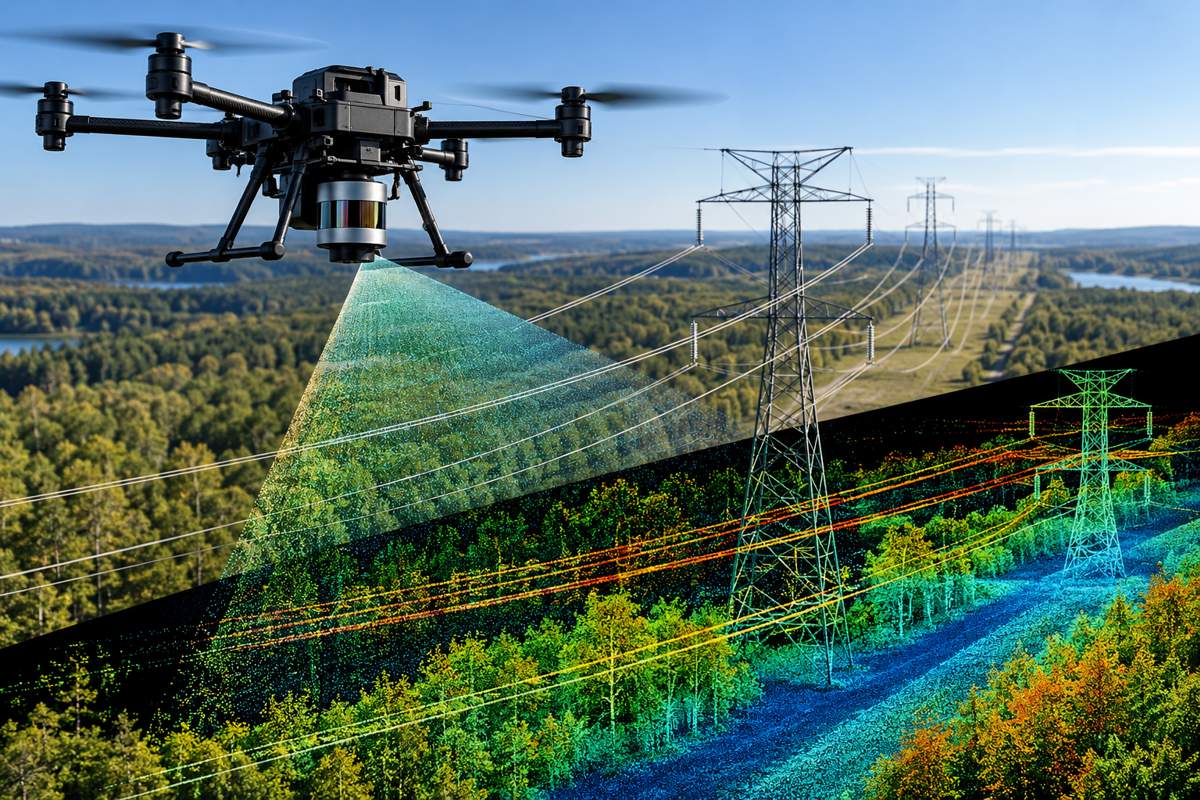
The technology uses laser measurements to establish distances and produce representations of surrounding terrain. On Earth, LiDAR is widely used in topographical surveying, road design, mine planning, autonomous machinery and digital modelling.
For lunar operations, similar processing could support the identification of obstacles, assessment of possible routes and development of terrain models around landing areas or future equipment locations.
The lunar south polar region presents difficult operating conditions. Low solar angles produce extensive shadows, while permanently shadowed areas and irregular terrain complicate observation and navigation. Surface characteristics can vary considerably over relatively short distances.
Processing LiDAR measurements locally would allow a robotic system to interpret terrain information without transmitting every raw measurement to Earth. The same computing platform could support image interpretation and monitoring applications.
HPE’s announced experiments concern the processing of data rather than the deployment of a complete autonomous navigation system. The company has not published detailed LiDAR performance targets or indicated that the mission will undertake actual lunar construction planning.
Nevertheless, the proposed workloads address functions that will be required as lunar operations become more complex. Reliable mapping, localisation and terrain assessment are prerequisites for moving equipment, transporting materials and establishing permanent facilities.
Hardware and Thermal Management
Spaceborne Computer-4 combines low-power central and graphics processing units with solid-state storage supplied by KIOXIA.
The module measures approximately 249 × 132 × 26 mm and weighs around 1.18 kg. Its compact dimensions reflect the mass and space constraints associated with carrying experimental equipment aboard a lunar rover.
StorageReview’s technical reporting identifies two 1 TB KIOXIA BG6 solid-state drives configured with mirrored storage, providing redundancy for stored data. The system uses a Linux-based software environment supporting containerised applications.
The hardware has been designed without conventional cooling fans. On Earth, most computing equipment relies on airflow to remove heat from processors and other components. The Moon’s near-vacuum environment makes that approach unsuitable.
Instead, heat must be transferred through the equipment’s thermal interfaces and ultimately rejected through radiation. Spaceborne Computer-4 is integrated with the rover’s thermal-management system, making the relationship between computing performance and heat dissipation an important part of the engineering.
The system will also undertake two established high-performance computing benchmarks: High-Performance LINPACK (HPL) and High-Performance Conjugate Gradient (HPCG).
HPL measures the performance of a system solving dense linear algebra problems and is widely associated with the TOP500 ranking of supercomputers. HPCG uses a different computational workload intended to provide a complementary measure of performance, including aspects of memory access and communication efficiency.
Together, the benchmarks should provide more useful information than a single theoretical processor-performance figure. Their results will help establish what computational capability can be delivered within the module’s limited power and thermal envelope.
The announcement does not provide detailed power consumption, radiation-protection specifications or expected benchmark scores. Those figures will be necessary for a fuller assessment of the hardware’s suitability for future missions.
Astrolab’s FLIP Rover
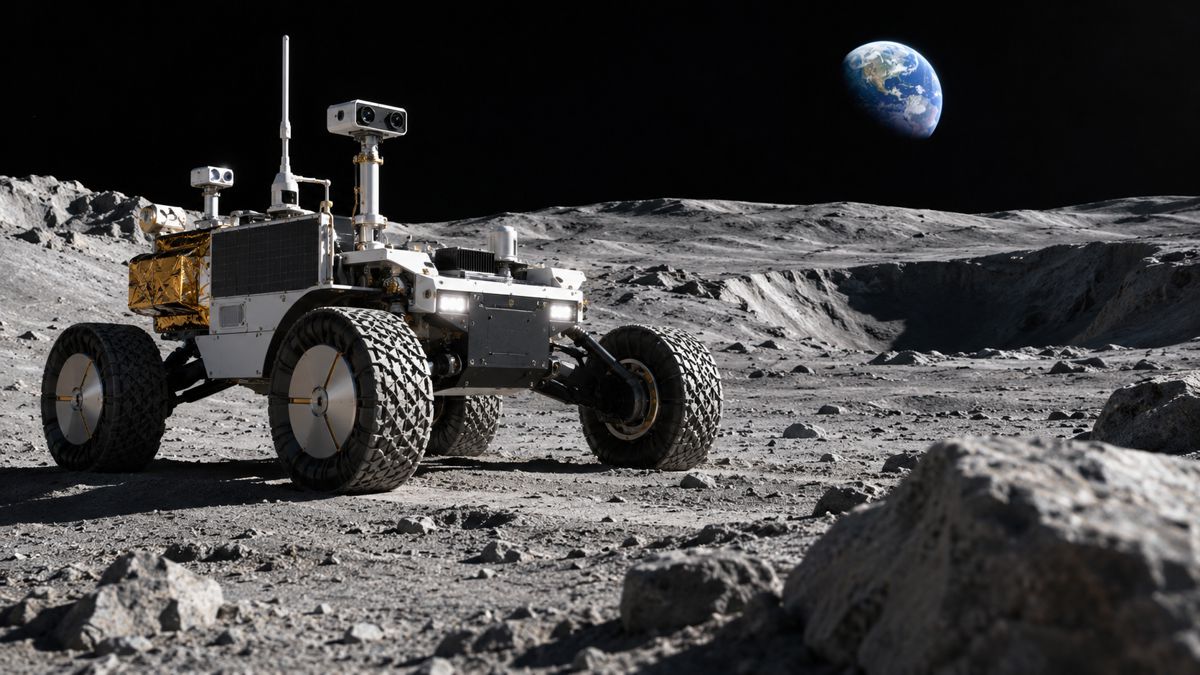
The computing module will travel aboard Astrolab’s FLIP rover, a commercial lunar mobility platform designed to accommodate different scientific and technology payloads.
The rover is scheduled to reach the lunar surface aboard the Griffin-1 lander developed by Astrobotic, which became part of Voyager Technologies in 2026. The mission forms part of NASA’s Commercial Lunar Payload Services initiative, through which the agency procures lunar delivery services from commercial providers.
FLIP provides HPE with a mobile platform for conducting its experiments without requiring the company to develop a complete lunar vehicle.
Jaret Matthews, founder and chief executive of Astrolab, described the arrangement in the original announcement: “Our FLIP rover is designed to accommodate a variety of payloads, and this mission will demonstrate how commercial lunar mobility platforms can support technology development and scientific research.”
The commercial model allows specialist technology companies to develop and test equipment using shared transportation and mobility infrastructure. Computing systems, scientific instruments and other payloads can be integrated into a mission without each supplier having to provide its own landing and surface mobility systems.
Spaceborne Computer-4 was mechanically integrated into the FLIP rover earlier in 2026, although the successful operation of the payload will depend on the wider mission reaching the lunar surface and completing its planned deployment.
Distributed AI and Future Lunar Infrastructure
NASA and Deloitte are contributing additional experiments to the computing programme.
NASA’s Federated Learning for Unbounded and Intelligent Decentralization experiment, known as FLUID, is intended to demonstrate coordination between AI models associated with Earth, the International Space Station and the Moon.
Federated learning enables distributed systems to participate in a shared learning process without necessarily transferring all their underlying data to a central location. The approach is relevant to environments where communications capacity, connectivity or operational requirements make centralised processing difficult.
NASA also plans to test a tuned large language model capable of semantic processing, allowing onboard documents to be searched and interpreted using natural-language queries.
Deloitte will contribute Silent Shield, a cybersecurity system intended to identify anomalous activity and potential intrusions through predictive analysis.
The experiments will be supported by HPE infrastructure on Earth. Astrolab’s mission control operation in Hawthorne, California, is expected to use HPE Private Cloud, while HPE CloudOps Software will provide tools for managing and automating computing workloads.
This combination of local processing and centralised infrastructure resembles architectures already used in connected industrial operations. Autonomous mining fleets, remote monitoring systems and construction equipment increasingly distribute computing tasks between individual machines, local networks and central facilities.
Immediate functions such as obstacle detection and machine monitoring benefit from processing close to the equipment. More demanding historical analysis, fleet optimisation and planning activities can be performed elsewhere when communications allow.
Future lunar infrastructure operations are likely to require a similar division of computing responsibilities. Surveying vehicles will need to interpret terrain measurements, robotic equipment will require navigation and monitoring systems, and scientific installations will generate substantial quantities of information.
Those applications will depend on more than processing capability. Power generation, thermal management, communications, radiation protection and mechanical reliability will determine how effectively computing equipment can support extended operations on the lunar surface.
Spaceborne Computer-4 is not intended to demonstrate a complete autonomous construction system. Its immediate task is to establish whether advanced AI workloads and recognised computing benchmarks can operate successfully on a compact lunar platform.
The results should provide measurable evidence of computing performance under conditions that cannot be fully reproduced in conventional terrestrial installations. For future lunar equipment, the relationship between available processing power, electrical consumption and heat management will be as important as the benchmark scores themselves.
Key Industry Questions
- What is HPE Spaceborne Computer-4? It is a compact, fanless computing module developed to test artificial intelligence and high-performance computing workloads on the lunar surface.
- When is the mission scheduled to launch? The Griffin-1 mission is targeting late 2026, although the launch and deployment schedule remains subject to change.
- Which rover will carry the computer? Astrolab’s FLIP rover will carry the module aboard the Griffin-1 lunar lander.
- How powerful is Spaceborne Computer-4? HPE has not disclosed detailed processor specifications or benchmark results. The module uses low-power CPU and GPU hardware and will undergo HPL and HPCG performance testing.
- Why is LiDAR processing being tested on the Moon? Local processing of laser-based terrain measurements could support mapping, obstacle identification and navigation without requiring all sensor information to be transmitted to Earth.
- How does the computer operate without cooling fans? The module relies on thermal interfaces and integration with the rover’s thermal-management system rather than conventional airflow-based cooling.
- What is NASA’s FLUID experiment? FLUID is a federated learning experiment intended to coordinate AI models associated with Earth, the International Space Station and the Moon.
- How could the technology support future lunar construction? Onboard computing could support surveying, terrain assessment, robotic navigation and equipment monitoring, although those applications extend beyond the immediate mission demonstration.
Strategic Takeaways
- Local computing can reduce the dependence of robotic equipment on continuous communications with Earth.
- LiDAR and visual data processing provide practical foundations for future lunar surveying and autonomous navigation.
- Computing performance must be assessed alongside power consumption, thermal management and equipment reliability.
- Commercial lunar mobility platforms allow specialist technology suppliers to test hardware without developing complete spacecraft.
- The planned HPL and HPCG benchmarks should provide measurable evidence of the computing capability available within a compact lunar system.