Heidelberg Materials Cuts Carbon on Major Eurotunnel Resurfacing Project
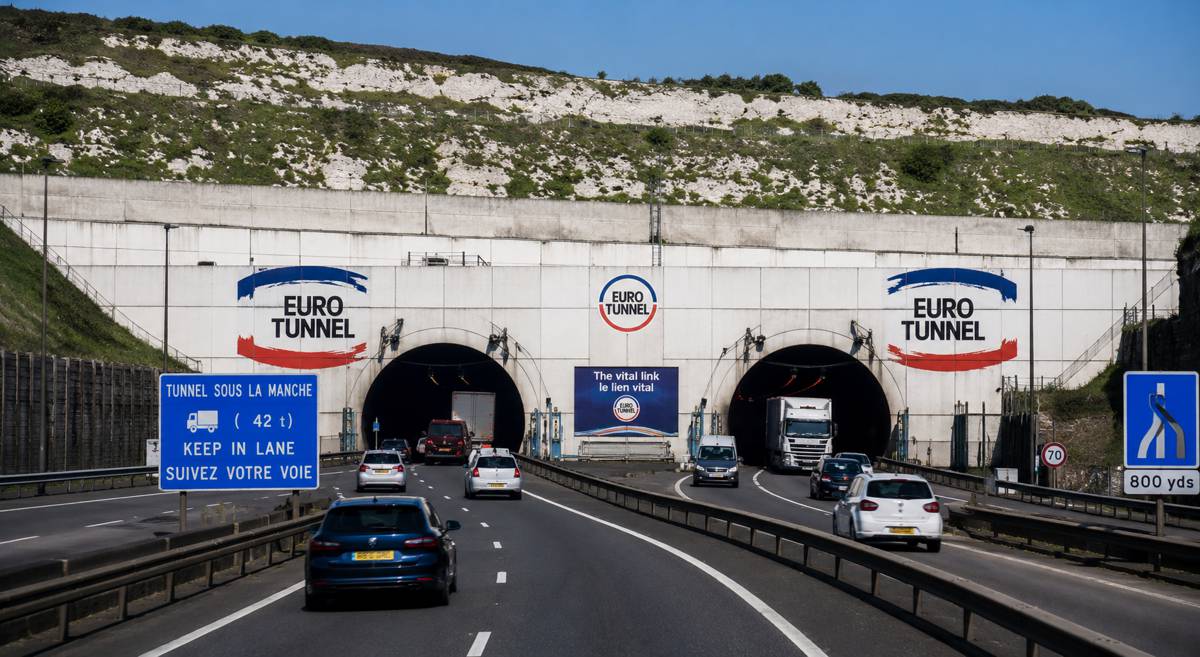
Few transport corridors in Europe carry the strategic weight of the Channel Tunnel. Linking the UK with mainland Europe, the infrastructure beneath the English Channel supports billions in annual trade movement, freight logistics and passenger travel. Keeping that system operational is not simply a maintenance exercise. It is a matter of economic resilience, infrastructure reliability and increasingly, environmental accountability.
That is precisely what makes the recent resurfacing works at the Eurotunnel service tunnel in Folkestone so significant. While the project itself covered a relatively modest 1,600 square metres, the technologies and materials deployed offer a revealing glimpse into how the future of infrastructure maintenance may evolve. Lower carbon asphalt, reduced emissions during production, improved air quality and enhanced durability all arrived together in a live operational environment where downtime simply was not an option.
The resurfacing programme, delivered by Heidelberg Materials UK in collaboration with Eurotunnel Services Limited, demonstrates how sustainable surfacing technologies are moving beyond pilot schemes and into critical transport infrastructure. More importantly, it highlights how contractors, asset owners and material suppliers are beginning to align operational performance with decarbonisation targets without compromising safety or cost competitiveness.
For the wider highways and infrastructure sector, the project arrives at a pivotal moment. Governments across Europe are tightening emissions standards, public infrastructure procurement is shifting toward lifecycle carbon accounting, and transport operators are under growing pressure to modernise ageing assets without extending closures or escalating operational disruption. Asphalt technology, often overlooked outside the road sector, is becoming an increasingly important part of that conversation.
Briefing
- Heidelberg Materials UK resurfaced the entrance to the Eurotunnel service tunnel using its Tufflex CarbonLock asphalt solution.
- The warm mix asphalt process reduced production temperatures by up to 40°C compared with conventional hot mix asphalt.
- The project achieved a minimum carbon reduction of 25 per cent compared with a traditional SMA specification.
- CleanAir additive technology was used to help reduce particulates and gas emissions in a sensitive tunnel environment.
- The resurfacing project demonstrates how low carbon asphalt solutions are moving into major strategic infrastructure applications.
Sustainable Surfacing Moves Into Critical Infrastructure
Road surfacing rarely captures headlines outside the highways sector, yet it remains one of the most carbon-intensive components of transport infrastructure maintenance. Conventional asphalt production relies heavily on energy-intensive heating processes, while bitumen itself is a petroleum-derived product closely tied to fossil fuel supply chains.
Across Europe, warm mix asphalt technologies have gained traction over the past decade as infrastructure owners seek practical pathways toward emissions reduction. According to the European Asphalt Pavement Association, warm mix asphalt can significantly reduce fuel consumption and greenhouse gas emissions during production while also improving working conditions for crews due to lower laying temperatures.
The Eurotunnel resurfacing project took that concept several steps further. Heidelberg Materials proposed replacing the originally specified stone mastic asphalt with its Tufflex surfacing solution incorporating CarbonLock bio-binder technology alongside CleanAir additives and its Era 140 warm mix asphalt production process.
The result was not simply a lower temperature asphalt. It became a layered sustainability strategy incorporating carbon reduction, air quality improvement, material recovery and operational efficiency into a single infrastructure maintenance programme.
Phil Greenin, Regional Manager – Contracting at Heidelberg Materials UK, said: “Sustainability is a key commitment for Eurotunnel Services Limited, so it was open to working together to find the lowest carbon solution for this project.”
He added: “It is the first time that Tufflex with CarbonLock has been used at a major infrastructure facility and was also the first time our asphalt and contracting teams worked together with Eurotunnel Services Limited in a collaborative partnership.”
The Growing Importance of Low Carbon Asphalt
Infrastructure construction accounts for a substantial share of global carbon emissions, with roads representing one of the largest contributors due to the scale of surfacing works required worldwide. The International Energy Agency has repeatedly highlighted the need for lower carbon construction materials if nations are to meet long-term climate targets.
For highways authorities and transport operators, the challenge has become particularly acute. Asphalt surfacing must withstand increasing traffic volumes, heavier freight vehicles and more extreme weather conditions while simultaneously reducing environmental impact. That balancing act is pushing innovation throughout the supply chain.
Tufflex asphalt is designed to provide strong resistance to deformation alongside enhanced skid resistance, both critical characteristics in heavily trafficked infrastructure environments such as tunnel access routes and emergency vehicle zones. Durability matters enormously in locations where access restrictions and operational downtime carry major financial consequences.
The CarbonLock binder introduces another dimension. By incorporating biogenic materials capable of absorbing and storing atmospheric CO₂ during their lifecycle, the asphalt effectively locks captured carbon within the surfacing material itself. Crucially, Heidelberg Materials states this stored carbon remains embedded even when the asphalt is eventually recycled.
Circular economy principles are becoming increasingly important across infrastructure procurement frameworks, especially within the UK and European Union. Asphalt already holds advantages in this area due to its recyclability, with reclaimed asphalt pavement widely reused in new mixes. Technologies that preserve carbon benefits through future recycling cycles could therefore become commercially significant as lifecycle carbon accounting becomes more stringent.
Air Quality in Tunnel Environments
Tunnel infrastructure presents unique engineering and operational challenges. Ventilation, emissions control and worker safety all carry heightened importance in enclosed environments where pollutants can accumulate more rapidly than on open highways. That made the inclusion of Heidelberg Materials’ CleanAir additive particularly relevant for the Eurotunnel project.
According to the company, the additive can reduce the release of certain gases and particulates by up to 40 per cent during production and laying. It also helps neutralise odours associated with asphalt operations.
While such reductions may appear incremental at first glance, air quality is becoming an increasingly important factor in urban and enclosed infrastructure projects. Low emission zones are expanding across major European cities, and construction activities themselves are facing tighter scrutiny regarding localised pollution impacts.
For tunnel operators, reducing fumes during maintenance operations offers practical advantages beyond environmental targets. Better working conditions can improve operational efficiency, minimise disruption and reduce exposure risks for maintenance personnel operating in confined environments.
The Channel Tunnel network represents one of Europe’s most safety-sensitive infrastructure systems. Maintaining emergency access routes while simultaneously carrying out resurfacing operations required careful logistical planning and scheduling.
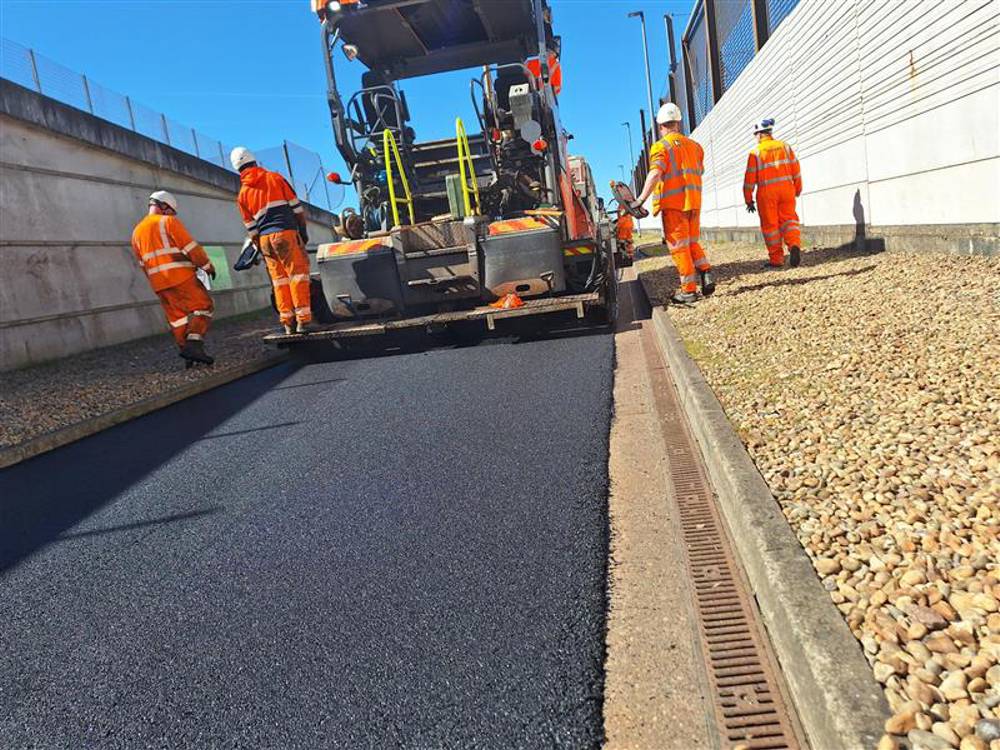
The project was therefore undertaken during quieter maintenance periods to minimise the risk of traffic accessing the newly laid asphalt before it had fully cured. Even then, access to the service tunnel had to remain available at all times in case emergency intervention became necessary.
Warm Mix Asphalt Continues to Gain Momentum
The asphalt used for the project was produced at Heidelberg Materials’ Allington plant using its Era 140 warm mix asphalt process. Warm mix technologies reduce manufacturing temperatures by up to 40°C compared with traditional hot mix asphalt production.
Lower production temperatures generate several benefits simultaneously. Fuel consumption falls because aggregates and binders require less heating energy. Lower burner demand reduces direct plant emissions. Material handling becomes safer for operatives due to reduced exposure to high temperatures. Transport and laying flexibility can also improve because the asphalt remains workable for longer periods.
Industry research from organisations such as the US Federal Highway Administration and the European Asphalt Technology Association has shown that warm mix asphalt technologies can also improve compaction quality under certain conditions, potentially extending pavement life when properly designed and applied.
For infrastructure operators, that combination matters. Extending surfacing lifespan while reducing maintenance frequency offers direct financial and operational advantages. On strategic infrastructure corridors like Eurotunnel, avoiding repeat closures and minimising intervention windows can generate significant long-term value.
Heidelberg Materials estimates that its Era 140 process can reduce production-related CO₂ emissions by up to 15 per cent compared with conventional hot mix asphalt manufacture.
Combined with the CarbonLock binder and material recycling elements of the scheme, the Eurotunnel project achieved an overall carbon reduction of at least 25 per cent compared with an equivalent traditional hot mix asphalt specification.
Complex Logistics Behind the Resurfacing Works
Infrastructure maintenance projects rarely unfold under ideal conditions, particularly on operational transport assets carrying critical services.
The Eurotunnel resurfacing programme involved several logistical complications beyond the surfacing technology itself. Due to adjacent high-powered electrical infrastructure within the tunnel environment, standard tipping vehicles could not be safely used on site because of height restrictions.
Instead, the project utilised walking floor heavy goods vehicles capable of unloading material horizontally rather than through raised tipping mechanisms.
That detail may seem minor, but it illustrates the broader engineering complexity involved in maintaining operational infrastructure systems where safety, access limitations and technical constraints intersect constantly.
The worn surfacing material was also removed and recovered for reuse, reinforcing the circular material strategy underpinning the scheme.
Campbell Main, Technical Lead –- Civils at Eurotunnel Services Limited, said: “It has been great to work alongside Heidelberg Materials to achieve a significant step forward in sustainable construction.”
He added: “A flexible approach and a collaborative team ethic from all parties culminated in a competitively priced carbon reducing alternative to traditional surfacing materials and the safe and sustainable delivery of this milestone project.”
Infrastructure Maintenance Is Entering a New Phase
Much of the global infrastructure debate focuses on megaprojects, high speed rail systems, smart cities and billion-pound construction programmes. Yet maintaining existing infrastructure assets may prove just as important over the coming decades.
Across Europe, ageing transport networks are placing growing pressure on asset owners to extend infrastructure life while reducing environmental impact and operational disruption. Asphalt surfacing technologies are becoming part of a much larger transformation involving digital monitoring, lifecycle asset management, circular material use and lower carbon construction processes.
Projects like the Eurotunnel resurfacing scheme demonstrate that sustainable construction is gradually moving away from standalone pilot programmes and into mainstream operational infrastructure delivery.
The implications stretch well beyond a single tunnel entrance in Kent.
As governments introduce stricter embodied carbon requirements and infrastructure operators face rising pressure to meet net zero commitments, lower carbon surfacing solutions are likely to become increasingly common across highways, ports, airports and logistics corridors worldwide.
The road sector has often been criticised for moving slowly on decarbonisation compared with electrified transport or renewable energy systems. Yet innovations in materials science, asphalt production and circular construction practices are beginning to shift that narrative.
The Eurotunnel project may not transform the global asphalt market overnight. Still, it offers a practical example of how infrastructure maintenance can evolve without sacrificing operational resilience, commercial viability or engineering performance.
In a sector where reliability is everything, that may prove far more influential than grand promises or ambitious headlines.