Ghana Tightens Road Safety Laws to Tackle Rising Traffic Deaths
Ghana has introduced one of the most significant overhauls of its road safety legislation in decades, bringing stricter rules on child restraints, motorcycle helmets and drink-driving into force as the country confronts a worsening road fatality crisis. The reforms, adopted by parliament in late 2025 and implemented in early 2026, align much of the country’s legal framework with recommendations set out by the World Health Organization and reflect a broader global push to reduce preventable deaths on roads across developing economies.
For construction firms, transport operators, policymakers and infrastructure investors, the changes carry implications far beyond public health. Safer roads are increasingly being recognised as a core component of economic resilience, labour productivity and sustainable infrastructure planning. In countries where road crashes place immense strain on emergency services, insurance systems and workforce stability, strengthening traffic legislation is becoming just as important as expanding highways or modernising transport corridors.
Ghana’s move comes at a time when many African nations are grappling with rapid motorisation, expanding urban populations and ageing transport infrastructure. The country’s road death toll rose sharply between 2016 and 2021, increasing by roughly 65% to nearly 3,000 reported fatalities annually. That translates to almost 26 deaths per 100,000 population, significantly above both the African regional average and the global average reported by the WHO.
The legislation also arrives ahead of the upcoming United Nations High-Level Meeting on Improving Global Road Safety, where governments are expected to outline new commitments aimed at halving road deaths and injuries worldwide by 2030 under the UN Decade of Action for Road Safety framework.
Briefing
- Ghana has introduced new road traffic legislation covering child restraints, motorcycle helmets and drink-driving limits
- The reforms largely align with WHO road safety legal recommendations
- Road deaths in Ghana increased by approximately 65% between 2016 and 2021
- Motorcycle riders account for roughly one-third of all road fatalities in the country
- The legislation supports broader global efforts to halve road deaths by 2030
Road Safety Emerges as a Development Priority
Road safety has steadily evolved from being treated as a policing issue into a central infrastructure and economic policy challenge. Across Africa, expanding transport networks have supported economic growth, but rising vehicle ownership and uneven enforcement standards have also driven a surge in road trauma.
According to global transport studies from the World Bank and the WHO, low and middle-income countries account for the vast majority of global road fatalities despite having far lower vehicle ownership rates than wealthier nations. Weak enforcement, inconsistent vehicle standards, limited trauma care and inadequate pedestrian protections continue to contribute heavily to casualty rates.
Ghana’s latest reforms suggest a shift towards a more integrated safety model, where legislation, engineering standards, enforcement and public awareness are increasingly viewed as interconnected components of transport infrastructure policy. That matters because road crashes carry enormous economic consequences. The African Development Bank has previously estimated that road traffic injuries cost African economies between 1% and 3% of GDP annually through healthcare costs, lost productivity and long-term disability.
In practical terms, safer roads also support construction logistics, freight reliability and labour mobility. Investors and international lenders increasingly assess transport safety standards when evaluating long-term infrastructure resilience, particularly in emerging markets where rapid urban expansion is placing additional pressure on roads originally designed for much lighter traffic volumes.
Tougher Child Restraint Rules Address a Persistent Safety Gap
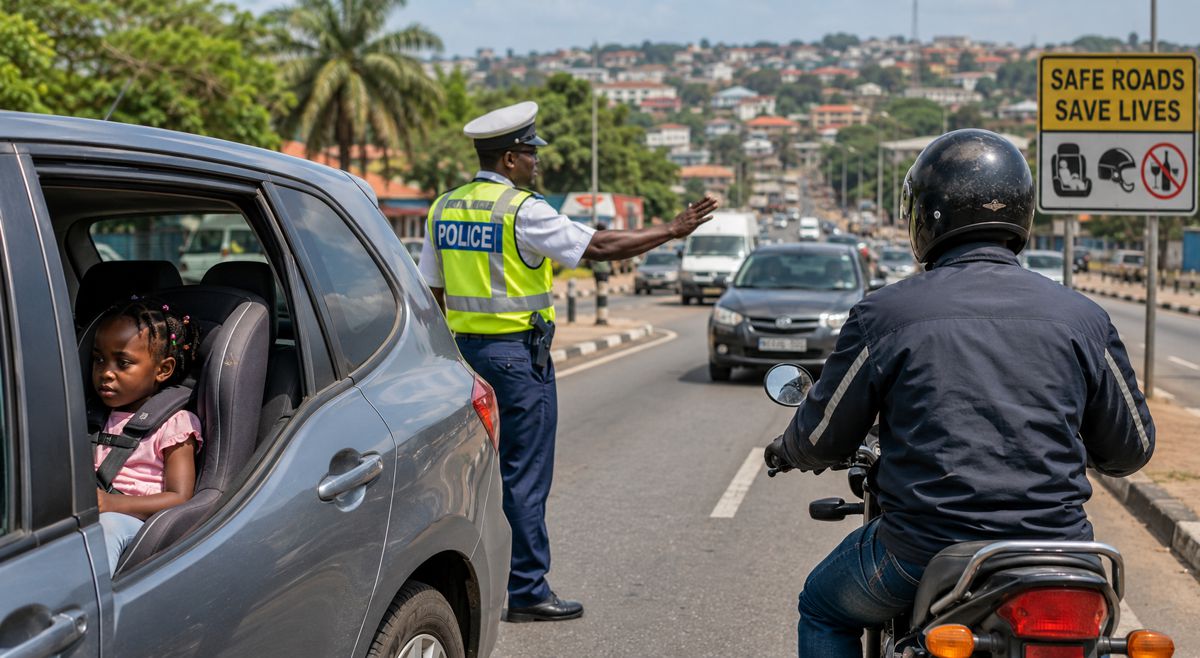
One of the most substantial changes within the new legislation centres on child occupant safety. Ghana’s revised framework now requires the use of child restraint systems that correspond to a child’s age, height, weight and physical vulnerabilities, bringing the country much closer to internationally recognised best practice.
For years, child restraint use across much of Africa has remained inconsistent due to affordability challenges, limited public awareness and weak regulatory enforcement. Yet evidence supporting their effectiveness is overwhelming. Studies referenced by the WHO show that correctly fitted child restraint systems can reduce crash-related deaths among infants by up to 71%.
The issue is particularly pressing in rapidly urbanising regions where traffic density has risen sharply. Children travelling unrestrained in overcrowded vehicles remain highly vulnerable during collisions, even at relatively low speeds. As vehicle ownership grows across Ghana’s cities and regional trade corridors, the absence of effective restraint systems has become increasingly difficult for policymakers to ignore.
The new standards are expected to place additional pressure on importers and retailers to improve the availability of certified child safety equipment. That could also stimulate wider conversations around vehicle standards enforcement and consumer safety regulation across West Africa’s automotive sector.
Lower Drink-Driving Limits Reflect International Standards
The revised legislation also strengthens Ghana’s approach to drink-driving by lowering the permitted blood alcohol concentration limit for drivers from 0.08 to 0.05 grams per decilitre. The previous threshold had long been criticised by road safety advocates as being out of step with international evidence on impairment risks.
Alcohol remains one of the leading contributors to fatal crashes worldwide. Research cited by the WHO indicates that between one-third and two-thirds of drivers killed in collisions across low and middle-income countries had consumed alcohol before the crash. Even relatively small amounts of alcohol can impair reaction times, judgement and hazard perception, particularly in high-density urban environments or poorly lit rural road networks.
Enforcement, however, will ultimately determine whether the new law delivers measurable improvements. Many countries have introduced lower alcohol limits without achieving major casualty reductions due to insufficient roadside testing capacity or inconsistent prosecution systems.
For Ghana, the challenge now lies in translating legislation into day-to-day enforcement. That will require investment in police training, testing equipment, judicial support and public awareness campaigns. Without those supporting measures, even well-designed laws can struggle to achieve meaningful behavioural change.
Helmet Standards Target Rising Motorcycle Fatalities
Motorcycle safety forms another critical pillar of the reforms. Riders now face stricter helmet requirements under the updated law, with all motorcyclists expected to wear helmets that meet approved safety standards.
Motorcycles have become increasingly central to mobility across African cities and rural communities alike. They offer affordable transport, support informal commerce and provide employment opportunities through delivery services and passenger transport operations. Yet they also represent one of the most vulnerable segments of the transport system.
In Ghana, motorcycle riders account for roughly one-third of all road deaths. Poor helmet quality has compounded the problem, with many riders using low-cost products that offer limited protection during high-impact collisions.
High-quality helmets dramatically improve survival outcomes. WHO-backed research shows that approved helmets can reduce the risk of death more than sixfold during crashes while substantially lowering the risk of traumatic brain injuries.
The new standards could reshape import practices and supply chains for protective equipment within the region. Enforcement agencies may also face pressure to crack down on counterfeit or uncertified helmets, an issue that affects several African transport markets.
International Partnerships Continue to Shape Road Safety Reform
Ghana’s legislative reforms were developed with support from the WHO, international partners and the Bloomberg Philanthropies Initiative for Global Road Safety. Since 2007, the initiative has supported more than 60 countries in strengthening laws relating to speed management, drink-driving, seatbelt use, child restraints and motorcycle helmets.
International road safety programmes have increasingly shifted from awareness campaigns towards direct legislative and enforcement support. Policymakers are recognising that public education alone rarely delivers sustained casualty reductions without legal frameworks and institutional capacity to support behavioural change.
Dr Fiona Braka, WHO Representative in Ghana, highlighted the significance of the reforms, stating: “Ghana’s amendment to the national road traffic act and new safety standards marks a major step forward for road safety. WHO is proud to have helped shape these changes that will save lives on the roads. Good laws and policies, strong leadership, coordination and enforcement are key to building safe transport systems that prioritize people and safety.”
That emphasis on coordination reflects a growing understanding that transport safety cannot be separated from infrastructure planning, urban design and economic development policy. Safer roads increasingly depend on collaboration between transport ministries, construction agencies, health systems, law enforcement and international development institutions.
Infrastructure Growth Must Be Matched by Safety Reform
Africa is expected to undergo one of the largest transport infrastructure expansions in the world over the next two decades. New highways, logistics corridors, industrial zones and urban transport systems are being developed to support population growth and trade integration under initiatives such as the African Continental Free Trade Area.
Yet infrastructure expansion without corresponding safety reforms risks intensifying casualty rates. Many countries continue to prioritise traffic flow and network expansion while underinvesting in pedestrian protections, enforcement systems and safe vehicle standards.
Ghana’s reforms signal an attempt to address that imbalance. The legislation acknowledges that road safety is not simply a transport issue but a national development challenge tied to healthcare systems, economic productivity and social stability.
For the global construction and infrastructure industry, the message is increasingly clear. Roads can no longer be judged solely by how quickly they move vehicles or freight. Their long-term value will increasingly be measured by how safely they move people.
A Safer Transport Future Depends on Enforcement
Passing legislation is often the easiest part of road safety reform. Sustained enforcement, public compliance and institutional accountability tend to determine whether casualty numbers actually fall over time.
Ghana’s updated laws create a stronger legal foundation, but their success will rely heavily on implementation. Enforcement agencies will need adequate funding, technical resources and political backing to apply the rules consistently across both urban centres and rural regions.
Public awareness campaigns will also play an important role. Many drivers, riders and passengers remain unfamiliar with international safety standards, particularly regarding child restraints and helmet certification. Without education and affordable access to compliant products, compliance levels may remain uneven.
Still, Ghana’s reforms represent a notable step forward at a time when road safety is gaining greater international urgency. With nearly 1.2 million people killed globally in road traffic incidents each year, and road crashes remaining the leading cause of death among people aged between 5 and 29, the pressure on governments to act is only intensifying.
For a country facing rising traffic volumes, expanding urbanisation and mounting economic pressures, safer roads are no longer a luxury. They are rapidly becoming an essential part of national resilience and sustainable growth.