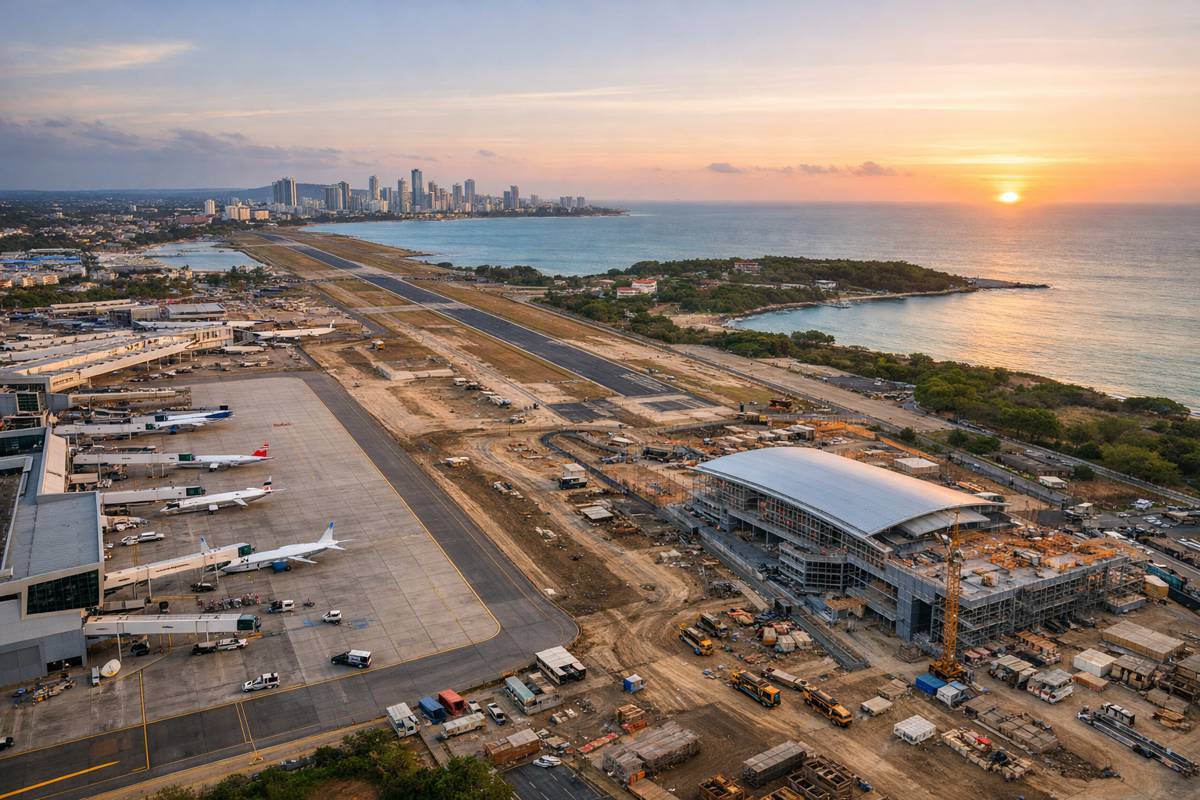
Colombia Strengthens Aviation Capacity With Cartagena Expansion
Colombia is stepping up its aviation ambitions with a major expansion of Rafael Núñez International Airport in Cartagena, a project that goes far beyond terminal upgrades. Backed by the country’s infrastructure authority and driven through a concession model, the development reflects a broader shift in how Latin America is modernising transport hubs to meet rising demand, unlock tourism growth and strengthen regional connectivity.
At the heart of the project is a decisive move by the national government to approve 18 key interventions that will transform the airport’s operational capacity and passenger experience. Yet, while the announcement may appear localised, its implications ripple across the global infrastructure sector. It highlights how mid-sized airports are becoming strategic assets in emerging markets, reshaping investment patterns and redefining the role of public private partnerships in aviation infrastructure.
A Strategic Upgrade with Global Implications
Cartagena has long been one of Colombia’s most important tourism gateways, drawing millions of visitors to its historic centre and Caribbean coastline. However, infrastructure has struggled to keep pace with demand. With passenger volumes climbing steadily over the past decade, the airport has approached its operational limits, creating bottlenecks that threaten both economic growth and visitor experience.
The expansion aims to increase annual passenger capacity from 7 million to 11 million, a substantial leap that aligns with broader trends in global aviation. According to the International Air Transport Association, passenger demand in Latin America continues to grow at rates exceeding global averages, driven by a combination of tourism recovery, middle class expansion and improved regional connectivity.
In that context, Cartagena’s upgrade is not simply about accommodating more travellers. It is about positioning the city as a competitive hub in the Caribbean aviation network. For investors and policymakers, this signals a growing recognition that secondary cities can play a pivotal role in relieving pressure on primary hubs while unlocking new economic corridors.
The Concession Model Driving Delivery
The project is being delivered through a concession awarded in 2025 to Operadora Internacional Aeropuerto de Cartagena, known as OINAC. This approach reflects a well-established model in Colombia, where private sector expertise and capital are leveraged to accelerate infrastructure delivery while maintaining public oversight.
Colombia has developed a reputation as one of Latin America’s most sophisticated markets for infrastructure concessions. Its fourth generation and fifth generation road programmes have attracted significant international investment, and the same framework is increasingly being applied to aviation assets. By extending this model to Cartagena’s airport, the government is signalling confidence in private operators to deliver complex upgrades efficiently and within defined timelines.
The project finance, estimated at COP 920 billion or approximately US$248 million, will be deployed over a construction period of around two and a half years. For contractors and supply chains, this represents a substantial opportunity across civil works, engineering services and specialist airport systems. For the wider industry, it reinforces the viability of concession driven airport development in emerging markets.
Expanding Capacity Without Expanding Footprint
One of the more notable aspects of the project is its environmental positioning. The approved interventions will be carried out within the airport’s existing licensed area, avoiding the need for additional land acquisition or significant ecological disruption. This is increasingly important in regions where environmental permitting can delay or derail major infrastructure projects.
Detailed technical and environmental documentation submitted in late 2025 and early 2026 assessed air quality, noise levels, ground stability and operational risks. The findings concluded that the anticipated impacts would be minimal and manageable, aligning with the Environmental Management Plan revised in 2025.
This approach reflects a growing trend in infrastructure development, where optimisation of existing assets is prioritised over expansion into new territories. By intensifying use within the current footprint, project developers can reduce both environmental risk and approval timelines, a factor that is becoming critical as sustainability requirements tighten globally.
Transforming the Passenger Experience
At the core of the expansion is the construction of a new international terminal spanning 17,360 square metres. This addition will significantly enhance the airport’s ability to handle international traffic, a key driver of tourism revenue for Cartagena and the wider Colombian economy.
Alongside the new terminal, 25,144 square metres of the existing facility will be renovated. This includes improvements to passenger processing areas, security infrastructure and commercial spaces. For travellers, the result should be a smoother, more efficient journey through the airport, with reduced congestion and improved amenities.
Airports are no longer just transport nodes. They have evolved into commercial ecosystems, where retail, hospitality and passenger services play a central role in revenue generation. By upgrading both new and existing infrastructure, Cartagena’s airport is positioning itself to capture these opportunities while meeting rising expectations from international travellers.
Strengthening Airside Operations
Beyond the terminal buildings, significant investment is being directed towards airside infrastructure. The commercial apron will be expanded by 15,740 square metres, bringing the total to nearly 100,000 square metres. This increase in apron space will allow the airport to accommodate more aircraft simultaneously, improving turnaround times and operational efficiency.
In addition, a new road running parallel to the runway will be constructed to streamline airport operations. This seemingly modest intervention can have a substantial impact, enabling more efficient movement of ground vehicles and reducing delays associated with aircraft servicing and logistics.
Airside efficiency is often overlooked in public discussions, yet it is a critical determinant of an airport’s overall performance. By addressing these operational aspects, the Cartagena project demonstrates a comprehensive approach that goes beyond passenger facing improvements.
Enhancing Landside Infrastructure and Accessibility
The project also includes the renovation of 11,683 square metres of parking facilities, increasing capacity to 330 vehicles. While this may appear incremental, landside access plays a crucial role in shaping the overall passenger experience and operational flow.
As airports expand, the interface between air transport and ground mobility becomes increasingly important. Efficient parking, drop off zones and road connections can significantly reduce congestion and improve accessibility. In Cartagena’s case, these upgrades will support the anticipated increase in passenger volumes while ensuring that the surrounding urban infrastructure can cope with the added demand.
More broadly, this highlights the need for integrated transport planning. Airports do not operate in isolation, and their success often depends on the quality of connections to city centres, hotels and regional transport networks. For policymakers, this underscores the importance of aligning airport investments with wider urban and regional development strategies.
Economic Impact and Regional Development
The expansion of Rafael Núñez International Airport is expected to generate significant economic benefits for Cartagena and the surrounding region. Increased passenger capacity will support growth in tourism, hospitality and related sectors, creating jobs and driving investment.
Cartagena is already one of Colombia’s most visited destinations, and improved airport infrastructure will make it even more accessible to international markets. This, in turn, can stimulate demand for new hotels, restaurants and tourism services, reinforcing the city’s position as a key economic hub in the Caribbean.
From a broader perspective, the project reflects the role of infrastructure as a catalyst for development. By improving connectivity, governments can unlock new opportunities for trade, investment and social mobility. In emerging markets, where infrastructure gaps remain significant, such projects can have a transformative impact.
A Blueprint for Sustainable Airport Growth
Perhaps most importantly, the Cartagena airport expansion offers a blueprint for how to balance growth with sustainability. By working within the existing footprint, minimising environmental impacts and integrating modern design principles, the project aligns with global efforts to make infrastructure more resilient and responsible.
Airports are under increasing scrutiny for their environmental footprint, particularly in terms of emissions and land use. While the aviation sector faces significant challenges in decarbonisation, infrastructure projects like this demonstrate that improvements can be made at the ground level through smarter planning and design.
For the global construction and infrastructure community, Cartagena’s approach provides valuable lessons. It shows that capacity expansion does not necessarily require large scale land acquisition, and that environmental considerations can be integrated into project design from the outset.
A Turning Point for Colombia’s Aviation Infrastructure
As construction progresses, the Rafael Núñez International Airport expansion is set to become one of Colombia’s most significant aviation projects in recent years. It reflects a broader commitment to modernising transport infrastructure and strengthening the country’s position in the global economy.
For investors, contractors and policymakers, the project offers a compelling case study in how to deliver complex infrastructure upgrades efficiently, sustainably and at scale. It also highlights the growing importance of regional airports in shaping the future of global aviation networks.
Ultimately, Cartagena’s airport is not just being expanded. It is being redefined as a strategic asset that can drive economic growth, enhance connectivity and support the evolving needs of a dynamic and increasingly interconnected world.