CIFA Pushes Concrete Placement Technology Into a New Era at SaMoTeR
Modern construction sites are under pressure from every direction. Urban density is increasing, labour shortages continue to bite, project timelines are tightening and infrastructure contractors are being asked to deliver more complex builds with fewer delays and tighter environmental controls. In response, equipment manufacturers are being forced to rethink long-established machine categories, especially in concrete transport and placement where logistics bottlenecks can cripple productivity.
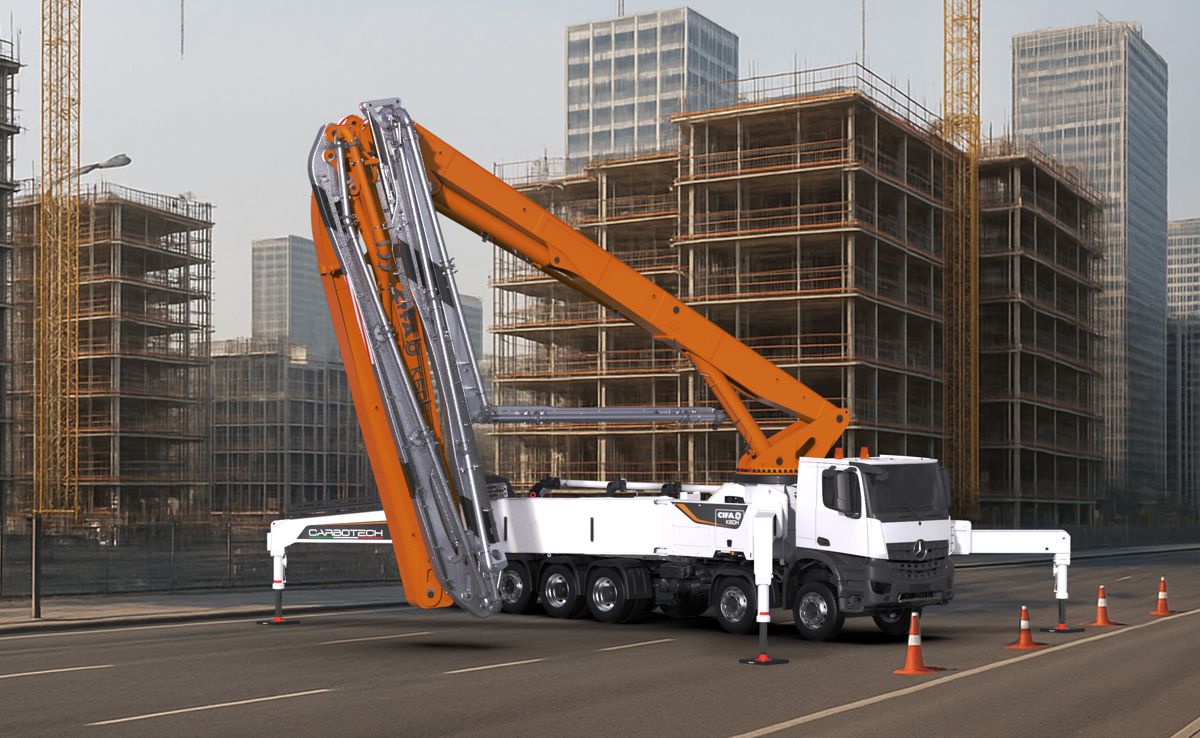
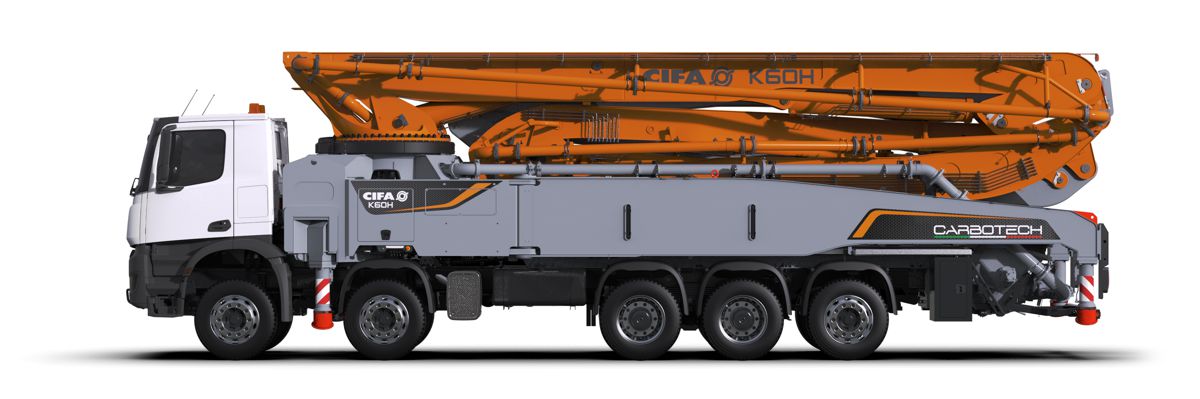
Italian concrete machinery specialist CIFA used SaMoTeR to unveil two machines aimed squarely at those operational pressures. The new K60H truck-mounted concrete pump and the MK35H truck mixer pump reflect a broader industry movement toward compact high-performance equipment designed for constrained jobsites, infrastructure megaprojects and increasingly digitised construction operations.
Rather than simply chasing larger boom sizes or higher pumping outputs, the engineering philosophy behind both machines appears focused on efficiency, manoeuvrability and reduced operational friction. That matters because modern infrastructure projects rarely resemble the wide-open construction environments of previous decades. Contractors today are working inside crowded cities, beneath bridges, inside tunnels, alongside live traffic, within industrial plants and on complex redevelopment sites where every metre of clearance counts.
Concrete placement technology has therefore become less about brute force and more about precision, flexibility and logistics optimisation. CIFA’s latest additions signal how rapidly this sector is evolving as contractors demand machines capable of adapting to highly variable operating conditions without compromising output.
Briefing
- CIFA introduced the new K60H concrete pump featuring a seven-section boom and CARBOTECH carbon fibre technology
- The K60H reduces boom unfolding height by around 32 percent compared to conventional pumps in the same category
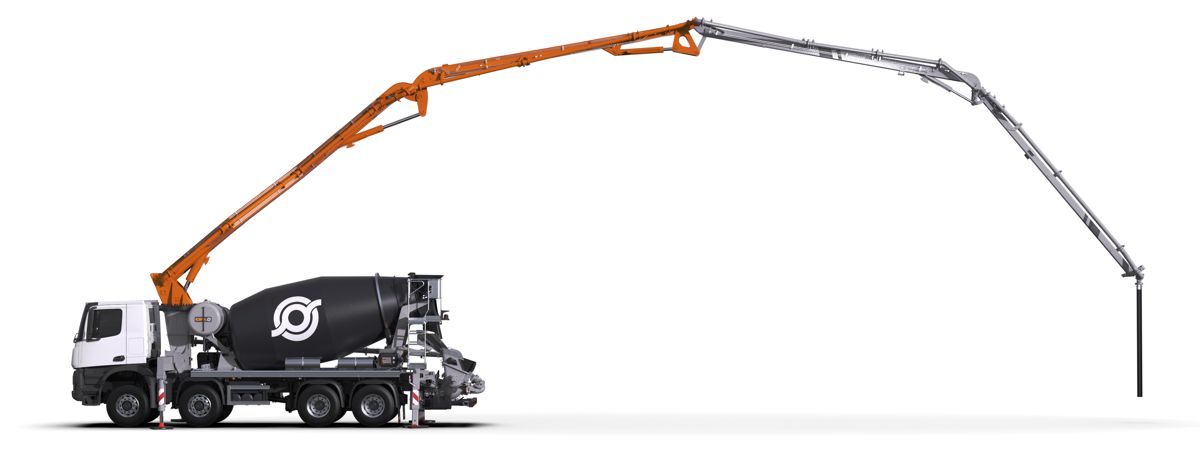
- The MK35H combines mixing and pumping functions into one compact machine for urban and restricted jobsites
- Carbon fibre boom technology continues reshaping the balance between machine reach, weight and road compliance
- Both machines reflect growing industry demand for compact, digitally controlled and logistics-efficient concrete equipment
The Construction Industry’s Shift Toward Compact High Capacity Equipment
The global concrete equipment market has been steadily changing over the past decade. Contractors increasingly require machinery capable of operating within dense urban environments while still supporting major infrastructure works such as tunnels, bridges, ports, rail corridors and high-rise developments.
Research from multiple construction equipment analysts has shown rising demand for compact and multifunctional machinery, particularly in Europe and Asia where transport regulations, emissions rules and urban space limitations heavily influence equipment procurement decisions. The pressure to reduce downtime and streamline logistics is also reshaping how contractors evaluate fleet investments.
Traditionally, achieving longer boom reach meant accepting heavier machines, more complicated transport logistics and reduced flexibility on constrained sites. Yet city-centre infrastructure upgrades and redevelopment schemes often leave little room for large stabilisation footprints or complex setup procedures. Equipment manufacturers are therefore being forced to deliver machines that balance reach, mobility and regulatory compliance in ways that simply were not possible twenty years ago.
This changing environment helps explain the significance of the K60H. The machine is not merely a larger pump. It represents an attempt to rethink how a 60-metre-class pump behaves in real-world operating conditions where space restrictions frequently determine productivity.
The K60H Targets Infrastructure Complexity
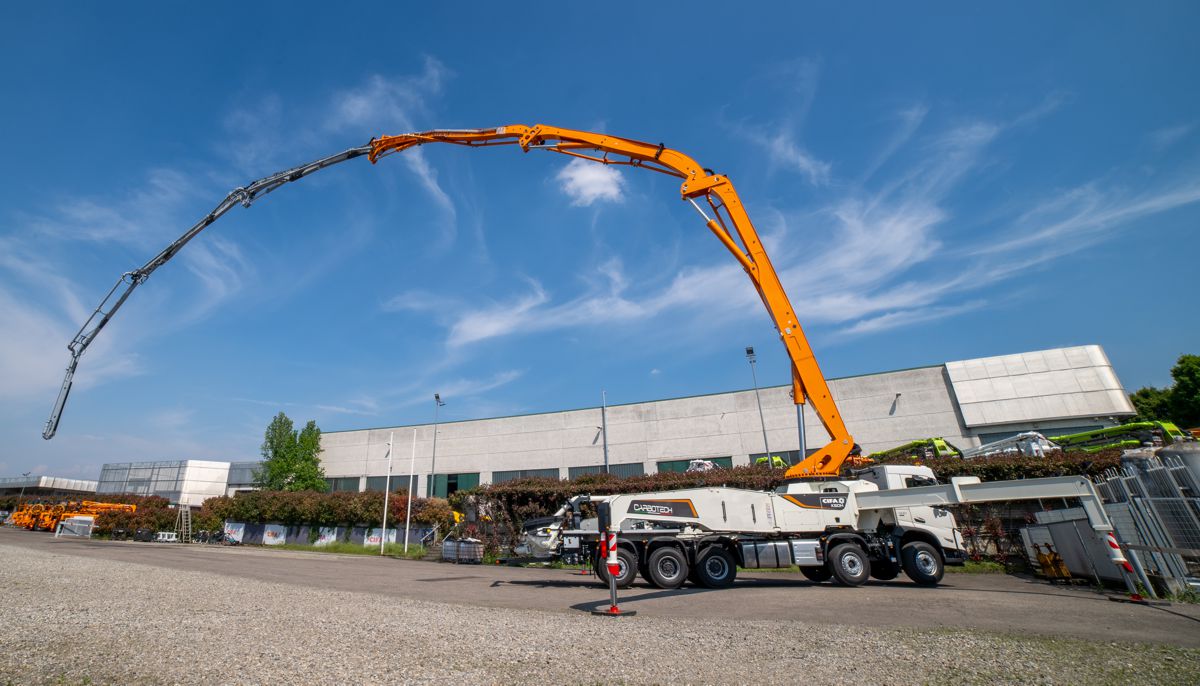
At the centre of the K60H’s design is its new seven-section boom configuration. While boom section counts may sound like a purely technical detail, they directly influence how effectively operators can place concrete in difficult environments.
By increasing the number of boom sections from six to seven, CIFA has created shorter individual boom segments that allow greater flexibility during deployment. This helps operators navigate around structures, overhead obstructions and confined site layouts with greater precision.
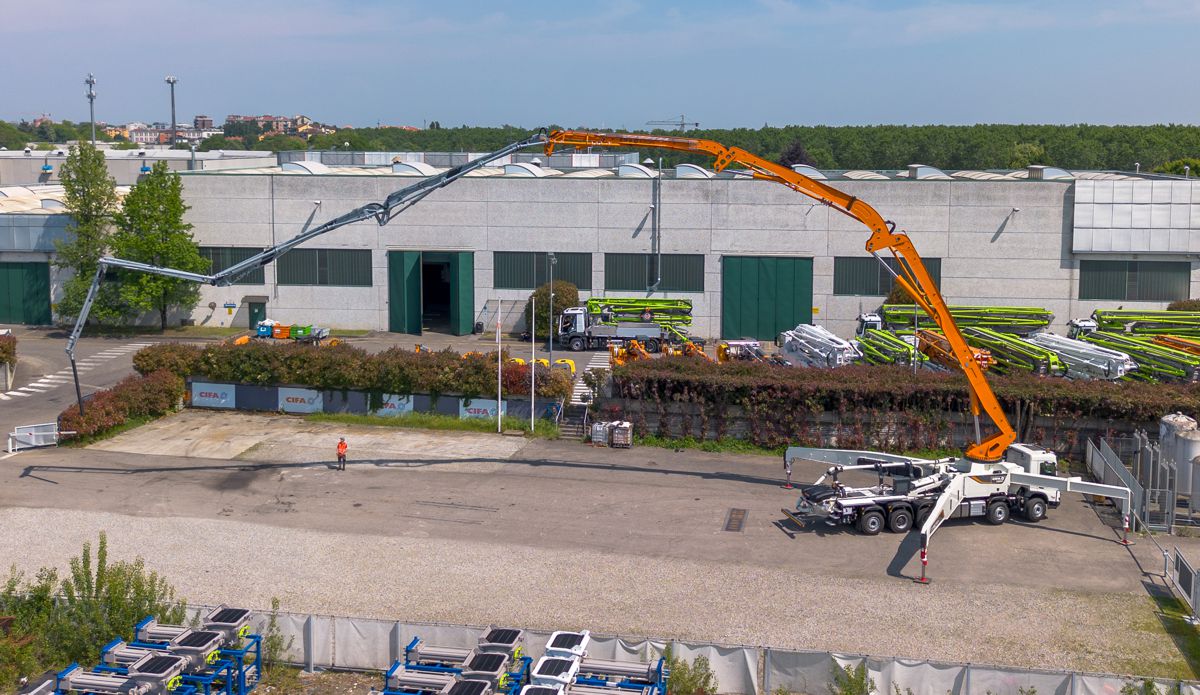
One of the machine’s most notable characteristics is its reduced unfolding height. CIFA states that the K60H can open with less than 10 metres of vertical clearance, approximately 32 percent lower than conventional pumps within the same category. That reduction could prove especially valuable for projects inside industrial facilities, beneath bridge decks, within tunnels or on urban developments where overhead constraints frequently limit equipment choices.
The overall road configuration has also been designed with manoeuvrability in mind. Despite its reach, the K60H maintains an overall length of roughly 13.5 metres while operating on a five-axle chassis. For contractors operating across European road networks where axle loads and transport regulations are tightly controlled, maintaining legal compliance without sacrificing boom reach offers clear operational advantages.
The absence of major overhangs above the cab or rear section further improves handling and site accessibility. Those details may appear subtle, but on congested infrastructure projects they can significantly reduce repositioning times and simplify vehicle movements around live operations.
Carbon Fibre Continues Changing Concrete Pump Engineering
The K60H also continues CIFA’s long-running investment in CARBOTECH technology, which integrates carbon fibre into the boom structure. Carbon fibre has become increasingly important within specialist construction equipment because it offers a rare combination of reduced weight and high structural strength.
In practical terms, lighter boom structures improve machine balance, reduce stress on supporting components and help manufacturers maintain longer reaches without dramatically increasing chassis size or overall weight. That balance becomes especially important in Europe where transport legislation places strict limits on axle loads and vehicle dimensions.
Carbon fibre technology has traditionally been associated with aerospace, motorsport and advanced manufacturing sectors due to its high production costs. However, its gradual adoption within heavy construction equipment reflects how contractors increasingly prioritise lifecycle efficiency over simple acquisition cost.
Reduced wear, lower fuel consumption, improved stability and easier transport compliance can all contribute to lower operating costs across a machine’s service life. For large contractors managing extensive fleets across multiple infrastructure projects, those efficiencies can quickly become commercially significant.
The use of carbon fibre also aligns with wider industry trends surrounding sustainability and operational efficiency. Lighter machines typically consume less energy during transport and operation while placing reduced strain on road infrastructure itself.
Pumping Capacity Meets Digital Control
Performance figures alone no longer define premium construction equipment. Contractors increasingly expect machines to deliver real-time diagnostics, operational monitoring and automated safety functions alongside raw productivity.
The K60H addresses this through CIFA’s Smartronic Advanced control system, which integrates multiple operational management functions into a unified interface. These include advanced stability control, automatic engine speed adjustment, boom extension management, pumping diagnostics and LCD monitoring systems.
Digital control integration has become increasingly important across the wider construction sector as equipment fleets become more connected and data-driven. Large infrastructure contractors are under mounting pressure to improve productivity tracking, reduce unplanned downtime and strengthen site safety performance.
Machine telematics, automated diagnostics and integrated control systems are therefore no longer optional extras for many contractors. They are becoming baseline requirements for fleet management and operational planning.
The K60H’s pumping unit, capable of delivering up to 180 cubic metres per hour, positions the machine for large-scale concrete placement operations where continuous output is critical. High-volume pours for bridges, tunnels, energy infrastructure and industrial facilities depend heavily on reliable pumping performance to avoid cold joints and maintain structural consistency.
The MK35H Brings Mixer And Pump Operations Together
While the K60H targets large-scale infrastructure operations, the MK35H focuses on a different but equally important challenge facing contractors: jobsite efficiency in compact environments.
The machine combines a concrete mixer and pump within a single unit, reducing the need for separate transport and pumping equipment. That integration can simplify logistics considerably, particularly on urban developments where access limitations, traffic restrictions and staging constraints complicate conventional concrete delivery operations.
Equipped with a 9 cubic metre drum and a 35-metre four-section boom, the MK35H has been designed to balance transport capacity with operational flexibility. Its compact configuration allows easier positioning within confined sites while helping contractors reduce setup time.
Urban construction increasingly depends on machines capable of performing multiple functions without requiring excessive support infrastructure. Smaller city-centre projects often face tight delivery schedules, restricted operating hours and limited staging space. Integrated equipment solutions therefore become increasingly attractive because they reduce site congestion and simplify coordination.
The MK35H’s integrated approach also reflects wider construction industry trends toward modular workflows and reduced logistical complexity. Every eliminated vehicle movement can potentially reduce fuel consumption, labour requirements and operational risk on busy sites.
Reliability And Simplicity
Despite growing digitalisation within construction equipment, contractors continue to place enormous value on reliability and ease of operation. Sophisticated machinery that becomes difficult to maintain or overly dependent on specialist technicians can quickly create operational headaches on demanding projects.
The MK35H addresses this balance through its PB908 pumping unit and Easytronic control system. CIFA states that the machine delivers pumping performance up to 90 cubic metres per hour while maintaining operational continuity under demanding conditions.
Remote-control operation further improves usability while helping operators position concrete more accurately and safely. Reduced training complexity may also become increasingly important as the industry continues grappling with skilled labour shortages across Europe and other major construction markets.
Labour availability remains one of the biggest challenges facing global construction. Industry bodies across Europe, North America and Asia continue warning about ageing workforces and declining numbers of younger skilled operators entering the sector. Equipment that simplifies operation while improving productivity may therefore play a growing role in helping contractors maintain output levels.
Concrete Equipment Evolves With Modern Infrastructure Demands
Concrete placement technology rarely attracts the same headlines as autonomous vehicles, robotics or artificial intelligence, yet it remains absolutely central to modern infrastructure delivery. Roads, tunnels, airports, ports, energy facilities and urban developments still rely heavily on efficient concrete handling operations.
What is changing, however, is the operating environment surrounding those projects. Infrastructure construction today demands faster deployment, tighter logistics, lower emissions, improved safety performance and greater adaptability to constrained sites.
Machines like the K60H and MK35H demonstrate how equipment manufacturers are responding to those changing realities. Flexibility, compactness, lightweight engineering and integrated digital systems are becoming defining characteristics of next-generation construction machinery.
CIFA’s latest machines also underline how concrete equipment design is becoming increasingly specialised. Contractors no longer simply purchase the largest machine available. Instead, procurement decisions increasingly revolve around operational compatibility with highly specific project conditions.
For infrastructure firms balancing productivity targets against regulatory pressure and urban complexity, that shift could prove increasingly important in the years ahead.