Melbourne Build Expo Fuels Victoria’s Construction Ambitions
Victoria’s construction and infrastructure sectors are entering another pivotal phase. Population growth, housing shortages, transport investment, decarbonisation targets and digital transformation are all colliding at once, creating enormous pressure on the industry to build faster, smarter and more sustainably. In that environment, large-scale industry gatherings are becoming more than trade exhibitions. They are increasingly acting as strategic meeting points where contractors, engineers, policymakers, developers, architects and technology firms can compare solutions, forge partnerships and gauge the direction of the market.
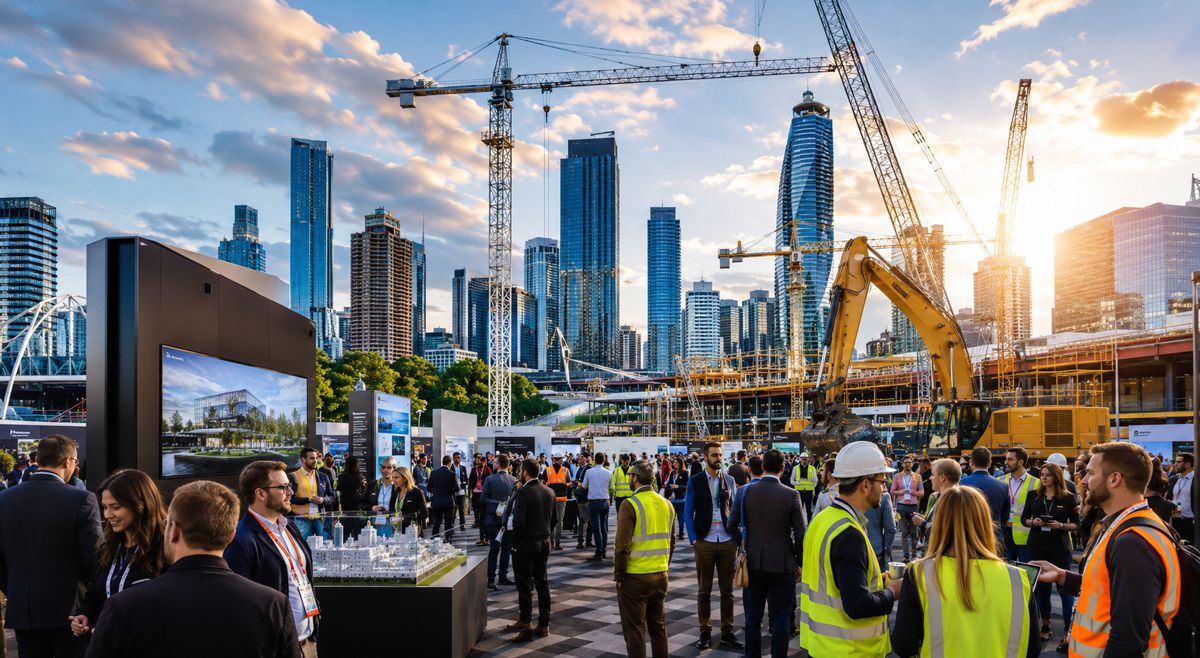
The 2026 edition of Melbourne Build Expo is positioning itself as one of the most influential built environment events in the Southern Hemisphere. Scheduled for 25 and 26 November 2026 at the Melbourne Convention and Exhibition Centre, the event is expected to attract more than 20,000 industry professionals, alongside 500 speakers and over 350 exhibitors spanning construction, engineering, property, infrastructure, safety and digital technologies.
The scale of the event reflects broader shifts taking place across Australia’s infrastructure economy. According to Infrastructure Australia and state government projections, Victoria continues to face mounting pressure to expand transport networks, accelerate housing delivery and modernise critical infrastructure. Melbourne itself is forecast to remain one of Australia’s fastest-growing cities over the coming decades, intensifying demand for construction innovation, workforce development and investment coordination.
Rather than functioning purely as a conventional trade show, Melbourne Build Expo has evolved into a broad industry platform that merges conferences, technical education, product showcases, policy discussions and large-scale networking under one roof. Its co-location with InstallerSHOW Melbourne, The Fire Safety Event Australia and The Security Event Australia also reflects how construction is becoming increasingly interconnected with building systems integration, safety technologies, energy efficiency and smart infrastructure.
Briefing
- Melbourne Build Expo 2026 returns on 25 to 26 November 2026
- The event is expected to host more than 20,000 attendees, 500 speakers and 350 exhibitors
- Major organisations involved in the speaker programme include ARUP, AECOM, John Holland and Multiplex
- Twelve CPD summits will focus on housing, digital construction, sustainability, MMC, infrastructure and design
- The event is co-located with InstallerSHOW Melbourne, The Fire Safety Event Australia and The Security Event Australia
Construction Events Are Becoming Strategic Industry Platforms
Large construction exhibitions used to revolve primarily around machinery launches and supplier stands. That model still exists, but the role of industry events has shifted significantly over the past decade. Today’s major expos increasingly function as intelligence hubs where businesses assess policy trends, evaluate procurement pipelines, monitor technology adoption and identify future commercial risks.
Australia’s construction market is particularly sensitive to those pressures. The sector continues to battle workforce shortages, rising material costs, project delivery challenges and tightening sustainability expectations. At the same time, governments are attempting to accelerate transport upgrades, housing development and renewable energy infrastructure programmes. Those overlapping demands are pushing firms to rethink procurement strategies, construction methods and project management models.
Melbourne Build Expo’s programme reflects those realities. The 2026 agenda includes dedicated summits covering digital construction, modern methods of construction, sustainability, future housing delivery, infrastructure investment and AI-enabled workflows. That broad mix suggests the event is targeting not just contractors and suppliers, but the wider ecosystem shaping project delivery across Victoria and Australia.
The increasing prominence of digital technologies is particularly notable. Building information modelling, AI-assisted project management, connected jobsite systems and digital twins are no longer niche topics reserved for specialist conferences. They are now central operational concerns for infrastructure owners, developers and contractors attempting to improve productivity and reduce project risk.
High Profile Industry Participation Signals Market Confidence
The first wave of announced speakers gives a strong indication of the event’s positioning within the Australian construction sector. Organisations contributing speakers include ARUP, AECOM, JLL, CPB Contractors, Hickory, Mirvac and CBRE.
That cross-section matters because it reflects the convergence now taking place between infrastructure delivery, property development, engineering consultancy and digital project management. The boundaries separating these sectors are becoming increasingly blurred as major projects require closer coordination between planners, investors, contractors and technology specialists.
The participation of major contractors and developers also points to sustained confidence in Victoria’s long-term infrastructure pipeline. Melbourne continues to invest heavily in rail expansion, housing delivery, urban renewal and transport connectivity. Projects such as the Suburban Rail Loop, Metro Tunnel and major road upgrades continue to reshape procurement and workforce requirements across the state.
For suppliers and technology firms, events like Melbourne Build Expo provide an opportunity to align products and services with those evolving infrastructure priorities. The value lies not just in sales opportunities, but in understanding how client expectations are changing around sustainability, resilience, digital integration and lifecycle asset management.
Digital Construction Moves Into the Mainstream
One of the strongest themes emerging from the 2026 programme is the continued mainstream adoption of digital construction technologies. Over the past few years, Australia’s infrastructure sector has accelerated investment in BIM workflows, cloud collaboration tools, site analytics, automation and AI-assisted planning systems.
The shift is being driven by necessity as much as innovation. Infrastructure owners and governments are demanding better visibility over cost, programme risk and long-term asset performance. Contractors meanwhile are looking for ways to improve productivity in an industry that has historically struggled with fragmented workflows and inconsistent data management.
Melbourne Build Expo’s AI and Digital Construction summits are likely to attract strong attention as firms attempt to separate practical deployment from marketing noise. Construction professionals are increasingly focused on tools that deliver measurable operational value rather than experimental technology with limited field application.
That distinction matters because digital adoption across construction is becoming more commercially disciplined. Firms are now evaluating technology based on labour efficiency, project predictability, safety improvements and lifecycle asset performance. Events capable of bringing together software providers, contractors, consultants and infrastructure owners in a practical environment are becoming increasingly important to industry decision-making.
Sustainability and Housing Pressures Shape the Agenda
Housing delivery is another major theme underpinning the event’s content strategy. Victoria, like much of Australia, faces growing pressure to accelerate residential construction while simultaneously meeting stricter sustainability and building performance standards.
Modern methods of construction, prefabrication and modular systems are therefore moving higher up the industry agenda. These approaches are increasingly viewed as potential solutions to labour shortages, project delays and affordability concerns. Melbourne Build Expo’s focus on MMC and future housing reflects broader conversations taking place across government and industry regarding how Australia can improve construction efficiency without compromising quality or compliance.
Sustainability remains another defining issue. Construction companies are facing increasing scrutiny over embodied carbon, operational emissions, waste reduction and material sourcing. Investors and governments are also placing greater emphasis on ESG performance across infrastructure and property projects.
That shift is changing procurement behaviour throughout the supply chain. Contractors and developers are increasingly assessing suppliers based not only on price and delivery capability, but also on carbon reporting, environmental performance and lifecycle sustainability metrics. Industry events are becoming important venues for demonstrating compliance capabilities and sharing emerging best practices.
Networking and Industry Culture Take Centre Stage
Beyond the conference stages and exhibition halls, Melbourne Build Expo continues to place heavy emphasis on networking and industry culture. More than 20 curated networking events are planned across the two-day programme, including major gatherings focused on Women in Construction and Diversity in Construction.
That emphasis reflects a broader recognition that workforce development and industry culture are now strategic concerns rather than peripheral HR topics. Australia’s construction sector continues to battle skills shortages, retention challenges and workforce diversity issues, particularly across technical and leadership roles.
The expo’s Ambassador Programme, which promotes diversity, sustainability, mental health, digital construction and young professionals, mirrors a wider industry effort to modernise the image and accessibility of construction careers. While progress remains uneven across the sector, there is growing acknowledgment that long-term workforce resilience depends on attracting a broader range of talent into the industry.
Melbourne Build Expo’s more festival-style atmosphere also reflects changing expectations around industry events. Live entertainment, DJs, networking parties and interactive demonstrations are increasingly being used to encourage deeper engagement and wider participation beyond traditional sales-focused exhibition formats.
International Expansion Reflects Growing Global Influence
The event forms part of the wider Build Expo portfolio organised by Nineteen Group, which operates construction-focused events in cities including Sydney, London, New York and Chicago.
That international footprint matters because construction and infrastructure challenges are becoming increasingly global in nature. Issues such as labour shortages, decarbonisation, digitalisation, supply chain resilience and urbanisation are affecting markets worldwide. International event platforms allow firms to compare regional approaches and identify transferable solutions across different infrastructure ecosystems.
Australia’s construction sector has historically been somewhat insulated geographically, but that dynamic is changing rapidly. Global investment flows, international contractors, imported technologies and international sustainability frameworks are increasingly shaping local project delivery.
Events like Melbourne Build Expo therefore serve not only as regional industry gatherings, but also as gateways connecting Australian construction professionals with broader international trends and innovations.
A Construction Industry Under Pressure to Evolve
The construction sector rarely changes quickly. Large projects, fragmented supply chains and conservative procurement practices tend to slow transformation. Yet the pressure now facing the industry is becoming difficult to ignore. Governments want faster housing delivery, infrastructure owners want better asset performance, contractors want improved productivity and communities expect safer, greener and more resilient infrastructure.
Melbourne Build Expo 2026 arrives at a moment when those pressures are intensifying simultaneously. The event’s scale, breadth and cross-sector focus suggest it is attempting to reflect the increasingly interconnected nature of modern infrastructure delivery rather than simply showcase products on a trade floor.
For construction professionals, developers, engineers, policymakers and technology firms, the event offers a snapshot of where the industry is heading and perhaps more importantly, where it is struggling to keep pace. The conversations taking place inside the MCEC this November are likely to reveal just as much about the sector’s growing pains as its ambitions.