Montréal Bets on AI to See Crashes Coming Before They Happen
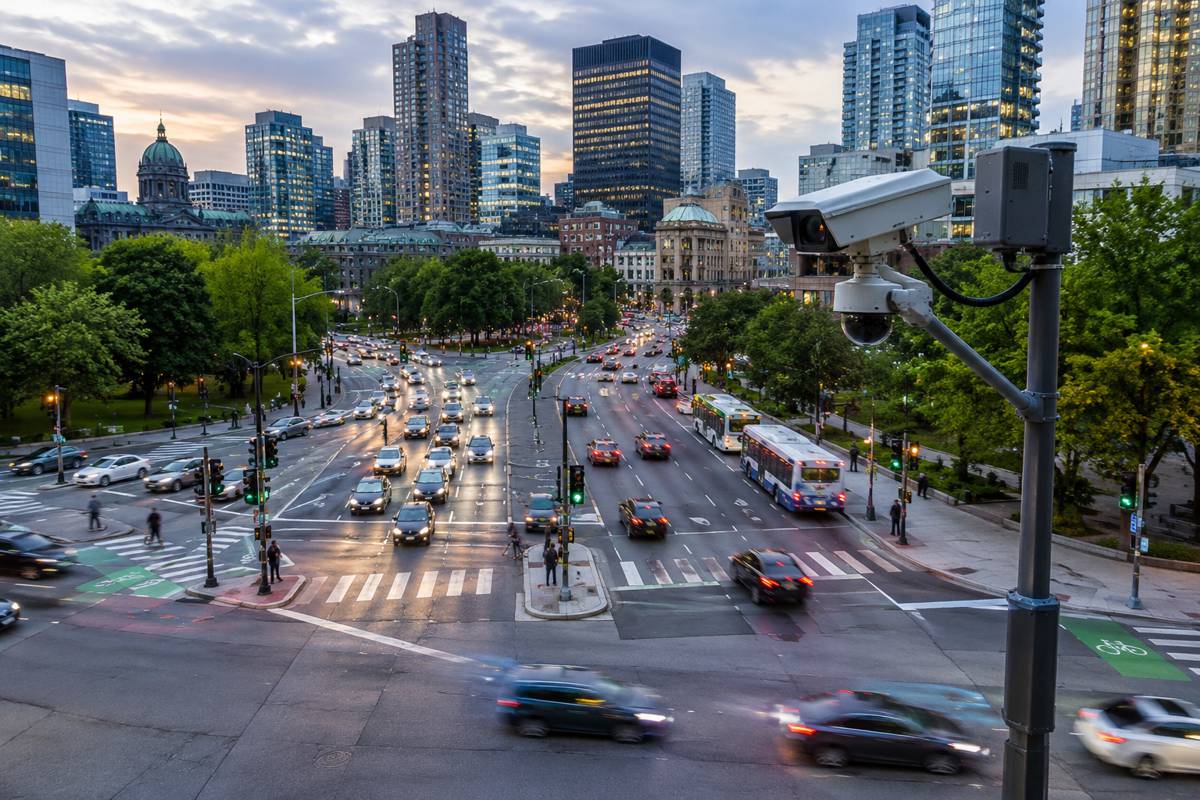
Montréal has put artificial intelligence at the centre of how it watches over its streets, switching on Derq’s INSIGHT platform across 100 intersections in what ranks among the largest deployments of its kind anywhere in North America. The rollout sits inside the city’s Safety and Mobility Analysis System at Intersections, known as SASMI, and it hands the city’s transportation teams something they’ve rarely had at this scale: a live, granular read on what’s actually unfolding on the road network rather than a stack of crash reports compiled weeks after the fact.
That distinction is the whole point. For decades, cities have managed roadway safety the way a coroner manages a case, looking backwards at what already went wrong. Montréal’s move flips that logic on its head, and it does so at a moment when transport agencies across the continent are under real pressure to show they can prevent harm rather than simply tally it. The deployment is being delivered alongside Tacel Ltd., Derq’s Canadian distribution partner, and it gives the wider industry a working template for what data-led, citywide safety management looks like when it leaves the pilot stage and goes operational.
Briefing
- Montréal has deployed Derq’s AI-powered INSIGHT platform across 100 intersections as part of its SASMI initiative, one of the largest such rollouts in North America to date.
- The system shifts the city from historical, fragmented crash reporting towards real-time monitoring of risk patterns, traffic flow and emerging safety hotspots.
- Delivery is being handled with Tacel Ltd., a Canadian intelligent transportation systems firm founded in 1979 and a longstanding supplier to the city.
- Derq is an MIT spinoff founded in 2016, holds 20 patents, and runs technology across the United States, Canada and the Gulf region.
- The contract lands as agencies elsewhere, including New Jersey ahead of the 2026 FIFA World Cup, turn to similar AI tools to manage complex, high-volume networks.
Why a Hundred Intersections Changes the Calculus
Scale is what separates a proof of concept from a genuine operational tool, and 100 intersections is a serious commitment by any measure. Plenty of cities have trialled AI safety analytics at a handful of junctions, gathered some encouraging numbers, then stalled when it came time to find the budget and the political will to go further. Montréal has skipped past that awkward middle stage, and in doing so it’s signalling to the market that this technology is ready to carry real responsibility across a busy multimodal network rather than sit quietly in a lab.
The city has also left itself room to grow. Officials have framed the 100-intersection figure as a starting position, with the platform built to expand across the broader network over time. For suppliers, integrators and investors watching the intelligent transportation space, that’s the part that matters. A large initial footprint with a clear path to expansion is exactly the kind of anchor contract that turns a promising vendor into an established one, and it gives other municipal procurement teams a reference deployment they can point to when they’re trying to justify their own spending.
From Rear-View Mirror to Real Time
Karl Jeanbart, Derq’s chief operating officer and co-founder, summed up the gap the platform is meant to close. “Cities have traditionally relied on fragmented, historical reports and limited data to understand roadway safety and traffic performance,” he said. “Montréal is taking a more proactive approach by using AI to produce granular traffic intelligence and provide real-time decision support across its transportation network. As founders from Montréal, we’re especially proud to support the city in advancing this work.”
What that means in practice is a steady feed of intelligence on how vehicles, cyclists and pedestrians are moving through each junction, with the software flagging the near-misses and risky patterns that usually go unrecorded until they turn into an actual collision. INSIGHT folds in automated traffic signal performance measures and predictive analytics, the same building blocks Derq showcased in the latest version of the platform unveiled at Intertraffic 2026 in Amsterdam. The technology is hardware-agnostic and designed to plug into infrastructure cities already own, from existing video sensors to traffic signals, which keeps the integration burden lower than a full rip-and-replace would demand. For engineers used to waiting on quarterly crash statistics, the shift to something closer to a live dashboard is a meaningful change in how the job gets done.
A City With Skin in the Game
The deployment doesn’t arrive in a vacuum. Montréal has been chasing its Vision Zero pledge for years, committing to eliminate road deaths and serious injuries by 2040 through a mix of street redesign, lower speed limits and better-protected crossings. Pedestrians remain the most exposed group on its roads, a pattern that holds across most large Canadian cities, and the city’s safety teams have repeatedly said the hard part isn’t agreeing on the goal but finding interventions sharp enough to move the numbers. AI-driven monitoring offers a way to target those interventions where the evidence says they’ll do the most good.
Alan DeSousa, the borough mayor responsible for mobility and infrastructure, tied the rollout directly to that ambition. “At Montréal, the safety of all road users is an absolute priority. The deployment of artificial intelligence solutions marks a strategic shift toward more proactive mobility management, enabling us to anticipate risks, respond more quickly, and, ultimately, save lives, while positioning the City as a leader in innovation,” he said. City councillor Alexandre Teodoresco, who holds the brief for optimisation, municipal performance and innovation, put the emphasis on the practical payoff. “This project demonstrates how innovation, driven by the intelligent use of data, can improve daily life for Montréalers. By taking full advantage of real-time data, we are strengthening our ability to analyze issues on the ground and better target interventions where they can have the greatest impact,” he said.
The Channel Partner Quietly Doing the Heavy Lifting
Behind most successful municipal technology rollouts sits a partner who knows how to navigate procurement, integration and the unglamorous business of keeping kit running, and that’s the role Tacel is playing here. Founded in 1979, the firm has spent more than four decades supplying traffic signal equipment and intelligent transportation systems to agencies across Canada, and it has a long working relationship with Montréal specifically. That history matters, because a vendor parachuting into a new market cold faces a steep climb, whereas a trusted local supplier already understands how the city buys and what it expects.
Yassine Benamghar, a vice president at Tacel, pointed to the operating reality that’s pushing agencies in this direction. “Transportation agencies are under growing pressure to make faster, more informed decisions across increasingly complex transportation networks,” he said. “Montréal’s deployment of Derq demonstrates how real-time safety intelligence can respond more quickly to emerging roadway risks.” The arrangement reflects a broader pattern in the sector, where a fast-moving AI specialist pairs with an established distributor to reach markets neither could serve as effectively alone. For Derq, the tie-up is the engine that turns a strategic distribution agreement, formalised earlier in 2026, into actual installations on the ground.
Part of a Wider Wave
Montréal’s contract reads rather differently once it’s placed next to what Derq has been up to elsewhere. The company, an MIT spinoff founded in 2016 with 20 patents to its name, has built its technology into networks across the United States, Canada and the Gulf region, and it carries a string of industry credentials including a Techstars Mobility alumni badge and recognition from the World Economic Forum. Its leadership team holds doctorates from MIT, Georgia Tech, IIT and McGill, the last of those a Montréal institution, which lends some substance to the founders’ claim of local roots.
The timing is telling too. Days after the Montréal news, Derq confirmed it was supporting a major intelligent transportation upgrade across roughly 95 sites around MetLife Stadium in New Jersey, part of a state effort to brace its roads for the more than a million visitors expected during the 2026 FIFA World Cup. Different city, different trigger, same underlying bet that real-time AI analytics can keep a stretched network moving and safer at once. Taken together, the deployments sketch out a sector finding its feet commercially, with municipalities and state agencies alike treating roadway intelligence as core infrastructure rather than a nice-to-have experiment.
What Montréal’s Move Tells the Rest of the Field
The honest test of any safety technology isn’t the press event, it’s whether the numbers shift over the following years, and on that front the jury is still out. Montréal will need to show that live monitoring actually translates into fewer collisions and faster, smarter interventions, not just a richer pile of data nobody has time to act on. Pulling that off depends as much on the city’s own processes, staffing and willingness to follow the evidence as it does on the software itself.
Still, the decision to go big rather than dip a toe in says something about where the wind is blowing. Cities that have spent years managing road safety in the rear-view mirror are starting to want a windscreen view instead, and the vendors who can deliver that at scale, with a credible local partner alongside them, are the ones likely to clean up as the market matures. Montréal has handed the rest of the field a fairly clear message: the proactive era of road safety management has stopped being theoretical, and the agencies that move first will set the terms everyone else ends up following.