Lightship Drives Job Site Power With PowerSled
The default soundtrack of a construction site has, for decades, been the low rumble of a diesel generator. Walk onto almost any job site at dawn and you’ll hear one before you see a single tool swing. Lightship, the Broomfield-based electric mobility firm best known for its Aero-Electric travel trailers, reckons that noise is on borrowed time.
The company has unveiled PowerSled, a configurable mobile battery platform aimed squarely at infrastructure, utility, emergency response and off-grid work, and in doing so it has opened a commercial division that takes its consumer technology somewhere far more industrial.
What sets PowerSled apart from the towable generators and battery trailers already rattling around work sites is that it does two jobs at once. It hauls payloads of up to 8,700 pounds while delivering grid-free electricity where it’s needed, and crucially it pulls some of its own weight in transit. Rather than acting as dead tonnage behind a truck, the platform uses Lightship’s TrekDrive propulsion-assist system to actively help the tow vehicle, trimming the efficiency penalty that usually comes with dragging a heavy trailer around.
For contractors weighing up how to power an increasingly electrified fleet of plant and tools, that combination of cargo, energy and self-propulsion is the part worth paying attention to.
Briefing
- Lightship has launched PowerSled, a commercial mobile power platform offering up to 240 kWh of usable battery capacity and 38 kW of continuous vehicle-to-load output, targeting construction, utility, emergency response and off-grid markets.
- The platform carries up to 8,700 pounds of payload and uses TrekDrive propulsion assist to reduce towing losses, distinguishing it from conventional towable generators and battery trailers.
- Agricultural drone manufacturer Exedy Drones is the launch customer, deploying PowerSled as a mobile charging and field operations hub for crop monitoring and spraying fleets.
- Orders are open now, with the launch following a Colorado factory expansion set to more than quadruple Lightship’s production capacity by the end of 2026.
- The move lands as tightening emissions rules, rising fuel costs and corporate carbon reporting push the construction sector to rethink diesel as its default power source.
Why Job Site Power Is Up For Grabs
The timing isn’t accidental. Across regulated markets, the economics that once made diesel an easy choice are unravelling fast. In California, regulators are pushing towards Tier 5 standards that aim for roughly a 90% cut in NOx emissions against current limits, and proposed legislation has begun targeting diesel backup power in high-pollution zones outright. In the UK, the removal of red diesel relief for most construction uses has stripped away a long-standing fuel subsidy, while main contractors now face real pressure to account for Scope 3 emissions across their supply chains. None of that makes a generator illegal overnight, but it does quietly load the dice against it.
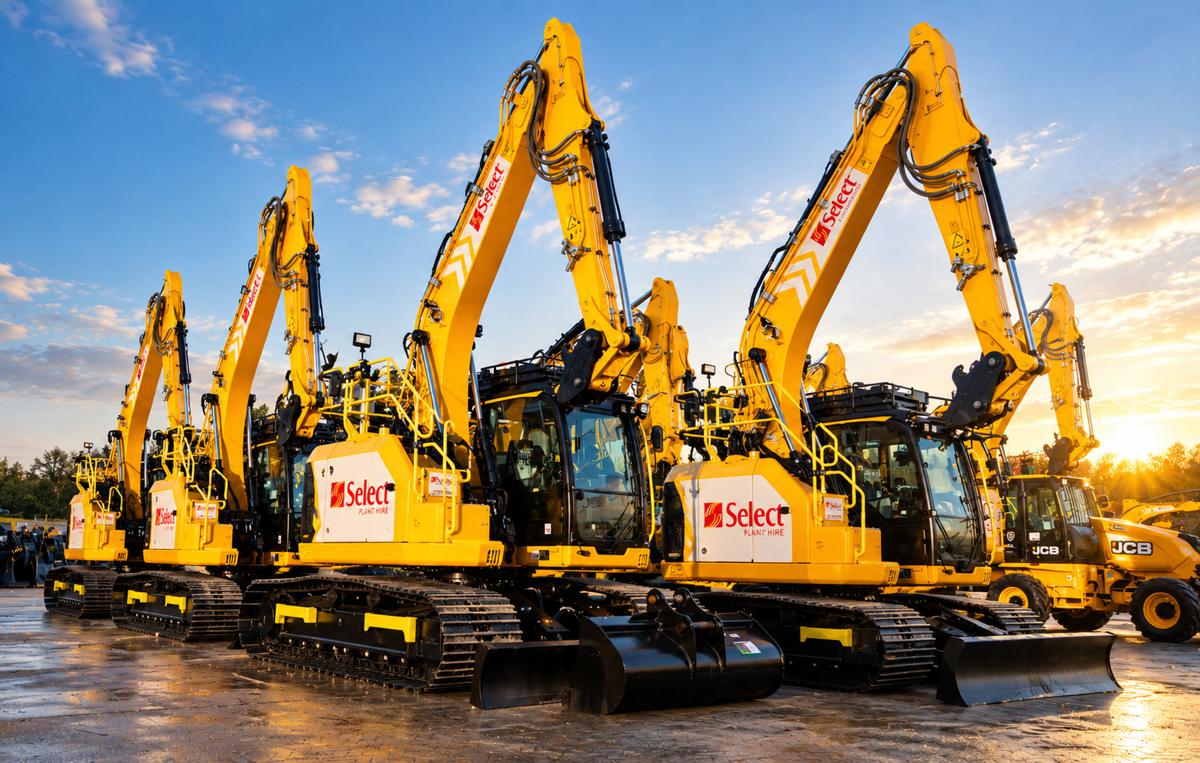
Equipment makers have already moved. Volvo, Caterpillar, JCB and Komatsu have all rolled out battery-powered excavators, loaders and lifts, and fleet operators are placing orders for machinery that won’t arrive until 2027. The snag is that an electric excavator is only as useful as the charge behind it, and grid connections to remote or temporary sites can take months to secure and a small fortune to trench.
That’s the gap mobile battery storage has rushed to fill, and analysts tracking the sector note that total cost of ownership against diesel can turn favourable within 18 to 30 months on an active project once fuel, maintenance and compliance costs are stripped out. PowerSled walks into that opening, and the numbers help frame it: industry estimates suggest its usable capacity could recharge a Volvo ECR25 electric compact excavator around twelve times over, or a Caterpillar 301.9 electric mini excavator roughly seven and a half times, before it needs topping up.
What Lightship Has Actually Built
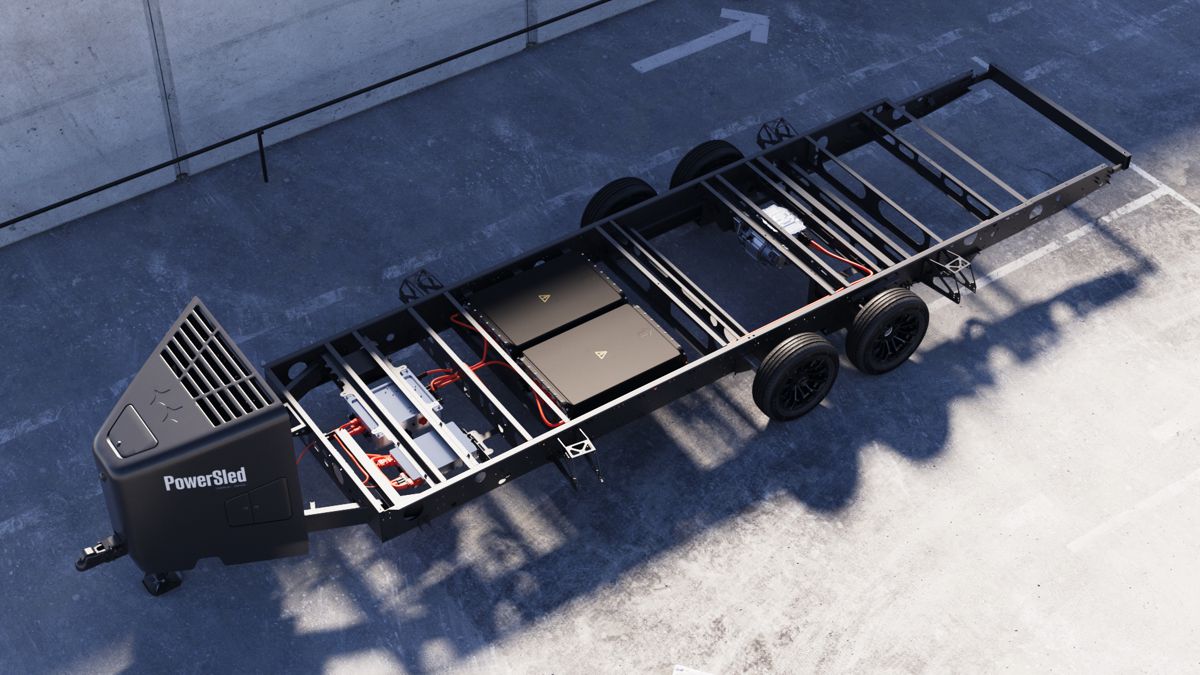
Strip away the framing and PowerSled is a heavy, ruggedised energy platform on wheels. The initial specification lists up to 240 kWh of usable high-voltage battery capacity, with continuous vehicle-to-load output of 38 kW at 240VAC, enough to run tools, pumps, lighting and charging duties through a full working day. It sits under a 12,000-pound gross vehicle weight rating, carries IP65-rated components for grubby, weather-exposed environments, and connects through a standard seven-pin tow vehicle hookup so operators aren’t reinventing how they hitch up.
An operating window of minus seven to forty-three degrees Celsius covers most of the conditions a North American field crew is likely to throw at it.
The TrekDrive element is the genuinely novel bit. Conventional battery trailers are inert cargo that punish your fuel economy or range every mile they’re towed. By driving its own axle to assist the tow vehicle, PowerSled aims to claw back those losses, then switch to silent operation once parked on site.
The same architecture underpins all three planned configurations: a stripped chassis aimed at custom upfitters and specialist builders, a flatbed platform for tools, pumps and field kit, and an enclosed cargo version for climate-sensitive or secure payloads. That shared platform approach matters commercially, because it lets Lightship chase very different end markets without splitting its engineering effort across separate products.
A First Customer In The Field
Lightship hasn’t launched this on spec. The company has secured an initial customer and begun deliveries to Exedy Drones, an agricultural drone manufacturer that plans to run PowerSled as a mobile charging and field operations hub for drone-based crop monitoring and spraying. It’s a telling first deployment, because agricultural drone work is exactly the kind of remote, power-hungry, grid-poor operation that has historically leaned on portable generators and a lot of jerry cans.
Scott Binder, Vice President of Engineering, Operations, and Technology at Exedy, framed the appeal in operational terms. “PowerSled represents a new era of charging capability for American fleets, delivering greater performance, flexibility, and operational advantages compared to traditional charging setups,” he said.
“For end users, it means all-day power without the constant noise, exhaust fumes, or compromises that have historically come with mobile energy. It is a cleaner, quieter, and more capable solution built to support how modern fleets, like ours, operate.” The reference to noise and fumes isn’t just marketing colour; on sites near homes, hospitals or live infrastructure, both increasingly carry regulatory and reputational weight.
From Camper Trailers To Commercial Infrastructure
Lightship’s route into this market is an unusual one. Founded in 2020 by Ben Parker, with chief executive Toby Kraus joining as co-founder the following year, the company made its name building all-electric travel trailers, including the AE.1, an aerodynamic towable with a 77 kWh battery now sold from around $157,500.
Backed by a $26.6 million raise and a subsequent $34 million Series B, it has built a business around domestic manufacturing, sourcing roughly 80% of the AE.1’s component value within the United States. PowerSled effectively repurposes that hard-won consumer hardware, the propulsion assist and the mobile energy management, for a far more demanding industrial buyer.
Ben Parker, co-founder and chief commercial officer, described the evolution candidly. “PowerSled is a natural extension of the systems and technologies we originally developed for AE.1,” he said. “What began as a platform for electric towing and off-grid travel evolved into an opportunity to rethink how mobile power is deployed across commercial environments. By combining cargo transport and energy storage into a single system, PowerSled can help reduce the need for multiple vehicles and standalone generators at a job site. As more industries electrify fleets and field operations, combined with state incentive programs, we see strong potential for a more flexible and efficient approach to mobile power infrastructure.”
Scaling Up Behind The Launch
The commercial push doesn’t come in isolation. PowerSled arrives hot on the heels of a major Colorado factory expansion, with Lightship adding roughly 44,000 square feet to its existing 32,000-square-foot Broomfield plant to reach a total footprint of about 76,000 square feet. The company expects the build-out to more than quadruple its production capacity by the end of 2026, lifting annual output from somewhere around 80 units to a target near 500, and it’s leaning into domestic production as a point of difference rather than chasing cheaper offshore supply.
Toby Kraus, chief executive and co-founder, has tied that strategy to a wider bet on where advanced mobility manufacturing is heading. “This expansion is a defining moment for Lightship,” he said when the build-out was announced. “At a time when many companies in this category are outsourcing their production and supply chain overseas, we’re doubling down on our commitment to American manufacturing, accelerating innovation and creating high-skill jobs in a region emerging as a hub for next-generation mobility.” For a young firm now selling into infrastructure, utilities and emergency response, controlling its own production cadence and supply chain is more than a flag-waving exercise, it’s the thing that lets it promise contractors a reliable delivery date.
The Electric Road Ahead
Whether PowerSled becomes a fixture on construction and utility sites will hinge on the same unglamorous questions every new platform faces: price against a diesel generator, service support when something fails at 6am, and how quickly incentives can soften the upfront sting.
The wider market is moving in Lightship’s direction, with battery storage steadily displacing diesel everywhere from wastewater lift stations to industrial backup, but moving in a direction and arriving are not the same thing, and the company is up against established generator suppliers and a growing field of mobile battery rivals.
What Lightship has done is take a credible swing at a real and worsening problem. As electric plant proliferates and the regulatory net around diesel tightens, the awkward truth for many contractors is that they’re buying electric machinery faster than they can power it on site. A platform that hauls cargo, stores serious energy, assists its own tow and runs in silence is a neat answer to that, provided the economics hold.
The next year, as orders convert into deployments and the new Colorado capacity comes online, will show whether the idea has the legs to match the ambition.