Komatsu Brings Connected Earthworks to Singapore’s Changi Terminal 5
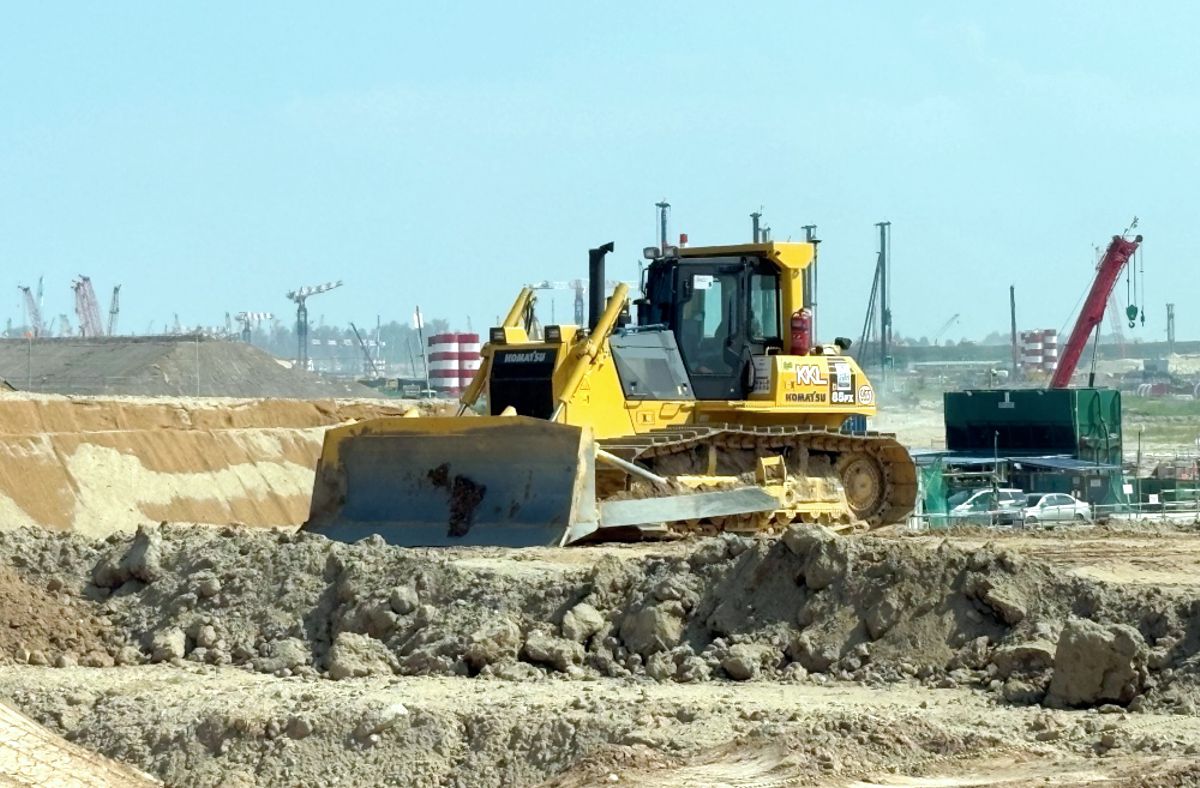
Komatsu’s first full-scale Smart Construction deployment in Singapore will place digitally guided machinery and shared earthworks data at the centre of one of Asia’s most consequential infrastructure programmes. At Changi Airport Terminal 5, the immediate objective is to improve the accuracy, visibility and coordination of construction across a site covering approximately 1,080 hectares. The wider significance lies in demonstrating how conventional construction fleets can become part of a connected production system on a project extending into the mid-2030s.
Terminal 5 will be larger than Changi’s four existing terminals combined, with an initial capacity of 50 million passengers a year and provision to expand to 70 million. Delivering infrastructure on that scale requires more than individually productive machines. Contractors, engineers and project managers need reliable information about what has been excavated, filled, graded and completed, particularly as designs, work packages and site conditions change.
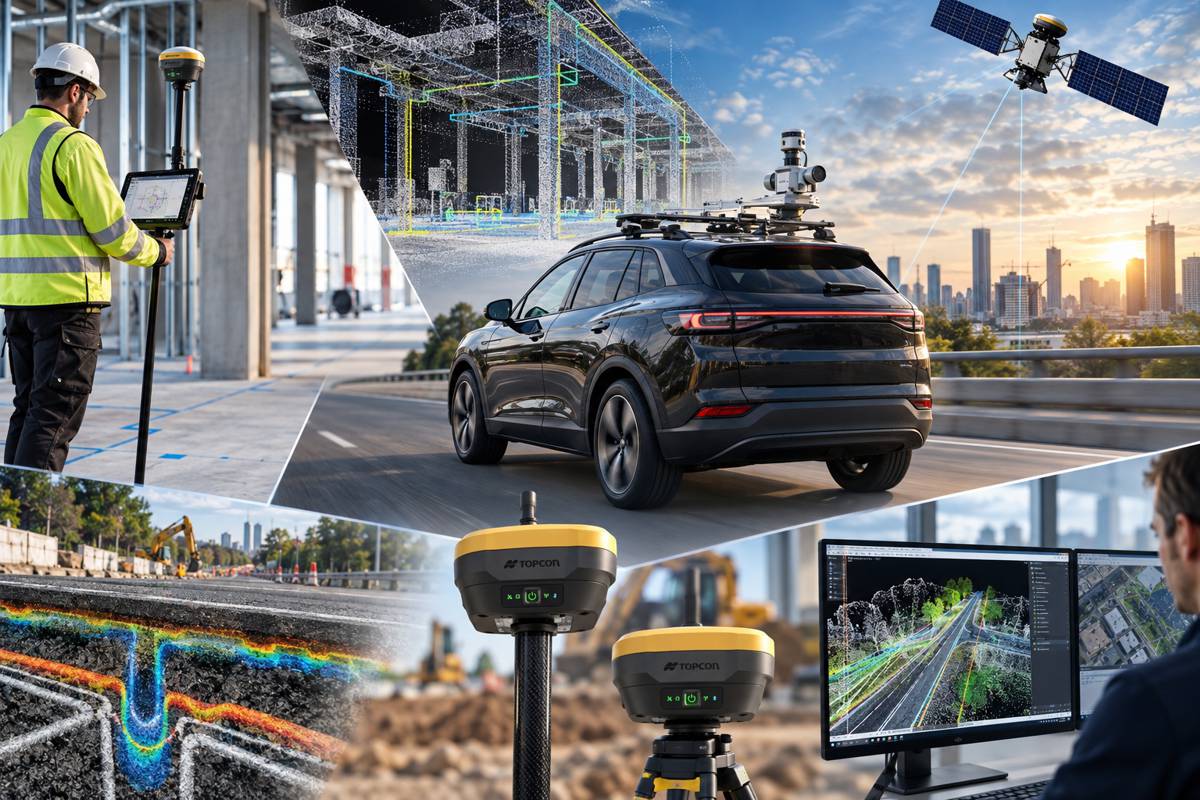
Komatsu’s deployment combines 3D Machine Guidance, the more equipment-flexible 3D Machine Guidance Flex and its SC Dashboard management platform. Together, these systems connect design information, machine position data and measured construction progress, creating a more continuous relationship between work in the field and decisions made by the project team.
Briefing
- Komatsu is undertaking its first full-scale Smart Construction deployment in Singapore at Changi Airport Terminal 5.
- The programme includes 3D Machine Guidance, 3D Machine Guidance Flex and the SC Dashboard project-management environment.
- Terminal 5 occupies approximately 1,080 hectares and is scheduled for completion in the mid-2030s.
- The terminal is designed initially to handle 50 million passengers annually, with potential expansion to 70 million.
- Komatsu has supplied construction equipment to the project and is implementing digital systems with its subsidiary EARTHBRAIN.
Turning Machine Guidance into Project Intelligence
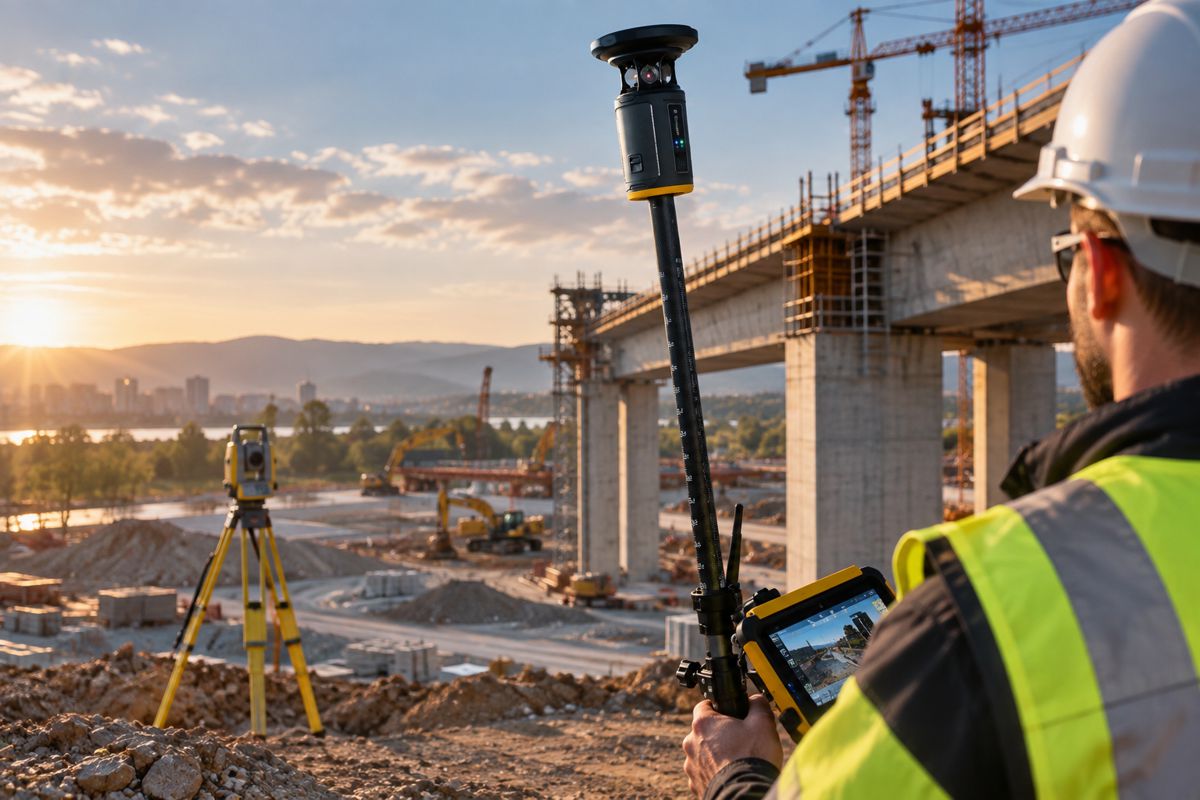
Machine guidance is already familiar on many major earthworks projects. Sensors, Global Navigation Satellite System antennas and digital design models allow operators to compare the machine’s working position with the intended grade or excavation profile. This can reduce repeated surveying, limit over-excavation and help operators achieve the required geometry more consistently.
The Terminal 5 deployment moves beyond the use of guidance as an isolated operator aid. Information generated during production can be brought into SC Dashboard, where construction progress and site data are visualised and shared. That gives managers a broader view of earthworks performance while allowing field activity to be assessed against the project’s digital plans.
The commercial value rests in shortening the distance between site conditions and management decisions. Conventional reporting may depend on survey cycles, manually assembled production records and information passed between subcontractors. A connected environment can make quantities and progress visible sooner, allowing teams to identify emerging discrepancies before they affect subsequent operations.
This does not eliminate the need for professional surveying, quality assurance or engineering judgement. Instead, it creates a more frequent stream of operational evidence between formal controls. On a vast, evolving site, that additional visibility can support more informed deployment of machines, labour and materials.
A Digital Layer Across a Mixed Equipment Fleet
One technically important feature is Komatsu’s inclusion of 3D Machine Guidance Flex. Standard machine-guidance installations are often associated with hydraulic excavators, graders or other specific machine categories. The Flex system is intended to extend relevant guidance capabilities to additional equipment, including bulldozers, according to the needs of the site.
That flexibility matters because large civil engineering projects rarely operate as uniform fleets. Equipment can be drawn from several manufacturers, contractors and specialist packages, while individual machines may be introduced, transferred or replaced as the programme advances. A digital strategy that depends entirely upon factory-integrated machines risks creating gaps in coverage.
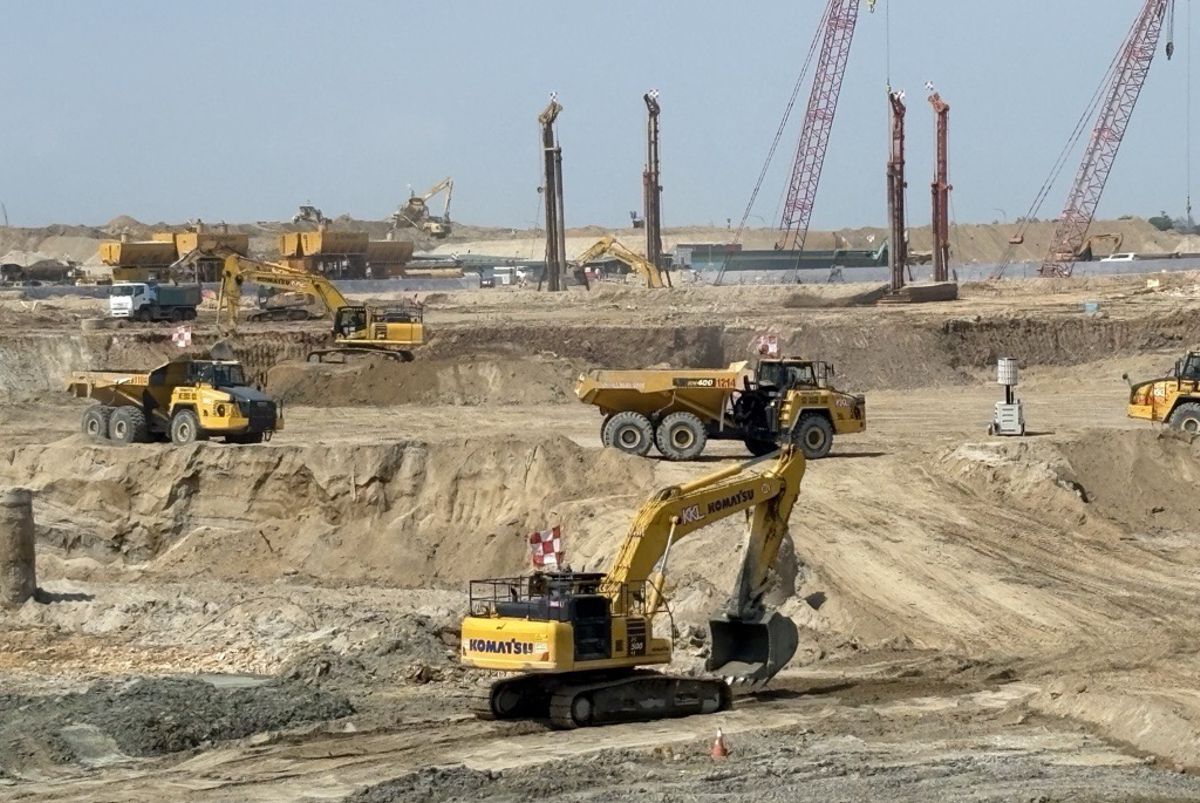
Komatsu has already supplied a substantial number of machines for Terminal 5, while Smart Construction solutions have been used during specific phases in collaboration with EARTHBRAIN. The move to full-scale deployment therefore represents an expansion of an existing working relationship rather than an untested arrival on the project.
Globally, Komatsu reports deliveries of more than 9,000 3D Machine Guidance systems and over 22,000 intelligent Machine Control machines. That installed base is commercially relevant because Terminal 5 will require dependable technology, support capacity and practical implementation knowledge over many years. Hardware availability alone will not determine success; configuration, training, data management and continuing technical support will be equally important.
Earthworks Visibility at Mega-project Scale
Terminal 5’s physical scale makes earthworks information a strategic project resource. Covering 10.8 square kilometres, the development involves an area close to twice the footprint of the existing airport. Even relatively small discrepancies in levels or quantities can become commercially significant when multiplied across such an extensive worksite.
Digital guidance can help operators work towards the design surface without relying on a constant physical network of stakes and profiles. This is particularly useful where haul roads, drainage systems, platforms and working zones are being repeatedly reconfigured. Faster access to design revisions can also reduce the risk of machines continuing against outdated information, provided robust version control is maintained.
SC Dashboard adds a management dimension by presenting progress information to stakeholders beyond the cab. Project teams can compare areas, monitor quantities and establish a more consistent account of work completed. For clients and principal contractors, that can strengthen production planning and support more transparent discussions about sequencing and performance.
The system’s value will depend on how thoroughly it is incorporated into working procedures. Data must be correctly captured, validated and interpreted, while design files need suitable governance. Digital visibility is most useful when everyone understands what the information represents, how current it is and which decisions it can safely support.
Supporting Singapore’s Integrated Digital Delivery Strategy
The deployment aligns with Singapore’s sustained effort to connect the different stages and participants of construction through Integrated Digital Delivery. The country’s Building and Construction Authority describes IDD as a lifecycle approach linking design, fabrication, construction and asset management, with 19 essential use cases identified to encourage consistent adoption across the industry. Singapore’s Integrated Digital Delivery framework also places particular emphasis on structured collaboration and data-driven decision-making.
Smart Construction occupies the field-production end of that digital chain. Building information modelling and common data environments have improved coordination within design and project administration, but their value diminishes if accurate information does not reach the machines performing the work. Likewise, valuable production data can be lost if it remains confined to individual equipment or subcontractor systems.
Connecting design surfaces to guidance-equipped machinery creates a more direct digital route from engineering intent to physical construction. Returning measured progress to a shared dashboard begins to close the loop. That makes earthmoving equipment a source and consumer of project data rather than merely a mechanical resource.
Singapore has also used public policy, procurement guidance, accreditation and financial support to promote digital capabilities across its built-environment sector. More than 900 small and medium-sized businesses had adopted supported digital solutions by 2024, according to the Building and Construction Authority’s account of the refreshed Built Environment Industry Digital Plan. The updated plan incorporates areas including smart inspection, contract management and emerging artificial intelligence applications.
Managing Productivity Without Separating Safety
Digital machine systems are frequently presented in terms of productivity, but their operational importance also extends to predictability and control. Better grade information can reduce unnecessary machine movements, repeated passes and interactions between equipment and ground personnel. Fewer stakes and reduced reliance on workers entering active machine zones can support safer work planning, although the technology does not replace exclusion zones, competent operators or established site controls.
More accurate production data can also help supervisors plan traffic flows and avoid congestion between excavation, loading, hauling and placement operations. On a large earthworks site, productivity is determined by the performance of the overall system rather than the cycle time of a single machine. Increasing excavator output achieves little if haulage, disposal or compaction capacity cannot absorb it.
Chikashi Shike, Senior Executive Officer and President of Komatsu’s Solution Division, positioned the deployment around this relationship between machinery and information: “Every construction site is different, and every customer has their own unique challenges. We’re really pleased to be supporting our customer here at Changi Airport as they take on this exciting project. Through Smart Construction, Komatsu does more than just provide machines — we work closely with our customers, from machine operation through to the use of digital site data, supporting them in improving productivity and making better decisions every step of the way.”
That emphasis reflects a broader change in the construction-equipment market. Manufacturers increasingly compete through software, data services, retrofit systems and workflow support alongside conventional machine performance. For customers, the procurement question is consequently widening from the capabilities of an individual machine to the value of the operational environment surrounding it.
Building a Long-term Information Framework
Terminal 5 is scheduled for completion in the mid-2030s, meaning its construction technology must remain useful across a programme lasting approximately a decade. Equipment will change, software will be updated and contractors will move between packages. The project’s information structure must therefore be more durable than any individual machine or technology version.
Interoperability will be central to that durability. Design data must move accurately between engineering and production environments, while site information should remain accessible to authorised stakeholders without creating unnecessary duplication. Clear standards for file formats, coordinate systems, naming conventions and data ownership can prevent the digital estate becoming fragmented as the project grows.
Training presents another long-term requirement. Operators need to understand how to use guidance without becoming detached from the physical behaviour of the machine and ground. Surveyors, engineers and supervisors must also be able to recognise erroneous or incomplete data rather than assuming that information is correct because it appears on a dashboard.
Successful implementation will consequently depend upon process design as much as software deployment. Contractors will need to define who prepares machine files, who approves revisions, who verifies completed surfaces and how discrepancies are escalated. These controls are less visible than GNSS antennas or digital displays, but they determine whether connected construction becomes a dependable production method.
A Regional Demonstration for Digital Construction
As Singapore’s first full-scale Smart Construction deployment, Terminal 5 provides Komatsu with a prominent regional reference project. Major airport developments combine difficult logistics, strict assurance requirements and extensive interfaces between civil, structural and systems contractors. A successful deployment could strengthen the commercial case for similar technology on ports, industrial sites, transport corridors and urban development programmes across Asia.
Yasuji Nishiura, Senior Executive Officer and President of Komatsu’s Construction Equipment and Regional Marketing Division, connected the project directly with that wider opportunity: “We’re really excited to bring our expertise to this project. By combining equipment, digital technologies and data, we’re supporting our customers to work more safely and productively on site. We believe this initiative will accelerate the digital transformation of construction site in Singapore, contributing to broader digitalization efforts across Asia.”
Conditions will differ across regional markets. Singapore benefits from strong digital infrastructure, institutional support and major clients capable of setting coordinated information requirements. Elsewhere, adoption may be constrained by inconsistent connectivity, shortages of trained personnel, fragmented contracting structures or limited access to accurate digital designs.
Terminal 5 can nevertheless help demonstrate how those barriers might be addressed. The lessons are likely to involve workforce development, information governance, contractual responsibilities and technical support as much as machinery. This makes the project important not simply as a showcase for Komatsu, but as evidence of what is required to operate connected earthworks at genuine mega-project scale.
From Equipment Supplier to Production Partner
For Komatsu, Smart Construction supports a business model that extends its involvement beyond the initial sale or rental of equipment. Guidance installations, software, data services, training and workflow consultancy can create longer customer relationships, particularly on complex projects where digital configuration continues throughout delivery.
For contractors, this offers potential advantages but also requires more sophisticated procurement. Buyers need to understand licensing, service availability, data portability, integration with existing systems and the cost of maintaining digital capability throughout a contract. The lowest equipment price may not represent the lowest production cost if machines remain disconnected from the project’s information workflow.
Clients and policymakers will also need to consider how digital requirements are expressed in tenders. Mandating a particular technology without defining the intended operational outcome can limit competition or encourage superficial compliance. Requirements centred on accurate progress information, interoperable design data and demonstrable production controls allow suppliers to propose appropriate methods while preserving accountability.
The most important measure at Changi will therefore be whether the deployment improves delivery at system level. Reliable quantities, fewer avoidable passes, faster response to design changes and stronger coordination between stakeholders would provide more meaningful evidence than the number of connected machines alone.
Establishing the Connected Worksite as Normal Practice
Changi Airport Terminal 5 gives Singapore an opportunity to apply digital construction principles on a scale capable of influencing expectations throughout the regional market. The programme connects national aviation capacity, long-term economic planning and construction productivity within a single project, making effective delivery strategically important well beyond the airport boundary.
Komatsu’s contribution brings machine control, retrofit guidance and management visibility into one operational framework. That combination addresses a persistent gap between digital design and physical production, where project information has often stopped at the site office instead of reaching the machine operator in usable form.
The deployment will not remove the complexity inherent in a decade-long infrastructure programme. It can, however, make that complexity more visible and manageable by creating a consistent flow of information between designs, machines and decision-makers. If maintained through changing contractors, equipment and construction phases, the digital framework could become one of Terminal 5’s most consequential construction legacies.
For the wider industry, the project signals that connected machinery is moving from specialist deployment towards an expected component of major-project delivery. The strategic advantage will belong not simply to businesses that acquire the technology, but to those that build the skills, procedures and commercial structures needed to use its data effectively.
Key Industry Questions
- What does Komatsu Smart Construction do at Terminal 5? Smart Construction connects digital design information with construction equipment and project-management tools. Its machine-guidance systems show operators where the bucket, blade or other working component sits in relation to the intended design. SC Dashboard then visualises progress and site information for authorised stakeholders. At Terminal 5, the combined system is intended to improve the consistency of earthworks, provide more timely production information and support decisions about sequencing, resources and completed quantities. It is a connected workflow rather than a single autonomous-machine product.
- Will the equipment at Terminal 5 operate autonomously? The announced deployment centres on 3D Machine Guidance, 3D Machine Guidance Flex and SC Dashboard, not a fully autonomous earthmoving fleet. Machine guidance supplies operators with position and design information, while intelligent machine-control functions may automate or constrain certain machine movements depending on the equipment configuration. Human operators, engineers and supervisors remain responsible for production, safety and verification. The significance lies in making machines more accurate and better connected to the project’s digital information, rather than removing people from the construction process.
- Why is 3D Machine Guidance Flex important for a large project? A mega-project typically uses different machine types, ages and configurations across numerous contractors and work packages. Factory-integrated control systems may be unavailable or unnecessary on every machine. A flexible guidance approach can extend digital working methods to equipment such as bulldozers and help reduce gaps between connected and conventional operations. Its practical value depends on machine compatibility, installation quality, calibration and access to current design data. It can support broader adoption without requiring the complete replacement of otherwise productive equipment.
- How can connected earthworks reduce project costs? Potential savings can arise from more accurate excavation and grading, fewer repeated passes, reduced reliance on physical staking and earlier identification of discrepancies. Better progress visibility may also improve fleet allocation, haulage planning and coordination between successive work packages. These benefits are not automatic. Contractors must account for system procurement, subscriptions, training, calibration, technical support and data preparation. The strongest commercial case emerges where digital guidance is integrated into planning and quality processes rather than treated as an accessory fitted to individual machines.
- What information-governance risks accompany digital construction? Principal risks include outdated design files reaching machines, inconsistent coordinate systems, poor access control, incomplete data capture and uncertainty over ownership or contractual reliance. A visually convincing dashboard can still be misleading if its source information is inaccurate or out of date. Projects therefore need defined approval procedures, revision controls, common naming standards, cybersecurity arrangements and clear responsibilities for preparing and validating machine data. Formal surveying and engineering assurance remain essential even when routine production information becomes more frequent.
- How does the deployment support Singapore’s construction strategy? Singapore’s Integrated Digital Delivery approach seeks to connect stakeholders and information across design, fabrication, construction and asset management. Komatsu’s systems contribute at the construction-production stage by bringing approved design information into machinery and returning progress data to project teams. This helps bridge the gap between building information models and physical operations. Terminal 5 also creates a high-profile demonstration through which contractors, technology providers and public bodies can develop workforce skills and establish repeatable processes for future infrastructure programmes.
- Could the Terminal 5 model be replicated elsewhere in Asia? The underlying model is applicable to airports, highways, ports, industrial developments and other earthworks-intensive projects. Replication will depend on local GNSS coverage, connectivity, workforce capability, digital-design quality and contractual arrangements. Markets with fragmented supply chains may need to begin with individual work packages before attempting programme-wide integration. Terminal 5’s most transferable lessons are likely to concern implementation: how data is governed, how mixed fleets are connected, how operators are trained and how clients specify outcomes without unnecessarily restricting technology choices.
- How should contractors evaluate machine-guidance investment? Contractors should assess the complete operational case rather than concentrating on hardware price. Relevant considerations include annual machine utilisation, rework exposure, survey costs, operator availability, software subscriptions, calibration, technical support and integration with existing project systems. Data portability and compatibility with mixed fleets are particularly important for contractors working across several clients. A controlled trial using measurable indicators such as pass count, completed quantities, fuel consumption and grade accuracy can provide better procurement evidence than supplier demonstrations alone.
Strategic Takeaways
- Terminal 5 positions connected earthworks as a project-management capability, not merely an operator-assistance technology.
- Mixed-fleet compatibility will be essential if digital construction is to expand beyond selected factory-equipped machines.
- Data governance, skills and workflow design will determine the commercial return more decisively than hardware installation alone.
- Singapore’s Integrated Digital Delivery policy provides a supportive environment for translating machine data into project-wide decision-making.
- Changi Terminal 5 could become an important Asian reference for procuring and operating digitally connected construction at mega-project scale.