Australia’s AU$100 Million Equipment Auction Signals Deeper Market Liquidity
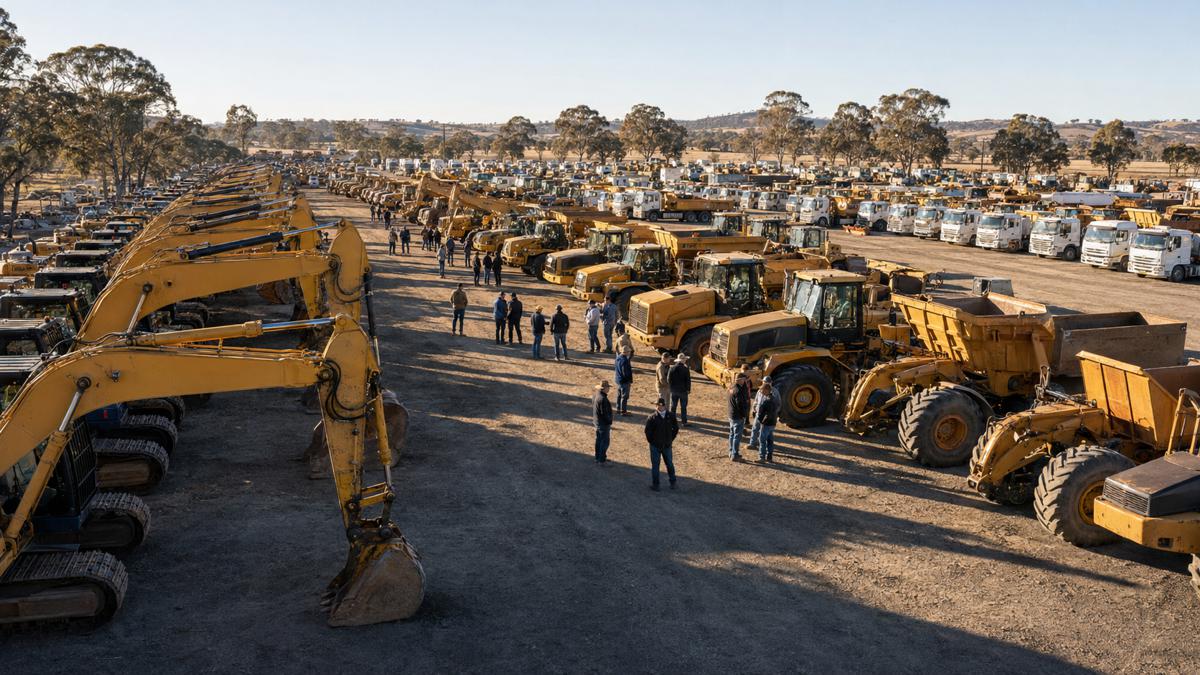
Australia’s construction, mining, transport and agricultural equipment market has delivered a significant measure of its underlying strength. Ritchie Bros.’ 2026 National End of Financial Year auctions generated more than AU$100 million in gross transaction value, with 5,516 lots sold through ten auctions held across the company’s Australian network.
The result matters beyond the auction sector. Used-equipment transactions provide an unusually direct view of how contractors, fleet owners and asset-intensive businesses are allocating capital. Nearly 11,000 registered bidders and more than 2,300 buyers suggest that demand remains broad, while participation from over 20 countries shows that Australian equipment is increasingly being priced within a global rather than purely domestic marketplace.
For equipment owners, the commercial attraction lies in liquidity: machinery can be converted into capital through a market capable of absorbing large volumes without relying solely on local buyers. For contractors and project operators, auctions offer access to working assets without the manufacturing lead times, depreciation exposure or capital commitment associated with new equipment. That combination is making the secondary market an increasingly important part of fleet strategy.
Briefing
- More than AU$100 million in gross transaction value was generated across ten auctions.
- A total of 5,516 equipment and vehicle lots were sold.
- Nearly 11,000 bidders registered, with more than 2,300 ultimately purchasing assets.
- International registrations came from over 20 countries, including the United States, Canada, New Zealand, the United Arab Emirates and the United Kingdom.
- More than 600 assets were consigned by the Garraway Group.
Liquidity Becomes a Strategic Fleet Asset
The central commercial development is not simply the AU$100 million total. It is the ability of a coordinated marketplace to process thousands of assets from multiple industries while attracting sufficient buyer competition to support price discovery. That capability is particularly valuable in Australia, where equipment may be dispersed across vast distances and where local demand can vary considerably between states and industrial regions.
Victoria, New South Wales and Queensland produced the largest concentrations of domestic activity. These are substantial construction and transport markets, but their participation also gave sellers access to bidders beyond the state in which an asset was located. Digital bidding and a national auction schedule allow a loader in Western Australia or a truck in Queensland to be evaluated by buyers elsewhere without depending entirely upon the local resale market.
For contractors, liquidity affects more than disposal proceeds. A machine with an accessible resale route carries a different commercial risk from one that may take months to sell. Reliable remarketing can influence purchasing decisions, financing periods, replacement cycles and the point at which ageing equipment is removed from service.
Fleet managers can therefore treat resale capacity as part of lifecycle planning. Acquisition price remains important, but total ownership cost also depends on utilisation, maintenance, downtime and eventual disposal value. A competitive secondary market strengthens the final element of that calculation.
A Larger Australian Marketplace Takes Shape
Ritchie Bros. attributed part of the result to the combined strengths of its own operation and Smith Broughton, the Western Australian equipment business it acquired in 2024. The significance of that combination lies in the joining of customer bases, inventory sources and geographical coverage rather than the addition of auction volume alone.
Smith Broughton brought established relationships in Western Australia, including exposure to mining, civil construction, transport and agricultural equipment. Ritchie Bros. contributed a wider auction network and international buyer base. Bringing those components together creates the conditions for machinery from a regional Australian market to be presented to domestic contractors and overseas purchasers through the same commercial channel.
“Breaking our own national record back-to-back shows just how much confidence both buyers and sellers have in the Ritchie Bros. platform,” said Dom McGlinchey, Sales Director APAC at Ritchie Bros. “By combining the strengths of Ritchie Bros. and Smith Broughton, we have unlocked a larger, more connected marketplace across Australia. Bringing together our complementary customer bases and inventory has significantly increased market liquidity and global buyer participation. This strong momentum—including more than 600 assets from the Garraway Group—translated directly into deeper competition and outstanding results on sale day.”
The Garraway Group consignment is important because large fleet dispersals test whether a market has enough depth to absorb concentrated supply. Bringing more than 600 assets into a wider 5,516-lot programme created substantial choice for buyers, while the number of registered bidders helped spread demand across equipment categories and price points.
Used Equipment Moves into Mainstream Procurement
Used machinery was once treated mainly as an option for smaller contractors or as a temporary response to an urgent project need. It now forms a more deliberate component of fleet procurement. Large contractors, rental companies, owner-operators and specialist subcontractors increasingly consider a mixture of new, used, rented and leased equipment rather than depending on a single acquisition route.
The economics are straightforward. A suitable used machine can reduce upfront capital expenditure and may already have passed through the steepest part of its depreciation curve. It can also be deployed more quickly when a project award, seasonal workload or production requirement creates an immediate need for capacity.
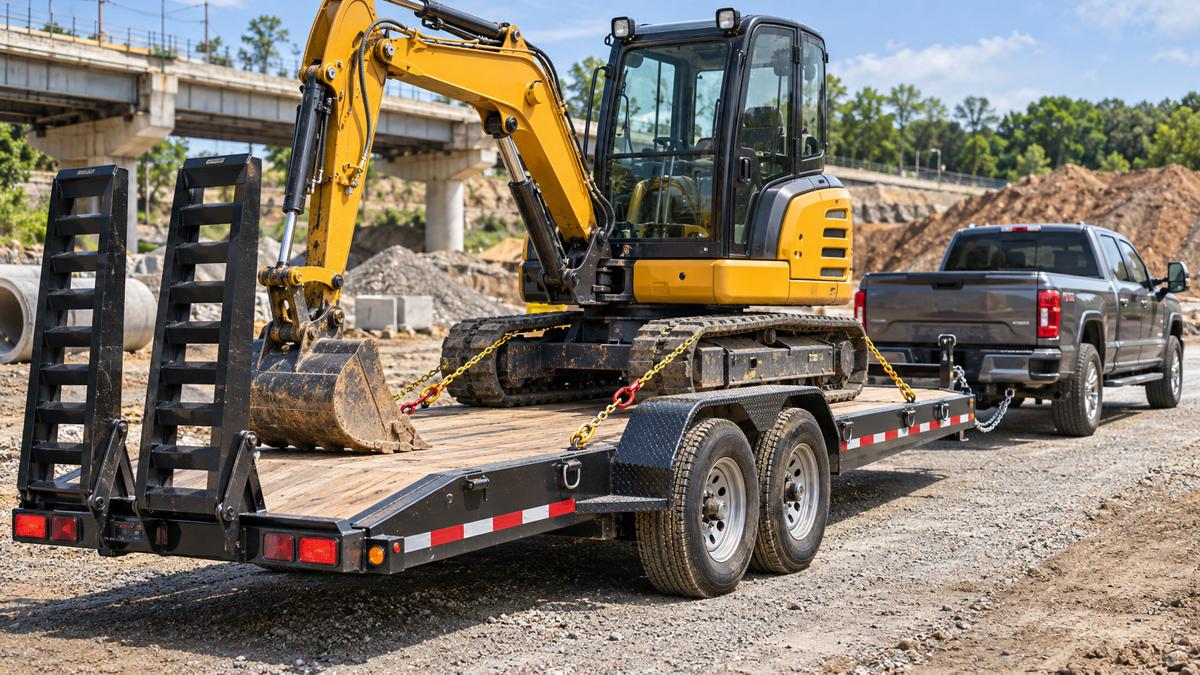
Those advantages do not eliminate the need for careful asset assessment. Buyers must still examine hours, maintenance history, attachments, specification, remaining service life and compatibility with their existing fleets. Transport costs can materially change the economics, especially when heavy machinery must cross Australia or travel to an export market.
Nevertheless, an auction offering thousands of lots gives procurement teams an opportunity to compare multiple asset types within a concentrated period. Earthmoving machinery, trucks, trailers, agricultural equipment and mining assets can be considered against operational need and available capital rather than assessed through disconnected individual transactions.
Global Bidding Changes Price Discovery
Registrations from more than 20 countries indicate that the competitive boundary for Australian equipment no longer ends at the coastline. Bidders from the United States, Canada, New Zealand, the United Arab Emirates and the United Kingdom registered for the auctions, while confirmed international buyers included participants from the United States, New Zealand and Egypt.
International demand can be particularly relevant for equipment that has a limited domestic audience but remains commercially useful elsewhere. Mining machinery, specialist trucks, attachments and older heavy equipment may attract different valuations depending on the buyer’s project pipeline, labour costs, maintenance capability and local availability of new machinery.
Export demand can also support residual values by preventing excess equipment from becoming trapped within one national market. Where overseas purchasers can justify freight, import duties, compliance work and commissioning costs, machinery can move towards markets where it has a higher productive value.
The distinction between registrations and completed purchases remains important. Nearly 11,000 registrations did not translate into the same number of buyers, but the large bidding pool still indicates broad interest. More than 2,300 buyers ultimately secured equipment, giving an average of roughly 2.4 lots per buyer, although individual purchasing patterns will have varied considerably.
Asset Disposal Becomes a Capital Management Tool
The end of Australia’s financial year traditionally creates a natural point for businesses to review inventories, replace machinery and dispose of underutilised assets. The scale of the 2026 auctions shows how that accounting timetable can also become a major capital reallocation event across several industries.
For sellers, releasing capital from surplus or ageing machinery can support debt reduction, new equipment purchases, technology upgrades or investment elsewhere in the business. Disposal can also reduce storage, insurance and maintenance costs associated with equipment that is no longer generating sufficient revenue.
Large operators increasingly make these decisions using utilisation records and telematics rather than relying exclusively on machine age. An older excavator that remains productive may justify retention, while a comparatively new machine with weak utilisation could be better sold into a strong market. The quality of available operational data is therefore beginning to influence both fleet decisions and the information presented to potential buyers.
Auction timing also affects risk. Delaying disposal can expose an owner to additional depreciation and repair costs, but releasing too much equipment at once can weaken pricing if buyer demand is limited. A national and internationally accessible marketplace reduces that concentration risk by distributing assets across a larger number of potential purchasers.
Digital Reach Still Depends on Physical Capability
Online participation has expanded the geographical reach of equipment auctions, but the underlying transaction remains firmly physical. Machinery must be received, catalogued, inspected, stored, collected and, in many cases, transported over substantial distances. The national network of auction yards is therefore as important as the bidding interface.
Buyers purchasing remotely need accurate descriptions, photographs and condition information to assess risk. They must also arrange payment, loading, transport and any compliance work required before an asset can enter service. For international buyers, the process can extend to export documentation, shipping, customs clearance and destination-country regulations.
RB Global’s wider portfolio includes Rouse Services, SmartEquip and VeriTread alongside its transactional businesses. These activities point towards a broader market model in which valuations, parts and service information, logistics and asset management can sit around the sale itself. The commercial opportunity is to reduce friction across the whole transaction rather than merely digitising the bidding process.
This integration matters because a purchase price represents only part of the cost of acquiring used machinery. Transport, inspection, reconditioning and mobilisation can determine whether an apparently attractive asset provides genuine value. Marketplaces that make those supporting processes easier are likely to play a larger role in professional procurement.
What the Result Says About Australian Industry
The range of assets sold reflects the overlap between Australia’s major productive sectors. Earthmoving equipment can move between civil construction, quarrying, mining support and agricultural work, while trucks and trailers serve almost every part of the economy. A broad auction therefore captures demand that cannot be attributed to one industry alone.
Australia continues to carry substantial requirements for roads, rail, energy, utilities, housing and resource infrastructure. At the same time, companies are investing heavily in machinery and other productive assets. Australian private capital expenditure rose sharply in the March quarter of 2026, with spending on plant and machinery playing a major role, according to Australian Bureau of Statistics data reported by Reuters.
The auction result should not be interpreted as a direct forecast of construction output or equipment prices. Gross transaction value can be affected by asset mix, individual fleet disposals and the timing of sales. However, consecutive national auction records indicate that the marketplace has been able to attract both supply and purchasing capital at considerable scale.
That capacity will become increasingly useful as fleets adjust to new technology. Contractors are assessing telematics, machine control, automation, alternative powertrains and more connected maintenance systems. Even where businesses intend to modernise, they need efficient channels through which existing assets can be transferred to other users.
Circularity with a Commercial Foundation
Extending the useful life of machinery supports a more circular equipment economy, but the strongest driver remains commercial. An asset that can perform productively for a second or third owner retains economic value, reduces the need for premature replacement and spreads its embodied manufacturing impact over a longer operating life.
The environmental case depends on condition, efficiency and application. Keeping an excessively fuel-intensive or unreliable machine in heavy service is not automatically the most sustainable option. Used equipment delivers the clearest benefit when it is properly maintained, matched to appropriate work and operated for a meaningful additional period.
Secondary markets also help newer technology move through the fleet hierarchy. A large contractor may dispose of a late-model machine as it adopts a newer platform, allowing another business to acquire capabilities that would otherwise be beyond its capital budget. Machine control, telematics and improved safety features can consequently reach smaller operators through the resale market.
Over time, buyers are likely to demand more dependable records covering service history, operating hours, component replacement and utilisation. Better data can reduce uncertainty, support financing and distinguish well-managed equipment from machinery with an unclear history. The technical quality of asset information may therefore become as influential as the scale of the auction audience.
Building a More Flexible Equipment Economy
Ritchie Bros.’ next unreserved auctions will continue within its global 2026 calendar, but the Australian result has already demonstrated the strategic value of connecting local inventories with international capital. Its importance lies in creating options for both sides of the transaction: sellers can release assets into a deeper market, while buyers can source equipment across industries, states and national borders.
For construction and infrastructure businesses, that flexibility can improve resilience. Project pipelines rarely develop in perfect alignment with factory lead times or fleet replacement schedules. Access to a large secondary market gives contractors another route to capacity when workloads change, contracts are awarded or specialist equipment is required quickly.
The longer-term development will be the integration of auctions with valuation data, inspections, financing, servicing and logistics. RB Global reported third-quarter 2025 gross transaction value of US$3.9 billion across its wider operations, illustrating the international scale behind these transactional systems and the investment being directed towards them. RB Global
Australia’s AU$100 million result is therefore more than an isolated sales milestone. It represents a maturing equipment ecosystem in which machinery is increasingly managed as a liquid, data-supported commercial asset throughout its working life.
Key Industry Questions
- What does gross transaction value mean in an equipment auction? Gross transaction value represents the aggregate value of assets sold through the marketplace. It is not the same as the auction company’s revenue or profit because most of the equipment belongs to consignors and the marketplace earns fees or commissions from facilitating transactions. GTV is useful for assessing the scale of commercial activity, but it can be influenced by the number, type and value of assets offered. A large mining fleet dispersal, for example, may increase GTV substantially without producing a proportionate increase in lot numbers.
- Why are EOFY auctions particularly important in Australia? Australia’s financial year ends on 30 June, giving companies a natural point at which to review capital assets, tax positions, budgets and replacement plans. Equipment that is surplus, underutilised or due for replacement may be released before or around this period. Buyers may also have approved budgets to deploy or need machinery for work commencing in the new financial year. The result is a concentration of supply and demand that can improve choice, encourage competitive bidding and accelerate fleet restructuring.
- What does international bidding mean for Australian equipment sellers? International participation expands the potential buyer pool beyond the region where an asset is located. This can be valuable for specialist or high-value equipment with limited local demand. Overseas competition may support stronger price discovery, although export transactions remain subject to freight costs, customs requirements, import restrictions and currency movements. Sellers benefit most when machinery is presented with clear specifications and condition information, allowing distant buyers to assess whether the total landed cost remains commercially attractive.
- Is used equipment always cheaper than buying new machinery? The purchase price is usually lower, but acquisition cost should not be considered in isolation. Buyers need to account for transport, inspection, repairs, servicing, attachments, financing and expected downtime. A lower-priced machine that requires major component work may cost more over its operating life than a newer alternative. The most effective comparison considers total ownership cost, expected utilisation and likely resale value. Availability can nevertheless give used machinery an advantage when a contractor cannot wait for a new machine to be manufactured and delivered.
- How should contractors assess machinery bought through an online auction? Contractors should confirm the machine’s identity, operating hours, specification, service records and visible condition before bidding. Where possible, an independent inspection should cover the engine, hydraulics, drivetrain, structural components, tyres or undercarriage, safety systems and installed technology. Buyers should also verify whether attachments are included and whether the machine complies with local requirements. Transport and commissioning costs should be calculated before the maximum bid is set, particularly for oversized equipment or assets being moved between states or countries.
- Can used-equipment auctions support fleet decarbonisation? They can support the process by giving owners a route to dispose of existing machinery while investing in newer, more efficient or lower-emission equipment. Secondary markets also extend the productive life of assets and can reduce premature scrapping. The outcome is not automatically lower-carbon, however. Its value depends on machine condition, fuel efficiency, utilisation and the work for which it is purchased. Reliable emissions, maintenance and operating data will become increasingly important as contractors introduce carbon criteria into procurement and disposal decisions.
- Why does auction liquidity matter to equipment financing? Financiers assess the ability to recover value if equipment is sold before the end of a loan or lease. A large marketplace with regular transactions can provide evidence of resale values and reduce uncertainty surrounding disposal. That can help lenders evaluate residual risk, particularly when supported by credible valuation and condition data. Liquidity does not guarantee a particular sale price, but transparent transaction histories and broad buyer participation can make commercial assets easier to finance than machinery with few potential purchasers.
- What is likely to shape the next phase of equipment remarketing? Asset data will become increasingly influential. Buyers will expect more reliable maintenance histories, telematics records, component information and evidence of utilisation, especially for high-value connected machinery. Marketplaces are also likely to deepen their links with inspections, finance, parts, logistics and asset-management services. The aim will be to reduce the time and uncertainty between identifying an asset and putting it to work. Sellers able to provide well-documented equipment should be better positioned as procurement becomes more data-led.
Strategic Takeaways
- Strong secondary-market liquidity gives construction and mining companies greater freedom to restructure fleets, release capital and respond to changing project pipelines.
- International participation is making Australian equipment values less dependent on local demand, particularly for specialist, mining and transport assets.
- Used-equipment procurement should be evaluated through total ownership cost, with condition, transport, reconditioning and expected utilisation considered alongside the winning bid.
- Consolidated yard networks and digital bidding platforms are creating a national marketplace while preserving the physical infrastructure needed for inspection, storage and collection.
- Verified maintenance, telematics and lifecycle data will increasingly influence residual values, financing decisions and buyer confidence.
Main Title