P&M Excavations Builds a Competitive Edge on a Decade of Trimble Machine Control
A family-run civil engineering contractor from County Tyrone has spent ten years proving a point that much of the wider construction sector is still only beginning to accept, which is that sustained investment in digital machine control changes the economics of groundworks rather than simply the mechanics. Omagh-based P&M Excavations has moved from a single survey kit in 2015 to a fully connected fleet running off one shared 3D design model, and the operational results it now reports place it among the more advanced small contractors working in the region.
The story matters because it comes not from a large national player with a dedicated technology budget, but from an owner-operator business that has had to justify every pound of expenditure against the realities of a tight-margin market.
For an industry still wrestling with flat productivity and a deepening skills shortage, the case carries weight beyond a single balance sheet. Faster delivery, less rework and fewer people exposed to hazardous positions on site are precisely the outcomes that infrastructure owners, housing developers and public procurement teams are increasingly asking contractors to demonstrate.
P&M Excavations has reached the point where its digital maturity is helping it win larger and more complex work, including a recent 920-unit housing development, at a moment when Northern Ireland’s housing pipeline is under acute pressure. The commercial logic of the company’s decade-long commitment, and the way it has been supported by its technology partner, offers a practical template for how modest civil engineering firms can compete on capability rather than price alone.
Briefing
- P&M Excavations has built a decade-long machine control programme with SITECH UK & Ireland, the authorised Trimble dealer for the region, progressing from one survey kit in 2015 to a fully connected fleet of GPS excavators, an automatic-control dozer and GNSS and ATS-equipped machines driven by a single 3D design model.
- The Omagh contractor reports up to three times faster delivery than its previous 2D workflows, alongside a significant reduction in rework and the capacity to take on larger projects, including a recent 920-unit housing development.
- Trimble Business Centre software sits at the heart of the operation, turning field data from GNSS receivers and total stations into 3D models, site designs and reports that give the owner-operators a single, coordinated view of each site.
- Company leadership frames the technology as a safety and workforce measure as much as a productivity one, reducing the number of people needed in dangerous positions and allowing experienced operators to be redeployed to higher-value tasks.
- The programme illustrates how sustained digital investment allows a family-owned SME to remain competitive in a cost-driven market, a theme with direct relevance to Northern Ireland’s stretched housing delivery and the UK’s long-standing construction productivity gap.
Why a Small Contractor’s Digital Bet Signals a Wider Shift
The most commercially significant aspect of the P&M Excavations story is not the technology itself, which is now well established, but the demonstration that consistent adoption over time turns a series of individual tools into a genuine business advantage. Machine control has been available to the UK and Irish civils market for years, yet uptake among smaller contractors has remained patchy, held back by upfront cost, training requirements and understandable caution about disrupting proven ways of working.
By committing early and continuing to invest through several economic cycles, the Omagh firm has arrived at a level of digital integration that many larger organisations have not, and it has done so while remaining a lean, owner-operated business.
That distinction matters for the way the sector thinks about return on investment. A single machine control kit delivers incremental gains on isolated tasks, but a fleet running from one coordinated design model changes how an entire project is planned, sequenced and delivered.
Artur Viceconte, Technical Sales Consultant at SITECH UK & Ireland, captured the trajectory when he observed that “Thanks to its history of technology adoption, P&M Excavations has become a regional reference point for digital construction in Northern Ireland. Starting with one survey kit in 2015, now all of its machines on-site have a rover, which allows the company to continue to deliver work even in a tight-margin, cost-driven market.” The reference to margins is telling, because it reframes digital investment as a route to resilience rather than a discretionary upgrade, an argument that resonates strongly at a time when contractor insolvencies remain elevated across the UK.
The Commercial Case for Faster, More Predictable Delivery
Speed of delivery is where the financial argument becomes most tangible. P&M Excavations reports delivery of complex civil engineering works up to three times faster than its earlier 2D workflows, a figure that reflects both the elimination of manual setting-out and the reduction of stoppages caused by checking and correcting levels.
On projects where site teams are paid for time and plant is charged by the day, compressing programme duration directly improves profitability and frees capacity to take on additional contracts within the same season. In a market where tender prices are under constant pressure, the ability to complete work sooner without adding headcount is often the difference between a viable bid and one that cannot be sustained.
The reduction in rework compounds those gains. Rework is one of the most persistent sources of waste in construction, consuming materials, labour and programme time while eroding the quality that clients ultimately pay for. By working to a precise digital model from the outset, operators can achieve finished surfaces correctly the first time, which reduces the volume of material moved unnecessarily and limits the risk of costly remediation.
Martin Dobbs, Co-Owner and Operator at P&M Excavations, pointed to this precision as the decisive commercial factor, noting that “Technology undoubtedly helps us work faster, and with GPS technology we know exactly where machines are working on site. The precision that comes from this technology is what really adds value to our business. We can deliver complex surfaces accurately for the first time which is a great result for the projects we work on.” The capacity that these efficiencies unlock has allowed the firm to pursue larger schemes, and the 920-unit housing development it has taken on would have been difficult to service at competitive rates using traditional methods.
Inside the Connected Fleet and the Single Design Model
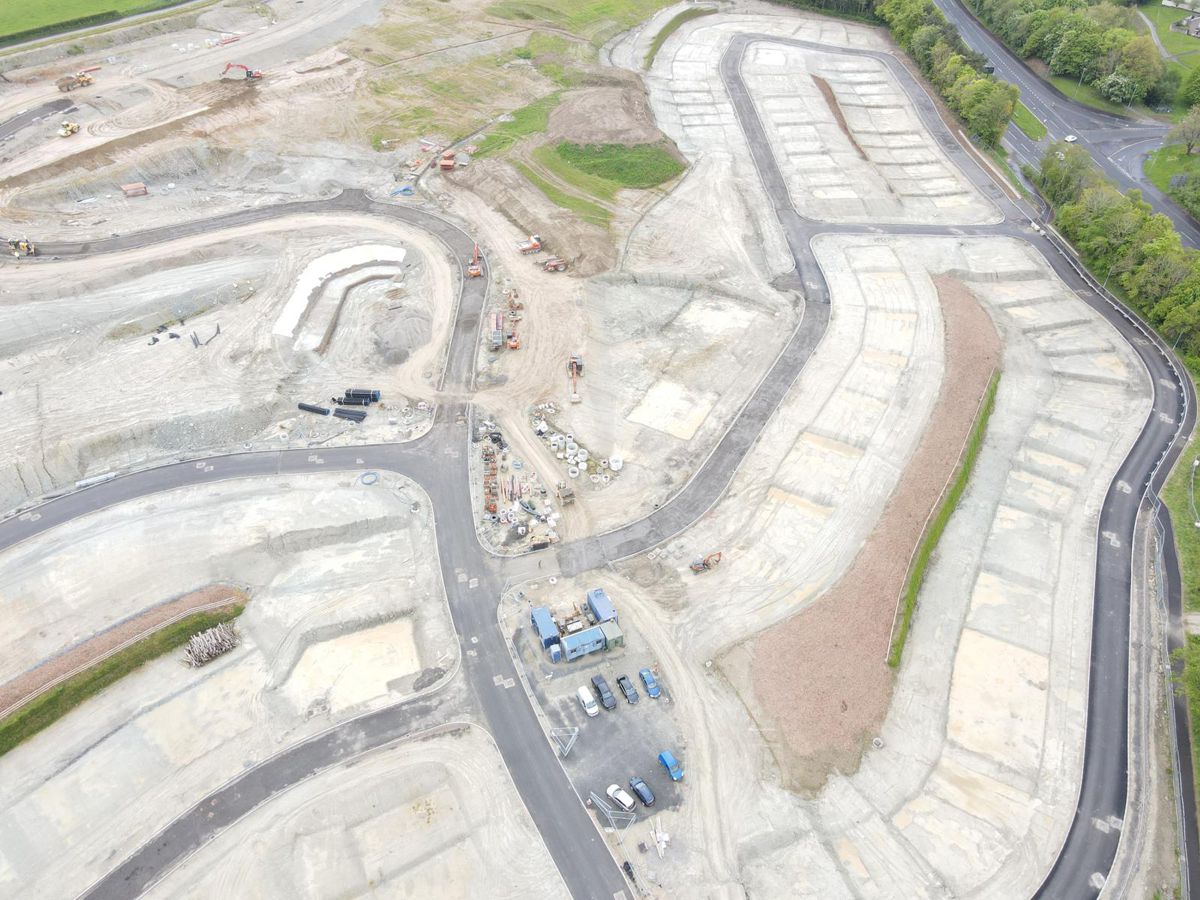
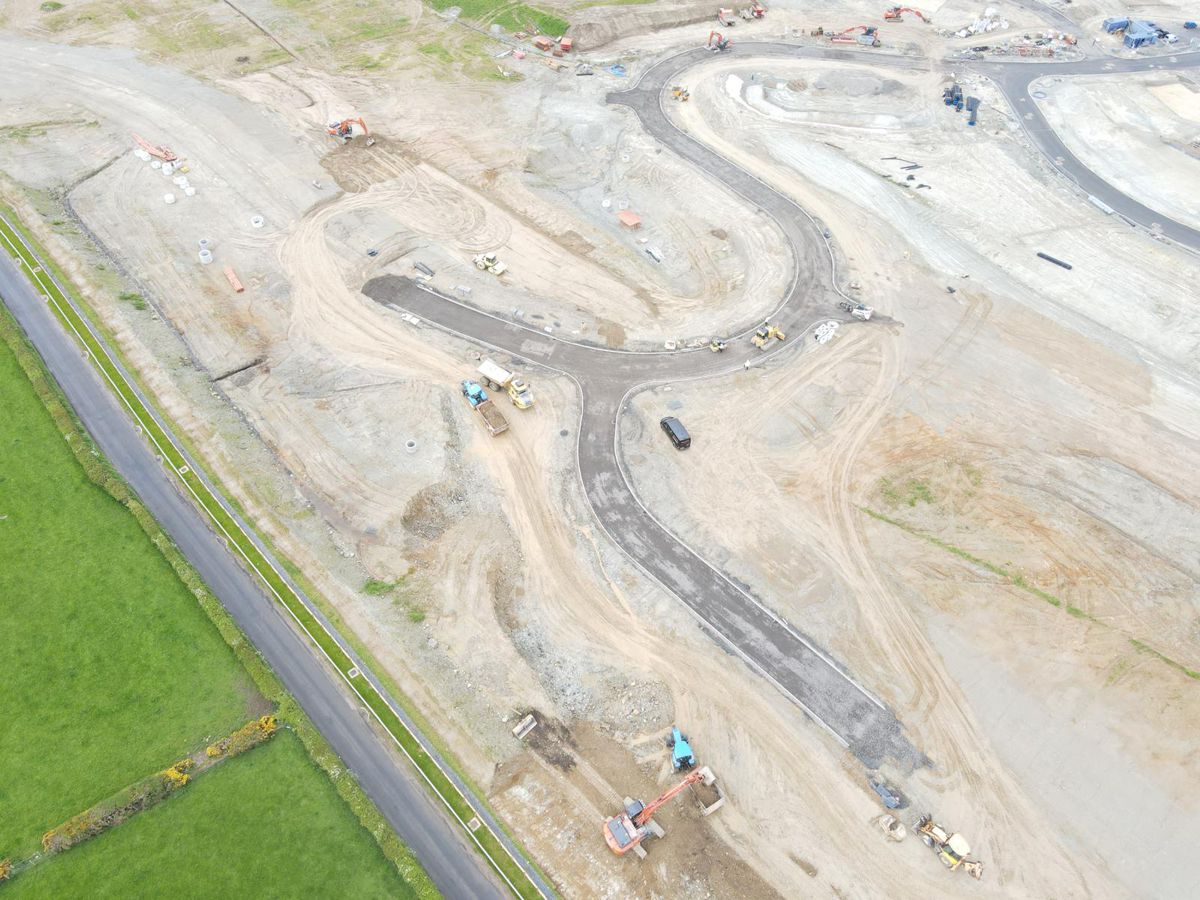
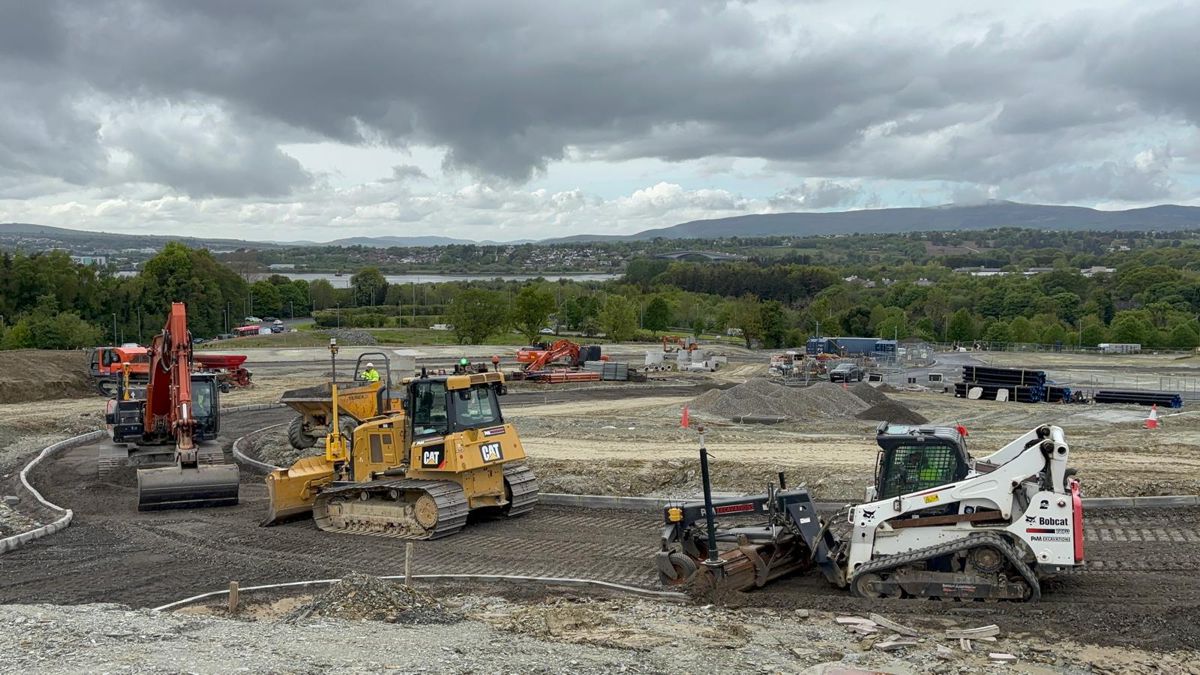
Technically, the defining feature of the P&M Excavations operation is coordination rather than any individual piece of hardware. The company now runs a connected fleet that includes GPS-guided excavators, a dozer with automatic blade control, and machines equipped with GNSS positioning and ATS, the automated total station tracking used where satellite positioning is less reliable, such as close to structures or beneath dense cover.
What binds these machines together is that they all draw from a single design model, so every operator on site is working to the same coordinated reference rather than to separate interpretations of a paper drawing. This shared source of truth removes a common cause of on-site error, where discrepancies between crews accumulate into misaligned levels and clashing setting-out.
Trimble Business Centre software provides the backbone for this approach, converting field data captured by GNSS receivers and total stations into actionable 3D models, site designs and reports. For an owner-operator business, the value of that capability lies in visibility, because it gives the people making commercial decisions a comprehensive overview of the site without waiting on external surveyors or manual measurement.
The progression from a single rover to a fleet in which every machine carries one reflects a deliberate strategy of building out the ecosystem piece by piece, an approach that spreads capital cost while steadily raising the baseline capability of the whole operation.
Peader Dobbs, Site Manager and Operator at P&M Excavations, described the practical shift from the cab, explaining that “Before machine control, everything was manual and your productivity suffers from constantly moving between crews checking levels. Now with the model in the cab we, as operators, can work faster and with increased precision which ultimately benefits our bottom line.” That account underlines how the technology collapses several traditional roles into a single, continuous workflow driven from the machine itself.
Safety, Skills and the Argument Against Replacement
One of the more strategically important dimensions of the P&M Excavations experience is how the firm positions technology in relation to its workforce. Rather than presenting machine control as a means of cutting labour, the company frames it as a way of keeping people out of harm’s way and redeploying their skills to more productive tasks.
Reducing the number of operatives required in the vulnerable zones around moving plant, where the risk of struck-by incidents is highest, addresses one of the most serious hazards in groundworks. Fewer people checking levels on foot in live excavation areas is a measurable safety improvement, and it aligns with the direction of travel in health and safety expectations across the UK and Irish civils sector.
The workforce argument extends into recruitment and retention, which is where the sector’s structural pressures come into focus. Seamus Mcllavar, Contracts Manager at P&M, has helped drive technology adoption across multiple projects, and he set out the philosophy directly, saying that “As opposed to replacing people on-site, technology allows people to work more safely and be more productive in other areas. Working alongside SITECH has allowed the team to benefit from their expertise, train operators and futureproof the business which is essential.”
The emphasis on futureproofing reflects a wider reality, because the construction workforce is ageing and younger entrants are increasingly drawn to roles that offer digital skills. Contractors that can offer operators the chance to work with modern technology hold an advantage in a labour market where more than 200,000 additional workers are needed across the UK to meet demand, and where the loss of experienced hands to retirement is outpacing new entrants.
The Dealer Partnership as a Long-Term Capability
The role of SITECH UK & Ireland in this story points to a broader lesson about how smaller contractors successfully adopt technology, which is that the relationship matters as much as the equipment. As the authorised Trimble dealer for the UK and Ireland, SITECH provides not only hardware and software but installation, calibration, technical support and certified training, and it is this continuity of support that has allowed P&M Excavations to build capability steadily since 2015.
For an owner-operator firm without an in-house technology department, having a partner that can train operators, troubleshoot on site and advise on the next stage of investment lowers the risk of adoption considerably. The partnership model effectively lets a small contractor access the kind of specialist expertise that would otherwise be the preserve of much larger organisations.
That support structure also helps explain why the investment has compounded rather than stalled. Technology programmes often falter when the initial enthusiasm fades and the practical friction of maintenance and upgrades sets in, but a dealer relationship that spans a decade creates the conditions for continuous improvement.
Training experienced operators to work with new tools, rather than expecting them to adapt unaided, protects the value of the human expertise the firm has spent years building. The result is a virtuous circle in which each new capability is properly embedded before the next is added, and the business grows more confident in extending its digital footprint as the evidence of return accumulates.
What This Means for Northern Ireland and the Wider Sector
The timing of the P&M Excavations story gives it particular resonance in Northern Ireland, where housing delivery is under sustained strain. The region’s social housing waiting list passed 50,000 households for the first time in early 2026, and industry bodies have repeatedly warned that construction is failing to keep pace with demand.
Contractors that can deliver complex residential groundworks faster, more accurately and at competitive cost are exactly what the delivery pipeline requires. A firm capable of servicing a 920-unit development efficiently represents part of the supply-side capacity that policymakers are seeking to strengthen, and the productivity gains that machine control enables translate directly into the ability to build more homes within constrained budgets.
The wider significance sits within the UK’s long-running productivity challenge. Construction output per hour rose by only around 14 per cent between 1970 and 2020, a period in which overall UK productivity grew by roughly 250 per cent, and closing that gap has become a national economic priority. Digital tools such as machine control are among the most immediate levers available, because they deliver gains on existing projects without requiring wholesale changes to procurement or contract structures.
What P&M Excavations demonstrates is that these gains are available to businesses of any size, provided the commitment is sustained and the support is in place. As infrastructure and housing programmes across the UK and Ireland push contractors to do more with fewer people, the firm’s decade of steady investment looks less like an outlier and more like a preview of where competitive groundworks is heading.
Key Industry Questions
- How much faster is 3D machine control than traditional 2D site workflows? P&M Excavations reports delivery of complex civil engineering works up to three times faster than its previous 2D methods. The improvement comes from removing manual setting-out, cutting the time operators spend leaving the cab to check levels, and reducing rework by building surfaces correctly the first time. Actual gains vary by project type, ground conditions and the complexity of the design, so the figure should be read as a strong indicative result from an experienced adopter rather than a guaranteed outcome for every contractor. The broader point is that coordinated 3D workflows compress programme duration and improve predictability, which is where the commercial value concentrates on time-charged and plant-heavy projects.
- What does a fully connected machine control fleet actually involve? A connected fleet means every relevant machine, from excavators to dozers, draws its guidance from the same digital design model rather than from separate drawings or manual measurements. In the P&M Excavations case this includes GPS-guided excavators, a dozer with automatic blade control, and machines using GNSS positioning and ATS total station tracking, all coordinated through Trimble Business Centre software. The benefit is a single, consistent reference across the site, which removes discrepancies between crews and reduces error. Building such a fleet typically happens incrementally, with contractors adding capability machine by machine as budgets allow and confidence grows, rather than through a single large purchase.
- Is machine control affordable for small and owner-operated contractors? The P&M Excavations experience suggests it can be, provided the investment is phased and supported. The firm began with one survey kit in 2015 and expanded gradually, spreading capital cost while steadily raising its baseline capability. For SMEs, the main barriers are upfront cost, training and the absence of an in-house technology team, which is why a dealer relationship that provides installation, calibration and certified training is important. Rental and hire options also allow contractors to access the technology without full capital outlay. The decisive factor is treating adoption as a long-term programme with a clear return, rather than a one-off purchase judged on immediate payback.
- How does machine control improve site safety? The primary safety benefit is reducing the number of people who need to be on foot in hazardous areas around moving plant. Traditional setting-out and level checking put workers close to operating machines and inside live excavation zones, where struck-by incidents are a leading cause of serious harm. With guidance delivered through the model in the cab, fewer operatives are exposed to those positions, and operators can work with greater precision without repeated manual verification. This aligns with tightening health and safety expectations across the UK and Irish civils sector, and it offers contractors a demonstrable improvement to present during client and regulatory scrutiny.
- Does adopting this technology reduce the need for skilled workers? The evidence from P&M Excavations points the other way. The company frames technology as a means of redeploying skilled people to more productive tasks rather than replacing them, and of keeping experienced operators safer. In a labour market short of skilled workers, the ability to offer modern digital tools also aids recruitment and retention, because younger entrants are increasingly drawn to technology-enabled roles. Rather than displacing expertise, machine control changes how that expertise is applied, shifting operators from manual checking towards higher-value work. For firms facing an ageing workforce and difficulty attracting talent, this repositioning of skilled labour is part of the appeal.
- Why does the relationship with a technology dealer matter so much? For a contractor without a dedicated technology function, the dealer relationship provides the expertise, training and ongoing support that make sustained adoption viable. SITECH UK & Ireland, as the authorised Trimble dealer, supplies not only hardware and software but installation, calibration, technical support and certified operator training. This continuity lowers the risk that a technology programme stalls after the initial purchase, which is a common failure point. A long-term partnership allows each new capability to be properly embedded before the next is added, and gives smaller firms access to specialist knowledge that would otherwise be beyond their reach. The relationship, in effect, becomes part of the capability.
- How does this affect housing delivery in Northern Ireland? Northern Ireland faces a severe housing shortage, with the social housing waiting list surpassing 50,000 households in early 2026 and delivery consistently falling short of demand. Contractors able to complete residential groundworks faster, more accurately and at competitive cost help address the supply-side constraints that policymakers are trying to ease. A firm capable of servicing a 920-unit development efficiently contributes directly to that capacity. Productivity gains from machine control mean more homes can be delivered within constrained public and private budgets, which matters when funding is finite and programme targets are difficult to meet. Digital capability among local contractors is therefore part of the wider housing solution.
- What is the wider economic significance of contractors like this adopting digital tools? Construction has been one of the weakest performers in UK productivity, with output per hour rising far more slowly than the economy as a whole over recent decades. Digital tools such as machine control are among the most immediate ways to close that gap, because they improve delivery on existing projects without requiring changes to procurement or contract structures. The P&M Excavations case shows these gains are available to businesses of any size, not only large contractors. As infrastructure and housing programmes push firms to deliver more with fewer people, widespread adoption of proven digital methods among SMEs could make a meaningful contribution to national productivity and competitiveness.
Strategic Takeaways
- Sustained, phased investment in machine control converts a collection of individual tools into a coordinated business advantage, and the compounding effect over a decade is what turns digital adoption from a cost into a source of competitive resilience for smaller contractors.
- Faster delivery and reduced rework translate directly into commercial capacity, allowing lean firms to bid competitively and take on larger, more complex schemes such as major housing developments without expanding headcount.
- Positioning technology as a safety and workforce measure, rather than a labour-cutting one, strengthens recruitment and retention in a market short of skilled workers, and gives contractors a demonstrable answer to tightening client and regulatory expectations.
- The dealer partnership is a strategic asset in its own right, because ongoing training, support and staged upgrades are what allow SMEs to adopt and sustain technology that would otherwise sit beyond their internal capability.
- With Northern Ireland’s housing pipeline under strain and UK construction productivity historically weak, digitally capable local contractors represent part of the supply-side answer, and procurement and policy increasingly reward the delivery certainty that machine control provides.