Japan is Building a Full-Stack AI Economy With NVIDIA
Japan’s latest wave of artificial intelligence investment matters because it is moving beyond isolated software trials and into the machinery, factories, transport systems and scientific infrastructure that support the wider economy. A series of announcements involving NVIDIA, Japanese government bodies, major industrial groups and technology start-ups points towards an increasingly coordinated model: domestically governed AI models, national computing capacity, edge processors for autonomous machines and software designed to connect digital intelligence with physical operations.
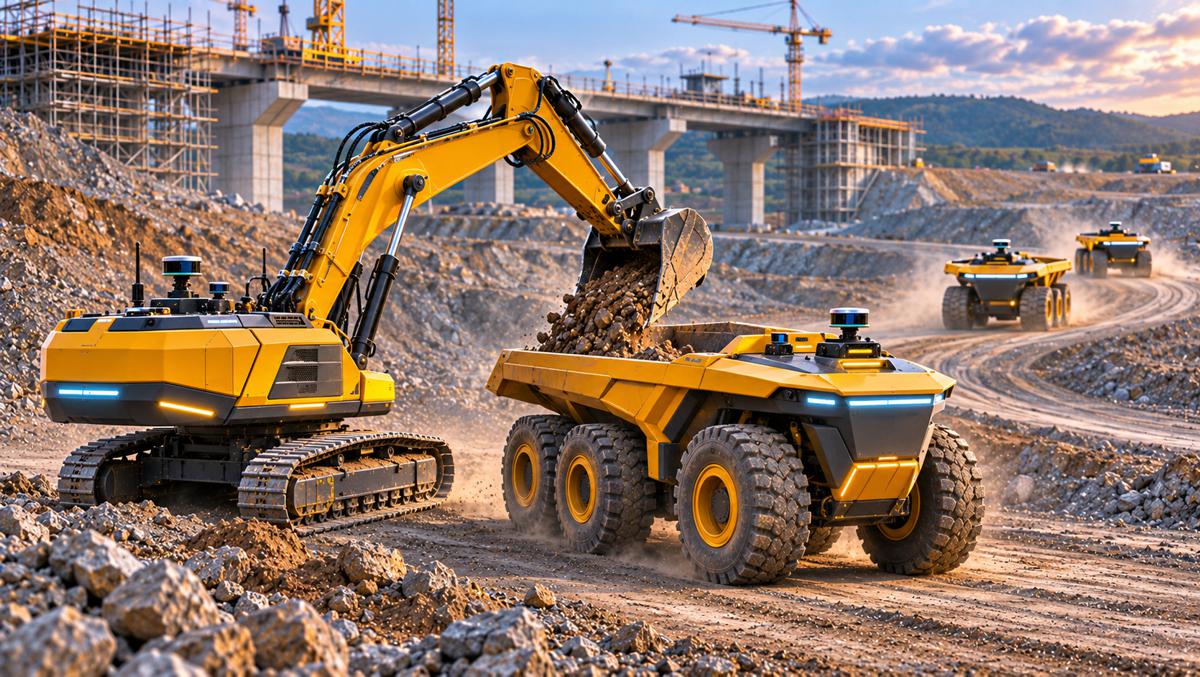
For construction and infrastructure, the most relevant developments are found in physical AI, intelligent transport, video analytics, digital twins and industrial robotics. Toyota is extending AI across vehicles, factories and urban mobility systems, Shimizu Corporation is testing vision AI for worker safety, and Hitachi is applying video agents to buildings and rail infrastructure. Alongside these deployments, new Jetson Thor computers are intended to make advanced inference more practical at the edge, bringing greater processing capability closer to robots, cameras, mobile equipment and other operational assets.
Briefing
- Japan has launched a government-backed physical AI initiative to develop open multimodal foundation models for robotics, digital twins and autonomous agents.
- Toyota is extending its NVIDIA relationship across advanced driver assistance, safety-critical software engineering, factory simulation and urban traffic intelligence.
- New NVIDIA Jetson T3000 and T2000 modules are designed to reduce the size, power requirement and cost of deploying advanced AI in robots and edge systems.
- Construction, rail and smart-space organisations are adopting agentic video systems for worker safety, asset monitoring, operational analysis and energy management.
- Japanese enterprises are customising open Nemotron models for local languages, regulated data and specialist industrial workflows rather than relying solely on general-purpose cloud AI.
Japan Connects Industrial Strength with AI Infrastructure
Japan already possesses many of the industrial capabilities needed to commercialise physical AI. Its manufacturers have deep experience in precision engineering, mechatronics, vehicle production, electronic components, industrial control and robotics. The present strategy is to combine that established production base with accelerated computing, simulation and locally adapted foundation models.
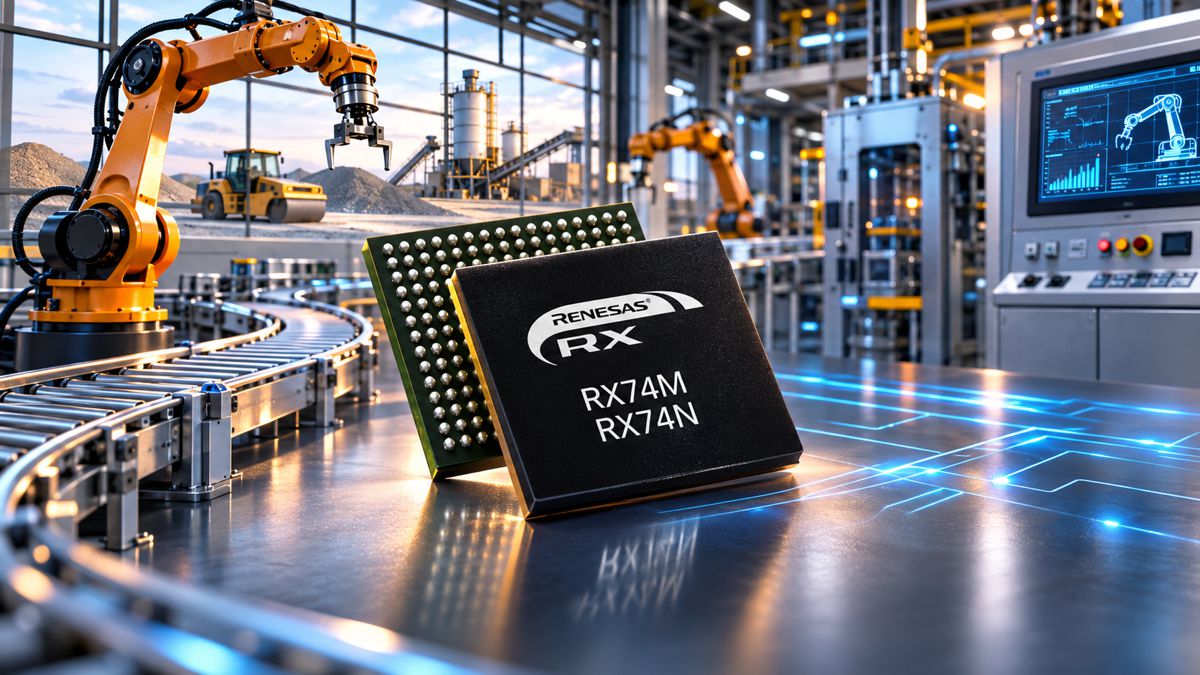
The breadth of participating organisations makes the initiative commercially significant. Fujitsu, Kawasaki Heavy Industries, FANUC and Yaskawa are among the companies working on industrial systems built around NVIDIA technologies, while more than 30 executives from 16 Japanese semiconductor equipment, memory, materials and component businesses participated in supply-chain discussions during NVIDIA chief executive Jensen Huang’s visit to Tokyo. Participants included Tokyo Electron, Kyocera, Mitsubishi Electric, Panasonic, Renesas Electronics, Kioxia, TDK and Shin-Etsu Chemical.
Japan’s Ministry of Economy, Trade and Industry has also launched a national Physical AI Initiative bringing together government, industrial data, manufacturing expertise and international technology providers. Its stated objective is to develop open multimodal foundation models for AI agents, robotics, digital twins and physical AI applications. This establishes a framework through which research, model development and industrial deployment can be coordinated rather than pursued as disconnected pilots.
Huang placed the opportunity in the context of Japan’s manufacturing heritage. “Japan has historically been very good at precision manufacturing and very large-scale manufacturing, but now we have AI,” Huang said to gathered reporters. “You can combine the two technologies and create robotics. The future of intelligent manufacturing, the future of robotics can now start.” The strategic argument is that Japan does not need to recreate its industrial base for the AI era. It needs to add intelligence, computing and software orchestration to capabilities it already possesses.
Toyota Links Vehicles, Factories and Urban Infrastructure
Toyota’s expanded work with NVIDIA illustrates how AI is beginning to cross conventional industry boundaries. The programme covers advanced driver assistance, automotive software engineering, factory simulation and an urban traffic intelligence model. These are often treated as separate technology markets, but they increasingly rely on the same underlying combination of visual perception, simulation, accelerated computing and safety-controlled decision-making.
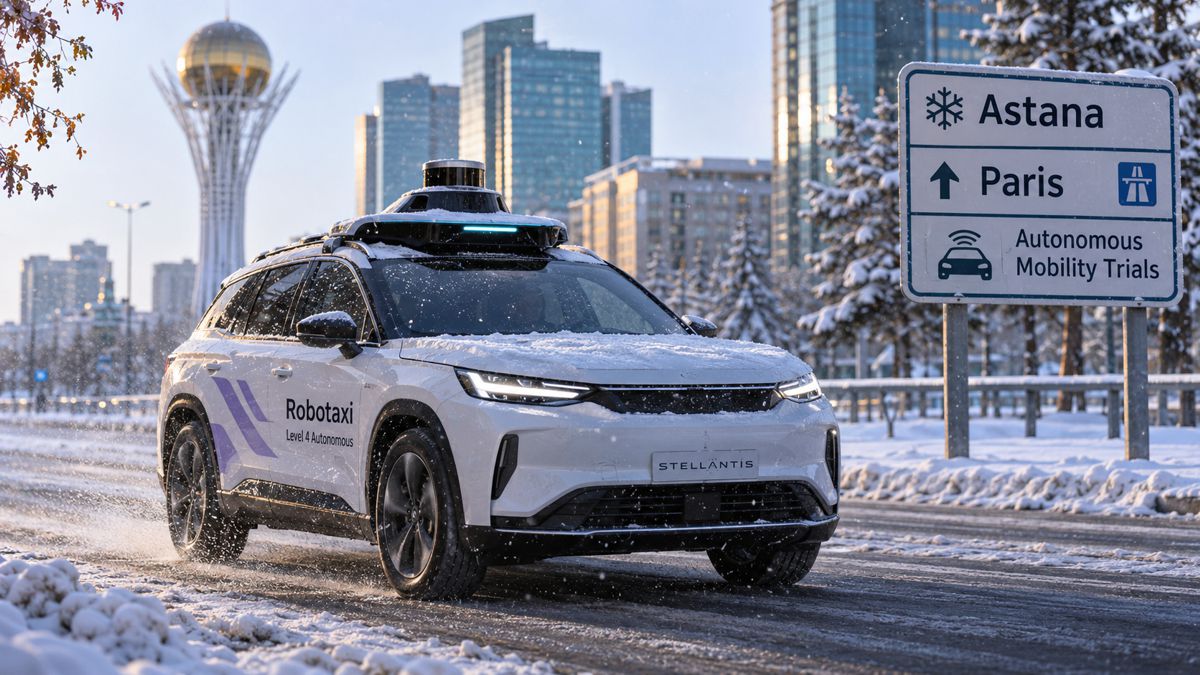
Toyota is developing next-generation vehicles offering L2++ advanced driver assistance using NVIDIA DRIVE AGX and the safety-certified DriveOS operating system. At this level, the vehicle can provide more capable and context-aware assistance, but human supervision remains part of the operating model. The commercial implications extend beyond the vehicle because more sophisticated assistance systems increase demand for reliable road markings, consistent signage, machine-readable traffic information and better coordination between vehicles and infrastructure.
The manufacturer is also using Megatron-LM and NVIDIA Nemotron datasets to train and refine a MISRA-compliant code-assistant model. MISRA guidelines are widely used to improve the safety, security and reliability of software in automotive and other critical systems. Applying specialised AI to code generation and review could help engineering teams work more efficiently, but validation, traceability and human accountability will remain essential wherever generated code influences safety-critical vehicle behaviour.
Factory operations form another part of the collaboration. Toyota is applying NVIDIA Omniverse libraries and the Isaac Sim framework to simulate robot movements, production processes and digital twin environments before changes are introduced on the manufacturing floor. This simulation-led approach can reduce physical commissioning work, identify interference between machines and help production teams assess revised layouts without disrupting live operations.
Woven by Toyota has meanwhile developed a multimodal vision-language model for urban traffic intelligence using NVIDIA H100 GPUs and Megatron-Core. Its purpose is to interpret real-world conditions, anticipate developing situations and support responses across transport and infrastructure systems. For road authorities, the important progression is from detecting individual vehicles towards systems that can understand the wider operational context captured by traffic cameras and other sensors.
Rishi Dhall, NVIDIA’s vice-president of automotive, described the breadth of that approach: “Physical AI will bring intelligence to every moving machine from cars, robots and trucks to the cities and factories they operate in,” said Rishi Dhall, vice president of automotive at NVIDIA. “Together, Toyota and NVIDIA are building the AI infrastructure for a new era of mobility, where vehicles can become more autonomous, manufacturing more AI-defined and urban environments more intelligent, responsive and safe.”
Edge Computing Moves Closer to Mass Deployment
Robots, mobile equipment and intelligent roadside systems cannot always depend on continuous cloud connectivity. Decisions involving navigation, collision avoidance, inspection or worker protection may need to be made locally and within fractions of a second. Edge computing is therefore becoming a critical part of the physical AI supply chain.
NVIDIA’s new Jetson T3000 and T2000 modules address this requirement by offering Blackwell-based computing in smaller configurations than the existing high-end Jetson AGX Thor platform. The T3000 combines 865 FP4 teraflops of AI compute, an eight-core Arm CPU, 32GB of LPDDR5X memory, 273GB/s of memory bandwidth and 25GbE connectivity. NVIDIA says it occupies approximately half the space and consumes about half the power of the T5000 while providing similar inference performance for certain multimodal workloads.
The related IGX T3000 provides the same stated performance with integrated functional-safety capabilities and support for NVIDIA Halos for Robotics. This is particularly relevant to industrial machinery and robots intended to operate near workers. High computing performance alone is insufficient in such environments; manufacturers also need fault management, deterministic behaviour, safety architecture and evidence that systems perform predictably under abnormal conditions.
The T2000 targets a broader class of edge devices with 400 FP4 teraflops and 16GB of memory. Possible applications include visual AI agents, autonomous mobile robots and industrial manipulators. Both modules are scheduled for availability in the first quarter of 2027, although developers can begin working through emulation, with T3000 support due in JetPack 7.2.1 during July 2026.
Software optimisation may prove as commercially important as the hardware specifications. New Jetson agent skills automate memory optimisation, system configuration and deployment tasks, potentially allowing developers to use lower-memory modules. NVIDIA reports that UBTech, Agile Robots and Connect Tech reduced memory use by up to 15GB in some workloads, while intelligent traffic technology company NoTraffic achieved a 30% reduction on Jetson TX2 NX. Such savings could lower unit costs or release capacity for additional functions without replacing deployed hardware.
Vision AI Becomes an Operational Infrastructure Tool
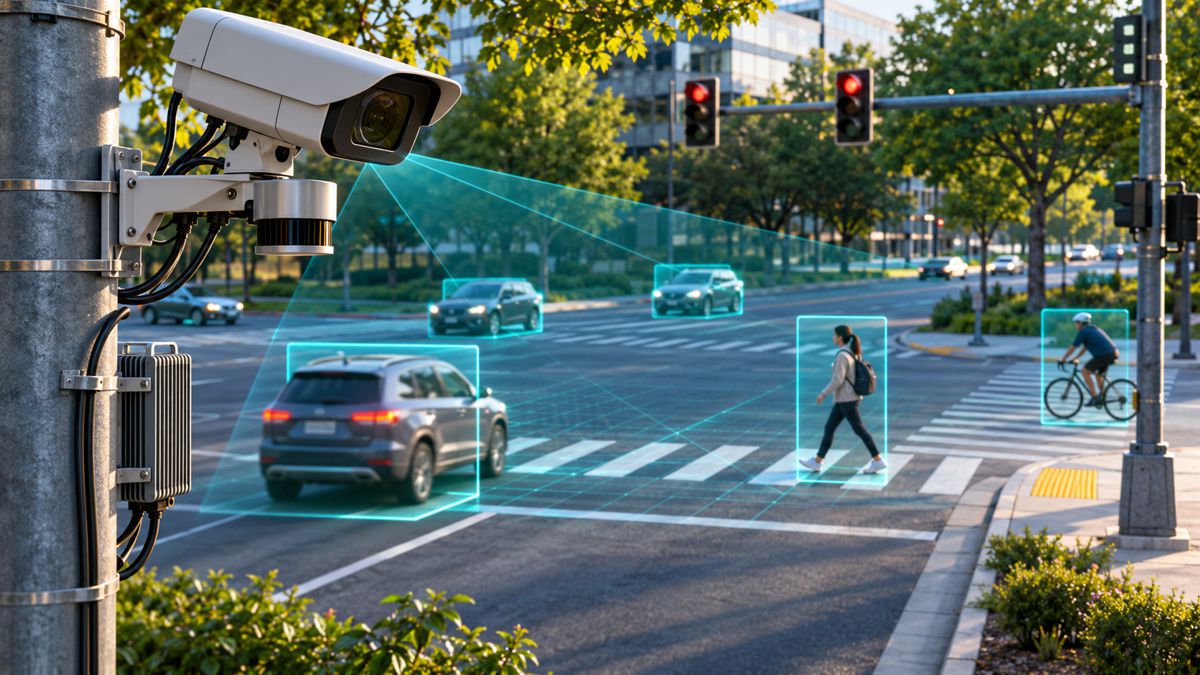
The next generation of video analytics is intended to do more than count vehicles, recognise objects or issue threshold-based alerts. Vision-language models can interpret scenes, search lengthy recordings through natural-language instructions and place observed events within a broader operational context. This could make existing camera networks more valuable to infrastructure owners, provided accuracy, privacy and system governance are properly addressed.
NVIDIA has added more than 80 skills to its Metropolis environment, including updated Video Search and Summarisation, DeepStream and TAO components. These cover tasks ranging from data preparation and synthetic image generation to model refinement and large-scale deployment. NVIDIA says coding agents can reduce development time by at least sixfold, although the practical result will depend on application complexity, data quality and the extent of site-specific validation required.
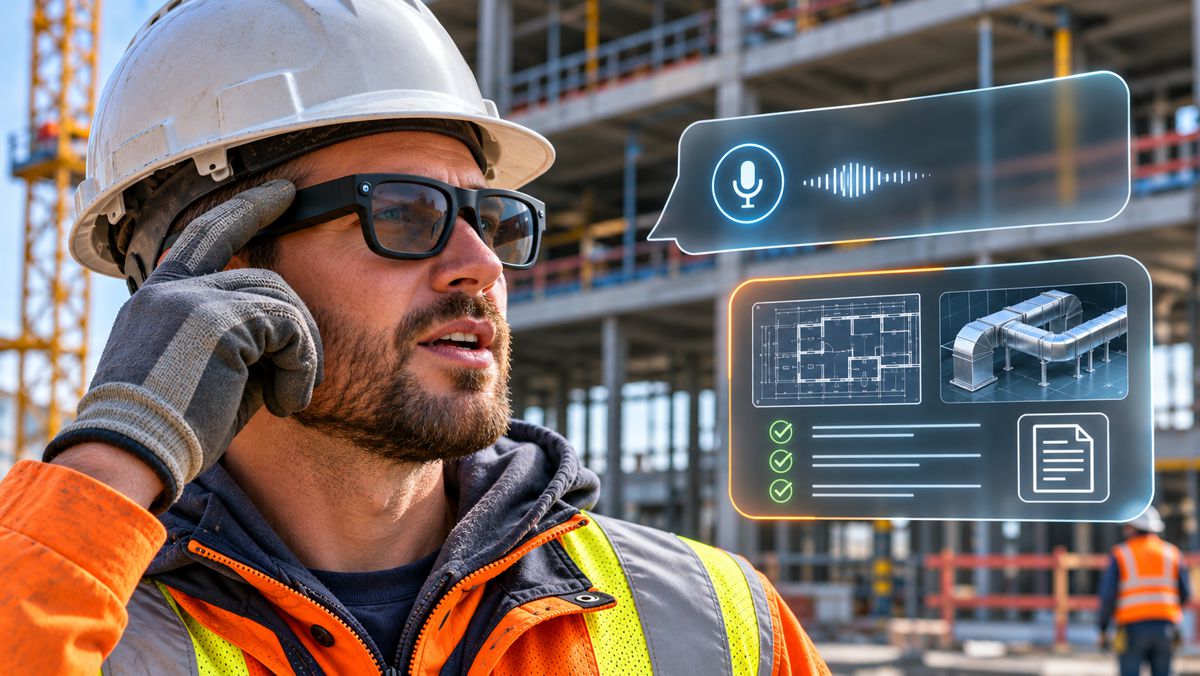
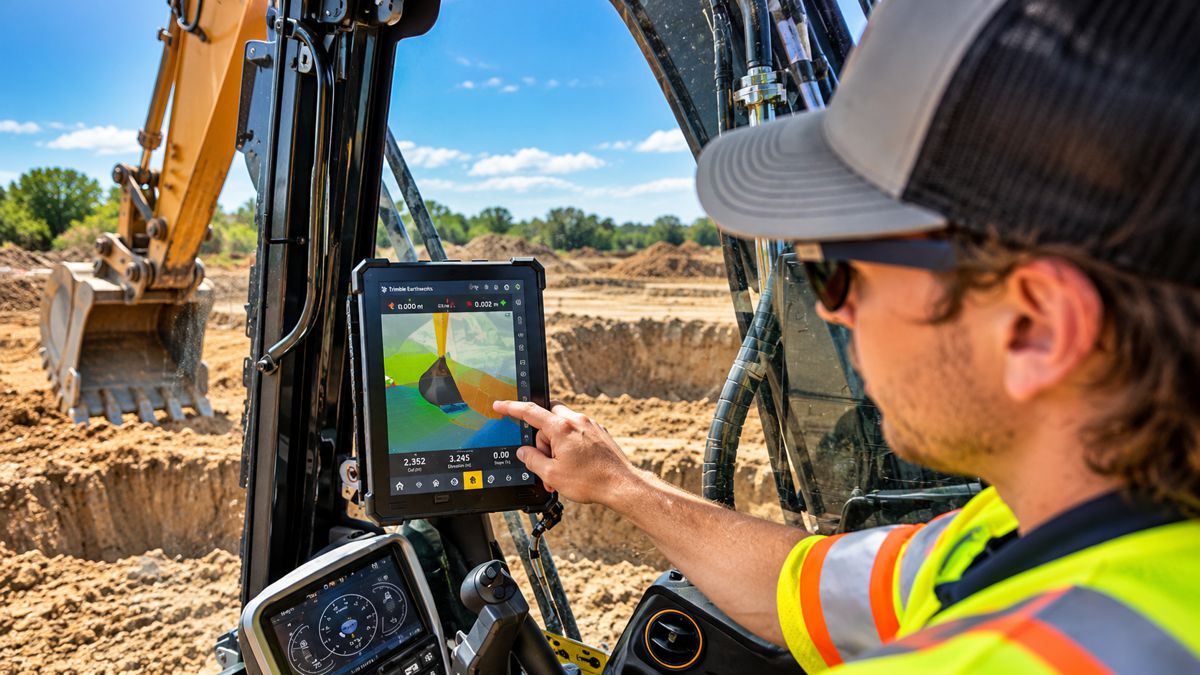
Japanese companies including Asilla, AWL, Fujitsu, Hitachi, OMRON, Shimizu Corporation and Yazaki North America are applying the technology across factories, construction sites, buildings and public spaces. Shimizu is piloting Video Search and Summarisation technology for construction worker safety. The potential value lies in identifying unsafe movements, reviewing incidents more efficiently and extracting useful safety knowledge from video that would otherwise require extensive manual analysis.
Hitachi is using video agents within its HMAX portfolio to examine conditions in buildings and rail infrastructure. NVIDIA reports that the applications can help reduce maintenance costs and energy consumption by 15% in rail use cases. While this is a company-reported result rather than an industry-wide benchmark, it illustrates how visual systems may support maintenance planning, energy optimisation and operational decision-making from the same sensor estate.
DeepStream 9.1 supports real-time, multi-sensor analytics from the edge to the cloud, including multi-camera tracking. TAO 7 provides tools for labelling, diagnostic analysis, fine-tuning and synthetic data generation. Synthetic datasets are especially relevant to construction and transport because rare but hazardous events may be poorly represented in historical footage, making it difficult to train or test systems exclusively on real-world examples.
Open Japanese Models Support Industrial Control
Japan’s AI programme also emphasises models that local organisations can inspect, customise and deploy within their own infrastructure. This matters in regulated industries and operational environments where commercially sensitive data, public records or critical infrastructure information cannot simply be sent to an external general-purpose service.
The Institute of Science Tokyo developed its Swallow family of open models using NVIDIA Nemotron datasets and the NeMo software stack. The models are intended to strengthen Japanese-language and reasoning performance while retaining English, mathematics and coding capabilities. Applications already being explored include financial-document translation and asset-management reporting.
SB Intuitions has used Nemotron technologies to develop the Sarashina family of Japanese generative AI models. Sarashina3 mini has been selected by Japan’s Digital Agency for specialist AI uses, while SoftBank has developed a Large Telecom Model using Sarashina and Nemotron to support autonomous telecommunications network operations. For connected infrastructure, AI capable of supporting network management may become important as roadside systems, sensors and edge devices increase the complexity of communications estates.
Hitachi is combining Nemotron and Cosmos open models with its own information technology and operational technology expertise. The aim is to coordinate IT and OT activities through multi-agent orchestration. This is relevant to industrial and infrastructure environments because operational data often remains divided among asset-management systems, control platforms, maintenance records and enterprise software.
ENEOS Holdings is pursuing a different specialist application, using Nemotron with AI-Q Blueprint and ALCHEMI NIM microservices for energy and materials research. Its workflows combine technical-document retrieval, visual and language understanding, simulation and molecular screening. Research includes immersion-cooling fluids and advanced catalysts, both of which have potential relevance to the energy consumption and thermal management of future computing infrastructure.
Computing Capacity Becomes Strategic Infrastructure
AI adoption at industrial scale requires more than individual processors and models. It depends on high-capacity computing infrastructure, data-centre power, networking, storage and the specialist engineering needed to operate them. Japan is therefore investing in national research systems alongside enterprise deployments.
Two Blackwell-based supercomputers are entering operation at RIKEN. RIKYU uses 1,600 NVIDIA Blackwell GPUs through the GB200 NVL4 platform and will support foundation-model development, materials science, life sciences and laboratory automation. ROQUO combines 540 Blackwell GPUs with quantum processors, including Quantinuum’s Reimei trapped-ion system, to support hybrid quantum and high-performance computing.
The National Institute of Advanced Industrial Science and Technology is also working with NVIDIA on quantum and AI infrastructure. NVQLink provides a low-latency connection between graphics processors and quantum processors, while AI models are being explored for quantum processor calibration and error correction. These remain advanced research activities, but materials discovery, chemical modelling and optimisation are among the areas that could eventually affect construction products, energy systems and industrial manufacturing.
A collaboration involving Mitsubishi Chemical, Mizuho Bank, Keio University, AIST, the University of Toronto and NVIDIA has demonstrated an AI and GPU-assisted quantum workflow for molecular spectral analysis. NVIDIA reports a 13.4-fold speed improvement over CPU-only nodes. One early application concerns extreme ultraviolet photoresist used in semiconductor manufacturing, highlighting the connection between scientific computing and the supply chains required to manufacture future AI hardware.
AI Expands Across Science and Enterprise Services
Japanese pharmaceutical companies are building a shared AI drug-discovery ecosystem through Tokyo-1, operated by Xeureka. Astellas, Daiichi Sankyo, Eisai and Ono Pharmaceutical are among the participating companies. Their work uses BioNeMo tools, virtual screening and accelerated data processing to investigate molecules and manage research workflows.
Biomy reports that NVIDIA single-cell RAPIDS reduced the time required for spatial transcriptomics analysis by 90%. It plans to use Nemotron-based agents to propose and coordinate virtual experiments. Although the application sits outside construction, it demonstrates the wider industrial pattern: specialised models, domain data and accelerated computing are being assembled into operational systems rather than offered as standalone conversational tools.
Financial institutions are following a similar path. The Japan Research Institute has deployed an AI factory using Nemotron models as a foundation for broader adoption across SMBC Group. Rakuten Bank plans to build transaction foundation models using NVIDIA Agent Toolkit, while Ippu Senkin is working on locally operated agents for secure payment activities. The same requirements for governance, proximity to data and controlled model deployment apply to infrastructure operators handling sensitive operational information.
NVIDIA’s 30-year relationship with SEGA offers a consumer-facing counterpart to these industrial programmes. SEGA plans to support the new RTX Spark platform for compact PCs, including the forthcoming VIRTUA FIGHTER CROSSROADS. Although gaming is peripheral to the infrastructure story, the partnership shows how graphics processing, simulation and AI computing have converged across consumer, scientific and industrial markets.
From Technology Portfolio to Industrial Operating Model
The common thread through the announcements is not any single processor, model or software library. Japan is assembling a layered AI environment stretching from national supercomputers and open models to factory digital twins, road intelligence, safety cameras and embedded processors. This creates a possible route for moving research into commercially deployable systems without separating computing infrastructure from industrial implementation.
For construction and infrastructure businesses, procurement will increasingly involve entire AI architectures rather than individual products. A contractor considering computer vision for worker protection must account for cameras, connectivity, edge processors, models, integration, cyber security, validation and operational responsibility. Similarly, a transport authority adopting video agents will need rules governing retention, automated decisions, human review and performance across weather, lighting and unusual traffic conditions.
The value of Japan’s approach lies in connecting its established industrial organisations with universities, start-ups, government bodies and computing providers. This may shorten the path between foundational research and production deployment. It could also support domestic control of models and data in sectors where operational resilience and technological sovereignty matter.
The harder phase will be scaling these systems safely and economically across real facilities. Model accuracy, interoperability, functional safety, energy demand and lifecycle support will determine which deployments become enduring infrastructure. Japan’s manufacturing discipline provides a strong foundation, but physical AI will ultimately be judged through measurable improvements in safety, productivity, asset availability and cost.
Key Industry Questions
- What is physical AI, and why does it matter to construction? Physical AI describes systems that perceive and interact with the real world through machines, cameras, sensors or robots. In construction, this may include autonomous equipment, robotic inspection, video-based safety monitoring and machines that adapt their behaviour to changing site conditions. Unlike office-based generative AI, physical AI must account for uncertainty, movement and safety-critical consequences. Deployment therefore requires suitable edge computing, sensor integration, functional-safety controls and extensive testing. Japan’s programme matters because it brings model developers together with experienced manufacturers capable of turning AI software into durable industrial products.
- How could NVIDIA Jetson Thor be used on construction sites? Jetson Thor modules could provide local computing for autonomous machines, mobile robots, inspection platforms, intelligent cameras and safety systems. Processing data on the machine reduces dependence on cloud connectivity and may improve response times for tasks such as obstacle detection or movement analysis. The T3000 targets demanding multimodal workloads, while the lower-specification T2000 is aimed at a broader range of edge systems. Actual adoption will depend on environmental protection, integration with machine controls, safety certification, power requirements and total installed cost, not simply the module’s headline processing performance.
- What does Toyota’s urban traffic model mean for road authorities? Woven by Toyota’s multimodal model is designed to interpret traffic conditions and anticipate developing situations rather than merely detect objects. For authorities, comparable systems could improve incident identification, congestion management and coordination between vehicles and roadside infrastructure. They may also help operators search video networks using natural-language instructions. Deployment would require reliable source data, transparent alert thresholds and appropriate human oversight. Authorities would also need to determine how insights integrate with traffic management centres, signal systems and emergency procedures before the technology could influence live network operations.
- Can vision AI improve construction worker safety? Vision AI can examine live or recorded video for unsafe movement, restricted-area entry, equipment interaction and other relevant conditions. It may also accelerate incident reviews and reveal recurring patterns that manual observation misses. Shimizu Corporation’s pilot indicates that Japanese contractors are beginning to test agentic video in a construction setting. The technology should supplement rather than replace established safety management. False alerts, obstructed views, changing site layouts, workforce privacy and poor performance in difficult weather or lighting all require careful consideration before operational decisions are automated.
- Why are open AI models important for infrastructure operators? Open-weight models allow organisations to inspect, adapt and run AI within their chosen environment. This can be valuable for infrastructure owners handling sensitive operational data, critical asset records or regulated information. A locally deployed model may also be customised around engineering terminology, domestic standards and an organisation’s maintenance procedures. Open models do not automatically guarantee security or accuracy, however. Operators still need model evaluation, cyber security controls, version management and clear responsibility for outputs. Their principal advantage is greater technical and operational control than may be available through a closed external service.
- How do digital twins support industrial robotics? Digital twins allow engineers to test robot movements, production layouts and control strategies in a simulated environment before altering a live facility. This can expose collisions, access problems and inefficient sequences without interrupting production or placing workers at risk. Toyota’s use of Omniverse libraries and Isaac Sim demonstrates how vehicle manufacturing is adopting this simulation-first approach. Construction equipment manufacturers and major contractors could apply similar techniques to automated yards, prefabrication facilities and repetitive site operations. The usefulness of a twin ultimately depends on how accurately it reflects the physical system and how consistently it is updated.
- Will agentic AI operate critical infrastructure autonomously? Some agents may eventually handle bounded tasks such as searching maintenance records, summarising camera footage or recommending operational actions. Fully autonomous control of critical infrastructure presents a much higher threshold. Systems would need reliable data, clearly defined authority, fail-safe behaviour, cyber protection and human intervention procedures. SoftBank’s work on autonomous telecom network operations and Hitachi’s IT-OT orchestration illustrate the direction of travel, but commercial deployments are likely to advance through constrained applications first. Operators should distinguish between an agent that recommends a decision and one authorised to alter physical operations.
- What should infrastructure buyers examine when procuring physical AI? Buyers should assess the entire operating system rather than focus only on processor speed or model size. Important factors include sensor quality, edge and cloud architecture, interoperability, cyber security, functional safety, model validation and performance under local conditions. Contracts should address data ownership, software updates, component availability and responsibility when automated outputs are incorrect. Organisations should also establish measurable operational objectives, such as reduced inspection time or improved asset availability. A limited deployment with agreed benchmarks can provide stronger evidence than a broad project built around untested assumptions.
Strategic Takeaways
- Japan is treating AI as an industrial capability spanning computing infrastructure, models, edge hardware and physical deployment, rather than as a collection of software applications.
- Compact Thor-based modules could lower the cost and power barriers to deploying advanced perception and reasoning on robots, intelligent cameras and autonomous machinery.
- Toyota’s work connects vehicle intelligence with factory simulation and urban traffic analysis, reinforcing the growing interdependence between vehicles and machine-readable infrastructure.
- Construction and transport organisations will need procurement and governance frameworks that cover data, models, hardware, safety and lifecycle support as one integrated system.
- Japan’s combination of manufacturing expertise, government coordination and locally controlled AI could provide a practical model for other industrial economies facing skills and workforce pressures.