Hitachi and Pronto Put Mixed-Fleet Autonomy at the Centre of Mining’s Future
The strategic partnership between Hitachi Construction Machinery and Pronto points towards a more commercially accessible model for mine automation, one designed around the equipment operators already own rather than an entirely new fleet tied to one manufacturer. Their memorandum of understanding covers the development of open mine automation solutions capable of combining mining machinery, operational expertise, digital systems and autonomous haulage technology.
That distinction matters because automation decisions are rarely made on technology alone. Mining companies must consider remaining equipment life, production schedules, workforce availability, capital constraints and the operational risks associated with changing established processes. A retrofit-capable system that can work across multiple manufacturers could allow mines to introduce autonomous haulage incrementally, preserving more of the value invested in existing trucks while avoiding an abrupt fleet replacement programme.
The agreement also arrives as Hitachi Construction Machinery prepares to become LANDCROS Corporation in April 2027. The manufacturer has already begun moving towards interoperable digital services, including a fleet management system that consolidates operating information from machinery made by different manufacturers.
Briefing
- Hitachi Construction Machinery and Pronto have signed an MoU covering open mine automation solutions, although no deployment timetable, customer project or commercial product configuration has yet been announced.
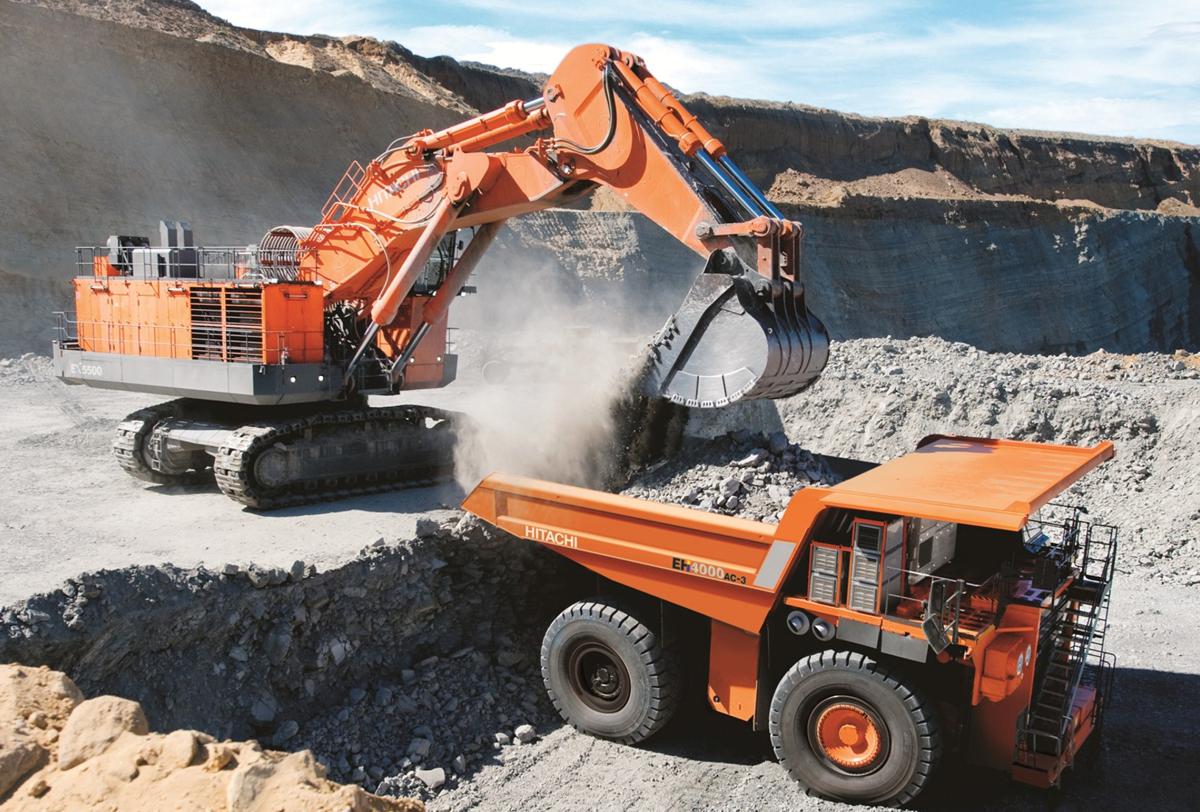
- Pronto’s autonomous haulage system can be retrofitted to haul trucks from different manufacturers, supporting mixed fleets rather than requiring a mine to standardise around a single OEM.
- The partnership could lower one of the main barriers to autonomy by allowing operators to retain suitable existing assets and introduce automation in stages.
- Hitachi contributes mining equipment knowledge, customer relationships, dealer and service infrastructure, while Pronto provides autonomous driving technology already used in commercial mixed-fleet operations.
- The agreement supports Hitachi’s wider transition to LANDCROS, which is being positioned around open technology, connected machinery and collaboration with specialist partners.
Retrofitting Changes the Investment Case
The most commercially significant element is not simply that two companies are collaborating on autonomous haulage. It is the emphasis on using trucks that mines already operate. Large mining fleets represent substantial sunk capital, and many machines remain productive for years when supported by component rebuilds, remanufacturing and structured maintenance programmes. Requiring those assets to be replaced before autonomy can be introduced may make an otherwise attractive project financially difficult to justify.
Pronto’s OEM-agnostic model is intended to decouple the autonomous driving system from the truck manufacturer. Its technology is designed to retrofit existing haul trucks and is offered in tiers for applications ranging from regional quarries to deep-pit, ultra-class mining. This potentially gives operators more control over the scale, timing and cost of implementation, although each mine will still require detailed engineering, operational validation and a robust safety case.
The retrofit model could also affect fleet procurement. Instead of treating autonomy as a feature that must be purchased with a new truck, operators could consider the haulage platform and automation layer as related but separately replaceable investments. That may strengthen competition between equipment suppliers, reduce dependence on one technology roadmap and allow mines to choose trucks according to payload, maintainability, regional support and total lifecycle cost.
None of this makes implementation simple. Truck interfaces, braking performance, steering systems, payload characteristics, communications and maintenance condition can vary considerably between machines and generations. The commercial attraction of an open system will therefore depend on how efficiently these differences can be engineered, validated and supported without undermining the repeatability that gives automation its economic value.
Mixed Fleets Move from Constraint to Starting Point
Most established mines operate mixed fleets, whether by design, acquisition history, local dealer strength or successive procurement cycles. Even where haul trucks largely come from one manufacturer, the wider production system frequently includes excavators, loaders, drills, graders and support equipment supplied by several companies. An automation system that assumes a completely uniform machinery environment may therefore conflict with the operational reality of the site.
Pronto has already demonstrated its system in a commercial mixed-fleet quarry environment. At Heidelberg Materials’ Lake Bridgeport operation in Texas, a fleet including Caterpillar 775G and Komatsu HD605 trucks surpassed two million tonnes hauled autonomously in under eight months, according to the company. That deployment is important because it provides evidence that different truck brands can operate simultaneously under a common autonomous haulage platform, rather than demonstrating compatibility only through isolated trials. Pronto’s account of the deployment identifies the specific truck models involved.
Moving from a quarry to an ultra-class mine nevertheless introduces another level of complexity. Deep pits can involve longer haul cycles, steeper gradients, changing road geometry, larger payloads, more difficult weather and denser interaction between autonomous and manually operated equipment. Pronto’s tiered portfolio addresses this by adding lidar and radar to its camera-based system for more demanding environments, but the partnership announcement does not yet specify which configurations Hitachi and Pronto will jointly support.
This makes the MoU a statement of direction rather than a completed product launch. The next commercially relevant milestones will be named mine deployments, the range of validated truck models, regional support arrangements and evidence of performance across different conditions. Operators will also want clarity on system ownership, upgrade responsibilities, cybersecurity, data access and the allocation of liability between the automation provider, equipment manufacturer and mine.
Hitachi Brings More Than Machinery
Hitachi Construction Machinery’s contribution is likely to extend well beyond access to trucks. The company has decades of mining equipment experience, a global installed base and established relationships with mine operators, dealers and service organisations. Those capabilities matter because autonomous haulage requires continuing support throughout the equipment lifecycle, including inspections, software updates, component maintenance, incident analysis and adaptation as the mine plan changes.
Masafumi Senzaki, President and Executive Officer of Hitachi Construction Machinery, placed the agreement within that longer customer relationship: “For decades, we have worked alongside mining customers around the world and have developed a deep understanding of their diverse needs and the challenges they face.
“Through our collaboration with Pronto, we will combine Hitachi Construction Machinery’s equipment expertise with advanced automation technologies to provide customers with greater flexibility and options in adopting automation solutions.
“This partnership represents an important step in realizing the desire embodied in the “O” of LANDCROS—to openly co-create new businesses and value with customers and partners across the mining industry, and to grow together.”
The manufacturer already operates its own autonomous haulage activities and remote support capabilities. The significance of the new partnership is therefore not that Hitachi has discovered autonomy, but that it is prepared to complement its internal expertise with an OEM-agnostic platform. That creates the possibility of serving mines where Hitachi equipment forms only part of the production fleet.
It also aligns with the company’s expansion beyond new machinery sales. Parts, remanufacturing, used equipment, maintenance services and digital operational support are increasingly important parts of the equipment business. Retrofitting automation to existing trucks could create a further lifecycle service opportunity, particularly if installation is combined with machine inspection, component renewal and long-term support agreements.
LANDCROS Builds an Open Digital Position
Hitachi Construction Machinery plans to change its trade name to LANDCROS Corporation and adopt LANDCROS as its corporate brand on 1 April 2027. Although a change of name does not alter mine productivity, the strategy surrounding it helps explain why Pronto is relevant. LANDCROS is being developed around connections between machinery, digital technology, customers and external innovation partners rather than a product portfolio confined to one manufacturer’s equipment.
Evidence of that direction is already visible. The LANDCROS Connect Fleet Management System, introduced in 2025, consolidates operational data from machinery produced by different manufacturers. It was initially launched in Europe and North America for businesses managing large fleets across multiple sites, using ISO-compliant machine location and operational data. Hitachi’s fleet management announcement described interoperability as the principal difference from its preceding Solution Linkage CONNECT system.
For mining operations, LANDCROS Connect Insight takes a more equipment-specific approach by collecting and analysing near-real-time machine information. Hitachi says the system can transmit more than 200 sensor data points from compatible mining machines for condition and performance analysis. The manufacturer intends eventually to interlink operational information from customers, group companies and technology partners through a broader digital platform. LANDCROS Connect Insight currently supports specified Hitachi excavators and rigid dump trucks.
The longer-term opportunity is to bring autonomous movement, machine health, production planning and maintenance intelligence into a more connected operational environment. That integration could help a mine identify whether lost production originates in dispatching, haul-road condition, loading practices, truck availability or maintenance performance. However, genuinely open automation will require clear interfaces and commercially workable data-sharing arrangements, not simply the ability to display multiple systems on one dashboard.
Practical Autonomy Rather Than Fleet Replacement
Pronto’s position is based on making autonomous haulage available to a wider range of operations. Its portfolio begins with a vision-based system intended for quarry and less complex haulage environments, followed by configurations using vision, lidar and radar for more demanding mining applications. This graduated model recognises that a regional aggregate operation and an ultra-class copper mine do not require identical sensor packages, redundancy or infrastructure.
Anthony Levandowski, Chief Executive Officer of Pronto, made the case for building around existing assets: “Mine operators have been clear: they want automation that works with the fleets they already own, not another closed, single-vendor ecosystem,” said Anthony Levandowski. “Pronto has proven OEM-agnostic autonomous haulage at commercial scale, and Hitachi Construction Machinery brings decades of mining equipment leadership, a global customer base, and an open autonomy vision that we share. Together, we can give every mining operation a practical, affordable path to autonomy.”
Pronto became part of Atoms in April 2026 and now operates as the core technology business within Atoms Mining. Its development path has included the acquisition of SafeAI and an agreement with Heidelberg Materials covering deployments across more than 100 trucks at over a dozen operations. The company also supplies technology for Komatsu Smart Quarry Autonomous in North America. These relationships indicate that its OEM-agnostic position does not prevent it from working directly with individual equipment manufacturers. Pronto’s Atoms announcement provides details of its ownership and deployment programme.
For Hitachi, the relationship provides a faster route into retrofit autonomy across fleets it did not manufacture. For Pronto, it offers access to equipment knowledge, global mining relationships and a service network that could help move deployments beyond specialist technology projects. The partnership will become more consequential if the two companies can turn those complementary strengths into repeatable installation and support processes.
Safety Depends on the Complete Operating System
Removing drivers from repetitive haul cycles can reduce their exposure to vehicle collisions, fatigue, dust, vibration and difficult working conditions. Autonomous trucks can also operate with consistent speed, braking and route discipline. These advantages explain much of mining’s interest in the technology, particularly in remote regions where attracting and retaining skilled operators is difficult.
Safety performance cannot, however, be separated from site design and operating discipline. Autonomous haulage requires controlled access, dependable communications, well-maintained roads, clearly defined interaction zones and procedures for breakdowns, blasting, roadworks and unusual weather. Light vehicles, graders, water carts and manually operated machinery must be incorporated into the traffic management system rather than treated as external complications.
Retrofit projects add the need to assess the condition and response of each truck before autonomous operation. Steering, braking and control systems must perform predictably, while maintenance procedures must preserve that performance throughout deployment. The partnership’s equipment expertise could be valuable here, particularly if machine inspection and readiness standards become part of the conversion process.
Workforce preparation is equally important. Autonomy changes the roles required at a mine but does not remove the need for people. Control-room personnel, field technicians, communications specialists, data analysts and maintenance teams become central to production. Operators considering the technology will therefore need a workforce transition plan alongside the engineering programme.
An Open Route to a Larger Automation Market
The immediate agreement is an MoU, so it should not be interpreted as confirmation of a finished commercial package or a guaranteed deployment pipeline. No mine, project value, implementation schedule or supported truck list has been announced. Its significance lies in the strategic alignment between a major mining equipment manufacturer and an autonomy company built around mixed-fleet retrofit systems.
If the partnership progresses into field deployments, it could broaden the addressable market for autonomous haulage. Greenfield mines can design their equipment, roads, communications and control systems around automation from the outset. Brownfield operations face more difficult constraints, but they also represent a much larger installed base of trucks and supporting infrastructure. A credible retrofit pathway would give these mines more opportunities to automate selected routes, fleets or production areas without redesigning the entire operation.
Open systems could also reshape procurement negotiations. Mines may increasingly ask equipment manufacturers to provide accessible machine interfaces, operational data and compatibility with independently supplied automation platforms. Automation readiness could become a residual-value consideration, particularly where trucks are expected to change ownership or remain in service through multiple rebuild cycles.
The wider construction and aggregates industries should watch this development closely. Quarry haulage provides an accessible proving ground for autonomy, while large earthworks, tunnelling, dam construction and remote infrastructure projects share several characteristics with mine sites. Progress in mixed-fleet mining autonomy could eventually influence how contractors automate repetitive material movement in controlled construction environments.
Key Industry Questions
- What does OEM-agnostic autonomous haulage mean? An OEM-agnostic autonomous haulage system is designed to work with trucks from more than one equipment manufacturer. Instead of requiring every truck to originate from the company supplying the automation platform, the system can be adapted to compatible machines already operating in the fleet. This is particularly relevant to established mines and quarries, where fleets often contain several brands and generations of equipment. Compatibility still requires engineering and validation because steering, braking, communications and machine-control interfaces differ. OEM-agnostic therefore does not mean that every truck can be automated immediately, but it provides a framework for supporting a wider range of assets.
- Why is retrofitting important to the economics of mine automation? Retrofitting can preserve the remaining productive value of existing haul trucks. A mine may have machines with many years of service life left, supported by rebuild and component replacement programmes. Requiring wholesale replacement would add substantial capital cost and could delay automation until the next fleet renewal cycle. A retrofit approach may allow the mine to automate selected trucks or operating areas in stages, spreading investment and reducing implementation risk. The final business case must still include conversion costs, site infrastructure, communications, training, maintenance, software support and any production disruption during commissioning.
- Can different truck brands operate autonomously in the same mine? They can, provided the autonomous haulage system has been engineered and validated for each model and the trucks operate within a common traffic, dispatch and safety environment. Pronto has reported commercial mixed-fleet operation involving Caterpillar and Komatsu trucks at Heidelberg Materials’ Lake Bridgeport quarry. Larger and more complex mines will require additional evidence because ultra-class payloads, deep-pit conditions, longer routes and severe weather create different demands. Operators should seek model-specific validation, defined performance limits and clear responsibility for maintaining compatibility throughout the life of the system.
- Does the MoU mean Hitachi and Pronto already have a product ready for sale? No specific joint product, mine deployment or commercial availability date was included in the announcement. An MoU establishes the intention to collaborate and identifies the direction of the relationship, but it does not provide the detail of a final supply contract. The next indicators of progress will include pilot or production sites, validated equipment models, supported regions and information about installation, servicing and commercial responsibility. Mine operators should also look for independently verifiable performance evidence covering safety, availability, tonnes moved, cycle consistency and operation under representative site conditions.
- What infrastructure does an autonomous haulage system require? Requirements vary by system and mine, but autonomous haulage typically depends on reliable communications, accurate positioning, controlled access and well-maintained haul roads. Mines also need traffic-management rules covering manual equipment, light vehicles and pedestrians, together with procedures for breakdowns, blasting, road changes and emergency intervention. Control-room capability, cybersecurity, data storage and system monitoring must be considered alongside the vehicle technology. Vision-based systems may reduce dependence on some forms of roadside infrastructure, but they do not remove the need for disciplined site design and operational control.
- How could open automation affect mining equipment procurement? Open automation could allow mines to evaluate trucks and autonomous systems as related but distinct purchasing decisions. Operators may choose equipment according to payload, durability, service support and lifecycle cost while selecting an automation platform capable of supporting several brands. Procurement teams are also likely to place greater emphasis on machine interfaces, data access, software support periods and future compatibility. Contractual responsibility will be crucial because faults may involve the truck, retrofit hardware, autonomy software, communications or site infrastructure. Clear performance and support obligations will therefore be as important as the initial technology specification.
- Will autonomous haulage eliminate mining jobs? Autonomous haulage reduces the requirement for drivers on repetitive truck cycles, but it creates or expands other roles. Mines need control-room operators, field technicians, communications engineers, maintenance specialists, data analysts and personnel capable of managing interactions between automated and manual operations. The workforce effect will depend on the mine, deployment scale and local labour market. Operators should plan retraining early, particularly for experienced drivers whose knowledge of haul roads, loading areas and operating hazards can be valuable in control, supervision and system-improvement roles. Workforce consultation should form part of implementation rather than beginning after the technology has been selected.
- Could the technology move from mining into construction? Controlled construction sites offer several potential applications, particularly repetitive material movement on major earthworks, tunnelling, dams and remote infrastructure projects. Mining and quarry deployments provide valuable experience because they involve private operating environments, repeated routes and centrally managed fleets. Construction projects are often more temporary and change their layouts more frequently, which can weaken the economics of extensive fixed infrastructure. Retrofit systems that are quick to install, adaptable to different trucks and capable of responding to changing routes could make autonomy more practical for contractors, especially on large, multi-year projects.
Strategic Takeaways
- Mixed-fleet retrofit capability could bring autonomous haulage within reach of established mines that cannot justify replacing productive trucks solely to access automation.
- The partnership combines Pronto’s autonomous driving system with Hitachi’s equipment knowledge, customer relationships and lifecycle support capabilities, addressing both technology and deployment.
- Open automation is likely to shift procurement attention towards machine interfaces, data rights, upgrade obligations and long-term compatibility between equipment and software providers.
- Commercial credibility will depend on named production deployments, independently measurable performance and a clearly defined support model rather than the MoU alone.
- Experience gained in mines and quarries could accelerate autonomous material movement across major earthworks and other controlled infrastructure projects.