ARC’s India Forum Puts Industrial AI to Work Across Plants and Supply Chains
The signal from Bangalore this month was less about ambition and more about arrival. ARC Advisory Group’s 24th India Forum, staged on 9 and 10 July 2026 under the banner “How AI Is Driving the Future of Industrial Operations and Supply Chain”, gathered more than 300 industry leaders, technology providers and end users for two days that treated artificial intelligence not as a horizon technology but as an operating reality.
Nearly 40 executive speakers and panelists set out how their organisations have moved AI out of the innovation lab and into the daily running of plants, refineries, factories and supply networks. For the asset-intensive industries that supply and sustain the built environment, that shift carries direct consequences for cost, reliability and the way infrastructure is procured and operated.
The relevance for construction and infrastructure runs deeper than it first appears. The materials that build roads, bridges, water systems and energy networks are made in exactly the kind of process and discrete plants the forum examined, from cement kilns and steel mills to bitumen refineries and aggregate operations.
Predictive maintenance, autonomous operations and resilient supply chains are the mechanisms that keep those plants producing and keep prices stable for contractors and infrastructure owners downstream. G. Ganapathiraman, Vice President and General Manager of ARC Advisory Group India, opened proceedings after a low-key plant-watering ceremony by the event’s sponsors, and the keynotes that followed framed the two days around practical strategy, responsible innovation and measurable outcomes rather than novelty for its own sake.
Briefing
- ARC Advisory Group’s 24th India Forum drew more than 300 delegates and nearly 40 speakers to Bangalore on 9 and 10 July 2026, with the central message that industrial AI has moved from experimentation to production-grade operations.
- Open Process Automation and the O-PAS standard emerged as a headline theme, offering asset owners a route out of proprietary control-system lock-in through interoperable, vendor-neutral architectures.
- The forum landed days after Schneider Electric agreed to acquire Gold Sponsor Cognite for 3.1 billion US dollars, a deal that underlines where commercial value is concentrating in the industrial AI stack.
- Industrial DataOps, data fabrics and agentic AI dominated the second day, reflecting a growing consensus that trusted, contextualised data is the gating factor for scaling AI across operations.
- Data sovereignty, cybersecurity and AI in regulated environments moved up the agenda, a shift with particular weight for transport, energy and utility infrastructure operators.
From Pilot Projects To Production Systems
For several years the industrial technology conversation has circled the same question of whether AI could deliver returns beyond the proof of concept. The tone in Bangalore suggested that question is being settled in practice. Speaker after speaker described AI becoming embedded in the fabric of operations, powering predictive analytics, intelligent automation, faster response and more resilient planning. The emphasis fell on scale rather than novelty, with executives explaining how early initiatives are being extended across sites, business units and supply chains rather than remaining confined to isolated pilots.
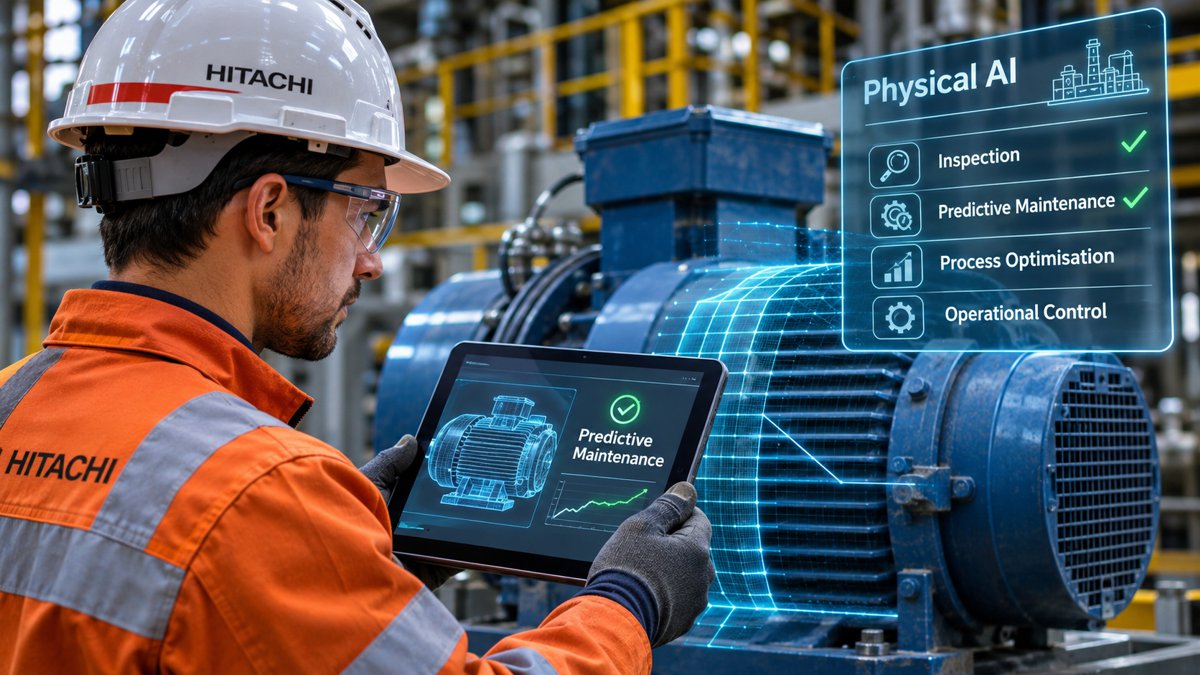
That maturation matters commercially because the value of industrial AI compounds with reach. A single predictive-maintenance model on one asset saves a modest amount, while the same capability applied across a fleet of pumps, compressors, kilns or haul trucks changes the economics of an entire operation. Speakers pointed to real-time data analysis accelerating decisions, predictive maintenance lifting asset reliability, and automation removing routine effort so that skilled staff can concentrate on higher-value work.
For infrastructure owners and the contractors they employ, these are the levers that determine whether a plant runs at full availability or loses days to unplanned downtime, and whether a material supply chain absorbs a shock or passes it on as delay and price volatility.
Open Process Automation Loosens The Grip Of Proprietary Systems
Among the more consequential threads for asset owners was Open Process Automation, the movement challenging the traditional automation pyramid in favour of open, interoperable systems. The Open Process Automation Forum, managed by The Open Group, is advancing the O-PAS standard, described by its authors as a standard of standards that stitches together established references such as OPC UA and the ISA family rather than replacing them.
The framework sets out a vendor-neutral reference architecture with security built in from the outset, and it has been tested through prototypes led by operators including ExxonMobil and Lockheed Martin, with commercial deployment targeted for the 2025 to 2026 window.
The commercial logic is straightforward once the technicalities are stripped away. Process plants have historically been tied to a single distributed control system supplier, which makes upgrades expensive, obsolescence hard to manage and innovation slow to arrive. An open architecture lets owners mix certified components from different suppliers, swap ageing elements without ripping out an entire system, and adopt new capabilities as they emerge.
For the refineries, water utilities, power stations and petrochemical sites that form the backbone of infrastructure delivery, that translates into lower lifecycle costs, longer asset horizons and more competitive procurement. It also lowers the barrier to layering AI on top, because interoperable systems expose the data that intelligent applications need to function.
Consolidation Signals A Maturing Market
The forum arrived at a moment of visible consolidation in the sector, and one deal in particular framed the mood. On 30 June 2026, just over a week before the Bangalore sessions, Schneider Electric announced a definitive agreement to acquire Cognite, one of the forum’s Gold Sponsors, in an all-cash transaction valued at 3.1 billion US dollars.
The French group intends to integrate Cognite with AVEVA, its industrial software arm, folding the acquired company’s data-contextualisation and agentic AI capabilities into the AVEVA CONNECT platform. Schneider’s leadership framed the rationale around a broader shift, arguing that industrial AI is moving from supporting analytics toward executing operations, a transition that demands a trusted and contextualised data foundation to be credible at scale.
Read alongside the sponsor roster, the deal says something about where value is settling. Siemens headlined as Global Gold Sponsor, with the OPC Foundation as Platinum Sponsor and ABB, Yokogawa and Cognite among the Gold tier, a line-up that spans control hardware, interoperability standards and the emerging data-and-AI layer.
The pattern points to margins and growth migrating toward the software that organises operational data and turns it into decisions, rather than toward instrumentation alone. For investors tracking the infrastructure technology space, the message is that data platforms and agentic tooling now command premium valuations, and that established automation majors are willing to pay heavily to secure a foothold in that layer.
Data Foundations Decide Who Scales
The second day sharpened the focus on Industrial DataOps, data fabrics and agentic AI, and the underlying theme was consistent with ARC’s wider analysis through 2026. The firm has argued repeatedly that data quality, not model sophistication, is the decisive constraint on scaling industrial AI, and that many organisations remain trapped in a chaotic web of point-to-point integrations that cannot support advanced automation.
A trusted, contextualised data fabric that links sensor readings, engineering diagrams, 3D models and maintenance records into a single coherent view is increasingly treated as the cost of entry rather than a nice-to-have.
That framing has practical teeth for infrastructure operators weighing digital twin and connected-asset programmes. A digital twin is only as reliable as the data feeding it, and an agentic system that acts autonomously on poor data will make poor decisions faster than any human. The forum’s attention to data foundations reflects hard-won experience from organisations that rushed to deploy AI before their data was ready and stalled as a result.
For owners of large, complex assets such as motorway networks, ports, water systems and energy grids, the sequencing lesson is clear, in that the investment in clean, contextualised and well-governed data has to come before the intelligent applications that sit on top of it can deliver dependable value.
Sovereignty And Security Move Up The Agenda
Alongside the operational and commercial threads ran a quieter but strategically important conversation about data sovereignty and cybersecurity. ARC’s India commentary has flagged that for public sector undertakings, sovereignty is becoming a business-critical requirement, because sensitive operational data drawn from energy, transport, mining and defence-linked infrastructure cannot be treated as a routine cloud workload. Day one of the forum addressed AI in regulated environments directly, acknowledging that the industries most central to national infrastructure operate under constraints that a generic cloud-first approach does not accommodate.
Security and sovereignty are not obstacles to industrial AI so much as design requirements that shape how it is deployed. The O-PAS standard builds cybersecurity into its architecture rather than bolting it on afterwards, and the wider forum discussion reinforced that connected operations widen the attack surface even as they unlock efficiency.
For infrastructure owners and the public authorities that oversee them, the practical implication is that AI adoption must be paired with a clear position on where data resides, who can access it and how the underlying systems are hardened. Getting that framework right early avoids the costly retrofits and compliance headaches that follow when connectivity outpaces governance.
What It Means For Construction And Infrastructure
Pulling the threads together, the Bangalore forum offered a coherent picture of an industrial base that is quietly rewiring how it operates, with consequences that reach well beyond the plant fence. The materials, energy and logistics that underpin every road, bridge and building are produced and moved by exactly the operations the forum examined, so gains in reliability, efficiency and supply-chain resilience flow through to construction cost and delivery certainty.
Open architectures and interoperability standards promise to loosen the vendor lock-in that has long inflated the lifecycle cost of infrastructure control systems, while consolidation among software providers signals a market maturing toward integrated, decision-grade platforms.
The near-term priorities for infrastructure leaders are becoming easier to name. Owners of asset-heavy portfolios stand to benefit from treating data foundations as the first investment rather than the last, from scrutinising procurement for openness and interoperability rather than accepting proprietary defaults, and from pairing every connectivity gain with a matching stance on security and sovereignty.
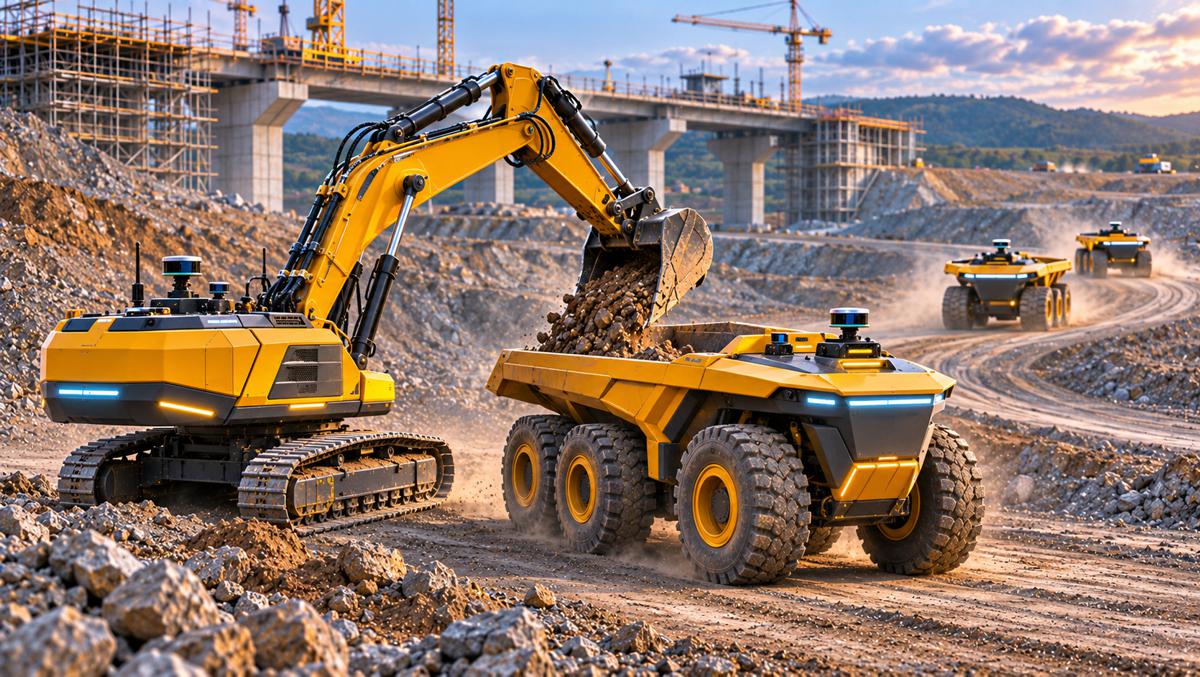
Equipment fleets, from the pumps and compressors inside a plant to the machines working a construction site, sit squarely within the predictive-maintenance and autonomous-operations trends the forum showcased, which points to steadily rising expectations of uptime and utilisation. The organisations that combine clean data, open systems and disciplined governance look best placed to convert industrial AI from a headline into a durable operational advantage.
Key Industry Questions
- What is Open Process Automation and why does it matter to infrastructure owners? Open Process Automation is a movement toward open, interoperable industrial control systems, advanced through the O-PAS standard managed by The Open Group. It challenges the traditional model in which a plant is tied to a single control-system supplier for decades. For infrastructure owners running refineries, water utilities, power stations and similar assets, the appeal is practical. Open architectures allow certified components from multiple suppliers to work together, so ageing elements can be replaced individually rather than through wholesale system upgrades. That reduces lifecycle costs, eases obsolescence management and makes it simpler to adopt new capabilities, including AI applications that depend on accessible operational data.
- How does the O-PAS standard reduce vendor lock-in? O-PAS defines a vendor-neutral reference architecture and a common information model, using established standards such as OPC UA and the ISA family rather than replacing them. Because conformant components share standard interfaces, an owner can integrate hardware and software from different suppliers into a single system. That breaks the historic dependence on one distributed control system vendor, where every upgrade, expansion or repair had to come from the original supplier at the supplier’s price. The standard has been tested through operator-led prototypes and moved toward commercial deployment across the 2025 to 2026 period, giving asset owners a credible path to more competitive procurement and longer, more flexible technology roadmaps.
- What did the Schneider Electric acquisition of Cognite signal about the market? Schneider Electric’s agreement to buy Cognite for 3.1 billion US dollars, announced on 30 June 2026, points to where commercial value is concentrating in the industrial AI stack. Cognite specialises in organising and contextualising industrial data and layering agentic AI on top, capabilities Schneider intends to fold into its AVEVA software business. The scale of the deal, struck just before the ARC forum where Cognite was a Gold Sponsor, suggests that data platforms and decision-grade AI now attract premium valuations. For the wider sector, it indicates that established automation majors see the data-and-intelligence layer, rather than instrumentation alone, as the battleground for future growth.
- Why is data quality described as the main barrier to scaling industrial AI? Industrial AI depends on trusted, well-organised data, and many operations still rely on tangled point-to-point integrations that were never designed for advanced analytics. ARC’s analysis through 2026 has consistently placed data quality, rather than model sophistication, as the decisive constraint on scaling AI. The reasoning is that an intelligent system acting on incomplete or poorly contextualised data will produce unreliable results, and an autonomous agent will do so at speed. Building a data fabric that links sensor readings, engineering records, 3D models and maintenance histories into a coherent view is increasingly treated as the necessary foundation before AI applications can deliver dependable value at scale.
- What is agentic AI in an industrial context? Agentic AI refers to systems that do not merely analyse and report but take action, executing tasks and making operational decisions within defined boundaries. In an industrial setting that might mean an agent adjusting a process, scheduling maintenance or rerouting a supply-chain flow without waiting for human instruction at every step. The forum treated agentic AI as a leading-edge theme precisely because it raises the stakes on data quality and governance. An agent that acts autonomously amplifies the value of good data and the risk of bad data, which is why discussion of agentic systems ran alongside heavy emphasis on data fabrics, sovereignty and security rather than being presented in isolation.
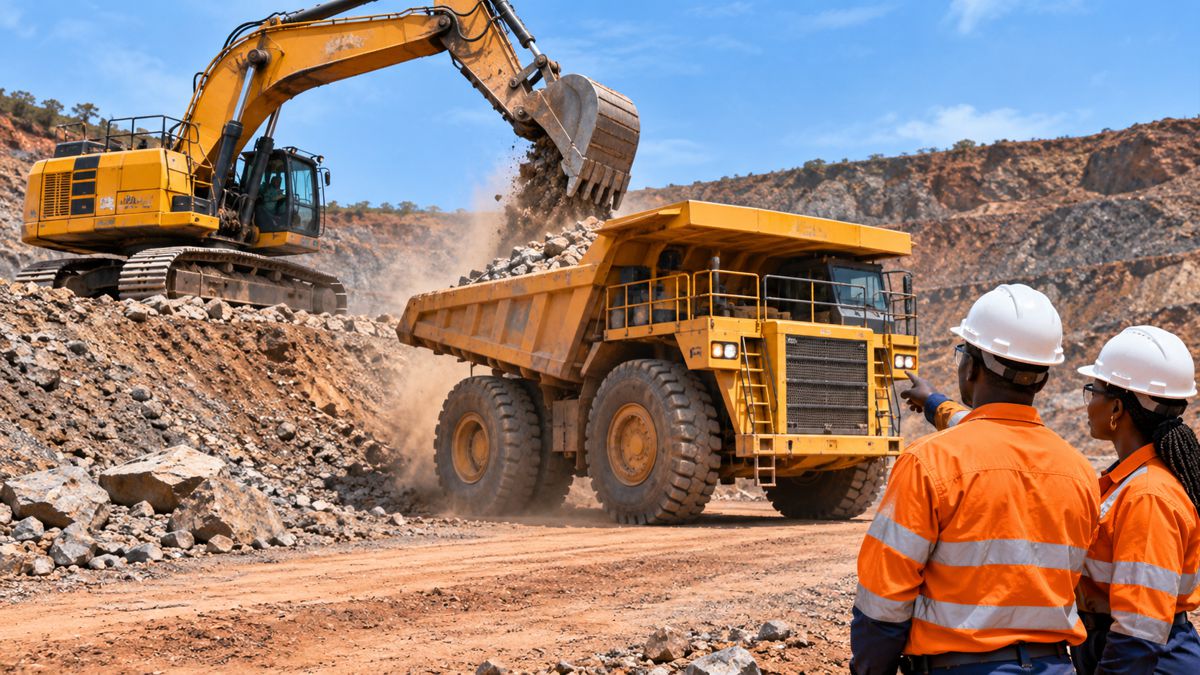
- How does industrial AI affect construction materials and infrastructure supply chains? The cement, steel, bitumen and aggregates that build infrastructure are produced in process and discrete plants of the type the forum examined. When those plants adopt predictive maintenance and intelligent automation, they run with higher availability and fewer unplanned stoppages, which steadies both output and price. Applied across supply networks, AI improves planning, visibility and responsiveness, helping operations absorb disruption rather than pass it downstream as delay or cost. For contractors and infrastructure owners, the practical effect is greater certainty of material supply and pricing, and a reduced likelihood that a fault in an upstream plant translates into a stalled project or a blown budget.
- What are the cybersecurity and sovereignty implications of connected operations? Connecting industrial systems to unlock AI-driven efficiency also widens the potential attack surface, which is why security featured prominently at the forum. The O-PAS standard builds cybersecurity into its architecture from the outset rather than adding it later. Sovereignty is a related concern, particularly for public sector operators, because sensitive data from energy, transport, mining and defence-linked infrastructure cannot always be treated as an ordinary cloud workload. The practical takeaway for infrastructure owners is that AI adoption should be paired from the start with clear positions on where data is stored, who can access it and how systems are hardened, avoiding costly retrofits when governance lags behind connectivity.
- What should infrastructure owners do now to prepare for AI-driven operations? The sequencing that emerged from Bangalore is instructive. Owners are best served by investing first in clean, contextualised and well-governed data, since that foundation determines whether later AI applications succeed or stall. Procurement deserves fresh scrutiny for openness and interoperability, so that new control and software systems do not lock the organisation into a single supplier for decades. Every gain in connectivity should be matched by a corresponding stance on cybersecurity and data sovereignty. Beyond that, treating equipment fleets and asset portfolios as candidates for predictive maintenance and autonomous operation positions an owner to raise uptime and utilisation steadily rather than waiting for a single large transformation.
Strategic Takeaways
- Industrial AI has crossed from experimentation into production, and its value scales with reach, so infrastructure owners with large asset portfolios stand to gain most from applying predictive and autonomous capabilities across whole fleets rather than single sites.
- Open Process Automation and the O-PAS standard offer a credible route out of decades-long control-system lock-in, and procurement teams should begin weighting openness and interoperability as commercial criteria in their own right.
- The 3.1 billion US dollar Schneider Electric acquisition of Cognite marks the data-and-AI layer as the sector’s premium growth segment, a signal worth heeding for anyone investing in or partnering across infrastructure technology.
- Clean, contextualised and well-governed data is now the precondition for dependable AI, which means digital twin and connected-asset ambitions should follow a serious investment in data foundations rather than precede it.
- Security and sovereignty are becoming design requirements rather than afterthoughts, and infrastructure operators who fix their data-residency and cyber-hardening posture early will avoid the expensive retrofits that catch out those who connect first and govern later.