The Independent Blueprint Behind Y.E.S.’s Kubota Expansion
Falkirk-based Your Equipment Solutions has committed to more than 70 Kubota mini excavators from local dealer HRN Tractors, and on the surface the deal reads as a routine fleet top-up by a regional plant and tool hirer. Read against the wider market, the transaction says something more instructive about where competitive advantage now sits in British plant hire.
The business, known across central Scotland as Y.E.S., has opened four new depots in roughly a year, restructured its ownership around its own workforce, and standardised much of its digging fleet on the compact segment’s global volume leader. Each of those decisions maps onto a distinct structural trend now reshaping the sector, and taken together they amount to a working template for how a well-run independent captures value in a market that consolidators have spent two decades trying to dominate.
The timing matters because the economics of hire have shifted decisively in favour of rental over ownership. Barbour ABI research puts UK rental penetration at roughly 75 per cent and values the plant hire market at around £3.56 billion in 2025, up close to a quarter since 2020, with the trajectory tied to a projected £700 to £775 billion pipeline of UK infrastructure investment.
When three-quarters of contractors already choose to hire rather than own, price and product availability converge across the field, and the differentiator that remains is service. That is precisely the ground on which Y.E.S. has chosen to compete, and its fleet investment should be read less as a procurement headline than as the operational backbone of a service-led growth strategy that larger national networks have historically struggled to match at the local level.
Briefing
- Your Equipment Solutions has ordered more than 70 Kubota mini excavators in 1.6, 1.8 and 3-tonne classes from dealer HRN Tractors, lifting its compact digging fleet beyond 150 machines.
- The Falkirk firm has expanded rapidly, adding Edinburgh and Glasgow depots earlier in the year and a fifth site at Inverness in May, alongside existing operations in Falkirk and Dundee, backed by more than £3 million of investment in depots, staff and fleet.
- Three years ago the founders sold a 60 per cent controlling stake to an Employee Ownership Trust, placing Y.E.S. within construction, one of the fastest-growing sectors for employee ownership in the UK.
- Compact excavators are the highest-volume, highest-utilisation asset class in a modern hire fleet, and Kubota leads the segment globally, factors that make brand standardisation a lifecycle-cost decision rather than a preference.
- Managing Director David Johnstone frames responsiveness and service, not product exclusivity, as the independent’s core commercial weapon, with acquisition-led growth now openly on the agenda.
Service As The Real Battleground In A Saturated Hire Market
The strategic logic behind the expansion becomes clear once the maturity of the UK hire market is taken into account. With rental penetration already high and the machines themselves largely interchangeable between suppliers, competitive advantage has migrated away from the equipment and towards the quality, speed and reliability of the service wrapped around it.
Independents that can turn a machine around quickly, answer the phone when something goes wrong, and keep a familiar face on the account hold a structural edge over multi-depot national operators whose decision-making sits several layers removed from the customer. That advantage is difficult for a large business to replicate, because it is a product of organisational shape rather than scale or capital.
David Johnstone, who spent 24 years as a director of a national hire business before striking out on his own, has built the company deliberately around that gap in the market. His assessment is unambiguous. “We strive to provide the complete service that customers expect,” he said. “When you’re an independent business, you can react quickly and we offer a service that some larger companies just can’t. We’re not supplying unique products, we just give the best service to our customers.”
The candour is significant, because it reframes the fleet order in the correct terms. Buying 70 Kubota excavators is not the story in itself; the story is the ability to guarantee that a well-maintained, reliable machine is available at short notice across an expanding depot network, which is exactly what a saturated market rewards. In a sector where the AMA and Barbour ABI reports both describe a fragmented landscape of national operators and local independents competing on availability and responsiveness, that positioning is commercially durable rather than sentimental.
Standardising On Compact Iron And The Fleet Economics That Follow
The choice to concentrate the order in the compact class reflects hard commercial arithmetic rather than habit. Mini excavators have become the workhorse asset of the hire industry, and the data underlines why. Compact machines account for the largest single share of the global compact equipment market, and in the United States mini excavators rank as the second-highest selling construction equipment category, representing more than a fifth of new financed sales according to EDA equipment finance data.
Their appeal is straightforward in operational terms, since they combine low acquisition and running costs with the versatility to work in confined urban sites, take a wide range of attachments, and move between jobs with minimal logistics. For a hirer, that translates into high utilisation, broad customer demand and predictable residual values, which is the combination that makes a machine worth owning in volume.
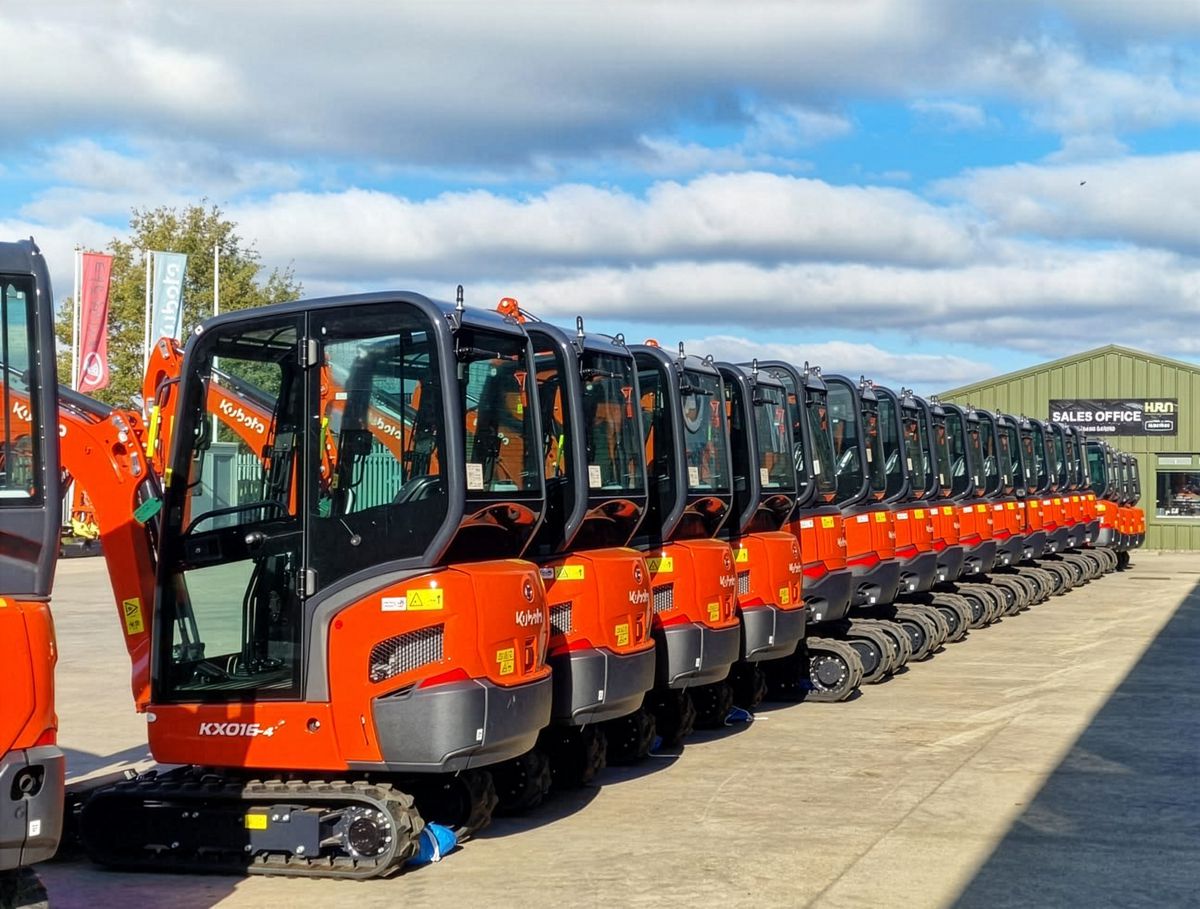
Standardising much of that fleet on a single manufacturer compounds the benefit. Kubota leads the mini excavator segment globally and holds around a quarter of new financed sales in the mature North American market, a position built on a reputation for durability and dealer support rather than headline specification. Y.E.S. bought its first Kubota compact machines in 2018 after weighing market intelligence against direct customer feedback, and Johnstone is clear about where the pressure came from.
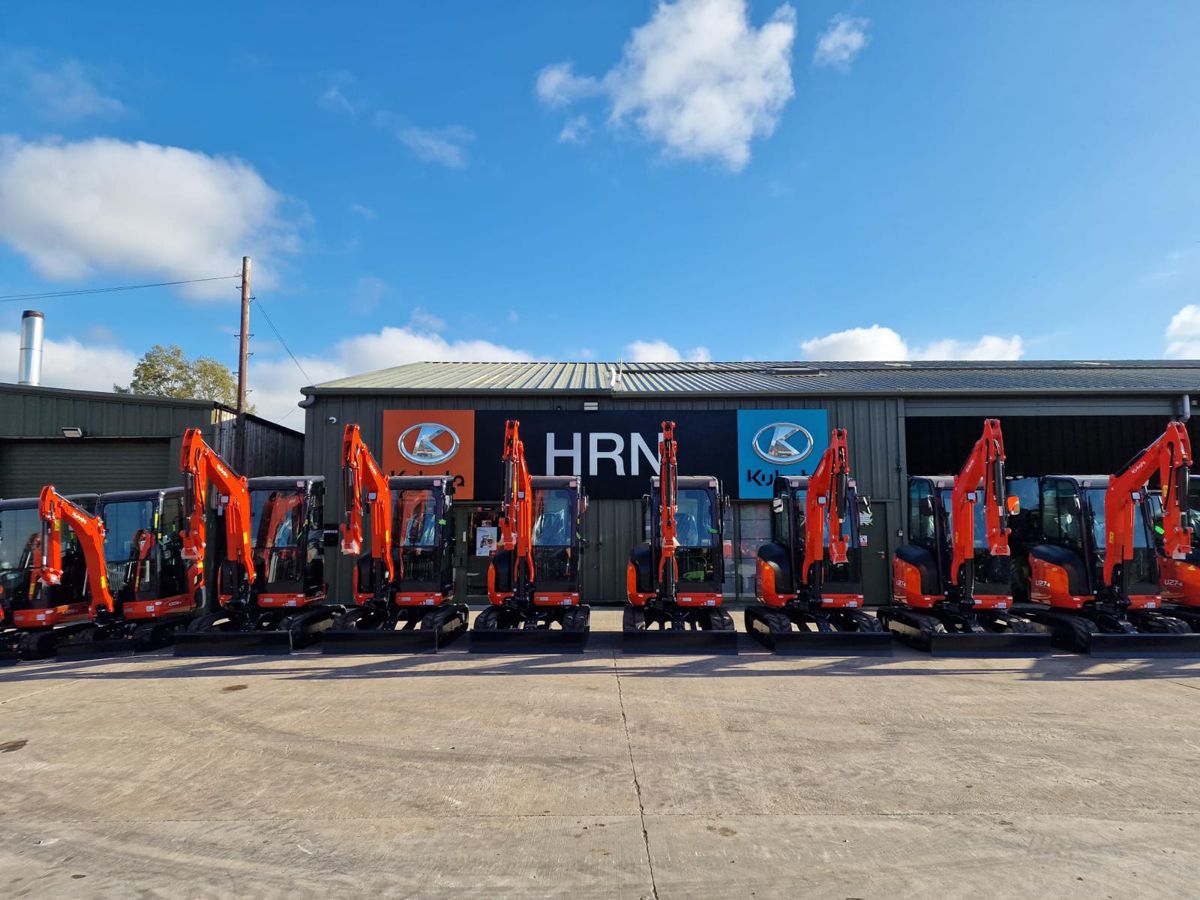
“Operators were just telling me to go with Kubota all day long,” he said. “The introduction of the five-year warranty with Kubota was also a strong selling point and the guy that runs the workshop at HRN is always on hand to help if needed.” Concentrating on the 1.6, 1.8 and 3-tonne classes keeps the fleet within the weight band that can be towed to site behind a pick-up or van, which preserves logistical simplicity and lowers the cost of getting a machine to a job.
The five-year warranty and the responsiveness of the dealer both feed directly into fleet uptime and lifecycle cost, the metrics that ultimately determine hire-fleet profitability, and Johnstone was pointed in crediting the supply chain that delivered the order at pace. “I would like to put on record my thanks for the support we have received from Martin Norry at Kubota and from Ian Burton from HRN, in getting this order delivered in such a short space of time.”
The Employee-Ownership Play And The Economics Of Succession
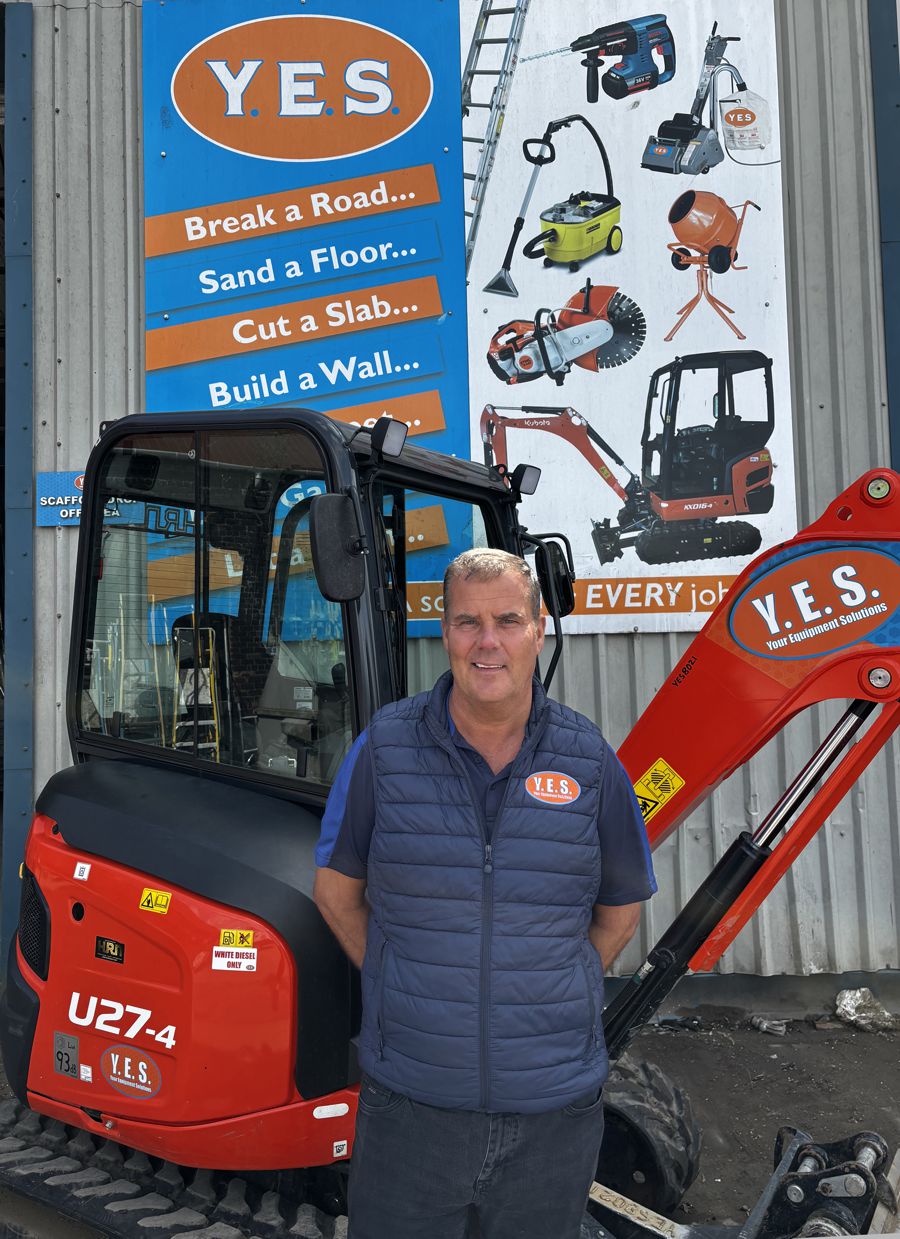
The most strategically revealing element of the Y.E.S. story is not the fleet at all, but its ownership structure. Three years ago Johnstone and the founding directors sold a 60 per cent controlling stake to an Employee Ownership Trust, converting a family-led independent that started in 2012 with four staff into a business now owned in large part by its more than 70 employees.
The move places Y.E.S. firmly within one of the most significant ownership shifts in British business. Figures from the Employee Ownership Association and the White Rose Employee Ownership Centre recorded around 2,470 employee-owned businesses in the UK by mid-2025, employing more than 358,000 people, with construction ranking among the fastest-growing sectors for conversion at roughly 14 per cent of the total.
For a plant hire business, where continuity of relationships and retention of experienced staff are the raw material of good service, aligning employee incentives with company performance is not a soft gesture but a direct reinforcement of the service model that underpins the whole strategy.
Johnstone’s own framing of the decision keeps it grounded in operational reality rather than ideology. “It gives the staff longevity of employment and they feel secure in their roles,” he said. “The key is to retain a large element of the family business way of working and to ensure that everyone feels valued at work.”
The commercial context around such transitions has since tightened, which sharpens the significance of Y.E.S. having moved when it did. The Government has cut the capital gains tax relief on qualifying disposals to Employee Ownership Trusts from 100 per cent to 50 per cent with effect from late November 2025, following earlier reforms to the qualifying conditions in 2024, a recalibration prompted by the rapid growth in EOT conversions and the rising cost to the Exchequer.
Owners who transitioned during the earlier full-relief window did so under materially more favourable terms than those contemplating the same route today. The wider point for infrastructure businesses weighing succession is that employee ownership has matured from a niche arrangement into a mainstream exit and retention structure, and one whose economics now demand closer modelling than they did even a year ago.
Building A Depot Network Through Geography And Acquisition
The physical expansion tells its own story about ambition and discipline. From its Falkirk base and an established Dundee depot, Y.E.S. added outlets in Edinburgh and Glasgow earlier in the year before opening a fifth site at Inverness in May, extending coverage from the central belt into the Highlands. That build-out has been financed by more than £3 million of investment spread across depots, staff and a fleet that now runs to over 150 mini excavators alongside compaction equipment, site dumpers, welfare units, generators and more than 400 portable toilets.
The breadth of that offer matters commercially, because a hirer that can supply the full complement of plant, tools and site infrastructure from a single local relationship captures more of each customer’s spend and defends the account against piecemeal competition. Building the network outward from a strong regional core, rather than overreaching, is the disciplined version of scale that fragmented markets tend to reward.
Growth on this trajectory brings the question of how far it can run, and Johnstone is open about the options. “We are looking to expand, through acquisition or through natural growth,” he said. “We’re growing significantly year on year and there are other potential openings in the pipeline.”
Consolidation across UK plant hire has generally been selective rather than sweeping, with margin pressure from equipment finance costs and utilisation swings weighing on smaller operators, which creates acquisition opportunities for well-capitalised independents with a clear service proposition. The fleet strategy leaves room to evolve in step with that ambition.
The company has assessed larger Kubota machines and, while the 3-tonne models remain the ceiling for now because they stay towable behind a pick-up or van, an expanding fleet of dedicated delivery trucks means heavier classes have not been ruled out. That measured approach, matching machine size to logistical capability and customer demand rather than chasing specification, is the same discipline visible throughout the business.
Community Resilience And The Local Licence To Operate
The service ethos extends beyond commercial transactions into the communities each depot serves, and this is more than corporate goodwill in a business whose competitive advantage rests on local relationships. Each Y.E.S. depot builds partnerships around practical support and involvement rather than simple sponsorship, spanning football at Falkirk, Stenhousemuir and Dundee United, golf and rugby, youth sports and school initiatives, employment and recruitment programmes, gardening projects, a dance school and an annual Christmas Toy Appeal. For a hire business, visibility and trust at the local level translate directly into brand strength and customer loyalty, and a genuinely embedded operator earns a licence to operate that a distant national competitor cannot easily buy. The community strategy is therefore consistent with, rather than separate from, the commercial one.
The clearest illustration came during the severe weather of 2024, a year that brought a run of named storms to Scotland, including Storm Bert in late November, which caused power outages and travel disruption across the country. Y.E.S. opened its depots outside normal business hours and supplied more than 40 heaters free of charge to local residents left without power, a practical intervention delivered when it was most needed rather than a marketing exercise. Johnstone characterises the company’s approach in plain terms. “We are a decent, sustainable business that does good when we can,” he said. That posture reinforces the same reputational foundation that supports the service proposition, and in a fragmented market where independents live or die on local standing, it is a meaningful commercial asset as well as a social one.
What The Y.E.S. Model Signals For The Hire Sector
Set against the direction of the wider market, the Y.E.S. expansion functions as a case study in how independent hirers can grow without abandoning the qualities that make them competitive. The combination of near-saturated rental penetration, the dominance of the compact excavator as the sector’s core asset, and the maturing of employee ownership as a succession route has created conditions in which a disciplined regional operator can scale on its own terms. Standardising the fleet on a proven compact brand controls lifecycle cost and uptime; aligning ownership with the workforce protects the service quality that differentiates the business; and building the depot network outward from a strong core captures more of the local market without overextension. None of these moves is individually novel, but their combination is coherent in a way that many larger, more capital-intensive competitors find difficult to sustain.
For infrastructure owners, contractors and investors, the read-across is worth noting. The value in plant hire is concentrating around operators who can guarantee availability and responsiveness at the local level while running fleet economics tightly, and the compact equipment segment is where the highest volume and utilisation now sit. Manufacturers with strong dealer support and warranty backing, of which Kubota is a clear example, stand to benefit disproportionately as hirers standardise to control cost and risk. The employee ownership dimension adds a further layer, since the recent tightening of tax relief will influence how future succession deals are structured across the sector even as the underlying appeal of the model endures. Kubota, founded in Osaka in 1890 and now operating in more than 120 countries with over 52,000 employees, brings the scale and continuity that a fleet-standardisation strategy of this kind requires, and the Y.E.S. order is a small but telling indicator of where purchasing conviction in the compact class is heading.
Key Industry Questions
- Why are compact excavators so central to modern plant hire fleets? Compact and mini excavators combine low acquisition and running costs with high versatility, working in confined urban sites, accepting a wide range of attachments and moving between jobs with minimal logistics. That drives high utilisation and broad, consistent customer demand, which is why they represent the largest share of the compact equipment market and rank among the highest-volume categories in equipment finance data. For a hirer, high utilisation and predictable residual values make these machines among the most reliable earners in the fleet. Concentrating investment in this class, particularly in towable weight bands up to around three tonnes, gives an operator flexible, in-demand assets that suit the mixed groundworks, utilities and small-site work that dominates regional hire.
- What commercial advantage does an independent hirer hold over national operators? The core advantage is responsiveness. In a market where rental penetration is high and machines are largely interchangeable, service quality becomes the decisive differentiator, and independents can make decisions close to the customer, turn machines around quickly and maintain consistent local relationships. National networks often carry additional layers of process that slow response times and dilute the personal account management smaller firms provide. That structural difference is difficult for a large business to replicate because it stems from organisational shape rather than capital. Independents that pair this responsiveness with a broad plant and tool offer, reliable fleet availability and genuine local presence can defend and grow market share even against much larger competitors.
- How significant is the shift to employee ownership in construction and plant hire? It has become a mainstream succession and retention structure. The UK recorded around 2,470 employee-owned businesses by mid-2025 employing more than 358,000 people, with construction among the fastest-growing sectors for conversion. For service-led businesses, aligning employee incentives with company performance directly reinforces the continuity and quality of relationships that underpin competitiveness. Employee ownership can improve retention of experienced staff, strengthen engagement and provide a stable ownership transition that preserves company culture. For plant hire specifically, where experienced operators and consistent service define the customer relationship, the model reinforces the very qualities that generate commercial value, making it a strategic rather than purely financial choice.
- How do the 2025 tax changes affect Employee Ownership Trust transitions? The Government reduced capital gains tax relief on qualifying disposals to Employee Ownership Trusts from 100 per cent to 50 per cent with effect from late November 2025, following earlier reforms to the qualifying conditions in 2024. Owners who transitioned during the earlier full-relief window secured materially more favourable terms than those contemplating the route now, and the change means half of a qualifying gain becomes chargeable, with Business Asset Disposal Relief unavailable alongside the EOT relief. The reform reflects the regime’s rapid growth and rising cost to the Exchequer rather than a withdrawal of support for employee ownership. Businesses weighing succession should model the revised economics carefully, since a sale to an EOT remains comparatively tax-efficient but no longer offers a complete exemption.
- Why does fleet standardisation on a single manufacturer make commercial sense? Standardising on one manufacturer simplifies maintenance, parts stocking, operator familiarity and dealer relationships, all of which improve fleet uptime and reduce lifecycle cost. Concentrating purchasing with a market leader that offers strong warranty terms and responsive dealer support, such as Kubota with its five-year warranty, lowers the risk of downtime and the total cost of ownership across the fleet’s life. For a hire business, uptime and lifecycle cost are the metrics that determine profitability, so a standardisation strategy protects margins while keeping service reliable. It also strengthens the operator’s negotiating position with the supplier and streamlines the logistics of moving, servicing and eventually disposing of machines at scale.
- What is driving the growth of the UK plant hire market? Contractors and developers are increasingly favouring flexible, on-demand access to machinery over asset ownership, driven by the need to reduce capital expenditure, manage compliance risk and adopt lower-emission equipment more quickly. Barbour ABI research values the market at around £3.56 billion in 2025, up close to a quarter since 2020, with rental penetration near 75 per cent and demand supported by a substantial pipeline of UK infrastructure investment. Sectors including utilities, renewable energy and data centres are adding to demand, while housing and civil engineering underpin the core market. Hiring has shifted from a cost-saving default to a strategic choice, allowing firms to scale quickly for major projects without the financial and regulatory burden of ownership.
- Why concentrate on towable weight classes rather than larger machines? Machines up to around three tonnes can be towed to and from site behind a pick-up or van, which keeps transport simple and inexpensive and allows rapid redeployment between jobs. That logistical flexibility suits the mixed small-site, groundworks and utilities work that dominates regional hire demand, and it lowers the cost of getting each machine earning on site. Larger classes require dedicated transport, which raises the logistical and cost threshold for deployment. As a hire business grows and invests in its own delivery fleet, heavier machines become more viable, but for many operators the towable band offers the best balance of versatility, utilisation and cost, which is why it often forms the backbone of a compact fleet.
- How does community involvement affect a hire company’s commercial position? For a business whose advantage rests on local relationships and trust, genuine community involvement reinforces brand strength and customer loyalty in a direct and measurable way. Practical support delivered at times of need, such as supplying free heating equipment during storm-related power outages, builds the reputation and goodwill that translate into recurring business and referrals. An operator embedded in its communities earns a local licence to operate that distant national competitors cannot easily acquire. In fragmented markets where independents compete on standing and relationships as much as on price, this reputational foundation is a commercial asset in its own right, supporting the service proposition and helping to defend accounts against piecemeal competition.
Strategic Takeaways
- In a UK hire market with rental penetration near 75 per cent and largely interchangeable machines, service quality and local responsiveness are now the decisive competitive differentiators, favouring disciplined independents over distant national networks.
- Compact excavators have become the sector’s core earning asset through high utilisation and predictable residuals, and standardising fleets on a proven volume leader such as Kubota is a lifecycle-cost and uptime decision rather than a matter of preference.
- Employee ownership has matured into a mainstream succession and retention structure, with construction among its fastest-growing sectors, and it directly reinforces the service continuity that underpins commercial value in relationship-led businesses.
- The reduction of EOT capital gains tax relief from 100 to 50 per cent from late November 2025 will reshape how future succession deals are structured, making earlier transitions comparatively advantageous and demanding closer financial modelling from owners considering the route.
- Consolidation across plant hire is likely to remain selective rather than sweeping, creating acquisition opportunities for well-capitalised independents that combine a clear service proposition, tight fleet economics and strong local standing.