
Skipper’s C8 Barrier and the New Economics of Street Works Safety
Pedestrian barriers rank among the least glamorous items in the construction supply chain, yet they sit at the point where three separate pressures now converge: a tightening expectation that street works remain navigable for blind and partially sighted people, the stubborn logistics cost of moving traffic management kit around a crew’s working day, and the slow migration of connected electronics into equipment that used to be entirely passive.
Skipper, the Manchester-based manufacturer that built its name on retractable cone-top barriers, has placed all three of those pressures inside a single product with the launch of its C8 modular barrier. The announcement reads on the surface as another entry in a crowded Chapter 8 market, but the design choices behind it track closely with where purchasing power and regulatory attention are actually moving.
The wider significance is easy to miss if the C8 is read only as a lighter, tidier version of the familiar red-and-white roadworks barrier. What matters commercially is that the criteria buyers use to evaluate temporary traffic management are changing, with accessibility, transport efficiency and lifecycle cost displacing the older calculus of unit price and basic compliance.
Manufacturers that fail to design against those criteria will find themselves competing on the wrong terms, and the ones that read the shift early will shape how frameworks are written for years. Skipper’s launch is best understood as a bet that the barrier is becoming a considered design component rather than a throwaway commodity.
Briefing
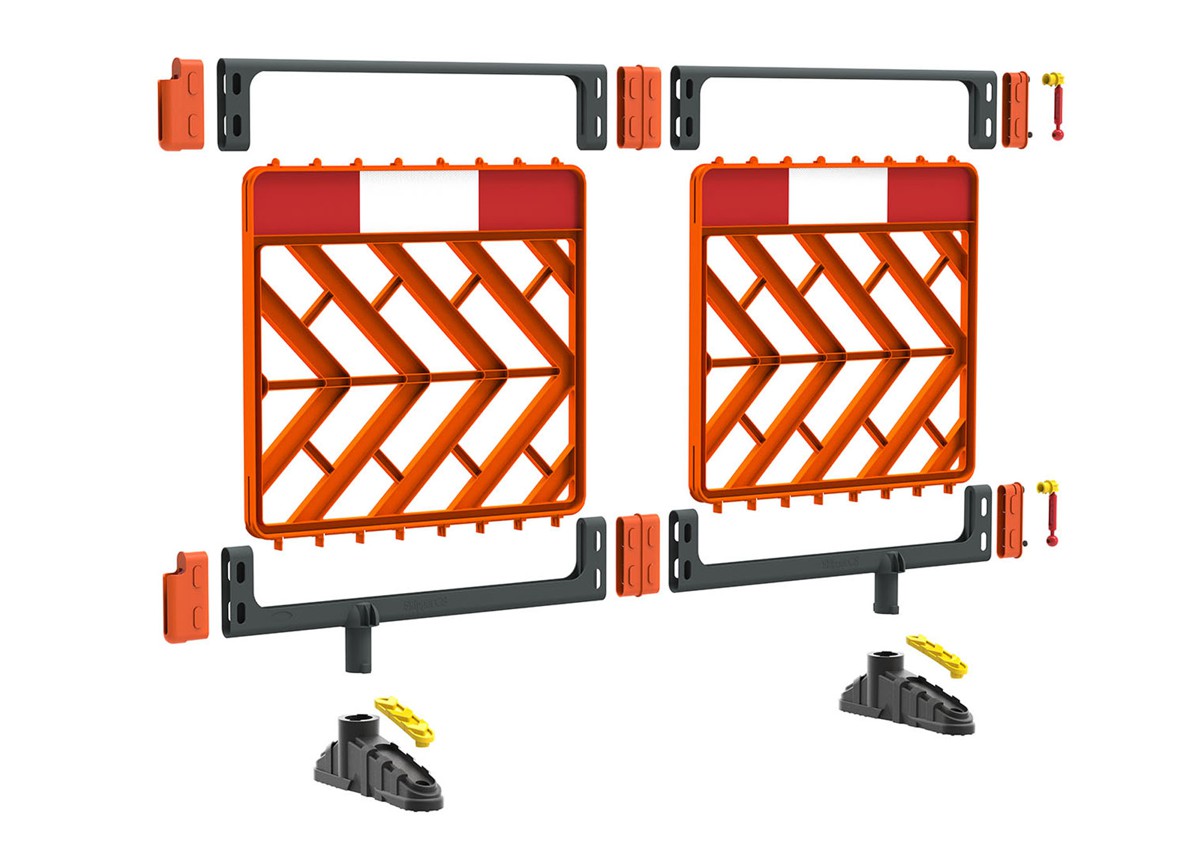
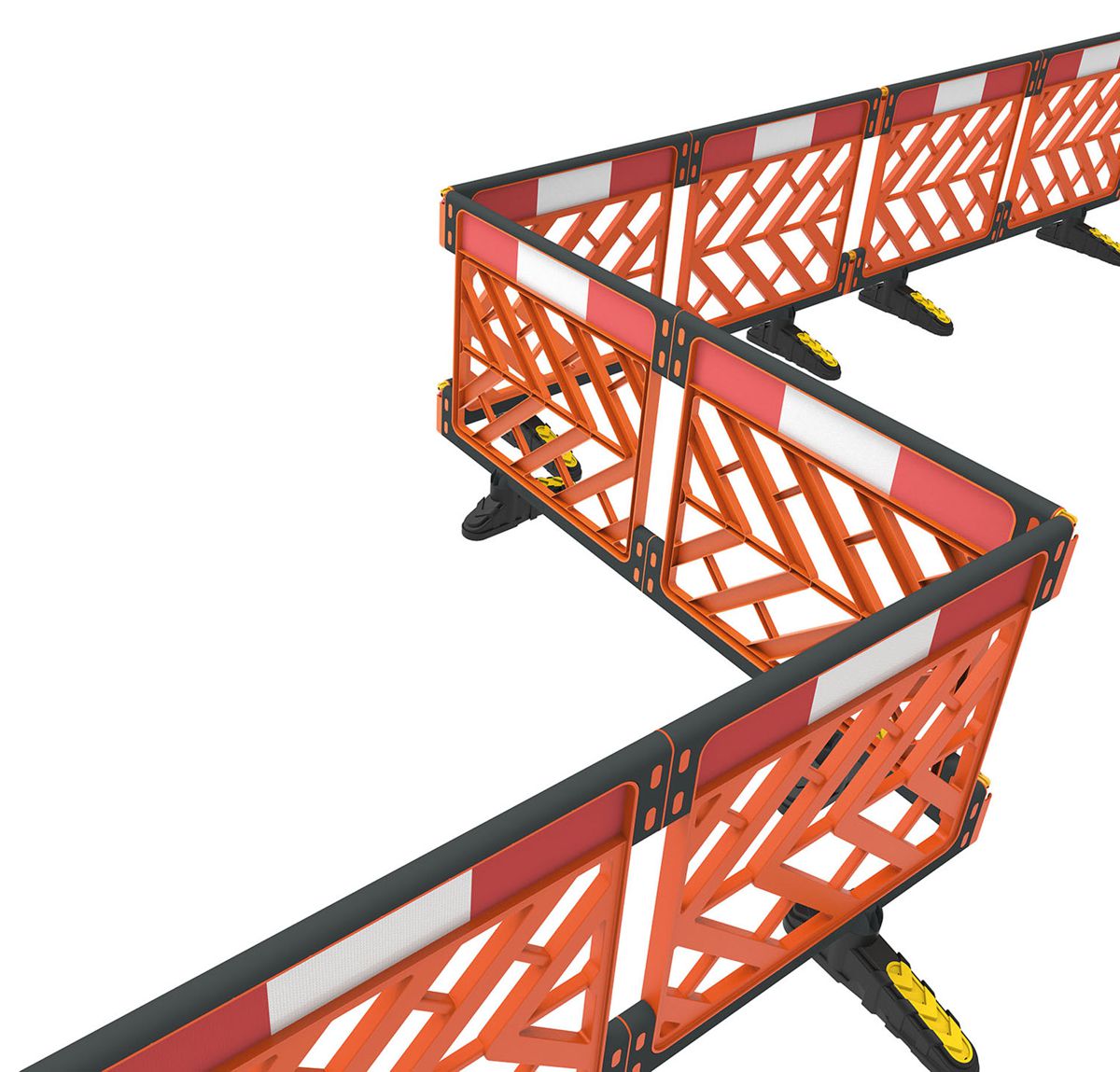
- Skipper has launched the C8, a modular Chapter 8 pedestrian barrier that breaks down into one-metre-square sections, addressing the transport and storage burden of conventional two-metre panels.
- The system uses patented magnetic dual-lock connectors at the top and bottom of each panel, articulating through 360 degrees to hold alignment over uneven and textured ground.
- A continuous top rail provides tactile guidance, allowing blind and partially sighted pedestrians to follow the barrier line by hand, an increasingly expected feature at street works.
- Integrated road lights run on concealed rechargeable Li-po batteries and are controlled through a free app that manages colour, timing and flash sequence.
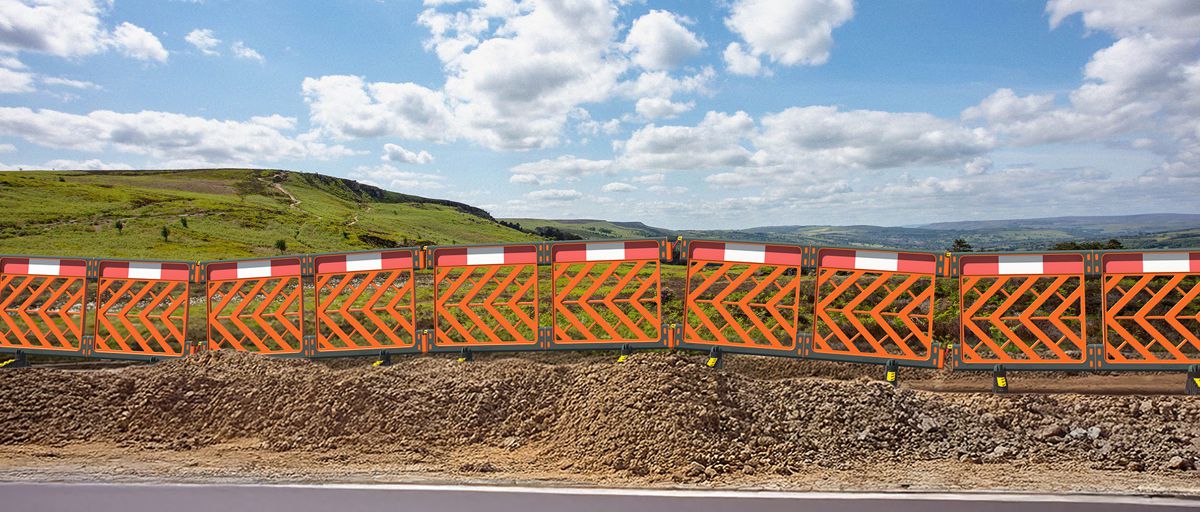
- Reflective bonded chevrons and brandable panels can be tailored for colour and messaging, positioning the product across roadworks, events and facilities management as well as highways.
The Accessibility Obligation Now Shaping Pedestrian Barriers
The design decision most likely to matter over the coming years is the C8’s continuous top rail, presented as a surface that blind and partially sighted pedestrians can run their hands along to follow a temporary route. That feature speaks directly to a body of guidance that has hardened considerably. The national Safety at Street Works and Road Works code of practice, widely known as the Red Book, sets a general minimum walkway width of 1.2 metres past works precisely so that a visually impaired person can be guided through, with an absolute minimum of one metre of unobstructed space.
The Department for Transport’s Inclusive Mobility guide goes further on detectability, recommending tapping rails with a depth of at least 150 millimetres and a lower edge no more than 200 millimetres from the ground so that cane users are not left to walk into hazards.
Charities have turned that guidance into sustained commercial pressure. Guide Dogs advises that temporary queuing areas and street furniture be marked out with accessible barriers fitted with tap rails so they are easy to detect, and the RNIB has documented the daily obstacles faced by pedestrians with sight loss in its 2025 report on navigating journeys, pressing government and local authorities toward practical change.
For contractors and local authority framework holders, the consequence is straightforward. Barriers that segregate a footway but cannot be safely followed by someone who cannot see them are becoming harder to justify, and equipment that builds tactile guidance into its standard form removes a growing source of complaint and reputational risk. Skipper’s inclusion of a hand-followable rail is therefore less a comfort feature than an alignment with the direction of travel in inclusive street design.

Where The Real Cost Sits In Temporary Traffic Management
The commercial heart of the C8 is not the barrier face but the way it folds down. Conventional Chapter 8 pedestrian barriers are typically supplied at two metres by one metre, a footprint that consumes van space at a premium and slows every load-out and collection. Breaking the panel into one-metre-square sections changes the arithmetic of a working day, because a crew that can carry more barrier in a smaller vehicle makes fewer depot runs, fits more work into a shift and ties up less capital in transport. In a sector where the largest controllable cost is rarely the hardware itself but the labour and vehicle time wrapped around it, that kind of reduction reads straight through to margin.
The timing sits against a substantial pipeline of works. The second Road Investment Strategy committed around 24 billion pounds to the strategic road network between 2020 and 2025, and every lane closure and verge repair within that programme requires temporary traffic management to keep road users and workers apart.
The safety stakes are not abstract, since workplace transport accounts for roughly a quarter of workplace fatalities in Great Britain, and construction contributes about 13 per cent of fatal workplace injuries while employing around seven per cent of the workforce. Equipment that goes up faster, holds its line more reliably and comes down more cleanly is not merely a convenience, because it shortens the exposure window during which crews and the public share space with live traffic.
Connectors, Stability And The Shifting Compliance Baseline
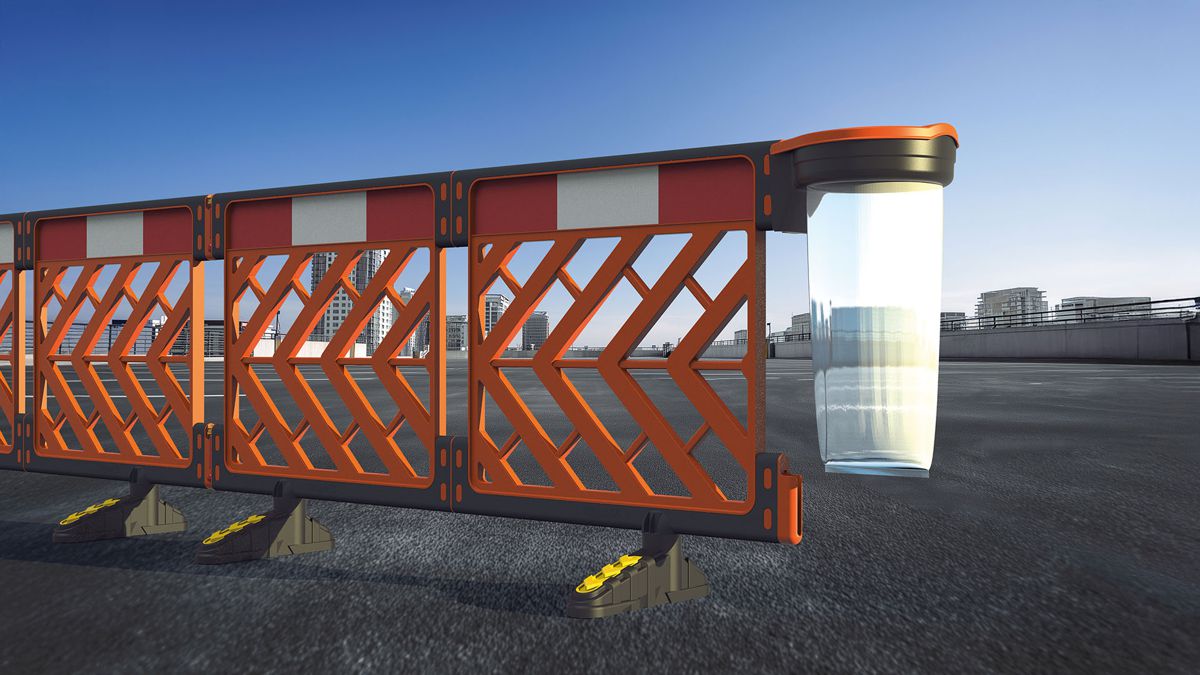
Stability is where the C8’s engineering choices are most pointed. Rather than the single hook-and-eye coupling common to the category, Skipper has fitted patented magnetic dual locks that join adjacent panels at both top and bottom, with connectors that articulate through a full 360 degrees to keep the run aligned across undulating ground. Anti-trip feet add a further layer of stability and can be fixed permanently where a run stays in place for longer.
The practical effect is a barrier line that is less likely to gap, lean or topple on the textured and uneven surfaces that characterise real street works, which in turn reduces the maintenance visits and reinstatement that quietly erode the economics of a deployment.
Compliance context matters here because the regulatory floor beneath these products is not static. Chapter 8 of the Traffic Signs Manual remains the reference standard for street works and lower-speed environments, and although it is formally guidance rather than law it is treated across the industry as the minimum for temporary traffic management.
On motorways and high-speed dual carriageways, National Highways has moved the goalposts, with GG117 in the Design Manual for Roads and Bridges superseding older Chapter 8 provisions for those settings. Manufacturers therefore have to design for a layered rulebook rather than a single test, and products that perform predictably across surfaces and use cases carry a clear advantage as buyers seek fewer product lines that satisfy more scenarios.
Lighting, Branding And The Quiet Digitisation Of Safety Kit
The C8’s electronics point to a broader shift in how even basic safety equipment is being specified. Each join can carry a road light powered by concealed rechargeable Li-po batteries, with colour, timing and flash sequence set through a free Skipper app rather than a physical switch. Hiding the battery and control board inside the frame protects the electronics and discourages tampering, while app control turns a passive lamp into a configurable device that can be matched to site conditions or corporate livery. The bonded reflective chevrons and the option to add logos and messaging to panel strips extend the same logic, letting a barrier double as a branded asset for events, utilities and facilities operators where consistent identity carries value.
This connectivity sits alongside a wider modernisation of temporary traffic management, in which the industry has been steadily digitising a discipline that long relied on manual processes. UK operators have already used technology to strip out risk at scale, with the elimination of live carriageway crossings for sign deployment removing an estimated 3.7 million worker crossings a year.
App-managed lighting on a pedestrian barrier is a modest step by comparison, yet it signals the same trajectory. As connected features migrate down from motorway-grade systems into everyday street works kit, the competitive question for manufacturers becomes whether their hardware can support software-defined behaviour rather than simply meeting a static specification.
What Skipper’s Position Reveals About The Market
Skipper’s credibility in this category is not accidental. The company has operated from its base outside Manchester since 2004, when it introduced what it describes as the world’s first patented cone-top barrier, and it has since built a catalogue of more than thirty health and safety products sold internationally. Its client roster, which the company lists as including British Airways, NASA, Hilton, BAE Systems and Balfour Beatty, spans aviation, defence, hospitality and tier-one construction, and that breadth is instructive. It signals that the addressable market for well-engineered barrier systems reaches far beyond the highways verge into any environment where people and hazards need to be kept apart.
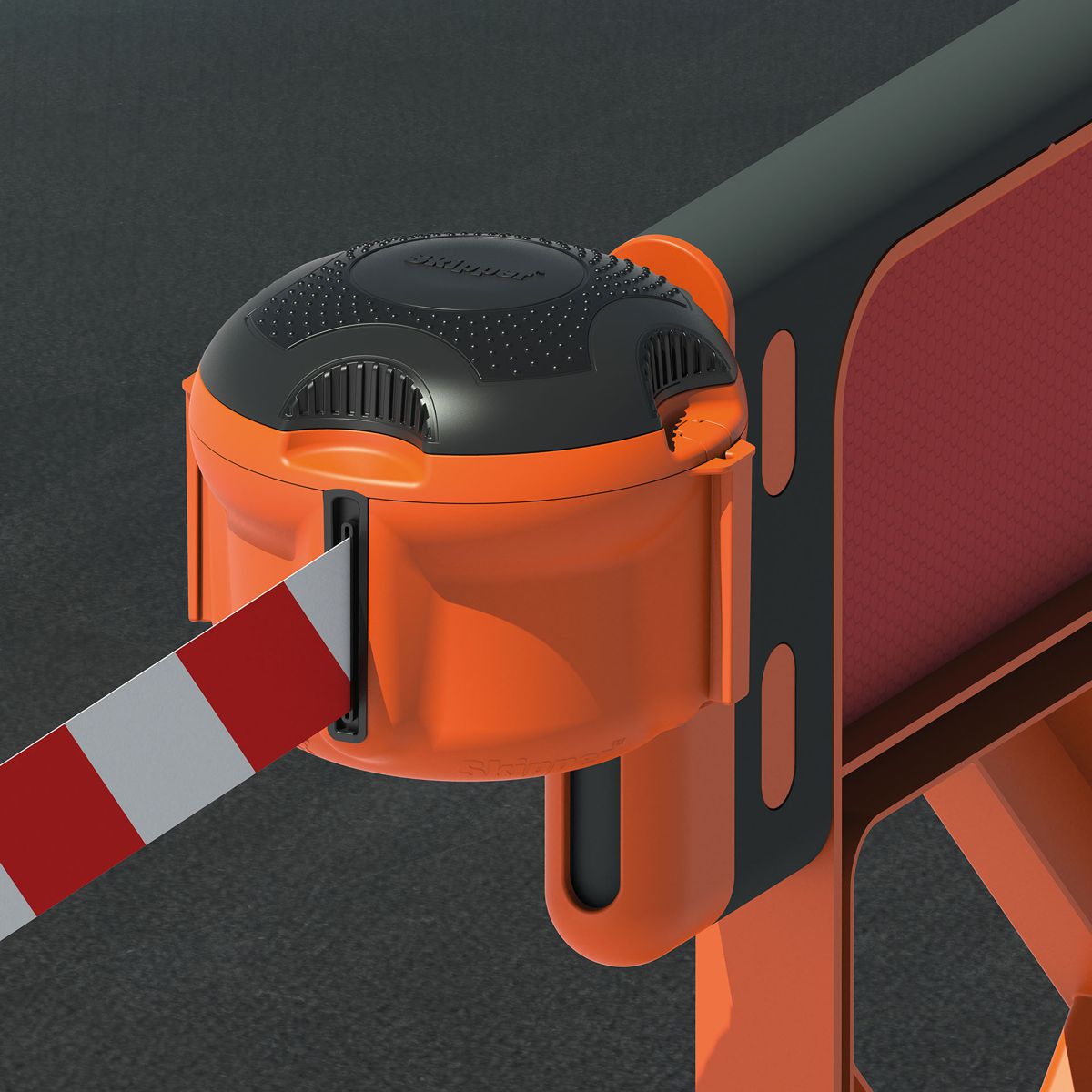
The strategic logic of the C8 is to extend an existing modular ecosystem rather than launch in isolation. Skipper has designed the new panels to connect with its wider range of retractable barrier and waste management products, which lets buyers standardise on a single family of equipment across roadworks, events and indoor facilities.
That interoperability is where much of the commercial value concentrates, because it raises switching costs, deepens account relationships and turns a one-off purchase into a platform decision. In a fragmented supply base populated by generic plastic barriers, the manufacturers most likely to defend margin are those that can offer a coherent system rather than an interchangeable commodity, and the C8 is a clear move in that direction.
The sales pitch is candid about the ambition. “We truly are revolutionising safety barriers with C8,” says Debbie Philip, Sales Director at Skipper. “Unlike other products on the market, ours combines a patented, robust system, that is easy to connect and transport, with bespoke branding, lighting and safety features for all kinds of traffic and pedestrian safety – scalable across any size project or event.” The claim will be tested in procurement, where framework buyers weigh whole-life cost and accessibility performance rather than launch language, yet the underlying proposition maps neatly onto the criteria that are rising up the specification.

The Direction Of Travel For Work Zone Design
The C8 is a single product, but the forces it responds to will outlast it. Accessibility obligations toward blind and partially sighted pedestrians are becoming firmer and more actively campaigned for, transport and labour costs continue to dominate the economics of temporary traffic management, and connected electronics are working their way into equipment that was passive a decade ago.
Any manufacturer selling into highways, utilities and events over the coming years will be judged against those three axes, and buyers writing framework specifications would be wise to treat tactile guidance, modular logistics and lifecycle cost as core requirements rather than optional extras.
For infrastructure owners and contractors, the practical lesson is to look past headline unit prices toward the total cost and total performance of a barrier system across its working life. A product that packs smaller, holds its line on rough ground, guides every pedestrian safely and carries configurable lighting can lower crew time, reduce complaints and simplify a fleet down to fewer standardised lines. Skipper’s launch does not settle where the category is heading, yet it captures the pressures shaping it with unusual clarity, and that alone makes it a useful marker for anyone deciding how to equip the next generation of work zones.
Key Industry Questions
- Is a Chapter 8 barrier a legal requirement for street works? Chapter 8 refers to the Department for Transport’s Traffic Signs Manual, which sets out how temporary works on or near the public highway should be signed and barriered. It is technically guidance rather than statute, but it is treated across the industry as the minimum standard for street works and lower-speed roads, and departing from it exposes contractors to liability if something goes wrong. Any organisation working on or beside a public road is expected to follow it, alongside the Safety at Street Works and Road Works code. In practice, buyers should treat Chapter 8 compliance as a baseline rather than a differentiator, and evaluate barriers on stability, accessibility and whole-life cost above it.
- How does modular design change the cost of temporary traffic management? Conventional Chapter 8 pedestrian barriers are usually supplied as two-metre panels, which are awkward to load and consume scarce van space. Breaking a barrier into one-metre-square sections lets a crew carry more equipment in a smaller vehicle, reducing depot runs and freeing capacity within a shift. Because the dominant cost in temporary traffic management is typically labour and vehicle time rather than the hardware, savings on transport and handling flow directly through to project margin. Modularity also improves storage density and makes it easier to scale a deployment up or down to match the job. For fleet operators running many small works, those efficiencies compound quickly across a year.
- Why does tactile guidance on barriers matter for accessibility compliance? Blind and partially sighted pedestrians navigate using canes, guide dogs and physical cues, so a barrier that segregates a footway but cannot be detected or followed creates a hazard rather than removing one. National guidance reflects this, with the Safety at Street Works code setting minimum walkway widths so a visually impaired person can be guided past works, and the Inclusive Mobility guide recommending detectable tapping rails at defined heights. Charities including Guide Dogs and the RNIB have campaigned for accessible barriers with tap rails and documented the obstacles that street works create. A continuous, hand-followable top rail addresses this directly, and as enforcement and public expectation tighten, tactile guidance is shifting from a desirable extra toward an assumed requirement.
- What is the difference between Chapter 8 and GG117? The two standards cover different environments. Chapter 8 of the Traffic Signs Manual remains the reference for street works and lower-speed roads, where most pedestrian barrier deployments occur. For motorways and high-speed dual carriageways with limits above 50mph, National Highways introduced GG117 within the Design Manual for Roads and Bridges, which superseded older Chapter 8 provisions for those settings and brought traffic management design, execution and monitoring under a single updated framework. For manufacturers and buyers, the implication is that products must perform across a layered rulebook rather than a single test, and equipment that behaves predictably across surfaces and use cases reduces the number of product lines a fleet must carry.
- How significant are the safety risks that pedestrian barriers address? The risks are real and measurable. Workplace transport accounts for roughly a quarter of workplace fatalities in Great Britain, and construction contributes about 13 per cent of fatal workplace injuries while employing around seven per cent of the workforce. Pedestrian barriers exist to keep the public and workers away from live traffic and plant, and the period during which people and vehicles share space is precisely when incidents occur. Equipment that deploys faster, holds its line reliably and comes down cleanly shortens that exposure window. That is why barrier performance is best judged not only on compliance but on how quickly and dependably it establishes and maintains a safe separation on real sites.
- What advantage do magnetic dual-lock connectors offer over hook-and-eye systems? Most barriers in the category join with a single hook-and-eye coupling, which can loosen, gap or lean on uneven ground. Magnetic dual locks that connect panels at both the top and bottom hold the run together more securely and resist the twisting that opens gaps between units. Connectors that articulate through 360 degrees allow the line to follow undulating and textured surfaces without losing alignment. The practical benefit is fewer maintenance visits to straighten or reinstate a run, more reliable segregation for pedestrians and drivers, and a barrier that stays presentable and effective longer, all of which improve the economics of a deployment beyond the initial purchase price.
- Can connected features like app-controlled lighting justify their cost on basic safety kit? Connected features earn their place when they reduce labour, improve reliability or add flexibility rather than simply adding novelty. App-controlled lighting lets a crew match colour, timing and flash sequence to site conditions without swapping hardware, and concealing rechargeable batteries and control boards inside the frame protects the electronics and discourages tampering. Branding options let a single barrier serve highways, events and facilities roles, spreading its cost across more uses. Whether the premium is justified depends on deployment frequency and the value of consistent identity and configurability to the operator. For high-utilisation fleets and brand-conscious clients, software-defined behaviour on otherwise passive kit is increasingly straightforward to justify.
- Where does the commercial value concentrate for barrier manufacturers? Commercial value in the barrier market is moving away from interchangeable plastic units toward coherent systems. Manufacturers that offer interoperable ranges, where a new product connects with existing barriers and accessories, raise switching costs and turn one-off purchases into platform decisions. Value also concentrates around the criteria buyers increasingly prioritise, namely accessibility performance, transport efficiency and whole-life cost, rather than headline unit price. Firms with recognised patents, broad client bases across sectors and the ability to support connected features are best placed to defend margin. For buyers, the lesson is to evaluate suppliers on the strength of their overall system and roadmap, not on the cheapest compliant panel available.
Strategic Takeaways
- Accessibility is becoming a specification requirement rather than a courtesy, so tactile guidance for blind and partially sighted pedestrians will increasingly be an assumed feature at street works, and equipment lacking it will face growing procurement and reputational resistance.
- The decisive cost in temporary traffic management is logistics and labour, which means modular barriers that pack smaller and deploy faster deliver margin gains that unit-price comparisons miss entirely.
- Stability engineering, from magnetic dual locks to anti-trip feet, translates directly into fewer maintenance visits and more reliable segregation, making it a commercial consideration rather than merely a technical one.
- Connected electronics are migrating into basic safety kit, and manufacturers whose hardware can support software-defined behaviour will hold an advantage as buyers begin to expect configurability as standard.
- Interoperable product ecosystems, rather than standalone items, are where barrier manufacturers will defend margin, because they convert commodity purchases into platform decisions with higher switching costs.