Trimble Closes the Distance Between the 3D Model and the Machine
The launch of Trimble SketchUp Pro Civil Contractor looks, on the surface, like a new edition of a familiar modelling package aimed at a fresh audience. The more consequential story sits underneath the product name.
Trimble has taken one of the more stubborn friction points in civil construction, the handover between a design created in an office and the survey and machine control systems that build it on the ground, and packaged the connection as an affordable, subscription-based workflow that a small earthworks contractor can actually operate. In doing so it has moved capability that once required a specialist modelling department, expensive CAD seats and skilled operators into a form that a two-machine grading outfit can pick up without hiring anyone new.
That shift matters because it lands squarely on the priority the industry has named for itself. Trimble’s own 2026 contractor survey, drawn from roughly 1,800 professionals at its 2025 Dimensions conference, found that the initiatives with the greatest potential to lift performance were improving how existing technology and data connect, alongside winning employee buy-in and easing labour pressure.
Pro Civil Contractor is a direct answer to that finding, and it arrives as the wider construction technology market consolidates around connected ecosystems, recurring software revenue and the interoperability that keeps a contractor tied to one vendor’s platform. The interesting question is not whether SketchUp can model dirt, but what it means when high-fidelity design-to-field precision becomes a line item priced at roughly the cost of a monthly phone plan.
Briefing
- Trimble has launched SketchUp Pro Civil Contractor, a subscription that links SketchUp 3D modelling to the Trimble Siteworks positioning system and the Trimble Earthworks grade control platform, carrying a single model from design through layout, excavation and verification.
- The package bundles the Trimble Site Contractor and Trimble Field Points extensions, exporting SketchUp geometry as Siteworks-ready design files and importing geolocated survey points back into the model as design references.
- Availability is through the SketchUp eCommerce store as an annual subscription for existing Trimble Siteworks users, with pricing understood to sit near US$41.58 per user each month, billed yearly.
- Trimble Siteworks and Trimble Earthworks software are not included in the subscription, which positions the product as an on-ramp into a Trimble ecosystem the contractor is expected to already run or adopt.
- The release aligns with the interoperability and data-sharing priorities identified in Trimble’s 2026 contractor survey and with a broader move across the sector towards connected, subscription-delivered construction technology.
Closing the Gap Between the Model and the Machine
The core of the announcement is continuity of a single digital model across the phases where errors and rework usually creep in. In a conventional earthworks job, a design intent expressed on paper or in a CAD file is translated, often manually, into stakeout points for the survey crew and then again into design surfaces a machine control system can follow.
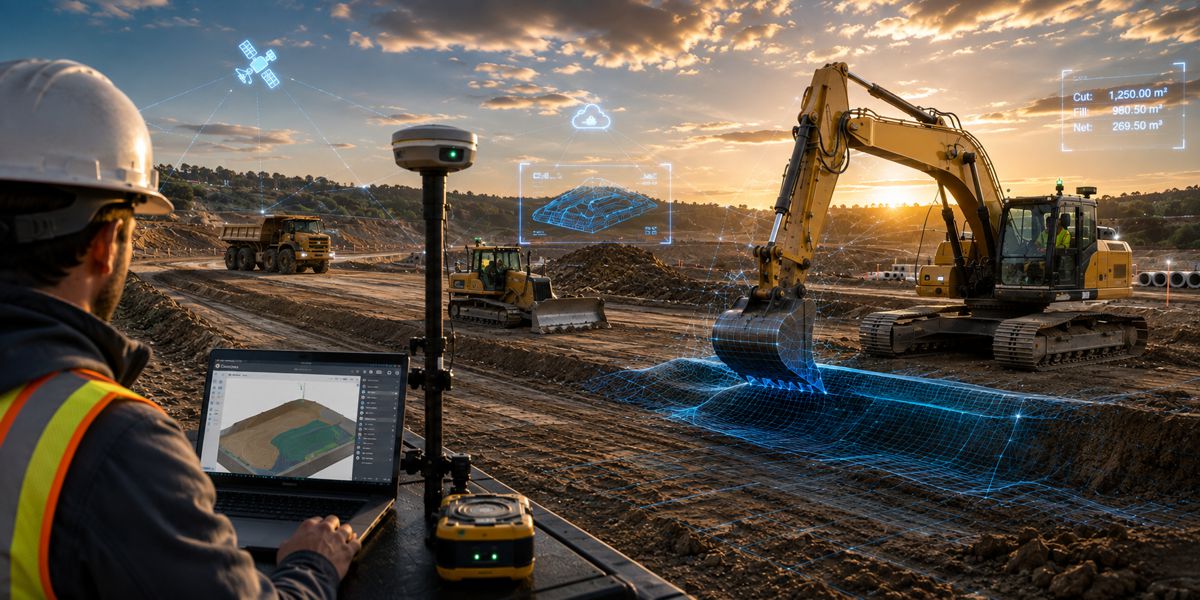
Every translation is an opportunity for a footing to land in the wrong place, a pad to sit at the wrong elevation or a grade to drift out of tolerance. Trimble SketchUp Pro Civil Contractor removes several of those translations by letting a contractor build a 3D excavation model in SketchUp, orient it to real site coordinates, and push it directly into the Siteworks ecosystem for layout, then on to Earthworks for machine guidance on excavators.
The technical plumbing that makes this work is the Trimble Site Contractor extension, which converts SketchUp geometry into design files compatible with Siteworks and produces the .dxf and .ttm surface files that machine control systems consume. The same extension imports geolocated points, linework and measured surfaces captured in the field back into SketchUp, so the design can be revised against real conditions rather than an idealised survey.
Elwyn McLachlan, vice president of civil construction product and strategy at Trimble, framed the intent plainly, saying: “Generating field-ready models in SketchUp makes it easier for contractors to move from design to machine guidance without the complexity of traditional 3D CAD software.” He added that “By streamlining data exchange between design, surveying and earthmoving, SketchUp Pro Civil Contractor helps contractors minimize downtime and get to work faster.”
For a contractor, the commercial translation is straightforward. Fewer manual handoffs mean fewer chances to build something in the wrong location, and a model that stays intact from office to cab is a model that reduces the reruns that quietly erode margin on tight-tolerance dirt work.
Specialist Capability Without a Specialist Department
The strategic weight of this launch rests on who it opens the door to. Sophisticated 3D-to-field workflows have long been available through heavyweight civil design suites, but those tools carry a learning curve and a cost structure that only larger contractors could justify staffing around. SketchUp’s appeal has always been its shallow learning curve, and pointing that accessibility at earthwork, grading and utility construction lets contractors who never maintained a modelling team create constructible designs grounded in actual site topography.
Chris Cronin, senior vice president of architecture and design solutions and education at Trimble, positioned the product for exactly that spread of users, saying: “From small grading and excavating jobs to large-scale earthwork, this connected workflow gives contractors of all sizes the advantages of creating designs grounded in real-world site conditions and confidently carrying that information through to construction.”
The pricing reinforces the point. Offered through the SketchUp eCommerce store as an annual subscription understood to sit around US$41.58 per user each month, the capability is packaged at a level that a small contractor can absorb as an operating cost rather than a capital decision. The value case is not hypothetical either.
Trimble’s own materials carry an account from Eric Rudd, owner at Rudd Construction, who reported that: “The SketchUp and Siteworks integrated workflow saved us $25k–$30k by eliminating time-consuming manual measuring and costly rework. It allowed us to quickly verify footing and pad locations, catching physical measurement errors before they turned into misplaced structural elements.” That single testimonial illustrates the economics that make an affordable subscription an easy decision, because the rework it prevents on one job can dwarf a year of licence fees.
The one caveat worth reading closely is that Siteworks and Earthworks software are not included in the subscription, so the headline price buys the modelling and connection layer while the positioning and machine control platforms remain a separate commitment. The affordability, in other words, is real, but it is the affordability of an on-ramp into a larger Trimble investment rather than a standalone solution.
Subscriptions, Ecosystems and the Interoperability Dividend
Viewed as a business move rather than a feature release, Pro Civil Contractor is a clean example of where construction technology commercial models are heading. Trimble has spent recent years steering Siteworks, Earthworks, WorksManager, Trimble Connect and the wider civil portfolio towards connected, subscription-delivered workflows, and this launch extends that logic into the design layer at the accessible end of the market. Each new subscriber who models in SketchUp and executes in Siteworks and Earthworks becomes a more deeply embedded customer, generating recurring revenue and a rising switching cost as more of their project data lives inside one interoperable stack. The strategic prize is not the modest monthly fee but the stickiness that comes from owning the full design-to-verification chain.
That approach maps precisely onto what contractors told Trimble they wanted. The 2026 survey identified fragmented software and data siloing as a drag on performance, with disconnected systems producing errors, delays and lost revenue.
Chris Peppler, vice president of platform at Trimble, described the response, stating: “Enhancing data connectivity and interoperability across the construction lifecycle is a top priority, and we will continue to accelerate our efforts in these areas.” Trimble has answered that demand at portfolio level through Trimble Marketplace, a catalogue of more than 100 pre-built integrations that link its tools to third-party software, and at product level through releases such as this one that stitch previously separate stages into a single flow.
For infrastructure owners and main contractors watching procurement, the signal is that interoperability has moved from a nice-to-have to a purchasing criterion, and vendors are now competing on how cleanly their data crosses between design, survey and machine.
Where the Margin Actually Comes From
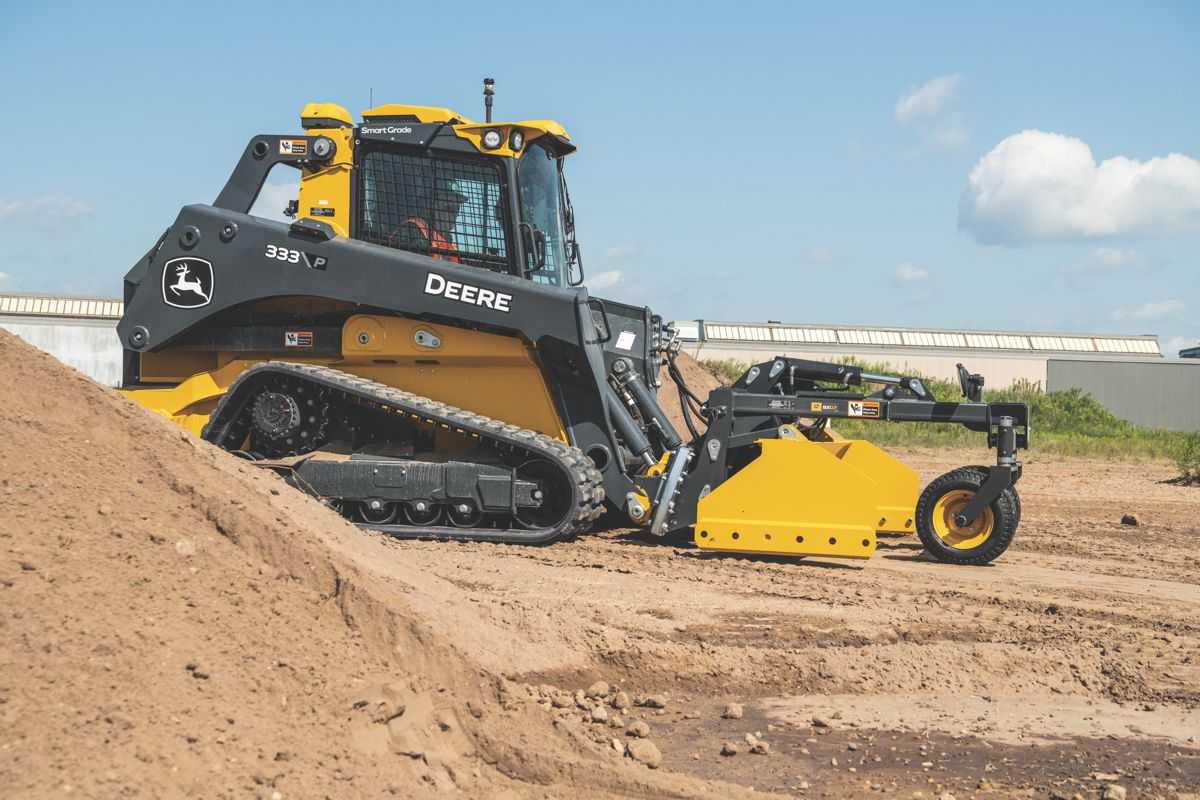
The productivity argument for connected earthworks is easy to assert and worth grounding in the mechanics of a jobsite. Rework is one of the most persistent sources of margin erosion in civil construction, and much of it originates in the gap between what was designed and what was built. When a machine operator on an excavator works from a design surface generated directly from the same model the office produced, and when a survey crew stakes control points from that same geolocated source, the scope for compounding small errors narrows considerably.
Trimble’s machine control proposition has long centred on getting the cut right the first time regardless of operator skill, and feeding it a clean, model-derived surface strengthens that promise at the point where mistakes are most expensive to fix.
There is a labour dimension to this that deserves equal attention. The same survey that flagged interoperability also placed workforce shortages, hiring and retention at the top of the industry’s concerns, with a meaningful share of the current workforce approaching retirement. Tools that let a less experienced operator hit grade accurately, and that let a contractor without a dedicated modelling specialist still produce constructible designs, are a partial hedge against that shortage. They lower the skill threshold for precision work and let a smaller headcount deliver the same accuracy.
The broader theme running through Trimble’s 2026 outlook is the democratisation of capability, small and mid-sized contractors gaining access to speed and precision that were previously the preserve of larger firms, and Pro Civil Contractor is a concrete instance of that trend reaching the design bench.
A Market Consolidating Around Data
Step back from the single product and a clearer market picture emerges. The competitive frontier in construction technology has shifted from the capability of any individual tool towards the integrity of the data flowing between tools, and the commercial value is concentrating with the vendors who can own the longest unbroken stretch of that chain.
Trimble’s advantage in civil is that it already sits at both ends, from precise positioning hardware and machine control in the field to design and collaboration software in the office, which lets it collapse steps that competitors relying on third-party handoffs cannot. Bringing SketchUp’s accessible modelling into that chain, and doing so at a price aimed at the underserved small and mid-tier, widens the base of contractors it can eventually pull deeper into the ecosystem.
For industry leaders, the practical reading is about direction rather than any single purchase. Procurement decisions taken now increasingly lock an organisation into a data ecosystem for years, so the durability and openness of a vendor’s platform matter as much as the merits of the tool in hand. Contractors evaluating design and machine control options should weigh how cleanly a workflow carries a model from office to cab, how much rework that continuity is likely to remove on their particular job mix, and what the total commitment looks like once the positioning and grade control layers that sit outside a headline subscription are added in.
The distance between drawing a grade and cutting it is closing, and the firms that treat connected, model-driven earthworks as standard practice rather than a premium capability will be the ones setting the pace on cost, accuracy and delivery speed over the next cycle.
Key Industry Questions
- What does Trimble SketchUp Pro Civil Contractor actually do? It links SketchUp 3D modelling to Trimble’s Siteworks positioning system and Earthworks grade control platform so a single digital model runs from design through field layout, excavation and verification. Contractors build a 3D excavation model in SketchUp, orient it to real site coordinates and export it as Siteworks-ready design files through the bundled Trimble Site Contractor extension. Those files guide control-point stakeout for survey crews and feed machine-readable surfaces to Earthworks systems on excavators. The Field Points extension and Site Contractor also import geolocated points and measured surfaces back into SketchUp, letting the design be checked and revised against real site conditions rather than an assumed survey.
- Who is the product aimed at? It targets civil contractors performing earthwork, grading and utility construction, with a particular emphasis on small and mid-sized operators who lack a dedicated 3D modelling department. SketchUp’s shallow learning curve is the draw, allowing users without deep CAD skills to produce constructible designs. Trimble positions it for the full range from small grading and excavating jobs to large-scale earthwork, but its strategic significance lies in reaching contractors who previously could not justify the cost or complexity of heavyweight civil design suites. It is best understood as an accessible entry point into connected earthworks for firms that have historically relied on manual measurement and paper-based translation.
- How much does it cost and what is included? The subscription is sold through the SketchUp eCommerce store on an annual basis, with pricing understood to sit near US$41.58 per user each month billed yearly, though the exact figure varies by region and currency. It includes SketchUp Pro plus the Trimble Site Contractor and Trimble Field Points extensions. Importantly, Trimble Siteworks and Trimble Earthworks software are not part of the subscription, so contractors need those platforms separately to complete the field and machine control side of the workflow. The headline price therefore buys the modelling and connection layer, and the full capability assumes an existing or planned commitment to the wider Trimble civil ecosystem.
- How does the connected workflow reduce rework? Rework in earthworks frequently originates in the manual translation of design intent into stakeout points and then into machine control surfaces, where each handoff can introduce errors. Carrying one model intact from office to cab removes several of those translation steps, so survey crews and machine operators work from the same geolocated source. That consistency helps catch measurement errors before they become misplaced footings, pads or grades that are costly to correct on site. One contractor cited by Trimble reported savings of US$25,000 to US$30,000 from eliminating manual measuring and rework, which illustrates why an affordable subscription can pay for itself many times over on a single job.
- Why does this launch matter beyond Trimble’s own customers? It is a clear signal of where construction technology is heading commercially, towards connected ecosystems, subscription pricing and interoperability as a core purchasing criterion. Trimble’s 2026 contractor survey found fragmented software and siloed data to be a leading drag on performance, and vendors are responding by stitching previously separate stages into single flows. When sophisticated design-to-field precision becomes affordable enough for small contractors, the competitive baseline for accuracy and delivery speed across the market rises. Infrastructure owners and main contractors should read it as evidence that connected, model-driven earthworks is moving from premium differentiator to standard practice.
- Does a contractor need to be an existing Trimble user? The subscription is offered to Trimble Siteworks users, and because Siteworks and Earthworks software are not included, the product functions primarily as an on-ramp for contractors already committed to, or willing to adopt, the Trimble civil stack. A contractor running an entirely different positioning or machine control platform would gain limited value from the connection layer alone. This is deliberate, since the strategic aim is to deepen engagement with the broader ecosystem and increase the volume of project data flowing through Trimble’s tools, which raises switching costs and secures recurring revenue over time.
- How does it fit the wider labour and skills picture? The construction workforce faces persistent shortages, with hiring, retention and an ageing workforce ranked among the industry’s top concerns in Trimble’s 2026 survey. Tools that lower the skill threshold for precision work offer a partial hedge, since machine control helps less experienced operators reach grade accurately and accessible modelling lets contractors produce constructible designs without a specialist team. By reducing the expertise required at several points in the workflow, the product allows a smaller headcount to deliver the same accuracy, which matters for firms struggling to recruit. It reflects a broader democratisation of capability that is bringing precision earthworks within reach of leaner operations.
- What should procurement teams weigh before adopting it? They should assess how cleanly the workflow carries a model from design to machine on their specific job mix, and how much rework that continuity is likely to remove in practice. The total cost picture matters more than the headline subscription, because Siteworks and Earthworks sit outside it and represent a separate and larger commitment. Teams should also consider the longer-term implication of ecosystem lock-in, since adopting a connected stack ties an organisation to one vendor’s data environment for years. Weighed against those factors, the potential rework savings, labour flexibility and delivery speed gains are substantial, particularly for contractors currently reliant on manual translation between design and field.
Strategic Takeaways
- The significant development is not a civil edition of SketchUp but the packaging of full design-to-machine continuity as an affordable subscription, bringing precision earthworks capability within reach of contractors who never staffed a modelling department.
- The headline price buys only the modelling and connection layer, since Siteworks and Earthworks remain separate purchases, so buyers should evaluate the total ecosystem commitment rather than the monthly subscription in isolation.
- Interoperability has become a genuine purchasing criterion, and the vendors that own the longest unbroken stretch of the design-to-verification data chain are where commercial value and competitive advantage are now concentrating.
- Rework reduction and a lower skill threshold give the product a dual return, cutting the errors that erode margin on tight-tolerance dirt work while partly hedging against the labour and skills shortages the industry has flagged as a top concern.
- Connected, model-driven earthworks is shifting from premium differentiator to expected standard, and contractors that adopt it now will set the pace on cost, accuracy and delivery speed as the wider market consolidates around integrated data.