Bouygues Construction Opens Scale One to Test Innovation Under Real Site Conditions
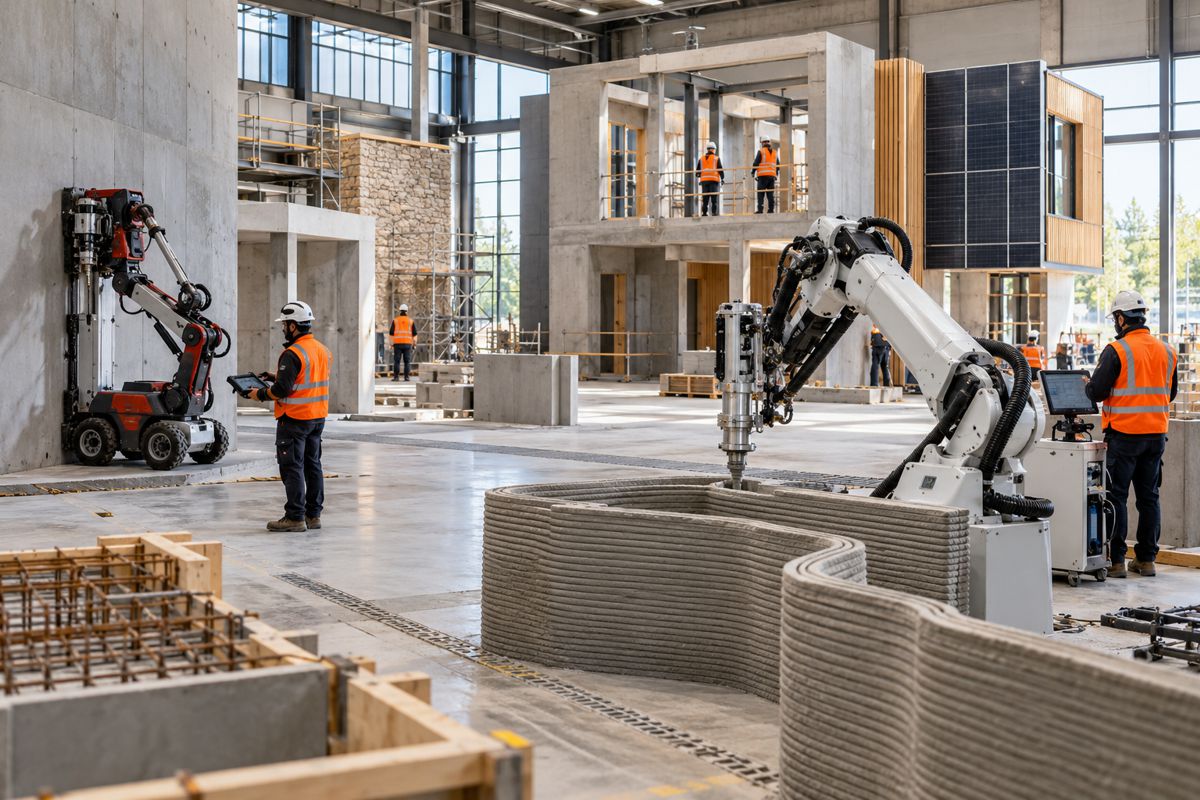
Bouygues Construction has opened a 2,500 m² innovation facility at Chilly-Mazarin, south of Paris, where new materials, robotic equipment and construction techniques can be tested at full scale before being introduced onto live projects. Known as Scale One, the platform combines simulated construction environments with prototyping, concrete 3D printing and robotics training, providing a dedicated setting in which developers and construction teams can evaluate technologies under conditions closer to those encountered on working sites.
Officially inaugurated on 6 October 2026, the facility is located within the Bouygues Construction Matériel technical centre and forms part of France’s wider industrial innovation programme. The project was selected in 2023 under the France 2030 Grands Lieux d’Innovation Filières initiative, which supports facilities designed to bring new technologies closer to commercial application.
A technology that performs well in a laboratory can encounter very different conditions on a construction site. Installation sequences, restricted access, operator safety, compatibility with existing equipment and the coordination of multiple trades can all determine whether a promising development becomes a practical construction method. Scale One has been designed to investigate these issues before technologies are committed to commercial projects, with construction personnel directly involved in evaluating their performance.
Briefing
- Bouygues Construction inaugurated Scale One on 6 October 2026 at Chilly-Mazarin, near Paris.
- The 2,500 m² facility includes separate testing environments for new-build and renovation projects.
- Facilities support rapid prototyping, concrete 3D printing, robotics training and full-scale construction trials.
- Technologies under evaluation include automated drilling, AI-assisted waste management, material-efficient structures and nuclear construction methods.
- The platform is open to external industry participants, with support available for prototyping, testing and ergonomic assessment.
From Laboratory to Construction Site
Scale One is organised around two environments representing new-build and renovation projects, allowing equipment and construction methods to be assessed against different operational constraints. New construction offers opportunities to integrate unfamiliar techniques into planned sequences, while renovation frequently involves restricted working areas, existing structures and the complications of adapting equipment to established buildings.
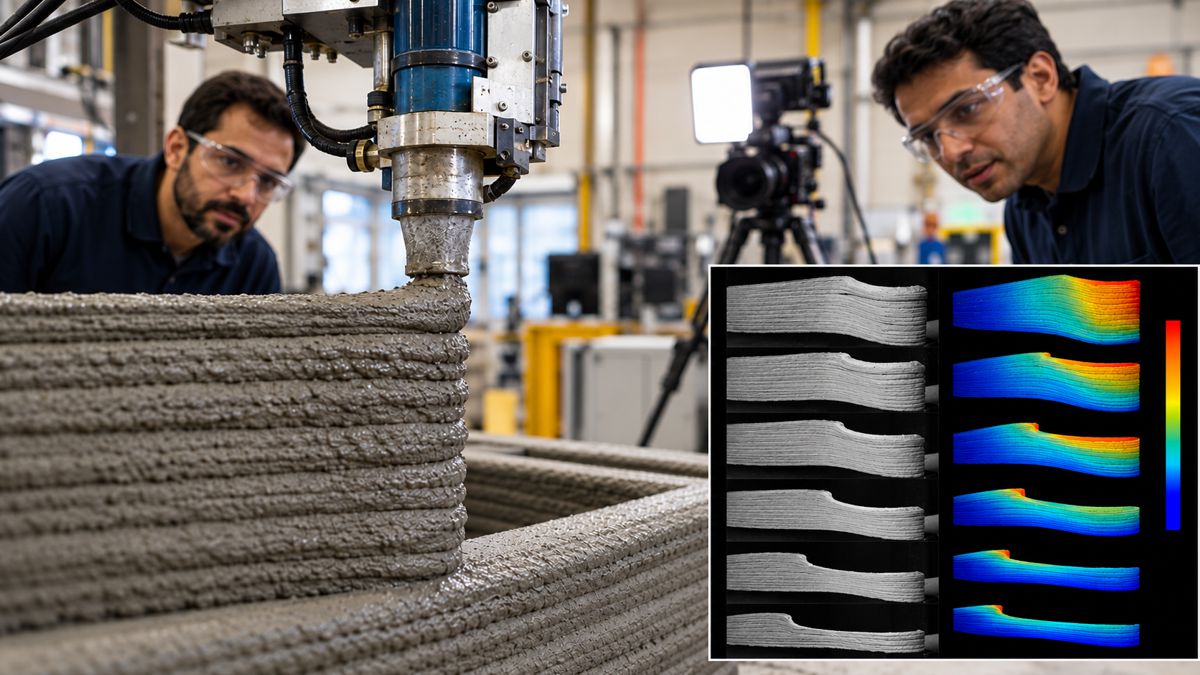
Alongside these environments, a fabrication laboratory supports rapid prototyping of construction accessories, while a dedicated facility provides capabilities for 3D concrete printing. A robotics training area allows new equipment to be evaluated alongside the personnel expected to operate or work around it, and flexible collaborative space brings together engineers, developers and construction specialists.
The arrangement allows ideas to move between design, fabrication and practical evaluation without immediately requiring access to an active construction project. Bouygues Construction intends to involve its site managers and operatives in trials, gathering feedback on usability, safety and installation procedures alongside technical performance data.
Pierre-Éric Saint-André, Chief Executive Officer of Bouygues Construction, explained the company’s objectives: “Accelerating the innovation process will speed up the transformation of our sector. Scale One allows us to create the conditions for testing solutions that the sector needs in real-world settings, ensuring their reliability at an earlier stage and rolling them out more widely. Our clear ambition is to reduce the time between an idea and its effective implementation in the field.”
The involvement of experienced construction personnel is central to the approach. A machine may achieve its intended technical performance yet prove awkward to position, time-consuming to prepare or difficult to integrate with other site activities. These practical details can determine whether equipment is adopted by construction teams, particularly where productivity depends on the smooth coordination of several operations.
Controlled trials cannot reproduce every condition encountered on a live project, from changing weather and ground conditions to subcontractor interfaces and programme pressures. They can, however, identify problems while equipment and procedures are still being developed, when modifications are generally easier to accommodate.
Robotics and Site Technologies
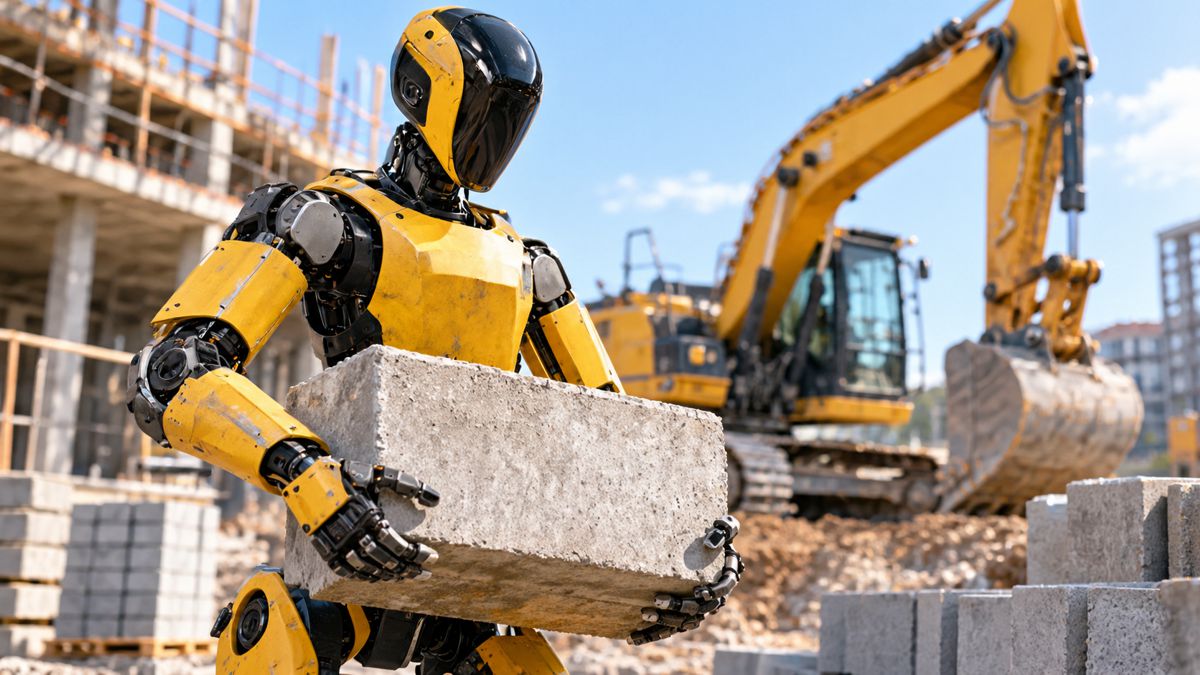
Among the technologies being trialled at Scale One is Roby2, described by Bouygues Construction as a drilling robot intended to reduce physical strain and the risk of musculoskeletal disorders among site workers while improving the quality of drilling operations.
Repetitive drilling can involve awkward postures, vibration exposure and physically demanding work, particularly when operatives must carry out large numbers of fixings or work overhead. Automating suitable tasks offers a way to reduce some of these demands, although practical deployment depends on the machine’s ability to operate reliably within the available working space and alongside other construction activities.
Scale One’s robotics training facilities provide an environment in which these operational requirements can be examined before equipment is introduced more widely. Operators must understand machine capabilities, safe working boundaries and the procedures needed when automated systems share space with conventional construction activities.
The platform is also evaluating Akhantas, an artificial intelligence-based solution intended to improve construction waste management. Waste segregation and handling can be difficult to organise on projects where materials arrive, are installed and are discarded at different stages, often with limited space available for storage and collection.
Bouygues Construction has not detailed the system’s technical architecture, but practical trials can establish how it fits into existing waste handling and reporting procedures. For construction teams, the value of such technology will depend partly on whether it simplifies everyday operations rather than introducing additional administrative work.
Both developments reflect the importance of evaluating technology within the activities it is intended to support. Robotic equipment must fit construction sequences and physical working conditions, while digital systems need to accommodate the information and operational practices already used by site personnel.
New Materials and Construction Methods
Material efficiency forms another substantial part of Scale One’s programme, with trials involving 3D concrete printing, structural designs incorporating voids and alternative building materials.
The concrete printing facility is intended to investigate how additive manufacturing can optimise the amount of concrete required for particular structures. Depositing material according to a programmed geometry can reduce reliance on conventional formwork and enable shapes that would be difficult to produce using standard casting techniques.
The practical advantages depend on the component being manufactured. Structural requirements, reinforcement, production speed and the characteristics of the printing material all influence whether an additive process provides a competitive alternative to conventional construction. Full-scale trials allow these factors to be examined alongside handling, installation and production procedures.
Scale One is also investigating construction methods that incorporate voids within structural elements, reducing the volume of material used where solid sections are unnecessary. Voided and hollow-core systems are already established in several areas of construction, but the precise technique being developed at the facility has not been detailed.
The programme extends to Stack by Woodoo, an engineered material described as augmented wood and developed in partnership with Bouygues Construction. According to the companies, the material is intended to offer mechanical strength comparable with reinforced concrete and steel while providing a lower carbon footprint.
Its suitability for structural applications will depend on the specific configuration and loading conditions, together with characteristics such as fire performance, moisture resistance, long-term deformation and connection design. The announcement does not provide the comparative test results or lifecycle assessment boundaries behind the performance claims.
Building-integrated photovoltaic cladding developed by Saint-Gobain is another technology under evaluation. Unlike conventional solar panels mounted onto a completed building, these systems incorporate electricity-generating modules directly into the building envelope.
Their installation must accommodate the requirements of both façade construction and electrical generation, including weatherproofing, ventilation, connections and future maintenance. Testing within a construction environment allows the installation process and coordination between trades to be examined before the system is adopted more widely.
Prefabrication for Nuclear Construction
One of the more specialised developments at Scale One is B-Slicer, a construction procedure intended for structural works associated with EPR nuclear power plants.
The method involves prefabricating concrete walls to facilitate assembly, potentially transferring some activities away from their final installation locations. Nuclear construction presents particularly demanding requirements for dimensional accuracy, quality documentation and the sequencing of structural works, making repeatability and controlled production important considerations.
Prefabrication can help organise complex assembly operations and reduce the amount of work undertaken in restricted areas, although the advantages depend on the design of individual elements, their connections and the arrangements required for lifting and positioning.
Bouygues Construction has not disclosed detailed information about B-Slicer’s fabrication process or connection methods. Its evaluation at Scale One provides an opportunity to examine construction procedures before they are considered for deployment within the more demanding quality assurance and regulatory framework of a nuclear project.
Opening Construction Innovation to the Wider Industry
Scale One is intended to operate beyond Bouygues Construction’s own research programme. The company says the facility is available to other construction industry participants, offering services ranging from innovation consultancy and prototyping to ergonomic evaluations and access to full-scale testing facilities.
French construction publication Batiweb has reported that the platform represents an investment of approximately €10 million over five years, including €1.5 million in combined state and regional support. According to the publication, external organisations can access the facilities through paid arrangements, with intellectual property provisions depending on whether projects involve independent testing or collaborative development.
That structure gives the facility a commercial role alongside its research activities. Specialist equipment manufacturers, materials developers and construction technology businesses may have the engineering capability to develop new products without possessing the facilities or operational experience needed to evaluate them under realistic site conditions.
Access to an established contractor’s technical infrastructure offers a way to undertake those trials while drawing on the experience of people familiar with construction operations. For smaller developers, it may also reduce the need to invest in dedicated testing environments that would see only occasional use.
Bouygues Construction brings considerable operational reach to the programme. The company reported sales of €10.6 billion in 2025 and operates in more than 50 countries, providing an international network of construction activities in which successfully tested technologies could potentially undergo further evaluation.
The commercial arrangements surrounding Scale One will help determine how widely the facility is used beyond the Bouygues group. Access costs, scheduling, intellectual property protection and opportunities for subsequent site trials are all relevant considerations for independent developers deciding whether to participate.
With its combination of full-scale testing, specialist facilities and direct involvement from construction teams, Scale One provides an additional route for bringing new equipment, materials and construction methods towards practical use. Its longer-term value will emerge through the technologies that progress from trials into regular construction operations, where technical performance must be matched by reliability, workforce acceptance and commercially viable costs.
Key Industry Questions
- What is Bouygues Construction’s Scale One facility? Scale One is a full-scale construction technology testing platform at Chilly-Mazarin, near Paris. It provides environments for evaluating new materials, equipment and construction processes before deployment on commercial projects.
- How large is Scale One? The inaugurated facility covers 2,500 m² and includes simulated construction environments, rapid prototyping facilities, concrete 3D printing capabilities and robotics training areas.
- Can external companies use Scale One? Yes. The platform is open to wider industry participation, with paid access arrangements reported for external organisations. Services include prototyping, testing and ergonomic evaluation.
- Which construction technologies are being tested? The initial programme includes construction robotics, AI-assisted waste management, concrete 3D printing, material-efficient structures, engineered wood, nuclear prefabrication and building-integrated photovoltaics.
- What is Roby2? Bouygues Construction describes Roby2 as a drilling robot intended to reduce physical strain and improve the consistency of site operations. Its precise application should be confirmed because independent reporting describes the equipment differently.
- How does Scale One support sustainable construction? The platform evaluates technologies intended to reduce material consumption, improve waste management and incorporate lower-carbon materials and renewable electricity generation into buildings.
- What is B-Slicer? B-Slicer is a proposed construction procedure involving prefabricated concrete walls for structural works associated with EPR nuclear power plants.
- How is Scale One funded? Batiweb reports approximately €10 million of investment over five years, including €1.5 million in state and regional support. The facility was selected through the France 2030 industrial innovation initiative.
- Why are full-scale construction trials useful? They allow developers to examine installation methods, equipment usability, safety and compatibility with normal construction activities before committing technologies to live projects.
Strategic Takeaways
- Full-scale testing can identify installation and operational problems that laboratory evaluations may overlook.
- Involving experienced site personnel during development helps align new equipment with established construction practices.
- Construction robotics must demonstrate reliable integration into working sequences alongside technical performance.
- Material-efficient designs and alternative building products require structural verification and practical manufacturing methods before widespread adoption.
- Shared testing infrastructure can reduce development barriers for smaller technology companies while giving contractors earlier access to emerging equipment and construction methods.