Construction AI Goes Deeper as Togal.AI Targets Trade-Specific Estimating
Artificial intelligence has already become reasonably good at finding things on construction drawings. The more difficult problem begins after something has been found.
A drywall estimator measuring a wall is not ultimately interested in its length alone. That measurement has to become studs, tracks, boards, insulation, fixings, labour, equipment and eventually a price. Different wall types require different combinations, contractors have their own preferred materials and productivity assumptions, and years of estimating experience are often embedded in formulas and libraries built up inside spreadsheets or specialist software.
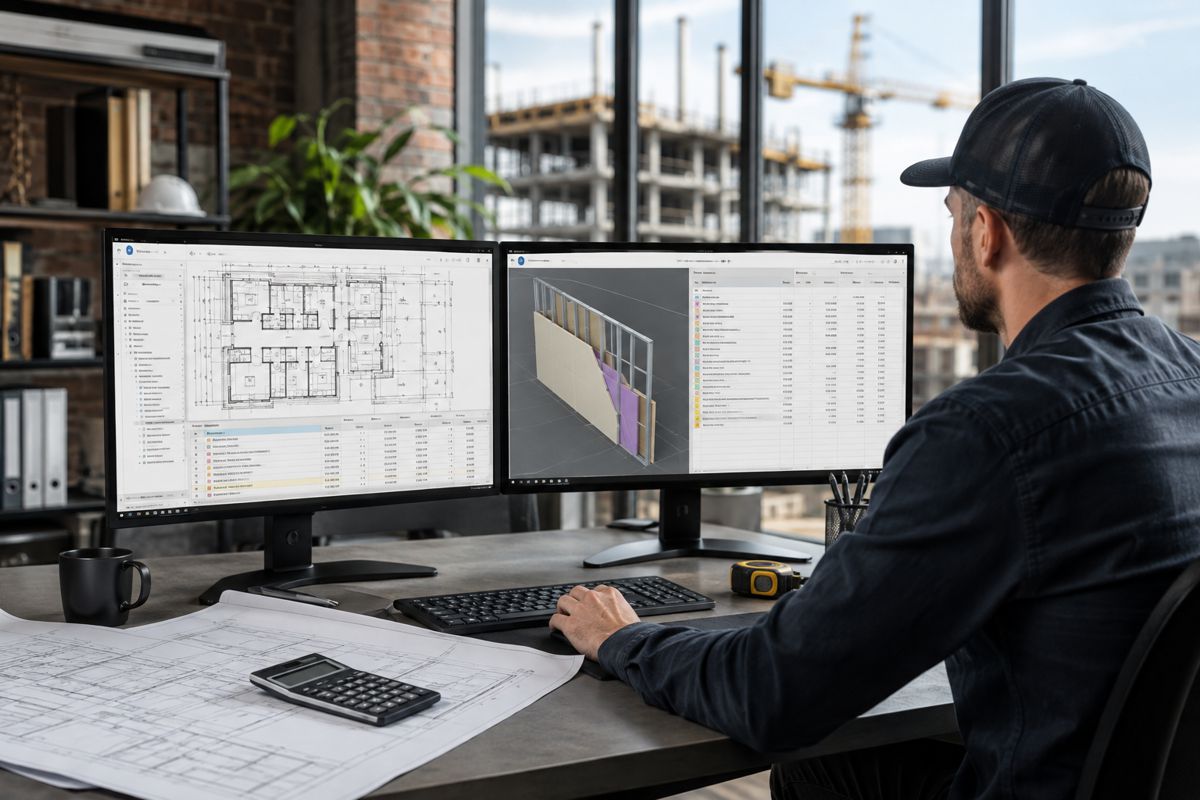
Togal.AI is now moving further into that part of the process with Assemblies, a feature initially focused on drywall estimating that links measured quantities from drawings with the materials, labour and equipment needed to build them.
It is a relatively specialised addition to an AI takeoff platform, but that specialisation is precisely what makes it interesting. Much of the first generation of construction AI has concentrated on capabilities that can be applied across many disciplines: reading drawings, recognising objects, searching documents, extracting quantities and automating repetitive administrative work. Assemblies takes a different route by embedding more of the working logic of a particular trade inside the software, with drywall intended as the starting point rather than the limit.
Briefing
- Togal.AI has introduced Assemblies to connect drawing takeoffs directly with material, labour and equipment calculations.
- Drywall is the initial focus because estimating walls requires considerably more information than their measured length or area.
- Contractors can create their own assemblies or adapt templates to reflect existing estimating practices.
- Existing build libraries from systems including PlanSwift and On-Screen Takeoff can be migrated rather than recreated from scratch.
- Togal.AI sees the feature as the beginning of a wider move towards AI tools designed around individual construction trades.
From Measurement to Buildable Scope
Construction takeoff and construction estimating are closely connected, but they are not the same task.
A takeoff establishes quantities from drawings. An estimate has to turn those quantities into something commercially meaningful. In drywall, for example, a measured wall may need to be interpreted according to its height, construction, board specification, stud configuration, insulation requirements and other components before materials and labour can be calculated.
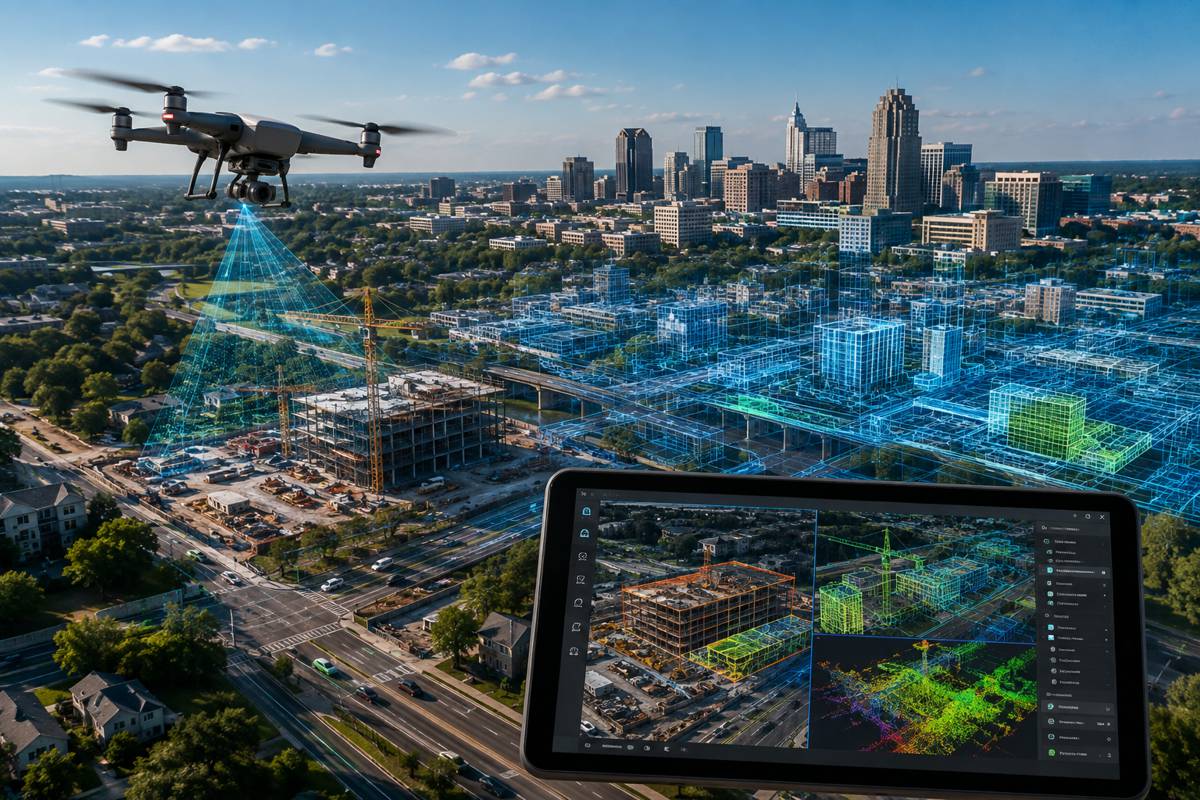
Togal.AI describes the conventional workflow as one in which estimators measure drawings and then transfer those quantities into spreadsheets or other estimating applications. Assemblies is intended to keep more of that work inside the same environment. Once a wall or other element has been classified, an associated assembly can calculate the components required to construct it.
“Drywall is a perfect example of why construction estimating is so much more complicated than simply measuring a set of plans,” said Patrick Murphy, Founder and CEO of Togal.AI. “An estimator doesn’t just need to know how many linear feet of wall there are. They need to know what goes inside that wall, how it’s built and what it will take to actually price and construct it. Assemblies lets contractors take their own estimating knowledge and apply it much faster.”
The concept of an estimating assembly is not new. Established platforms such as PlanSwift have long allowed estimators to group materials and labour into assemblies and apply them to takeoff items. PlanSwift describes its assemblies as groups of parts that can be applied together, with variables adjusted to calculate quantities and costs. Its current platform also incorporates AI-assisted measuring, counting, scaling and plan navigation.
Togal’s development therefore sits within a much longer evolution of digital estimating rather than replacing it. The difference is in bringing AI-assisted drawing interpretation and contractor-defined estimating logic increasingly close together inside a cloud-based workflow.
Preserving the Estimator’s Knowledge
One of the more consequential aspects of Assemblies is its treatment of existing estimating libraries.
Contractors can create assemblies themselves or begin with Togal.AI templates and customise the formulas and components to match the way they already estimate work. Togal says libraries developed in legacy platforms such as PlanSwift or On-Screen Takeoff can also be migrated.
That matters because an estimating system can contain far more than software configuration. Over years of bidding, contractors build formulas, classifications, material relationships, allowances and rules that reflect how their business actually constructs work. Replacing an estimating platform can therefore involve reconstructing a considerable body of institutional knowledge. Assemblies attempts to make that knowledge portable rather than asking the contractor to abandon it.
The approach also places the estimator in a different relationship with AI. The software can automate recognition and calculation, while the contractor continues to define the underlying assembly and the assumptions attached to it. An experienced estimator’s knowledge is effectively converted into a reusable rule set that can be applied repeatedly to quantities generated from new drawings.
It keeps the contractor’s estimating knowledge at the centre of the process rather than asking AI to manufacture that knowledge itself.
Drywall as the Starting Point
Drywall is a useful test case because seemingly simple geometry can hide considerable estimating detail.
A wall measured from a drawing may translate into board on one or both faces, metal or timber studs at specified centres, top and bottom track, insulation, fasteners and other components. Heights and wall classifications change those quantities, while contractor-specific construction methods can change them again.
Togal.AI already provides automated linear and ceiling-area takeoff tools for drywall alongside manual editing, text search and drawing analysis. Assemblies extends that workflow from recognising and measuring the scope towards determining what is required to construct it.
Completed calculations can be exported with formula columns and cost codes and organised according to variables including material and stud height, allowing the resulting information to continue into downstream estimating or procurement processes.
There is still an important boundary between automating calculations and producing a commercially reliable bid. Labour productivity, supplier pricing, project conditions, waste, access, programme requirements and contractual risk do not disappear because quantities have been calculated automatically. The quality of an assembly also depends upon the rules and assumptions used to create it, leaving the estimator responsible for the judgements around them.
Trade-Specific Construction AI
Togal.AI’s broader strategy is to move towards individual trades rather than treating construction estimating as a single generic workflow.
“Construction isn’t one industry with one workflow. It’s thousands of specialized contractors, suppliers and vendors, each with their own expertise,” Murphy said. “Drywall is where we’re starting, but the bigger opportunity is to take AI deeper into those individual workflows and give each trade technology built around how they actually work.”
General-purpose AI can remove large amounts of repetitive work, particularly where documents, drawings and structured information are involved. Specialist construction work becomes harder to automate as the software moves closer to the decisions that determine how something will actually be built and priced.
An electrical estimator thinks differently from a drywall estimator. Concrete, mechanical services, glazing, roofing and structural steel each have their own measurement conventions, assemblies, productivity assumptions, terminology and commercial practices. Even contractors working within the same trade may price apparently similar work differently.
Generic AI capabilities are likely to become increasingly widespread as drawing recognition, document search and large language models mature. Deep workflow knowledge is harder to commoditise because it requires software to accommodate the accumulated practices of individual trades and, eventually, individual businesses.
Construction’s fragmented structure may therefore shape the way specialist AI develops. A general contractor, drywall subcontractor, civil engineering contractor and mechanical specialist may all work from the same project information while performing fundamentally different analytical tasks. Developing common technology and extending it into specialised applications may prove more practical than trying to make one system understand every construction workflow in equal depth.
Estimating Capacity
Togal.AI is also framing Assemblies around estimating capacity.
“For contractors, estimating capacity directly affects how much work they can pursue,” Murphy said. “If you can dramatically reduce the time spent building each estimate, the same team can bid more projects and focus on value engineering.”
The arithmetic is attractive, although greater bidding capacity does not automatically produce better commercial outcomes. Contractors still need to decide which opportunities deserve estimating resources, while increasing bid volume without maintaining estimating discipline simply produces more bids rather than necessarily producing better ones.
Where automation becomes more valuable is in removing repeated processing from qualified estimators. An estimator who no longer has to transfer measurements between systems and repeatedly apply the same formulas can spend more time reviewing unusual conditions, checking scope, interrogating drawings and specifications, assessing alternatives and considering risks that cannot be captured by a standard assembly.
The software then becomes less about replacing estimating expertise and more about increasing the number of times that expertise can be applied.
Togal.AI’s Assemblies does not solve the wider challenge of trade-specific construction AI, nor is the underlying concept of assemblies new to estimating software. Its interest lies in where the company is choosing to take the technology next.
AI-assisted takeoff established that software could find and measure construction elements faster. Connecting those measurements with contractor-defined assemblies begins to move the technology towards the knowledge that turns quantities into work. If that approach extends successfully across other trades, the next competitive phase in construction AI may be decided less by which platform can read the most drawings and more by which one best understands what happens after the measurement has been made.
Key Industry Questions
- What is a construction estimating assembly? An assembly groups the components required to construct a particular item or system. A drywall wall assembly, for example, might combine boards, studs, insulation, fixings, labour and other requirements so quantities can be calculated from a measured wall.
- What does Togal.AI Assemblies do? Assemblies connects takeoff quantities with predefined formulas and components, allowing material, labour and equipment requirements to be calculated as the estimator works with drawings.
- Why has Togal.AI started with drywall? The company says drywall was selected because of the detailed relationship between measured walls and the numerous components required to construct them. Different wall types, heights and specifications can produce substantially different material requirements.
- Are estimating assemblies a new concept? No. Assemblies have existed in established construction estimating platforms for years. The development with Togal.AI is their closer integration with AI-assisted drawing recognition, measurement and classification.
- Can contractors create their own assemblies? Yes. Togal.AI says contractors can create assemblies or customise templates to reflect their existing estimating methods and formulas.
- Can existing estimating libraries be transferred? According to Togal.AI, contractors moving from platforms including PlanSwift and On-Screen Takeoff can migrate existing build libraries so established formulas and estimating rules do not have to be recreated manually.
- Does Assemblies produce a finished construction bid automatically? It automates parts of the quantity and calculation workflow, but a commercially sound estimate still depends on pricing, labour assumptions, project conditions, specifications, contractual requirements and professional judgement.
- Why are trade-specific AI tools emerging? Construction trades operate with different terminology, measurement methods, materials and estimating practices. As general AI capabilities become more common, software developers can concentrate more closely on the specialised workflows that follow initial document or drawing analysis.
- Could the same approach work beyond drywall? Yes. Assembly-based estimating is already used across multiple construction disciplines. Togal.AI has indicated that drywall is the starting point for a broader strategy of developing capabilities around individual trades.
Strategic Takeaways
- AI drawing recognition is increasingly becoming the beginning of the estimating workflow rather than the finished product.
- Contractor-defined assemblies provide a practical way of combining automation with the accumulated knowledge of experienced estimators.
- Compatibility with existing estimating libraries can become an important competitive factor because those libraries contain years of company-specific estimating logic.
- Trade specialisation offers construction technology developers a way to differentiate products as generic AI capabilities become more widely available.
- The strongest productivity gain may come from removing repetitive calculation and data transfer while leaving commercial judgement with the estimator.