PACCAR Profits Rise 44% as Parts Revenue Hits Record High
PACCAR reported a 44% increase in net income for the third quarter of 2026, with stronger truck margins, record aftermarket parts revenue and improved financial services profitability contributing to a substantial recovery in earnings.
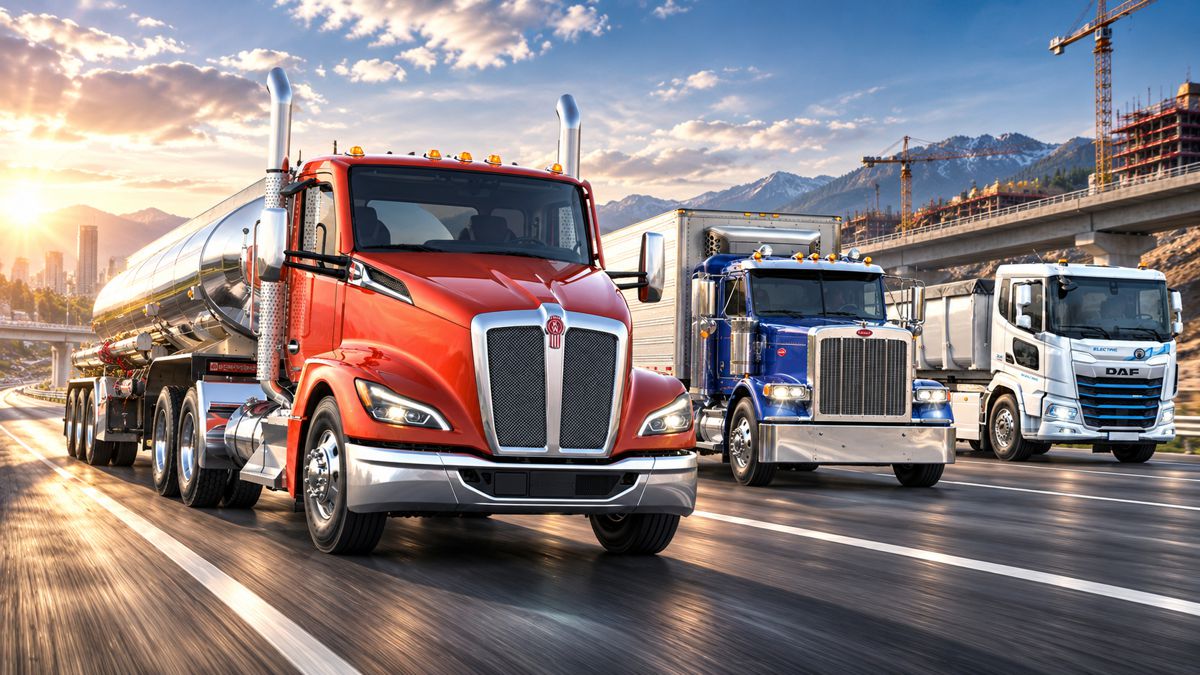
The American manufacturer, whose brands include Kenworth, Peterbilt and DAF, generated net income of $847.5 million on revenues of $7.94 billion during the three months to September. Revenue increased by 19% compared with the corresponding quarter of 2025, while global truck deliveries reached 40,100 vehicles despite production constraints affecting component availability.
The results were accompanied by a positive, although measured, outlook for commercial vehicle demand across North America, Europe and South America. PACCAR is also preparing to introduce a new connected vehicle platform in 2027, extending its activities in fleet management technology while continuing to invest in manufacturing, aftermarket distribution and alternative powertrains.
Briefing
- PACCAR’s third-quarter revenue increased 19% to $7.94 billion, with net income rising 44% to $847.5 million.
- Global truck deliveries reached 40,100 vehicles, with supplier constraints limiting production during the quarter.
- PACCAR Parts achieved record quarterly revenue of $1.78 billion, although pretax profitability remained below 2025 levels.
- PACCAR Connect will become available in Kenworth and Peterbilt Class 8 trucks from early 2027.
- North American Class 8 truck sales are forecast at 240,000–280,000 vehicles in 2027, while European demand is expected to remain broadly stable.
Truck Margins and Production Outlook
PACCAR’s earnings improvement was driven partly by higher margins in its truck manufacturing business, with the company reporting a combined gross margin of 14.5% across its truck, parts and other operations during the quarter.
Chief executive Preston Feight attributed the improvement to stronger truck segment margins and the performance of the group’s supporting businesses: “The increase in quarterly profits resulted from higher truck segment margins and strong overall business performance. PACCAR Parts reported record revenues and PACCAR Financial Services achieved very good profits.”
The manufacturer delivered 40,100 trucks worldwide during the quarter, although production was affected by component supply constraints as suppliers worked to accommodate higher manufacturing volumes. During the company’s third-quarter earnings conference call, management acknowledged that these difficulties had restricted deliveries and indicated that availability should improve during the final three months of the year.
PACCAR expects fourth-quarter deliveries to reach between 41,000 and 43,000 trucks, with combined truck, parts and other gross margins remaining within a range of 14%–15%.
For the first nine months of 2026, the group generated revenue of $22.26 billion and net income of $2.20 billion, compared with $21.62 billion and $1.82 billion respectively during the equivalent period in 2025.
The nine-month comparison requires some qualification. The previous year’s earnings included a $264.5 million after-tax charge associated with civil litigation in Europe, which reduced the reported profit for that period. The third-quarter improvement, however, was supported by stronger operating performance, with higher truck margins and contributions from the company’s parts and financial services operations.
Commercial Vehicle Demand Across Global Markets
PACCAR expects North American heavy-duty truck demand to remain relatively strong into 2027, supported by fleet replacement activity, economic growth and continuing investment in infrastructure.
The company estimates that Class 8 truck retail sales in the United States and Canada will reach between 240,000 and 260,000 vehicles during 2026. Its forecast for 2027 extends that range to 240,000–280,000 vehicles, allowing for potential growth while acknowledging uncertainty over the pace of market recovery.
Kenworth and Peterbilt serve a broad range of applications across the region, from long-distance freight to construction materials transportation, specialist haulage and industrial logistics. Replacement decisions in these sectors are influenced by vehicle age, operating costs, freight demand and the availability of financing, alongside the performance of the wider economy.
Regulatory uncertainty is also affecting the outlook for 2027. During the earnings call, PACCAR management discussed the unresolved position surrounding US heavy-duty vehicle emissions requirements and the associated non-conformance penalties, which can affect the cost of vehicles that do not meet applicable emissions standards.
With penalty levels still awaiting finalisation, customers have limited visibility over some aspects of future truck pricing. PACCAR indicated that discussions with fleet operators were continuing, but acknowledged that the uncertainty could cause customers to hesitate before committing to purchases.
In Europe, the manufacturer forecasts annual registrations of 300,000–320,000 trucks above 16 tonnes in both 2026 and 2027. The relatively stable outlook points towards continued fleet replacement rather than substantial growth in overall vehicle registrations, with European operators also assessing the commercial practicality of alternative powertrains.
South America presents a somewhat different picture. PACCAR expects the above-16-tonne market to reach 100,000–105,000 vehicles in 2026, increasing to 105,000–115,000 in 2027.
Kenworth and DAF both serve markets where heavy-duty vehicles operate across demanding transport routes and industrial environments. Mining, agricultural logistics, construction materials and long-distance freight place considerable demands on durability and maintenance support, particularly where vehicles operate far from established service infrastructure.
Record Parts Revenue Supports the Business
PACCAR’s aftermarket operations continued to provide a substantial contribution to group profitability during the quarter, although revenue growth was accompanied by slightly lower earnings.
PACCAR Parts achieved record quarterly revenue of $1.78 billion, with pretax income of $404.4 million compared with $410 million during the corresponding period last year. Revenue for the first nine months reached $5.24 billion, up from $5.14 billion in 2025, while pretax profit declined from $1.25 billion to $1.22 billion.
The business operates 21 distribution centres worldwide, providing more than four million square feet of logistics space. This network supports over 2,000 DAF, Kenworth and Peterbilt sales, parts and service locations, together with more than 350 TRP retail stores.
Investment in distribution capacity is continuing, with an additional parts distribution centre planned for France. The facility will complement PACCAR’s operation in Massbach, Germany, which opened in 2024, and strengthen the supply network serving DAF dealers and customers across the region.
For operators of specialist commercial vehicles, the availability of replacement components can be as important as their purchase price. A truck unavailable for work may disrupt aggregate deliveries, concrete production schedules or the movement of heavy equipment between construction sites, particularly where spare capacity is limited.
PACCAR has been expanding its Managed Dealer Inventory and Fleet Services activities alongside the TRP all-makes parts brand, which supplies replacement components for vehicles beyond the company’s own manufacturing brands.
The all-makes business broadens the potential customer base for its distribution network, while dealer inventory management and fleet services provide opportunities to develop longer-term relationships with operators throughout the working life of their vehicles.
Financial Services and the Used Truck Market
PACCAR Financial Services reported third-quarter pretax income of $138.1 million, an increase of 9.4% compared with the $126.2 million achieved during the same period last year.
The division generated revenue of $558.9 million, slightly below the previous year’s $565.3 million, with management attributing the improvement in profitability to steady financing margins and better conditions in the used truck market.
Its portfolio covers approximately 222,000 trucks and trailers, supported by total assets of $22.5 billion. These figures include PacLease, the group’s full-service leasing operation, which maintains a fleet of approximately 37,000 vehicles.
PACCAR Financial Services operates in 26 countries across four continents, providing financing and leasing capabilities alongside the group’s manufacturing and dealer businesses. During the first nine months of 2026, the division issued $2.38 billion in medium-term notes to support its activities.
The used truck market is closely connected to fleet renewal decisions. Residual values influence financing arrangements and the cost of replacing older vehicles, while the availability of suitable second-hand equipment provides an alternative for operators seeking additional capacity without committing to new truck purchases.
For construction and infrastructure logistics businesses, where vehicle requirements can fluctuate with project workloads, the relationship between acquisition costs, financing terms and resale values remains an important part of fleet management.
PACCAR Connect Expands Digital Fleet Services
PACCAR is preparing to introduce PACCAR Connect, a connected vehicle platform scheduled to become available in Kenworth and Peterbilt Class 8 trucks from early 2027.
Unveiled at the American Trucking Associations’ Management Conference & Exhibition in North Carolina, the platform combines vehicle information, fleet telematics, customer-specific productivity applications and electronic driver logging within an integrated in-cab display.
The system is designed to bring vehicle data and operational applications into a common environment, allowing fleet operators to manage several functions through a single platform rather than relying on separate systems.
PACCAR chief information officer Lily Ley described the technology as part of the company’s developing digital services strategy: “PACCAR Connect advances our transportation solutions strategy and will serve as a unifying platform that enhances customer productivity while creating new revenue streams for PACCAR.”
Connected vehicle systems are already used to monitor vehicle locations, operating hours, maintenance requirements and driver activity. In construction logistics, access to reliable fleet information can assist with scheduling deliveries, coordinating vehicles across multiple sites and identifying maintenance requirements before equipment becomes unavailable.
The practical value of these systems depends on how effectively the information can be incorporated into existing operations. Fleet managers may already use transport management software, maintenance platforms and specialist applications, making compatibility and data accessibility important considerations when introducing additional technology.
PACCAR has not yet detailed the full commercial arrangements for PACCAR Connect, including its subscription structure or the extent of third-party application integration.
The company’s emphasis on potential new revenue streams indicates that digital services are becoming a more prominent part of its commercial activities, complementing the existing relationship between its manufacturing, parts and financing businesses.
Investment in Powertrains and Manufacturing
PACCAR continues to invest heavily in manufacturing facilities, powertrain development and vehicle technology, with capital expenditure and research budgets extending well beyond the current production cycle.
During the third quarter, the company spent $137.6 million on capital projects and $108.9 million on research and development. Over the first nine months of 2026, these expenditures reached $411.8 million and $332.3 million respectively.
Full-year capital expenditure is expected to reach $650–700 million, alongside research and development spending of $440–460 million. Similar capital investment is planned for 2027, with research expenditure forecast to increase to between $460 million and $500 million.
The development programme covers next-generation clean diesel engines, hybrid systems and battery-electric powertrains, together with connected vehicle services, parts distribution and manufacturing improvements.
DAF demonstrated its developing electric truck range at IAA Transportation 2026 in Hanover, including the XD Electric and XF Electric models, which received the International Truck of the Year 2026 award.
Battery-electric heavy trucks are increasingly available for defined commercial applications, particularly where vehicles operate on predictable routes and can return regularly to suitable charging facilities. Their suitability for more demanding operations varies according to payload, duty cycle, journey length and infrastructure availability.
Construction-related transportation presents particular challenges. Vehicles may be required to carry dense materials, operate on temporary access roads, perform power-intensive ancillary functions or move between sites where charging facilities are limited or unavailable.
Diesel powertrains consequently remain central to many heavy-duty applications, while electric and hybrid alternatives are being developed for operations where their characteristics offer practical advantages.
PACCAR’s continuing investment across several technologies gives the manufacturer a range of options as vehicle requirements and emissions regulations evolve across its international markets.
Manufacturing Outlook for 2027
PACCAR enters the final quarter of 2026 with stronger earnings, substantial investment commitments and expectations of continuing commercial vehicle demand across its principal markets.
Its parts and financial services businesses remain important contributors to profitability, while the planned introduction of PACCAR Connect will add further digital capabilities to Kenworth and Peterbilt trucks. Investment in distribution infrastructure and powertrain development is continuing alongside preparations for the next production cycle.
The immediate challenge is manufacturing capacity. Supplier constraints affected third-quarter deliveries despite strong customer orders, and PACCAR expects component availability to improve as production volumes increase.
With fourth-quarter truck deliveries forecast at 41,000–43,000 vehicles, the final months of 2026 will provide an indication of how effectively the manufacturer and its suppliers can accommodate higher demand ahead of the next fleet replacement cycle.
Key Industry Questions
- How much did PACCAR’s profits increase in the third quarter of 2026? PACCAR reported net income of $847.5 million, an increase of 44% compared with the third quarter of 2025. Revenue increased by 19% to $7.94 billion.
- How many trucks did PACCAR deliver during the quarter? The company delivered 40,100 trucks worldwide. Supplier constraints affected production, although management expects deliveries to increase to 41,000–43,000 in the fourth quarter.
- What is PACCAR’s outlook for North American heavy-duty truck demand? The manufacturer forecasts US and Canadian Class 8 truck retail sales of 240,000–280,000 vehicles in 2027, compared with an estimated 240,000–260,000 in 2026.
- How could US emissions regulations affect truck purchasing in 2027? Uncertainty surrounding emissions-related non-conformance penalties is complicating future vehicle pricing. PACCAR has acknowledged that some customers may delay purchasing commitments until the cost implications become clearer.
- How is the European heavy truck market expected to perform in 2027? PACCAR expects registrations of trucks above 16 tonnes to remain within a range of 300,000–320,000 vehicles, broadly consistent with its 2026 forecast.
- What is PACCAR Connect? PACCAR Connect is an integrated vehicle technology platform combining truck data, telematics, driver logging and fleet applications. It is scheduled for introduction in Kenworth and Peterbilt Class 8 trucks in early 2027.
- How extensive is PACCAR’s parts distribution network? PACCAR Parts operates 21 global distribution centres supporting more than 2,000 manufacturer-branded dealer and service locations and over 350 TRP stores. An additional distribution centre is planned in France.
- Why are PACCAR’s financial services operations relevant to fleet operators? The division provides financing and leasing services supporting truck acquisition and replacement. Its portfolio includes approximately 222,000 trucks and trailers, including vehicles operated through PacLease.
- Which powertrain technologies is PACCAR developing? The company continues to invest in advanced diesel, hybrid and battery-electric technologies, reflecting different operating requirements and emissions regulations across its markets.
Strategic Takeaways
- Fleet replacement remains an important source of demand. PACCAR’s forecasts indicate broadly stable European sales and potential growth in North and South America, although the outlook varies between markets.
- Aftermarket operations provide substantial recurring revenue. Record parts sales demonstrate the scale of PACCAR’s distribution network, even though pretax profitability remains below 2025 levels.
- Component availability remains a manufacturing constraint. Supplier limitations affected third-quarter deliveries, with PACCAR expecting production to improve during the final quarter.
- Regulatory uncertainty is affecting future truck pricing. Unresolved US emissions-related penalty arrangements are complicating purchasing decisions ahead of 2027.
- Connected services are becoming a larger part of the commercial vehicle business. PACCAR Connect will extend the manufacturer’s fleet technology offering, although its commercial model and integration capabilities remain to be detailed.