Baku’s Transport Investment Sets the Stage for Road & Traffic 2026
Road & Traffic 2026 will open in Baku in October against an unusually busy backdrop of road, tunnel, public transport and urban mobility investment. The 14th Caspian International Road Infrastructure and Public Transport Exhibition takes place at Baku Expo Center from 14 to 16 October, bringing together companies working across the physical and increasingly digital layers of transport infrastructure.
The exhibition covers road and bridge construction, tunnelling, geodesy and GIS, urban planning, parking, intelligent transport systems, traffic management, public transport equipment, cycling infrastructure, road safety, signs, barriers, markings and lighting. That is a broad remit, but one that increasingly reflects the way modern transport projects are actually delivered.
For international manufacturers, engineering companies and technology suppliers, the interesting part is less the breadth of the exhibition than the market outside its doors.
Briefing
- Road & Traffic 2026 takes place at Baku Expo Center from 14 to 16 October.
- The exhibition covers roads, bridges, tunnels, public transport, traffic management, ITS, GIS, road safety and urban mobility.
- Azerbaijan’s 2025–2030 programme for Baku and surrounding areas includes 25 road-infrastructure construction projects.
- Road & Traffic runs alongside four other exhibitions during Caspian Construction Week.
- The combined event connects transport suppliers with construction, reconstruction, building systems and industrial markets.
Transport Investment Around Baku
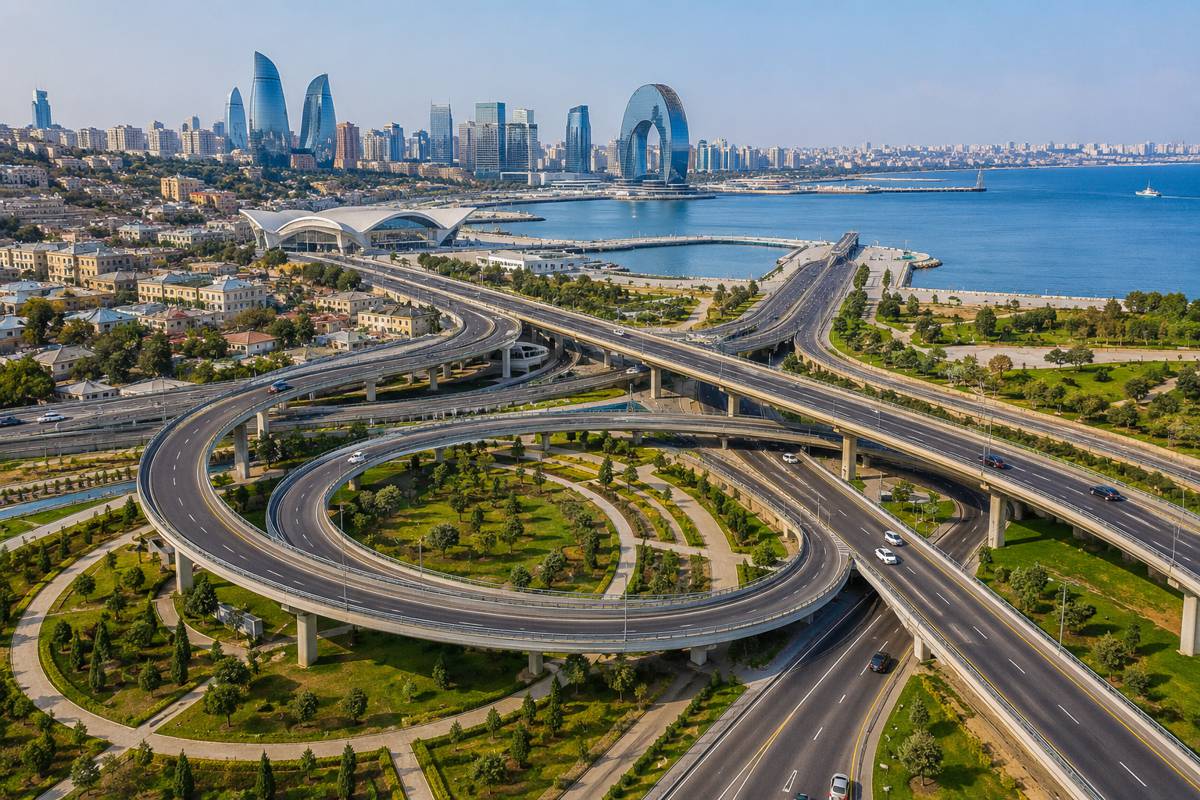
The 2025–2030 State Programme for the Improvement of Transport Infrastructure in Baku and Surrounding Areas provides some indication of the scale of activity. According to Azerbaijan’s Ministry of Digital Development and Transport, 25 projects within the programme concern road infrastructure. Four were under construction by January 2026, including the Bilgah–Novkhani–VAZ Circle–Khirdalan–M-4 route and the road between Academician Hasan Aliyev Street and Koroghlu Metro Station, with work on another four roads planned to begin during the year.
Some are substantial pieces of urban highway engineering. The State Agency of Azerbaijan Automobile Roads says the Pirshaghi–Novkhani–Khirdalan–M4 project will create a 29 km, six-lane connection between the M1 Baku–Guba–Russian border highway and the M4 Baku–Shamakhi–Yevlakh route. Its structures include nine interchanges, 13 overpasses, a canal bridge, three cut-and-cover tunnel-type crossings and two pedestrian overpasses.
Another project, extending from Academician Hasan Aliyev Street to Muzzaffar Narimanov Street, involves construction of a 3.9 km, six-lane road. The scheme includes four road tunnels with a combined length of 2,210 metres and three underground pedestrian crossings totalling 112 metres.
The workload extends well beyond Baku. Azerbaijan’s road agency reported in January 2025 that 44 road projects totalling 3,382.6 km were being designed or constructed in territories covered by the government’s Great Return programme. Among the major schemes is the 81.7 km Ahmadbayli–Fuzuli–Shusha road, adding another substantial programme of highway and associated infrastructure to the country’s transport workload.
Digital Transport and Mobility
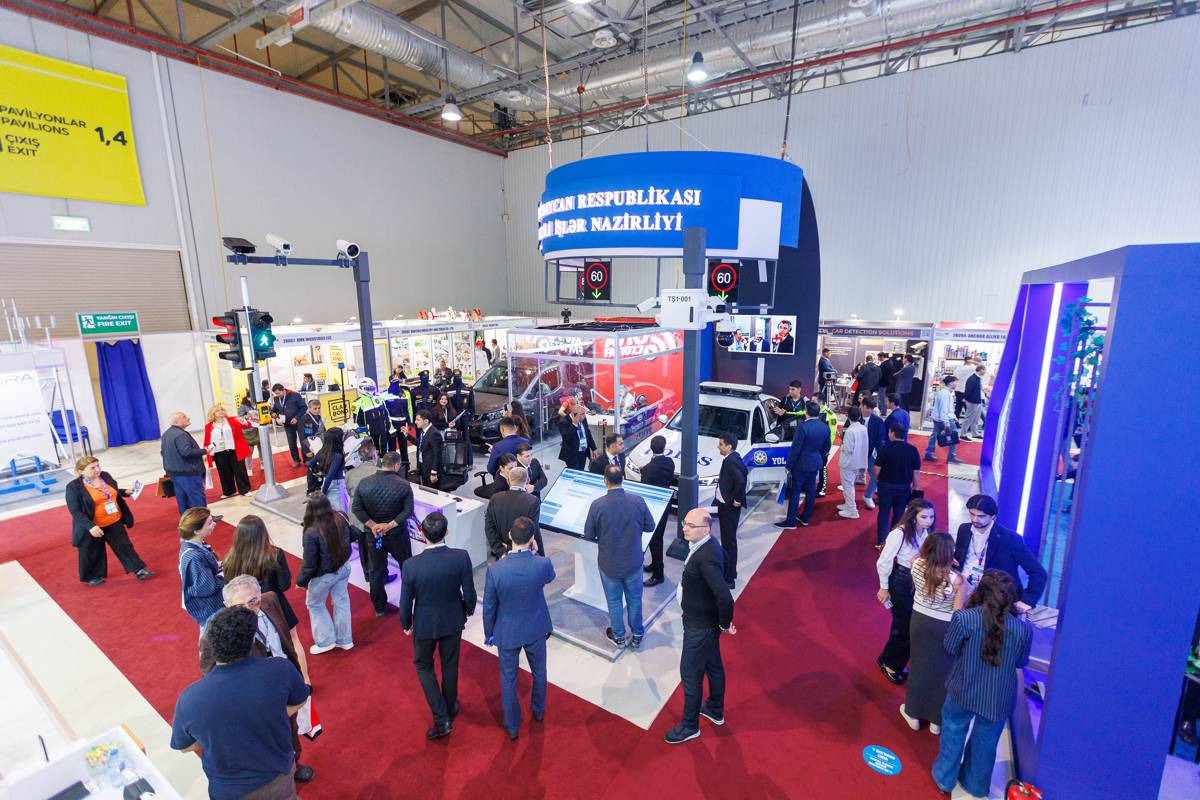
Azerbaijan’s transport programme extends beyond civil engineering. The Ministry of Digital Development and Transport has been developing digital systems alongside physical infrastructure, including the country’s Single Window information system for transport and logistics.
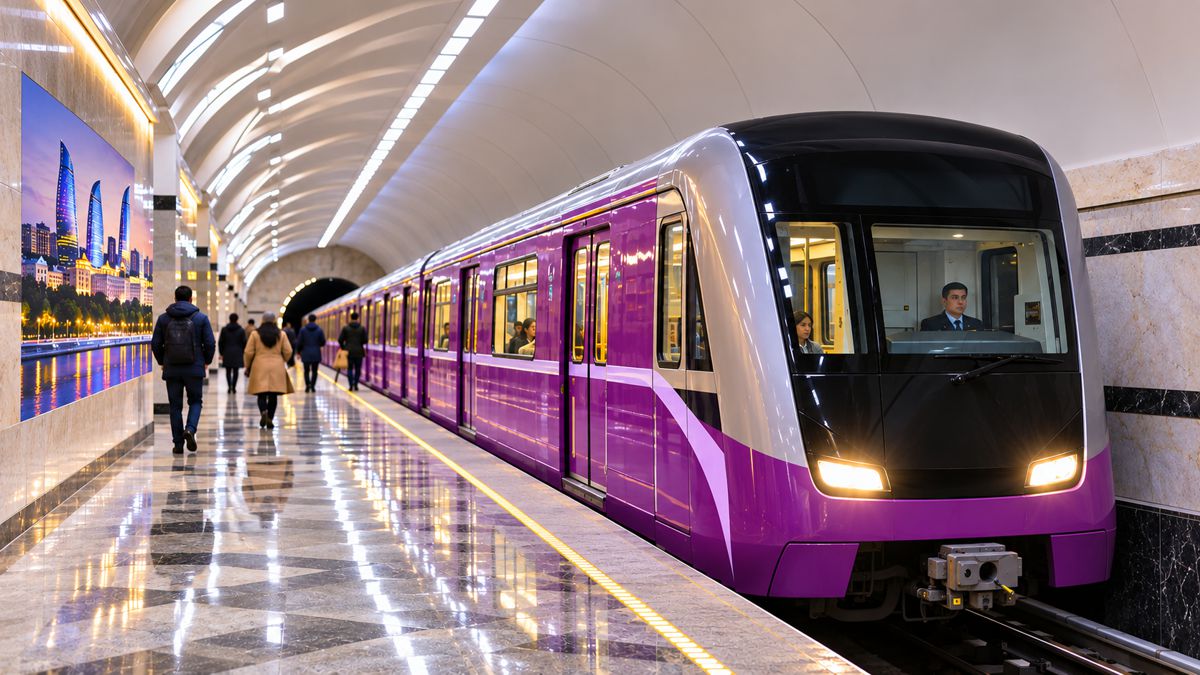
Urban mobility is moving in the same direction. The Azerbaijan Land Transport Agency, AYNA, has been developing digital-twin capabilities for modelling urban mobility, while artificial intelligence applications are being explored across railway maintenance, freight planning, passenger-flow analysis and safety systems in the Baku Metro.
These systems increasingly sit alongside conventional infrastructure rather than in a separate technology category. A modern urban road scheme can encompass earthworks and structures, traffic signals, lighting, monitoring, communications, public transport integration, pedestrian facilities, data systems and software. The exhibition’s combination of civil engineering, traffic technology, GIS, passenger systems and intelligent transport reflects that increasingly mixed project environment.
The Caspian Market
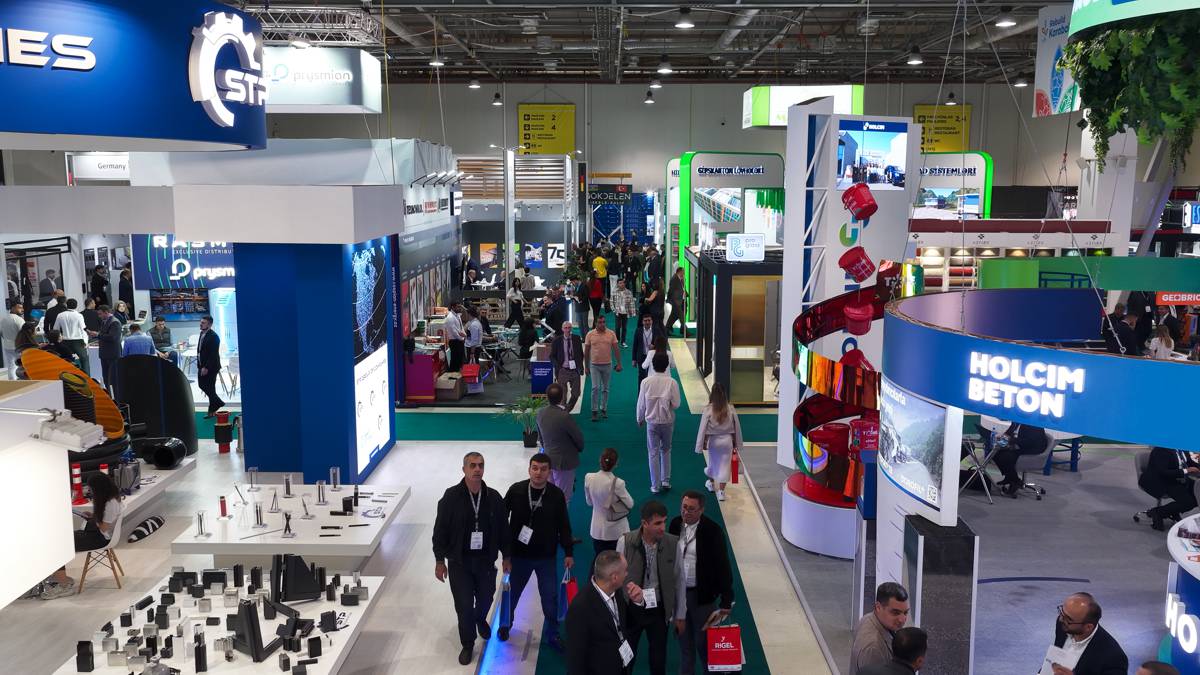
Road & Traffic is intended to bring manufacturers and technology providers into contact with Azerbaijan’s transport authorities, government agencies, public transport operators, contractors and infrastructure companies. For overseas businesses entering the market, those relationships can extend well beyond making an initial sale.
Technical compliance, procurement structures, local representation, installation capability, maintenance and after-sales support can matter as much as the equipment itself. Manufacturers of specialist road machinery, traffic systems, structures or digital equipment may consequently need local engineering and distribution relationships capable of supporting projects throughout their operating lives.
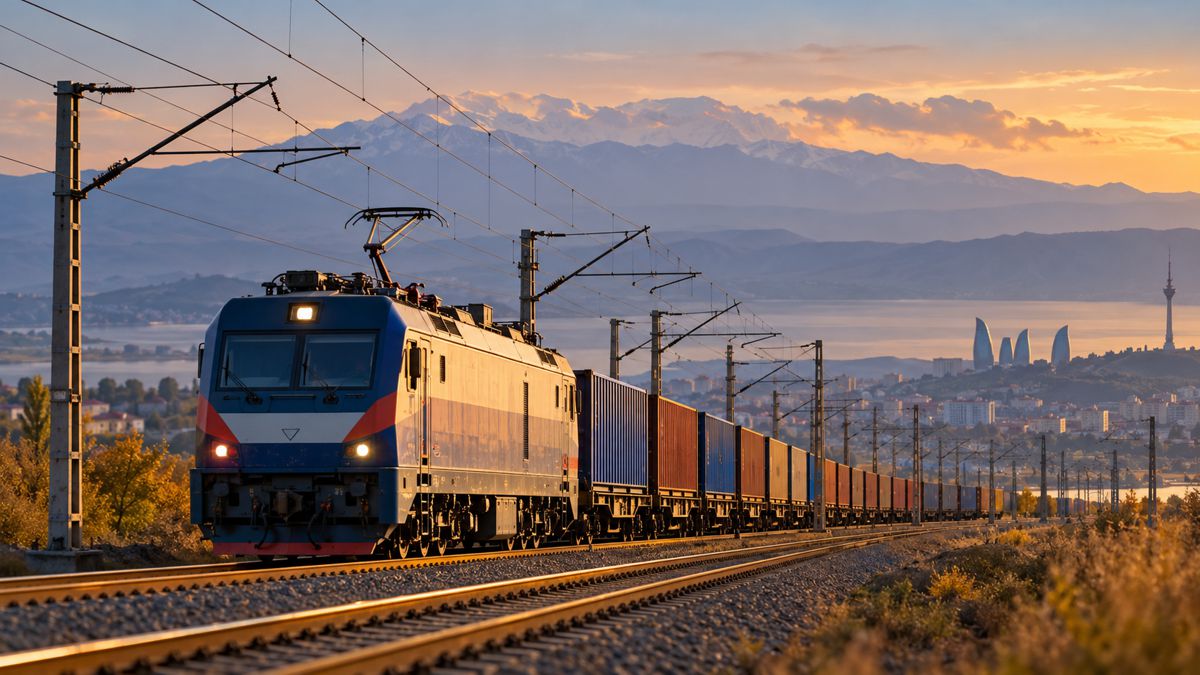
Azerbaijan’s geographic position adds another dimension. The country sits on the Trans-Caspian International Transport Route, commonly known as the Middle Corridor, connecting Asian and European markets through Central Asia, the Caspian Sea and the South Caucasus. Investment in the wider transport network therefore sits alongside efforts to strengthen Azerbaijan’s position as a multimodal transit hub between east and west.
Road & Traffic occupies the more practical end of that picture. Its exhibitors are concerned with the roads, structures, public transport networks, safety equipment and control systems required to keep the transport system working on the ground.
Caspian Construction Week
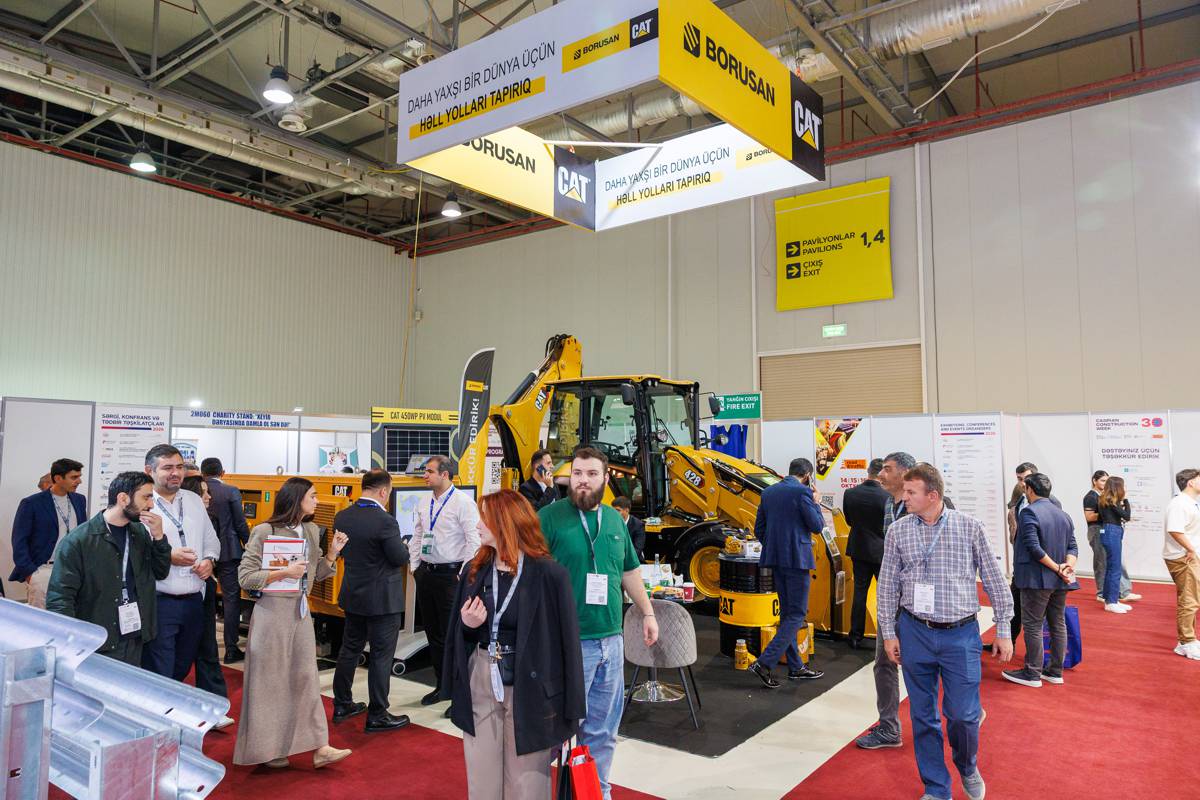
Road & Traffic will operate as part of a larger exhibition programme at Baku Expo Center. Caspian Construction Week brings it together with BakuBuild, the 31st Azerbaijan International Construction Exhibition; Rebuild Karabakh, the sixth Azerbaijan International Restoration, Reconstruction and Development of Karabakh Exhibition; Aquatherm Baku, covering heating, ventilation, air conditioning, water supply and sanitary systems; and Plastex Caspian, focused on plastics and polymers.
The overlap is potentially useful because transport infrastructure rarely sits neatly within one industrial category. Road construction draws on aggregates, concrete, polymers, drainage, utilities, structures, lighting and building systems, while digital technologies are becoming embedded across planning, construction and operation. Major urban projects also intersect with property development, utilities and public-realm construction.
An exhibitor specialising in bridge components may therefore find relevant contacts beyond the Road & Traffic halls. The same applies to drainage suppliers, polymer manufacturers, geospatial companies, engineering consultancies and contractors whose work crosses conventional exhibition categories.
For visitors, the combined format puts complementary technologies within the same venue. Equipment and systems can be examined directly, technical requirements discussed with manufacturers and potential suppliers assessed against the demands of projects already moving through Azerbaijan’s infrastructure programme.
A Working Infrastructure Market
Trade exhibitions are ultimately useful in proportion to the activity in the markets they serve. Road & Traffic 2026 arrives while Azerbaijan is building substantial road infrastructure, reworking urban transport around its capital and developing digital systems intended to manage transport and mobility more efficiently.
That combination gives the exhibition a practical setting for its mixture of road engineering, public transport, traffic systems, geospatial technology and safety equipment. It also brings traditional infrastructure suppliers into the same environment as the companies providing the sensing, communications, modelling and control technologies increasingly embedded within transport projects.
The exhibition will not determine which companies secure Azerbaijan’s future transport work. It can, however, put manufacturers, contractors and technology providers in the same room as the organisations designing, procuring, operating and supplying a transport network that is already changing.
Key Industry Questions
- When and where is Road & Traffic 2026? The exhibition takes place from 14 to 16 October 2026 at Baku Expo Center in Azerbaijan.
- What industries does Road & Traffic cover? Its scope includes road, bridge and tunnel construction, GIS and geodesy, public transport, intelligent transport systems, traffic management, parking, road safety, signs, barriers, markings, lighting and associated infrastructure technologies.
- How active is Azerbaijan’s current road programme? The 2025–2030 Baku transport programme alone contains 25 road-infrastructure construction projects. Separate large-scale road construction and reconstruction programmes are also being undertaken elsewhere in the country.
- Is the exhibition relevant to ITS and digital transport companies? Yes. Intelligent transport, traffic and passenger-flow management, GIS and related systems form part of the exhibition, while Azerbaijan is also developing digital mobility and transport-management capabilities.
- Why could Azerbaijan be interesting to international infrastructure suppliers? Current investment encompasses urban roads, tunnels, public transport and digital mobility, alongside Azerbaijan’s wider role in regional transport corridors.
- What is the Middle Corridor? The Middle Corridor is a multimodal trade route connecting Asia and Europe through Central Asia, the Caspian Sea and the South Caucasus. Azerbaijan forms an important part of the route.
- Which other exhibitions take place alongside Road & Traffic? The event coincides with BakuBuild, Rebuild Karabakh, Aquatherm Baku and Plastex Caspian as part of Caspian Construction Week.
- Who is likely to find Road & Traffic useful? The event is aimed at manufacturers, contractors, engineering companies, transport technology providers, public transport businesses, infrastructure authorities, consultants, distributors and organisations seeking partners in Azerbaijan and the wider Caspian region.
Strategic Takeaways
- Azerbaijan’s current transport workload gives Road & Traffic a live project environment rather than a purely prospective market proposition.
- Baku’s road programme includes sizeable highway, tunnel, interchange and pedestrian infrastructure packages drawing on a broad construction supply chain.
- Digital mobility is developing alongside conventional construction, widening the exhibition’s relevance beyond traditional road-building products.
- International suppliers entering Azerbaijan may need local engineering, distribution, installation and maintenance relationships as well as competitive products.
- Combining Road & Traffic with Caspian Construction Week increases its relevance to companies whose technologies cross the boundaries between transport, construction, utilities and industrial systems.