KGM Introduces Two-Seat Musso Commercial Pick-Up Following UK Tax Changes
KGM Motors UK has introduced two-seat commercial versions of its Musso Rebel and Saracen pick-ups, offering construction businesses, agricultural operators and trade contractors an alternative to conventional double-cab models following changes to UK vehicle taxation.
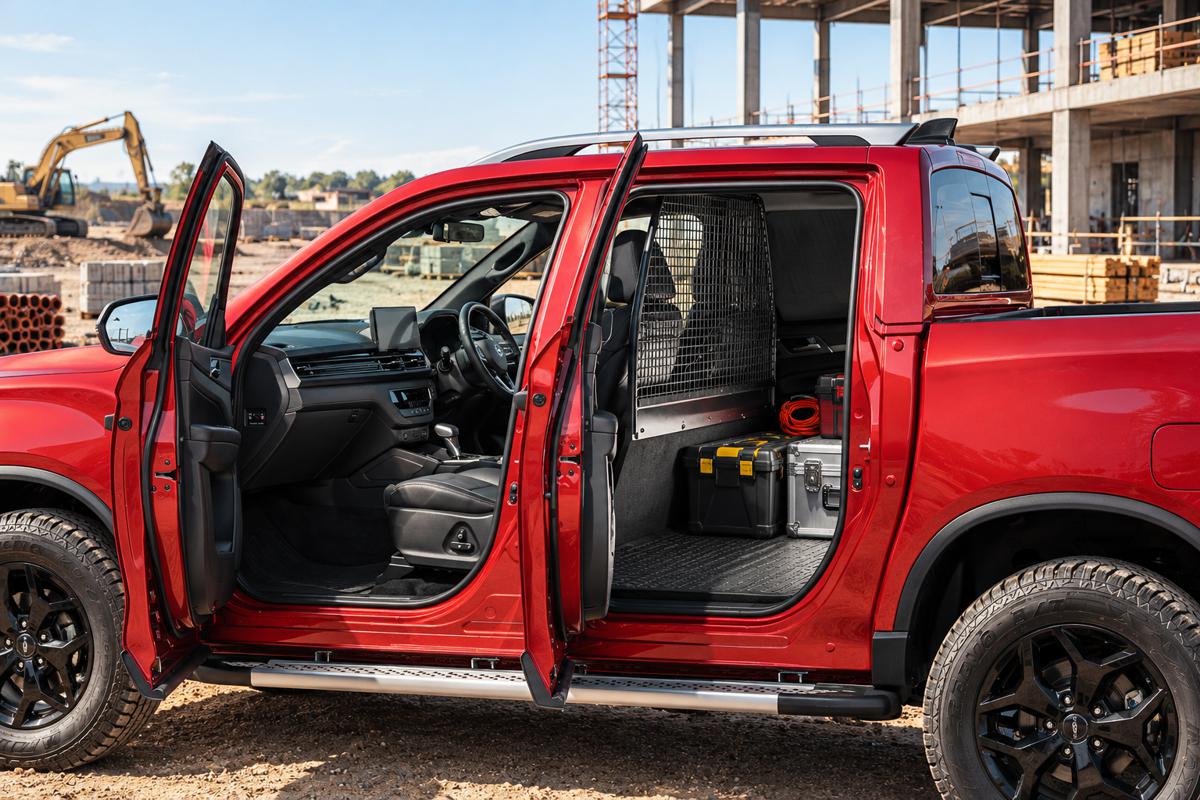
The new Musso Commercial range replaces the rear passenger accommodation with a secure load area while retaining the diesel powertrain, four-wheel-drive system and towing capabilities of the existing pick-up. Prices start at £33,980 excluding VAT, with KGM offering the conversion as part of a dedicated commercial specification.
The launch follows changes introduced by HM Revenue & Customs in April 2025, when most conventional double-cab pick-ups began to be treated as cars for Benefit-in-Kind and capital allowances purposes. Vehicles previously classified as commercial goods vehicles on the strength of their payload can now attract different tax treatment, potentially increasing the cost of providing them to employees and changing how businesses claim relief on their purchase.
Briefing
- KGM has introduced two-seat Musso Commercial versions of its Rebel and Saracen pick-ups for UK business customers.
- The conversion replaces rear passenger accommodation with a secure load area, fixed mesh bulkhead, protective flooring and rear window security mesh.
- A 2.2-litre diesel engine produces 202 PS and 441 Nm, with selectable four-wheel drive and low-range gearing.
- KGM quotes towing capacity of up to 3.5 tonnes, payload of up to 1,205 kg and gross train weights reaching 6,750 kg, depending on specification.
- Prices start at £33,980 excluding VAT, with KGM advertising commercial Benefit-in-Kind treatment and eligibility for a 100% capital allowances write-down.
UK Pick-Up Taxation
For many years, UK businesses could purchase double-cab pick-ups with payload capacities of at least one tonne and generally treat them as commercial vehicles for several important tax purposes. The arrangement made vehicles with four or five seats attractive to contractors, farmers and utility companies needing to combine passenger transport with load carrying and towing.
That position changed in April 2025 when HMRC revised its interpretation of the legislation governing vehicle classification, following a 2020 Court of Appeal judgement involving multipurpose vehicles. Under the revised approach, a vehicle’s construction and primary suitability determine whether it should be treated as a car or a goods vehicle.
According to HMRC’s Benefit-in-Kind guidance, most conventional double-cab pick-ups are now expected to be classified as cars because their construction makes them suitable for carrying both passengers and goods. Transitional protection remains available for qualifying vehicles ordered, purchased or leased before the changes took effect, subject to the relevant conditions and an end date of 5 April 2029.
Capital allowances were also affected, with the revised treatment beginning on 1 April 2025 for Corporation Tax and 6 April 2025 for Income Tax. VAT continues to operate under separate classification rules, retaining the established one-tonne payload approach for relevant input tax purposes, while Vehicle Excise Duty remains unaffected by the revised Benefit-in-Kind classification.
Single-cab pick-ups and vehicles constructed primarily for carrying goods remain available to operators seeking commercial vehicle treatment. KGM has followed that principle by converting the Musso’s rear passenger compartment into a dedicated load area, retaining the existing platform and mechanical specification.
Commercial Load Configuration
The Musso Commercial retains two front seats, with the space behind them converted into an enclosed compartment for tools, equipment and other business materials. A full-height fixed mesh bulkhead separates the occupants from the cargo area, while a heavy-duty rubber mat protects the floor and security mesh fitted to the rear windows provides additional protection.
For construction and maintenance businesses carrying power tools, surveying instruments, diagnostic equipment or smaller components, the compartment provides storage separate from the external pick-up bed. Equipment can be carried inside the vehicle, protected from the weather and less visible from outside, while the open bed remains available for larger or dirtier loads.
The arrangement comes with an obvious compromise. Removing the rear seats eliminates the flexibility of transporting additional personnel, making the vehicle less suitable for contractors who regularly move crews between sites. Businesses that primarily need two seats, however, gain additional enclosed storage without moving to a conventional panel van.
KGM says the conversion has been developed to support commercial vehicle classification, with the manufacturer advertising standard commercial Benefit-in-Kind treatment and eligibility for a 100% write-down allowance. The precise tax position depends on the vehicle’s construction and the applicable legislation, while the availability of capital allowances also depends on the purchaser’s circumstances.
Engine, Towing and Payload
The Musso Commercial retains KGM’s 2.2-litre diesel engine, producing 202 PS and 441 Nm of torque. Selectable four-wheel drive and low-range gearing provide additional traction and controlled movement on unmade roads, construction compounds, agricultural tracks and other surfaces where conventional road-going vans may struggle.
Low-range gearing is particularly useful when manoeuvring heavy trailers, negotiating steep gradients or moving equipment at low speeds. By multiplying torque through the transmission, it allows the vehicle to maintain controlled progress over difficult ground without relying on high engine speeds.
KGM quotes a maximum towing capacity of 3.5 tonnes and payload of up to 1,205 kg across the Musso range, although the figures vary according to specification. The manufacturer also quotes gross train weights of 6,450 kg for manual models and 6,750 kg for automatic versions, allowing substantial combined vehicle and trailer loads within the relevant operating limits.
Gross train weight represents the maximum permitted combined weight of the loaded towing vehicle and trailer. A higher rating can allow operators to retain more usable vehicle payload while towing heavy equipment, provided the individual gross vehicle weight, axle loads and trailer limits are respected. For contractors moving compact machinery, materials or equipment trailers between sites, these figures deserve as much attention as the headline towing capacity.
Maximum payload and maximum towing capacity should not automatically be treated as simultaneous limits for every version. The actual combination depends on the vehicle’s plated weights, transmission, conversion weight and trailer configuration, with businesses operating near the maximum ratings needing to confirm the limits of their chosen commercial variant.
The diesel powertrain and four-wheel-drive system remain familiar territory for operators accustomed to conventional working pick-ups. Fuel consumption, emissions and servicing costs will still influence whole-life expenditure, particularly for fleets covering substantial road mileage between construction sites.
Pricing and Fleet Applications
The Musso Commercial range is available through KGM’s UK dealer network, with the Rebel Commercial starting at £33,980 excluding VAT. The Saracen Commercial is listed from £36,780 excluding VAT, providing a higher-specification alternative for operators seeking additional equipment and comfort.
KGM says the commercial conversion is provided without an additional charge compared with the equivalent standard Musso model, although published prices should be compared on a like-for-like basis, including transmission and equipment specification.
Kevin Griffin, Managing Director at KGM Motors UK, said: “The new Musso Commercial range has been developed to offer a clear solution. By combining a dedicated two-seat conversion with secure load space, standard commercial Benefit-in-Kind and eligibility for 100% write-down allowance, it gives operators an alternative without compromising the capability Musso is known for. We don’t believe customers should have to pay a premium for a vehicle configured to meet their business needs, which is why the conversion is included at no additional cost compared with the equivalent standard Musso model.”
Benefit-in-Kind liabilities can affect employees permitted to use company vehicles privately, while capital allowances influence how businesses recover qualifying vehicle expenditure through the tax system. For fleet operators replacing several pick-ups, the financial difference between a conventional double-cab and a dedicated commercial configuration may extend well beyond the initial purchase price.
The Musso Commercial also enters a market where operators have several established alternatives. Panel vans generally offer greater enclosed cargo volume, while conventional pick-ups provide open load beds, substantial towing capacity and, in four-wheel-drive form, access to sites where road-oriented commercial vehicles may be less suitable.
KGM, formerly SsangYong, has traditionally positioned the Musso around towing capability, equipment levels and competitive pricing. The commercial conversion allows the manufacturer to offer a more specialised working vehicle using the existing platform, drivetrain and dealer support network, rather than developing an entirely separate model.
For businesses whose pick-ups spend much of their working lives carrying equipment rather than passengers, the two-seat configuration offers a practical combination of enclosed storage, an open load bed and heavy towing capability. The revised UK tax rules have given that arrangement an additional commercial consideration, bringing vehicle construction and passenger accommodation more directly into fleet purchasing decisions.
Key Industry Questions
- What is the KGM Musso Commercial? It is a two-seat commercial version of the Musso pick-up, available in Rebel and Saracen specifications, with a secured load compartment replacing the rear passenger accommodation.
- Why has KGM introduced a two-seat Musso? The model addresses demand for working pick-ups following changes to UK Benefit-in-Kind and capital allowances treatment of conventional double-cab vehicles introduced in April 2025.
- How much does the Musso Commercial cost? The Rebel Commercial starts at £33,980 excluding VAT, while the Saracen Commercial is listed from £36,780 excluding VAT.
- Can the Musso Commercial tow a 3.5-tonne trailer? KGM quotes towing capacity of up to 3.5 tonnes across the Musso range. Operators should confirm the precise rating and plated limits of their chosen commercial variant.
- What engine does the Musso Commercial use? A 2.2-litre turbocharged diesel engine producing 202 PS and 441 Nm of torque, combined with selectable four-wheel drive and low-range gearing.
- Does the Musso Commercial qualify for commercial vehicle tax treatment? KGM advertises standard commercial Benefit-in-Kind treatment and eligibility for a 100% write-down allowance. Actual tax treatment depends on the vehicle’s classification and the relevant business circumstances.
- Are double-cab pick-ups still treated as commercial vehicles for VAT? VAT rules remain separate from the revised Benefit-in-Kind and capital allowances treatment. The established one-tonne payload threshold continues to apply for relevant VAT classification purposes.
- Can a Musso carry its maximum payload while towing? The Musso’s relatively high gross train weight can permit substantial combined loads, but the simultaneous payload and towing limits depend on the specific vehicle’s plated weights, trailer configuration and load distribution.
Strategic Takeaways
- Businesses replacing double-cab pick-ups acquired before April 2025 may face different tax treatment even when the replacement vehicle performs essentially identical duties.
- A dedicated two-seat configuration can support commercial vehicle classification while retaining the mechanical capabilities of an established pick-up platform.
- Gross train weight is particularly relevant for construction operators regularly towing machinery, where vehicle payload and trailer weight must be considered together.
- Enclosed storage behind the front seats offers a practical alternative for contractors carrying valuable equipment that would otherwise occupy the exposed pick-up bed.
- The commercial conversion removes rear passenger capacity, making the vehicle most suitable for operators whose transport requirements centre on equipment and materials rather than moving crews.