Bentley’s 2026 Infrastructure Awards Spotlight Digital Engineering Around the World
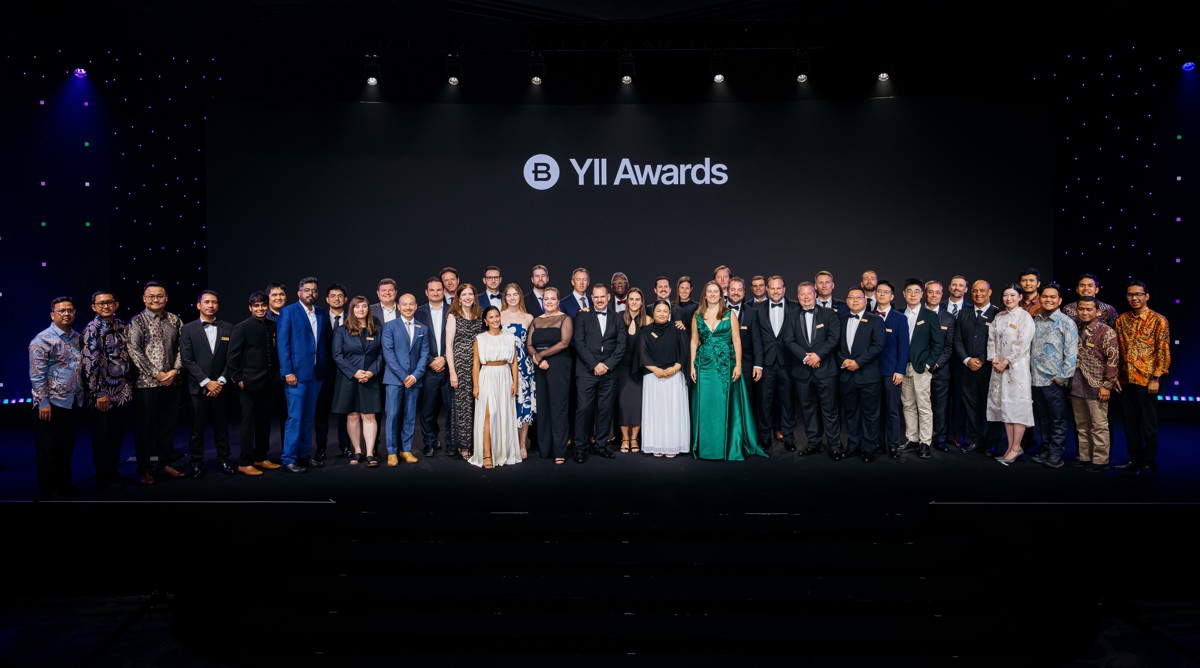
More than 300 infrastructure projects from 53 countries were nominated for Bentley Systems‘ 2026 Year in Infrastructure Awards, with 12 category winners announced at the company’s annual event in Singapore on 7 October. The recognised projects range from Australia’s River Torrens to Darlington road programme and the expansion of Dublin Port to European railway engineering, pumped storage development in China and operational water networks in the Netherlands.
The awards, now in their third decade, recognise engineering organisations using Bentley software across the design, construction and operation of infrastructure. This year’s results encompass major civil engineering projects alongside applications involving connected project information, digital twins and artificial intelligence.
Briefing
- More than 300 projects from organisations in 53 countries were nominated for the 2026 awards.
- Independent judges selected winners across 12 infrastructure categories during the 6–7 October event in Singapore.
- Australia’s River Torrens to Darlington project won the Roads and Highways category.
- Other winners included Dublin Port, Porto Metro, Port Polska and operational water distribution digital twins in the Netherlands.
- Bentley also announced Founders’ Honors recognising additional applications of digital engineering, selected by its founders and executives.
Major Transport Projects Among the Winners
Australia’s River Torrens to Darlington (T2D) Project received the Roads and Highways award, recognising work by the Torrens to Darlington Alliance in partnership with the South Australian Government’s Department for Infrastructure and Transport. The alliance brings together John Holland, Bouygues, Arcadis, Jacobs and Ventia on one of Adelaide’s major transport infrastructure programmes.
The project forms part of the continuing development of the city’s north-south transport corridor, where the coordination of engineering information across multiple organisations is an important part of delivering a complex road scheme.
In Portugal, AYESA Engineering won the Bridges and Tunnels category for Porto Metro 3.0, an integrated digital tunnel design workflow. The project focuses on the coordination of tunnel engineering information, bringing together design activities that must account for alignment, structural requirements and ground conditions within a constrained urban environment.
Rail infrastructure was also represented by SUDOP PRAHA of the Czech Republic, which received the Rail and Transit award for its HSR Central Bohemia project, covering the RS 1 high-speed railway section between Poříčany and Světlá nad Sázavou. Poland’s Port Polska was recognised in the Project Delivery category, adding another major transport development programme to the year’s winners.
The projects differ considerably in scale and engineering requirements, although each involves the management of complex information across disciplines and project participants.
Construction and Structural Engineering
Ireland’s Wills Bros secured the Construction award for Dublin Port’s MP2 Berth 52 and 53 project. The recognition brings a marine construction scheme into a programme that also encompasses design engineering and infrastructure operations.
Port development involves the interaction of civil works, marine engineering, utilities and operational requirements, often within facilities that must continue handling commercial traffic during construction. The Dublin Port project provides an example of digital engineering being applied within that demanding delivery environment.
Indonesia’s PT Wijaya Karya Bangunan Gedung Tbk, known as WIKA Gedung, received the Structural Engineering award for its work on the retractable roof of Jakarta International Stadium. The project represents a different engineering application, involving a large movable roof structure where structural design and mechanical operation must be considered together.
In India, Pinnacle Future Build won the Cities and Facilities category for the Pinnacle Infotech Digital Twin Madurai Campus, extending the range of recognised projects into the management and representation of building and campus infrastructure.
Energy, Water and Ground Engineering
China’s South-to-North Water Diversion (Chongqing) New Energy Development Co., Ltd. and POWERCHINA Zhongnan Engineering Corporation won the Energy Production category for the Chongqing Yunyang Jianquan Pumped Storage Digital Power Station.
Pumped storage developments bring together substantial civil engineering works, hydraulic systems and electrical infrastructure. The project was recognised for its digital engineering application, although Bentley’s announcement does not provide quantified performance results or detailed technical outcomes.
Australia’s APD Global received the Transmission and Distribution award for Clean Energy Link-North, an AI-driven digital delivery project associated with renewable energy infrastructure.
Water infrastructure featured through Evides of the Netherlands, which won the Water and Wastewater category for Water Distribution Operational Digital Twins at Scale. Its focus on operating networks rather than new construction provides a different perspective on the use of connected engineering information, particularly where asset records and operational data must remain useful long after the original infrastructure has been delivered.
The Philippines’ Aboitiz Renewables won the Geospatial and Reality Modelling category for GeoShield, while Brazil’s Intertechne Consultores received the Subsurface Modelling and Analysis award for its use of Leapfrog and PLAXIS in tailings dam modelling and assessment.
The Brazilian project is a particularly relevant application of specialised engineering software. Tailings storage facilities require careful assessment of ground conditions and geotechnical behaviour, with numerical modelling forming part of a broader process of investigation, engineering judgement and monitoring.
The 2026 Year in Infrastructure Category Winners
The 12 category winners announced by Bentley Systems were:
| Category | Winning organisation and project |
|---|---|
| Bridges and Tunnels | AYESA Engineering, Portugal: Porto Metro 3.0: Optimized Integrated Digital Tunnel Design Workflow |
| Cities and Facilities | Pinnacle Future Build Pvt. Ltd., India: Pinnacle Infotech Digital Twin Madurai Campus |
| Construction | Wills Bros, Ireland: Dublin Port MP2 Berth 52 and 53 |
| Energy Production | South-to-North Water Diversion (Chongqing) New Energy Development Co., Ltd. and POWERCHINA Zhongnan Engineering Corporation, China: Chongqing Yunyang Jianquan Pumped Storage Digital Power Station |
| Geospatial and Reality Modelling | Aboitiz Renewables Inc., Philippines: GeoShield |
| Project Delivery | Port Polska, Poland: Port Polska |
| Rail and Transit | SUDOP PRAHA a.s., Czech Republic: HSR Central Bohemia (RS 1 VRT Poříčany – Světlá nad Sázavou) |
| Roads and Highways | Torrens to Darlington Alliance and South Australian Department for Infrastructure and Transport, Australia: River Torrens to Darlington (T2D) Project |
| Structural Engineering | WIKA Gedung, Indonesia: Jakarta International Stadium – Engineering Largest Retractable Roof |
| Subsurface Modelling and Analysis | Intertechne Consultores S.A., Brazil: Leapfrog and PLAXIS for Tailings Dam Modeling and Assessment |
| Transmission and Distribution | APD Global, Australia: Clean Energy Link-North: AI-Driven Digital Delivery for Renewables |
| Water and Wastewater | Evides N.V., Netherlands: Water Distribution Operational Digital Twins at Scale |
Founders’ Honors Extend Across Infrastructure Operations
Alongside the independently judged awards, Bentley’s founders and executives selected additional projects for Founders’ Honors, covering specialised applications of digital engineering in construction, transport, energy, water management and environmental resilience.
Among the transport-related recipients was WSP USA, recognised for model-based delivery on the I-35 Capital Express Central project in Texas. Singapore’s T.Y.Lin International received the Ground-Informed Design honour for an 800-metre-long dual three-lane road tunnel associated with the North-South Corridor.
Portugal’s COBA was recognised for work on Santos Station as part of the Lisbon Metro Yellow and Green Lines extension, while Indonesia’s PT Hutama Karya received the Constructioneering honour for the Parliamentary Complex of Nusantara.
Several other projects focused on the use of connected data and operational information. WSP Global in India was recognised for its iTwin AI Project Lifecycle Intelligence Platform, while Colombia’s Empresas Públicas de Medellín received an honour for a secondary water distribution system digital twin.
Environmental applications included contaminated groundwater assessment at Norway’s Mongstad Refinery, urban climate resilience work in Pau, France, and system-wide water leak detection by Maynilad Water Services in the Philippines. These projects sit alongside honours for renewable energy, engineering education and digital infrastructure.
Complete List of 2026 Founders’ Honors
Bentley’s announcement stated that 17 projects received Founders’ Honors. The following are the 16 individual projects identified in the supplied announcement.
| Recognition | Recipient and project |
|---|---|
| Asset Intelligence | Empresas Públicas de Medellín, Colombia: EPM Water Secondary Distribution System Digital Twin |
| Connected Data | WSP Global Inc., India: iTwin AI Project Lifecycle Intelligence Platform |
| Constructioneering | PT Hutama Karya, Indonesia: The Parliamentary Complex of Nusantara |
| Design Optimisation | POWERCHINA Fujian Electric Power Survey and Design Institute, China: Automatic Modeling and Optimization Software for Offshore Jacket Structures |
| Digital Champion | COBA, Portugal: Santos Station – Extension of Lisbon Metro Yellow and Green Lines |
| Digital Infrastructure | Ampirical, United States: Powering the Western Hemisphere’s Largest Data Center |
| Digital Twin at Scale | Almondz Global Infra Consultant Limited, India: NAKSHA |
| Education – Hands-on Teaching Using AI | Universidad de las Fuerzas Armadas ESPE, Ecuador: Intelligent Leak Management with Autoencoders |
| Education – Systems Thinking | University of Glasgow Smart Systems Group, United Kingdom: Glasgow City Region: Cocreation of Transport and Multi-Energy Futures |
| Ground-Informed Design | T.Y.Lin International, Singapore: North-South Corridor – 800m Long Dual 3-Lane Road Tunnel |
| Model-Based Delivery | WSP USA, United States: I-35 Capital Express Central – Downtown |
| Powering Tomorrow’s Mobility | FS Engineering S.p.A., Italy: Energy Sustainability: Self-Production for Green Mobility System |
| Powering Tomorrow’s Mobility | TTC, Brazil: Electromobility in the Southern Region |
| Restoring Our Environment | Norconsult Norge AS, Norway: Mongstad Refinery – Contaminated Groundwater Risk and Mitigation Review |
| Resilient Cities | Communauté d’Agglomération Pau Béarn Pyrénées, France: Urban Data Intelligence: A CDE for Climate Resilient Infrastructure |
| Securing Our Water Future | Maynilad Water Services, Philippines: Scaling Leak Detection at Maynilad from DMA to System-Wide Analysis |
Digital Engineering Beyond Construction
The 2026 results include a substantial number of projects concerned with infrastructure already in operation. Water distribution, leak detection, environmental assessment and asset intelligence feature alongside the construction of new roads, railways, buildings and energy facilities.
The distinction between designing an asset and managing it over decades is becoming increasingly relevant to the use of digital engineering information. Design and construction models may contain extensive detail about physical infrastructure, but their operational usefulness depends on whether that information can be maintained, updated and accessed by the organisations responsible for the completed asset.
The Dutch water distribution project, Colombia’s secondary distribution system digital twin and the Philippine leak detection programme offer examples of digital methods being applied to existing networks. Their applications differ, but all concern infrastructure whose performance must be understood and managed throughout its working life.
Artificial intelligence introduces further possibilities for analysing engineering and operational information, provided the underlying data is sufficiently reliable and relevant to the decisions being made. The 2026 awards include AI-specific applications in project delivery, connected data and engineering education, although the announcement provides limited evidence from which to assess their individual performance.
Cate Lochead, Bentley Systems’ chief marketing officer, described the company’s emphasis on connecting information across engineering disciplines and infrastructure lifecycle phases: “That new cycle of AI-enabled innovation requires an open ecosystem, where infrastructure professionals can connect their data and preferred software to make better, faster decisions.”
The statement reflects Bentley’s position as an engineering software supplier, and the awards remain a showcase of projects using its technology. The main categories are independently judged, but recognition does not in itself establish measurable improvements in cost, productivity or asset performance. Such conclusions would require more detailed project evidence than the awards announcement provides.
Nevertheless, the geographical and technical range of the winning entries offers a useful view of the applications being pursued by engineering organisations. Major transport projects continue to feature prominently, while operational water networks, geotechnical assessment and connected infrastructure information are receiving comparable recognition.
The enduring challenge for infrastructure owners is to preserve the usefulness of engineering information beyond the immediate project. Models developed during design and construction can support subsequent operations, but only where the information remains accurate, accessible and relevant to the people managing the physical asset.
Key Industry Questions
- What are Bentley’s Year in Infrastructure Awards? An annual programme recognising infrastructure projects that use Bentley Systems software in design, construction, project delivery or operation.
- How many projects were nominated in 2026? More than 300 projects were nominated by organisations in 53 countries.
- Which project won the Roads and Highways category? Australia’s River Torrens to Darlington project, submitted by the Torrens to Darlington Alliance in partnership with the South Australian Government.
- Who won the Construction award? Ireland’s Wills Bros for the Dublin Port MP2 Berth 52 and 53 project.
- What is the difference between the category awards and Founders’ Honors? The 12 category winners were selected by independent judges. Founders’ Honors recipients were chosen by Bentley’s founders and executives.
- How are digital twins used in infrastructure? Digital twins connect representations of physical assets with relevant engineering, asset or operational information. Their capabilities depend on the data and systems incorporated.
- What role does artificial intelligence play in digital engineering? AI can assist with analysing engineering information, identifying patterns and supporting selected design or operational processes. Results depend on the application and quality of the underlying data.
- Are Bentley’s infrastructure awards independently judged? The 12 principal categories are judged independently, although Bentley organises the programme and recognises projects using its software.
Strategic Takeaways
- Major road, rail, tunnel and port projects remain prominent applications of multidisciplinary digital engineering.
- Water network projects demonstrate the use of digital twins for managing existing infrastructure rather than concentrating exclusively on new construction.
- Ground modelling and geotechnical analysis remain specialised areas where engineering software supports complex assessment work.
- AI-related entries are becoming part of the awards programme, but project-specific performance evidence remains essential when evaluating claimed benefits.
- Engineering information retains operational value only when it can be maintained and used effectively beyond project completion.