Granite Expands Utah Footprint With Strategic Acquisition
Granite has moved to deepen its presence in one of the fastest-growing construction markets in the western United States, completing the acquisition of Kenny Seng Construction. The deal strengthens Granite’s vertically integrated construction and materials platform in Utah, adding contracting capability, quarry assets and exposure to resilient infrastructure sectors.
For investors, contractors and public-sector buyers alike, this is more than a routine bolt-on purchase. Utah has become a magnet for population growth, industrial development and transport investment, creating sustained demand for roads, schools, utilities, housing-enabling infrastructure and aggregates. By securing a business with established regional operations and raw material reserves, Granite is positioning itself to capture a larger share of that long-cycle demand.
Granite, founded in 1922 and recognised as one of the largest diversified civil construction groups in the United States, has increasingly focused on home-market strategies where scale, materials control and recurring regional demand can lift margins and improve bidding discipline. The Kenny Seng Construction acquisition appears to fit that playbook neatly, giving Granite stronger local delivery capability while reducing reliance on third-party materials supply.
The transaction also underlines a wider trend across North American infrastructure markets. Large contractors are seeking ownership of quarries, pits, logistics capacity and specialist subcontracting operations to improve certainty over cost, programme and supply chains. In an era of inflationary pressure and tighter procurement scrutiny, control over the full chain has become a competitive edge rather than a luxury.
Briefing
- Granite has completed the acquisition of Kenny Seng Construction in Utah.
- The deal expands Granite’s vertically integrated construction and materials operations.
- Assets include a hard rock quarry with around one million tonnes annual production potential.
- The acquired business reportedly generates about $150 million in annual revenue.
- Utah’s rapid growth makes the region strategically important for long-term infrastructure demand.
A Stronger Position In A High Growth State
Utah has consistently ranked among the stronger-performing US state economies, supported by population growth, business relocation, logistics investment and a relatively diverse industrial base. Expanding urban areas around Salt Lake City, Provo, Ogden and surrounding corridors have driven steady demand for highways, municipal works and community infrastructure.
That matters because construction growth is rarely sustained by a single sector. Utah benefits from a blend of public investment and private development, creating opportunities across education facilities, civil engineering, utilities and commercial projects. Granite’s acquisition broadens its ability to participate across all of those segments with a locally rooted platform.
Rather than entering the market cold, Granite has acquired an established operator with working relationships, regional knowledge and existing production assets. That shortens the time needed to scale operations and lowers the execution risk often associated with greenfield expansion.
Vertical Integration Is Becoming The Winning Formula
The phrase “vertically integrated” can sound like boardroom jargon, but on the ground it means something practical. Contractors that own or control aggregates, transport fleets, processing assets and field crews can often price work more accurately, schedule jobs more efficiently and respond faster when markets tighten.
Kenny Seng Construction brings end-to-end capabilities including earthworks, site preparation, concrete work, utility installation, project management, aggregate production, materials processing and transportation. Folded into Granite’s wider network, those services create a more complete operating model in Utah.
That’s especially relevant in infrastructure delivery, where delays in one link of the chain can derail entire programmes. If aggregates are scarce, trucking is stretched or utility crews are unavailable, costs rise quickly. Ownership of core functions helps reduce that exposure.
Across the US construction sector, this model has gained traction as federal infrastructure funding, state transport programmes and private industrial projects compete for labour and materials. Companies with internal supply strength are often better placed to weather volatility.
Quarry Assets Could Prove Highly Valuable
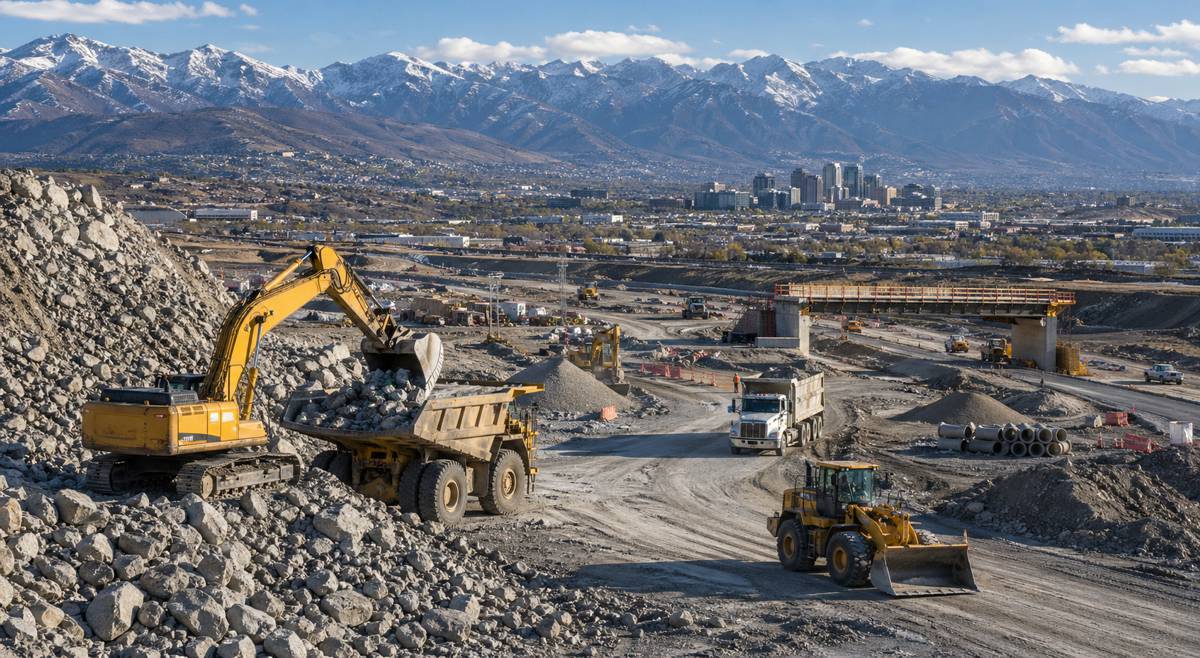
Perhaps the most strategically important part of the acquisition lies beneath the ground. Granite says the deal includes a hard rock quarry with growth opportunities, including a potential sand and gravel pit, annual production potential of around one million tonnes and approximately 45 million tonnes of reserves plus measured and inferred resources.
In construction, aggregates are the backbone of roads, concrete, asphalt, drainage systems and site works. Demand is local, transport costs are high and permitting new extraction sites can be complex and slow. As a result, existing reserves near growth markets can become exceptionally valuable assets.
Utah’s expanding metro areas and transport corridors are likely to need large volumes of crushed stone, sand and gravel for years ahead. Owning reserves close to demand centres can improve margins while giving Granite a reliable feedstock for both internal projects and external sales.
That dual revenue stream often appeals to investors. Materials businesses can provide steadier earnings than lumpier contracting cycles, helping smooth performance through changing market conditions.
Exposure To Resilient End Markets
Granite noted that the acquired business provides revenue exposure to education infrastructure, civil infrastructure and the private sector. That diversity is worth noting.
Education infrastructure, from school expansions to campus improvements, is often tied to demographic growth and long-term public planning rather than short-term market swings. Civil infrastructure can include roads, utilities, drainage and public works, sectors supported by municipal, state and federal budgets. Private-sector work adds flexibility and can capture faster-moving commercial opportunities.
No single market is immune to downturns, of course. But a balanced portfolio tends to be more durable than dependence on one niche. In practical terms, it allows labour and equipment to be redeployed as demand shifts.
For Granite, that broader revenue mix in Utah could complement its national portfolio while strengthening recurring regional cash generation.
Financial Signals Investors Will Watch
Granite said the acquired business has approximately $150 million in annual revenue with an expected adjusted EBITDA margin in the high teens. While integration always carries execution risk, those headline figures suggest the target is not a distressed asset but an operating business with meaningful scale.
Margins in the high teens are particularly notable in a sector where contracting returns can be squeezed by labour, fuel, insurance and materials costs. If maintained, that performance may reflect a beneficial mix of materials earnings, operational efficiency and disciplined project selection.
Investors will likely watch three things next: how quickly Granite integrates the business, whether cross-selling opportunities emerge, and whether quarry output ramps as expected. If those pieces land well, the acquisition could support earnings quality rather than simply adding turnover.
Leadership Sees Long Term Value
Granite President and Chief Executive Officer Kyle Larkin said: “We are excited to welcome the Kenny Seng Construction team to Granite. Kenny Seng Construction is a highly complementary business that strengthens our vertically-integrated home market strategy in Utah. Their end-to-end service capabilities, strong position in education and civil infrastructure, and established materials platform align well with our focus on building durable, resilient businesses that create long-term value for our shareholders.”
That statement reflects Granite’s current strategic direction. Rather than chasing growth for growth’s sake, the company appears focused on durable regional positions supported by materials ownership and recurring demand.
It also hints at a people strategy. Acquisitions in construction succeed when local management, field expertise and customer relationships are retained. Folding teams into a larger organisation while preserving entrepreneurial strength is often the real test.
Utah Becomes A More Important Battleground
Utah is no backwater in the North American infrastructure story. Rapid demographic expansion, logistics positioning, technology-sector growth and sustained public investment have made it increasingly attractive to national contractors and materials groups.
Road capacity upgrades, water systems, education facilities and development-enabling infrastructure are all likely to remain active themes. Add industrial and warehousing growth, and the pipeline becomes broader still.
Granite’s latest move suggests the company sees Utah not as a peripheral market, but as a core long-term operating region. If that judgement proves right, this acquisition may be remembered less as a simple purchase and more as a strategic land grab in a market with years of momentum ahead.