CAREC Business Forum Targets the Next Generation of Central Asian Infrastructure
CAREC has mobilised about $57.9 billion for regional development since 2001, with more than 90% directed towards transport and energy. After 25 years of roads, railways, border infrastructure and power connections, the programme is increasingly confronting a different challenge: turning the next generation of regional infrastructure into projects that private companies and investors can participate in.
The CAREC Business Forum 2026, taking place in Ulaanbaatar, Mongolia, on 30 September and 1 October will host around 250 representatives from companies, governments, investors, business associations and development organisations, who are expected to attend alongside the 25th CAREC Ministerial Conference.
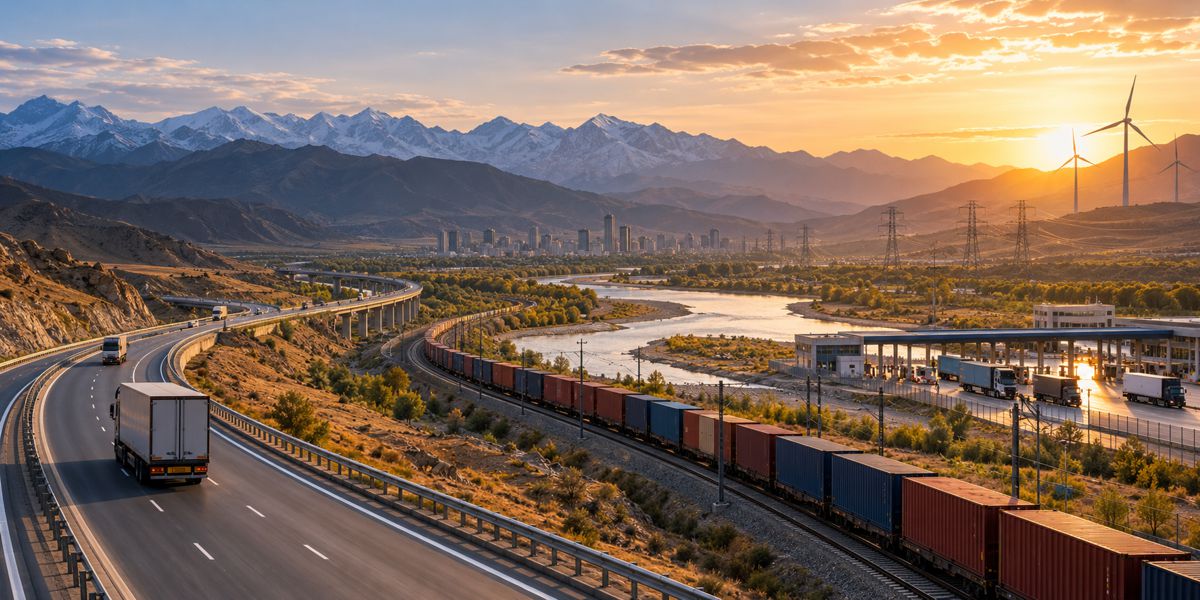
The physical infrastructure remains fundamental across a region spanning some of the world’s most important overland connections between China, Central Asia, the Caucasus, South Asia, the Middle East and Europe. But CAREC’s current programme reaches increasingly into the systems surrounding those assets: digital logistics, border modernisation, energy interconnection, critical-minerals value chains, procurement and the financing structures needed to bring private capital into regional projects.
Briefing
- The CAREC Business Forum 2026 takes place in Ulaanbaatar on 30 September and 1 October.
- Approximately 250 private-sector, government, investor and development-partner representatives are expected.
- CAREC has mobilised about $57.9 billion for regional development since 2001.
- Smart transport and logistics, energy and interconnectivity, and critical minerals form the forum’s three principal sector themes.
- PPPs, project pipelines and ADB procurement procedures will feature prominently in discussions with participating businesses.
From Corridors to Connected Logistics
Transport has always sat near the centre of CAREC. Several participating countries are landlocked, while the wider region forms part of the overland connections linking major Asian and European markets. Roads, railways and border infrastructure have consequently absorbed a large share of CAREC investment.
Building the corridor solves only part of the problem. Freight can still lose time at borders, terminals and administrative interfaces even where the road or railway itself operates efficiently. Increasingly, the constraints sit between the physical assets: digital documentation, border systems, freight platforms and the interfaces between modes and jurisdictions.
CAREC has identified smart and digital technologies as part of the continuing modernisation of its transport corridors, including paperless trade, digital documentation, multimodal integration and greener transport systems. Its Smart Mobility Working Group held its first meeting in Manila in May 2026, focusing on corridor bottlenecks and the policies and technical capacity required to deploy smart mobility technologies.
Border infrastructure is also attracting fresh investment. ADB has approved a $400 million Border Upgrades for Integration, Logistics and Development financing facility aimed at modernising border infrastructure and trade processes across participating economies.
The resulting market extends beyond conventional civil works. Transport software companies, logistics operators, border technology providers, engineering consultancies, equipment suppliers and intelligent transport specialists increasingly sit alongside road and railway contractors in the regional infrastructure picture.
Making Projects Investable
CAREC governments still face substantial infrastructure and financing requirements, while energy transition, corridor modernisation and industrial development are widening the range of projects competing for public resources. Greater use of public-private partnerships and private-sector finance, technology and operating expertise is therefore becoming part of the programme’s investment strategy.
Infrastructure projects do not attract private investment merely because governments need capital. They require credible revenue models, predictable regulation, manageable risks and procurement structures capable of allocating those risks sensibly.
The Ulaanbaatar forum is designed partly to bring potential investors and suppliers closer to actual opportunities. Participants are expected to gain access to a curated pipeline of projects from CAREC development partners, supported by business-to-business and business-to-government meetings intended to encourage partnerships, joint ventures and project-specific discussions.
Preparations for the wider 25th Ministerial Conference have followed a similar direction. CAREC senior officials meeting in Ulaanbaatar in June discussed investment pipelines and financing alongside initiatives covering transport, digital connectivity and energy security. Further discussions in August included work on border upgrades, a CAREC Digital Corridor and a Critical Minerals to Manufacturing Financing Partnership Facility.
For contractors, consultants, technology companies and infrastructure investors looking at Central Asia, the emerging project mechanisms may ultimately prove more valuable than the conference programme surrounding them.
Procurement and Competition
The forum will also deal directly with how companies compete for ADB-supported work. Participants are due to receive guidance on updated Asian Development Bank procurement policies and frameworks, including compliance requirements and their application to sovereign projects, with particular attention to Merit Point Criteria and the evaluation of technical and financial submissions.
Where procurement gives greater weight to technical quality, methodology and capability, bidders have to demonstrate how they intend to deliver a project rather than simply meet minimum requirements and compete predominantly on price.
That places a different burden on companies entering unfamiliar CAREC markets. Understanding the evaluation framework, assembling the appropriate technical team and presenting a credible delivery methodology can become as important as identifying the tender itself.
Critical Minerals and Infrastructure
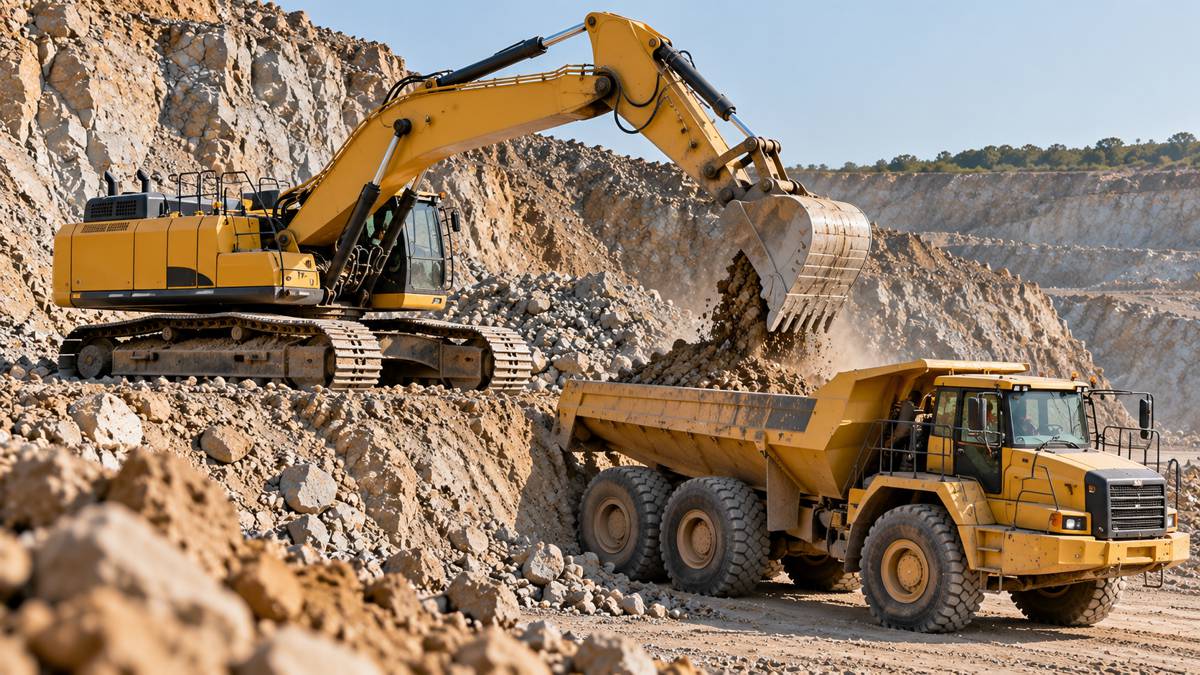
Critical minerals bring mining, industrial development and infrastructure into the same investment conversation. Central Asian countries possess deposits of copper, lithium, rare earth elements and other minerals increasingly sought by battery, energy and advanced manufacturing industries, while CAREC is looking beyond extraction towards greater downstream processing and regional value creation.
Moving further downstream requires considerably more than mines. Processing facilities need reliable electricity, industrial sites need roads and rail connections capable of carrying bulk materials and finished products, and export chains depend on border crossings, terminals and logistics systems. New projects also require geological knowledge, skilled labour, finance and access to processing technology.
CAREC’s proposed Critical Minerals to Manufacturing Financing Partnership Facility reflects that broader approach, linking mineral development more closely with processing, manufacturing and the infrastructure required to support them.
Mongolia provides a particularly relevant setting for the discussion. Its substantial mining economy, landlocked geography and position between China and Russia place transport capacity, border efficiency and energy availability directly alongside the question of how greater value can be retained from mineral production.
Energy Across Borders
Energy and interconnectivity form the third major strand of the forum, covering renewable generation, regional electricity trading and smart grids alongside the power requirements created by industrial development.
Cross-border interconnection can provide larger markets for renewable generation and allow electricity systems with different generation profiles and demand patterns to exchange power. Building the transmission infrastructure is only one part of that process, with regulation, market arrangements and operating standards also having to work across national boundaries.
The relationship with the forum’s other themes is particularly close. Mineral processing requires substantial and dependable electricity supplies, while digital infrastructure and increasingly electrified transport systems add new loads to regional networks. CAREC’s work on regional energy connectivity therefore sits alongside, rather than apart from, its transport and industrial ambitions.
A More Commercial CAREC
The 2026 gathering follows a CAREC Business Forum held alongside the 24th Ministerial Conference in Bishkek in November 2025, where discussions covered financing, digital solutions and green technologies and four private-sector partnerships were announced in logistics, e-commerce and tourism.
Ulaanbaatar is intended to move further towards identifiable investment opportunities and closer interaction between governments, development institutions and companies. The Business Forum also forms part of a wider week of CAREC meetings around the 25th Ministerial Conference, bringing together regional policy, financing and infrastructure discussions in the Mongolian capital.
There remains considerable distance between presenting a project pipeline and turning those projects into contracts, financed assets and operating businesses. Cross-border infrastructure carries political, regulatory, financing and coordination risks that conferences cannot remove, and the ability of proposed mechanisms to produce bankable projects will become clearer only as individual investments move towards procurement and financial close.
After a quarter-century dominated by building the physical links of regional integration, attention is moving towards what travels across them, how efficiently it moves, how projects are financed and procured, and where private companies can supply the technology and expertise required to make those networks more productive.
Key Industry Questions
- When and where is the CAREC Business Forum 2026? The forum will take place on 30 September and 1 October 2026 in Ulaanbaatar, Mongolia, alongside the 25th CAREC Ministerial Conference.
- What is CAREC? The Central Asia Regional Economic Cooperation programme is a partnership of 11 countries and development partners focused on regional cooperation, connectivity and economic development.
- How much investment has CAREC mobilised? CAREC reports that approximately $57.9 billion has been mobilised since 2001, principally for transport connectivity, energy security and trade facilitation.
- Which sectors will the 2026 Business Forum focus on? The principal themes are energy and interconnectivity, smart transport and logistics, and critical minerals.
- Will infrastructure projects be presented to companies? The forum is expected to provide private-sector participants with access to a curated pipeline of projects from CAREC development partners, alongside B2B and B2G matchmaking.
- Why is procurement included in the programme? ADB intends to improve companies’ understanding of its updated procurement framework, bidder requirements, evaluation methods and Merit Point Criteria so firms can prepare stronger submissions.
- What does smart transport mean in the CAREC context? It includes digital and green transport systems, multimodal integration, intelligent logistics, smart border infrastructure, paperless trade and technologies intended to improve the operation of regional corridors.
- Why are critical minerals part of the infrastructure discussion? Expanding from extraction into processing and manufacturing requires power, transport, logistics, industrial facilities, finance and cross-border connections. Mineral value chains are therefore closely tied to infrastructure development.
Strategic Takeaways
- CAREC’s infrastructure agenda is broadening from constructing corridors towards improving the digital, logistical and commercial systems operating across them.
- Attracting private capital will depend on developing investable projects with credible financing, regulatory and risk structures.
- Procurement capability will become increasingly important for companies pursuing ADB-supported opportunities across the region.
- Critical-mineral development could generate additional demand for transport, energy, processing and logistics infrastructure.
- Some of the strongest opportunities are emerging where transport, energy, digital systems and industrial development intersect.