Telenor and Red Hat Launch Nordic Sovereign AI Platform
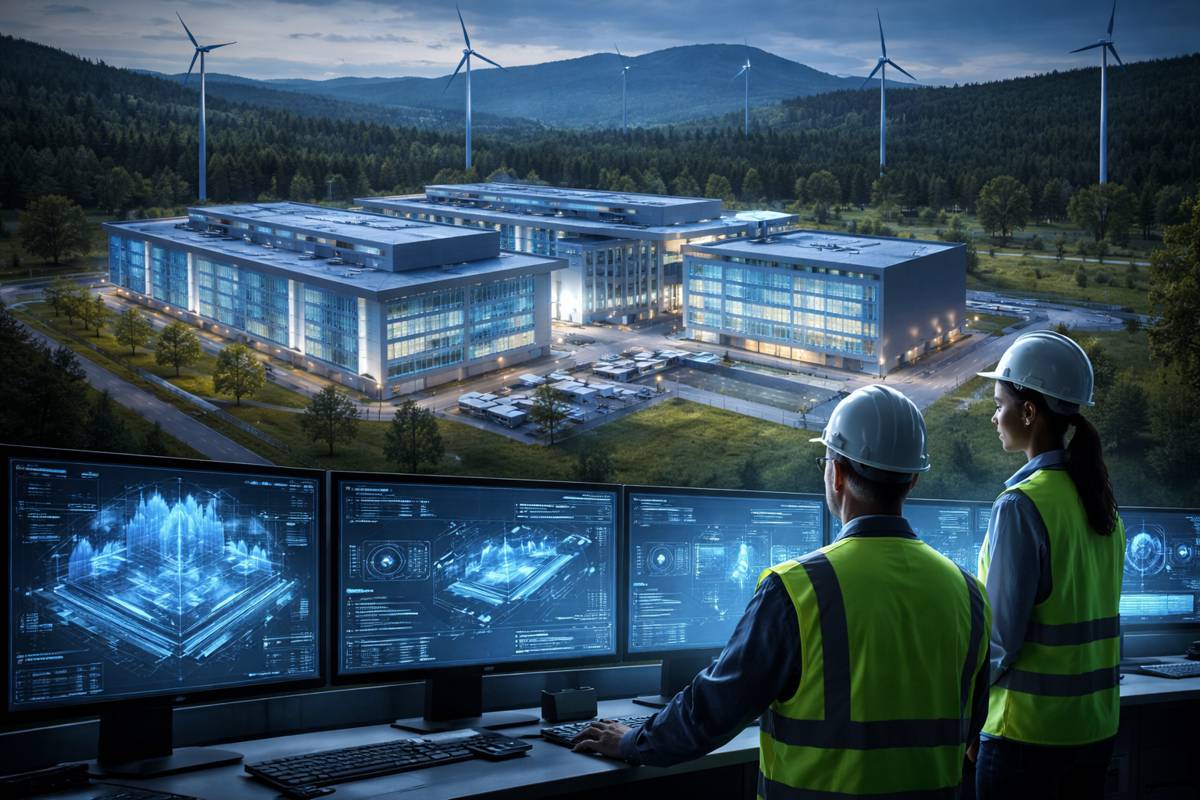
Across Europe, artificial intelligence has moved from a research topic to a national capability. Governments, regulators and critical industries now treat data location and operational control as strategic assets alongside energy security and telecommunications resilience. The collaboration between Telenor and Red Hat reflects that shift. Rather than simply deploying AI in the cloud, the partners are building what amounts to an industrial-grade AI production environment designed to operate within national borders.
The Telenor AI Factory combines high performance computing, cloud-native software and operational governance into a single platform. Powered by NVIDIA reference architecture hardware and Red Hat’s hybrid cloud stack, the system allows organisations to train and deploy AI models while keeping sensitive datasets in-region. For sectors such as transport infrastructure, utilities, public administration and defence supply chains, the difference isn’t academic. Many European regulations, including GDPR and the upcoming AI Act, require strict oversight over data processing, explainability and accountability.
For the construction and infrastructure ecosystem, the implications are immediate. Digital twins, predictive maintenance analytics and automated project planning increasingly rely on large datasets from sensors, drones and connected machinery. If those datasets leave the jurisdiction, compliance risks escalate. By hosting compute capacity locally, Telenor effectively offers an alternative to hyperscaler dependence, giving contractors and operators a pathway to deploy AI without compromising regulatory alignment.
From Cloud Adoption to Industrial AI Production
The collaboration centres on Red Hat OpenShift AI as the environment for building and running machine learning workloads. The platform supports training, inference and operational deployment across multiple tenants, allowing external companies to use the same infrastructure while maintaining data separation. That architecture matters because most AI initiatives fail not during development but during operational rollout. Moving models from prototype notebooks into real operational workflows remains one of the industry’s biggest bottlenecks.
The AI Factory approach attempts to solve that gap. Instead of isolated GPU clusters or departmental experiments, organisations gain a standardised production pipeline. Retrieval augmented generation and agentic workflows built using LlamaStack can be deployed into live operations with automated provisioning through Red Hat Ansible Automation Platform. In practical terms, this means a transport authority could train a model to detect road defects and deploy it directly into inspection workflows without rebuilding infrastructure around it.
Independent research backs the importance of this transition. According to multiple enterprise AI adoption studies from analyst firms such as Gartner and IDC, the majority of AI projects stall between pilot and production due to integration complexity, governance and operational reliability concerns. A consistent cloud-native foundation removes those barriers by making deployment repeatable rather than bespoke.
Why Infrastructure Industries Need Sovereign AI
Infrastructure sectors handle some of the most sensitive operational datasets in the economy. Railway signalling logs, traffic camera feeds, pipeline monitoring sensors and airport security analytics all qualify as critical information. When processed externally, they introduce national security and commercial confidentiality concerns.
Europe’s digital strategy has therefore moved toward “sovereign cloud” frameworks. These don’t prohibit global technology providers but require local control over data processing, access rights and technical support jurisdiction. Red Hat’s EU-based support model aligns with those expectations by ensuring operational assistance remains inside European legal frameworks.
For construction and engineering companies, sovereign AI unlocks new use cases that were previously restricted. Predictive asset maintenance, automated contract analysis and safety monitoring systems rely on large historical datasets. Organisations often avoided deploying them due to compliance uncertainty. With regional processing guarantees, the risk profile changes.
Kaaren Hilsen, CEO of Telenor AI Factory, explained the operational intent: : “Telenor is focused on delivering dependable technologies for organizations looking to enhance operational resilience and drive AI-powered innovation. Telenor AI Factory and Red Hat collaborate as one team – we get in rooms together to jointly problem-solve and push forward. We are building Telenor AI Factory for flexibility and portability, no lock-in, and Red Hat is a key part of this with its open software and principles. With Red Hat as the common cloud layer, Telenor AI Factory provides purpose-built, security-focused environments that reduce deployment complexity while optimizing costs so that our customers can build on what already works and own what they create. Red Hat and Telenor AI Factory are transforming isolated GPU silos into a flexible and compliant offering ready for the demands of the Nordic and wider European market.”
Open Source as a Compliance Mechanism
A notable aspect of the project is its reliance on open source software rather than proprietary cloud frameworks. In infrastructure industries, auditability is often as important as performance. Regulators and operators need to understand how systems behave, especially when AI decisions affect safety or operational continuity.
Open source allows code inspection, verification and modification. For organisations deploying AI into traffic management, energy distribution or automated equipment operation, this transparency becomes essential. Instead of trusting opaque algorithms, operators can validate processes and document them for compliance reviews.
Red Hat’s approach also reduces vendor lock-in. Applications can run across environments and hardware accelerators without redesign, allowing infrastructure owners to change suppliers or expand capacity without rewriting software stacks. For large capital projects with multi-decade lifespans, that flexibility has measurable financial value.
Rich Stephens, vice president EMEA Telecommunications at Red Hat, emphasised the strategic goal: : “Telenor AI Factory is leading the way in rolling out sovereign cloud for the enterprise and Red Hat is excited to bring our experience of open innovation and flexible platforms to support delivery of these diverse and complex services. With the pace of change in the AI market, Red Hat and Telenor AI Factory are catering for today’s greatest strategic need: The freedom to choose any model, on any accelerator, across any environment. Together we are delivering support for sovereignty, governance and enhanced systems security so that customers can scale AI efforts to drive value, with control and autonomy over data.”
Turning GPU Capacity into a Shared Industrial Resource
High performance computing infrastructure traditionally existed only within hyperscale cloud providers or specialised research facilities. The AI Factory model turns it into a shared industrial utility. Multiple organisations operate on the same hardware environment while remaining logically separated.
This multi tenancy approach improves GPU utilisation, which has become a major cost factor in AI adoption. Many companies purchase accelerators that remain underused outside training cycles. Centralised infrastructure distributes workloads more evenly, improving efficiency and lowering entry barriers for smaller firms.
The facilities in Norway operate on renewable energy, addressing another emerging constraint in AI expansion. Large scale AI training requires significant electricity consumption. European operators increasingly prioritise low carbon data centres to align with sustainability commitments and regulatory targets.
For infrastructure operators, this combination of compliance, performance and sustainability makes AI economically viable. A municipal transport authority, for instance, could deploy predictive traffic optimisation without investing in its own computing centre, while still meeting national data rules.
Bridging IT and Operational Technology
One of the persistent challenges in digital construction and infrastructure management is the divide between IT systems and operational technology. Asset monitoring platforms, building information models and enterprise software rarely share a common runtime environment. The result is fragmented data and duplicated workflows.
By running both traditional applications and AI workloads on the same cloud-native foundation, the AI Factory approach reduces that fragmentation. Engineers, data scientists and application developers work within a shared operational environment rather than isolated tools. Operational data can feed analytics systems directly, and analytics results can flow back into operational platforms automatically.
That matters in sectors adopting digital twins. A bridge monitoring system might detect structural anomalies, trigger a predictive model, generate maintenance recommendations and feed them into asset management software in a single workflow. Previously, such integrations required custom engineering and manual data exchange.
A Shift in the Competitive Landscape
The broader significance extends beyond a single telecom operator. Europe has long relied on global hyperscalers for advanced computing services. Sovereign AI factories suggest a hybrid model where local infrastructure providers host regulated workloads while still leveraging global technology ecosystems.
This model could reshape procurement strategies across public sector infrastructure projects. Instead of mandating specific cloud providers, tenders may require compliance characteristics such as in-region processing, auditable algorithms and EU jurisdiction support. Vendors capable of operating within sovereign AI frameworks gain competitive advantage.
For contractors and consultants, the shift opens a new market category. AI services tailored to regulated environments will likely become part of project delivery packages, much like cybersecurity requirements became standard in the past decade.
The Industrialisation of AI Deployment
What emerges from the Telenor and Red Hat collaboration is less about a new technology and more about a new operational model. Artificial intelligence is moving from experimentation to infrastructure, from isolated innovation teams to standard engineering practice.
By combining open source software, automated deployment and shared high performance computing under regulatory control, the AI Factory approach effectively industrialises AI adoption. Organisations no longer need to design bespoke architectures for each project. They connect to a production environment designed for compliance and scale.
In the long run, that may prove more transformative than any individual algorithm. When deployment becomes routine, adoption accelerates. For the infrastructure sector, where projects last decades and regulatory oversight is intense, the ability to operationalise AI safely determines whether digital transformation remains a promise or becomes standard practice.