Expandable Space Habitats Set the Stage for Permanent Lunar Infrastructure
Humanity’s return to the Moon is no longer a symbolic gesture or a short-lived exploration campaign. Instead, governments and private industry are steadily laying the groundwork for a sustained presence beyond low-Earth orbit. The latest sign of that shift comes from a strategic investment by Voyager Technologies in Max Space, a company developing expandable space habitats designed to support long-duration lunar missions and future deep-space exploration.
While the investment itself runs into the multi-million-dollar range, the broader implications stretch far beyond a single financial transaction. The collaboration highlights a fundamental challenge facing the emerging space economy: how to build scalable, safe and economically viable infrastructure in environments where every kilogram launched from Earth carries a significant cost.
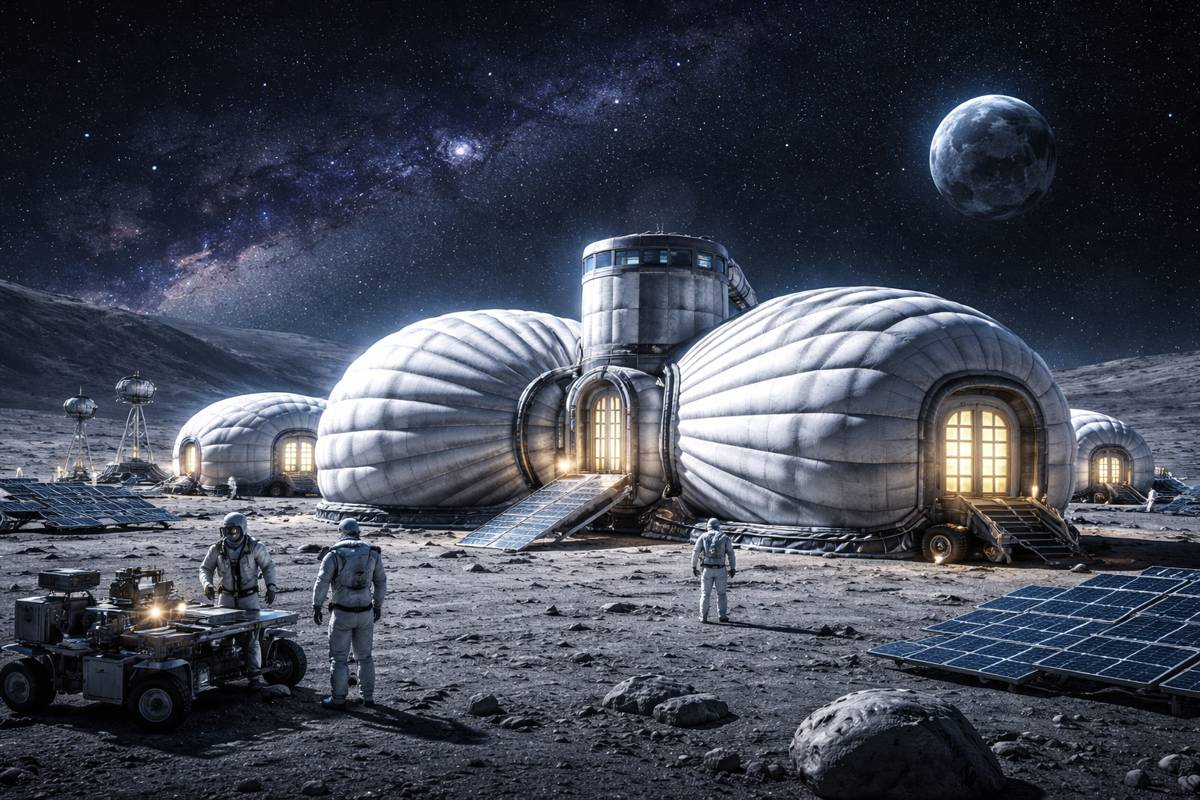
Expandable habitats, once considered experimental, are increasingly viewed as a practical solution to this challenge. By launching compactly and expanding once deployed, they promise dramatically larger living and working spaces for astronauts while reducing the mass and volume required during launch. In the context of the rapidly evolving lunar exploration ecosystem, that capability could play a decisive role in turning ambitious mission plans into sustainable operations.
The Infrastructure Challenge Beyond Low Earth Orbit
Establishing a long-term human presence beyond low-Earth orbit demands far more than powerful rockets or advanced spacecraft. The real bottleneck lies in infrastructure. Astronauts require reliable habitats, life-support systems, power generation and logistical networks capable of functioning in extremely hostile environments.
For decades, most orbital habitats have relied on rigid metallic modules, such as those used on the International Space Station. While these structures are robust and well understood, they come with a fundamental limitation: the usable internal volume is constrained by the size of the rocket fairing used during launch.
Expandable habitats tackle this limitation head-on. They launch in a tightly folded configuration and inflate or mechanically expand once they reach orbit or their destination. The result is significantly more habitable space without increasing launch mass.
Research into inflatable habitats dates back several decades, but the concept gained serious traction when NASA tested expandable modules on the International Space Station. The Bigelow Expandable Activity Module (BEAM), installed in 2016, demonstrated that soft-sided structures could perform reliably in the harsh environment of space. The module exceeded its expected lifespan and provided valuable data on radiation protection, micrometeoroid resilience and long-term structural performance.
Today’s expandable habitat technologies build on those lessons while pushing the scale and engineering sophistication much further.
Voyager Technologies Bets on Scalable Lunar Infrastructure
Voyager Technologies’ investment in Max Space reflects a growing recognition that future space missions will depend heavily on modular, scalable infrastructure systems. Rather than focusing solely on transportation, many space companies are now positioning themselves as providers of integrated space architecture.
Voyager chairman and chief executive Dylan Taylor framed the investment in those terms, emphasising the need for permanent operational capabilities beyond Earth orbit.
“Expanding human presence beyond low-Earth orbit requires infrastructure that is scalable, resilient, and purpose-built for permanence,” said Dylan Taylor, chairman and CEO of Voyager. “Our investment in Max Space aligns directly with our strategy to deliver mission-ready systems that extend American strength into cislunar space. By pairing Voyager’s integrated platform with Max Space’s expandable habitat architecture, we are accelerating the transition from demonstration missions to durable lunar capability.”
This strategy mirrors broader trends across the commercial space sector. Companies are increasingly developing complete mission ecosystems that combine launch services, orbital platforms, logistics networks and surface infrastructure.
By integrating expandable habitats into this ecosystem, Voyager aims to accelerate the shift from exploratory missions toward permanent operational capability in cislunar space, the vast region between Earth and the Moon that is becoming a strategic focus for both civil and defence space programmes.
Max Space and the Economics of Expandable Habitats
At the heart of the partnership lies Max Space’s expandable habitat architecture, which is designed to deploy up to twenty times its stowed volume after launch. This dramatic expansion ratio offers a powerful economic advantage in space missions, where launch mass remains one of the most expensive constraints.
According to the company, its habitat design allows a fully equipped structure with approximately 350 cubic metres of internal volume to be launched on a single Falcon 9 rocket before expanding in orbit or on a planetary surface.
Such efficiencies could reshape the cost structure of lunar exploration. Instead of launching multiple rigid modules that require complex assembly in space, a single expandable unit could provide a substantial operational environment for astronauts.
Max Space co-founder and CEO Saleem Miyan argues that solving the problem of habitable volume is central to any serious effort to establish permanent settlements beyond Earth.
“Max Space was built to solve the hardest problem in lunar exploration: delivering safe, scalable, and permanent human space at an economically viable mass,” said Saleem Miyan. “Voyager’s investment is a powerful validation of our expandable habitat thesis and long heritage in orbit. Together we are building habitats designed not just to reach the moon but to stay there.”
Expandable structures also allow mission planners greater flexibility. Habitat geometries can be adapted for different operational needs, whether supporting short-duration exploration missions, scientific research outposts or long-term lunar bases.
Supporting the Artemis Vision for a Permanent Moon Presence
The partnership also aligns closely with NASA’s Artemis programme, which aims to return astronauts to the lunar surface while establishing the foundations for a sustained human presence.
Artemis represents a significant shift in space exploration strategy. Earlier lunar missions, including the Apollo programme, focused on short visits lasting only days. Artemis, by contrast, aims to create a permanent operational presence supported by a combination of orbital platforms, surface habitats and commercial logistics services.
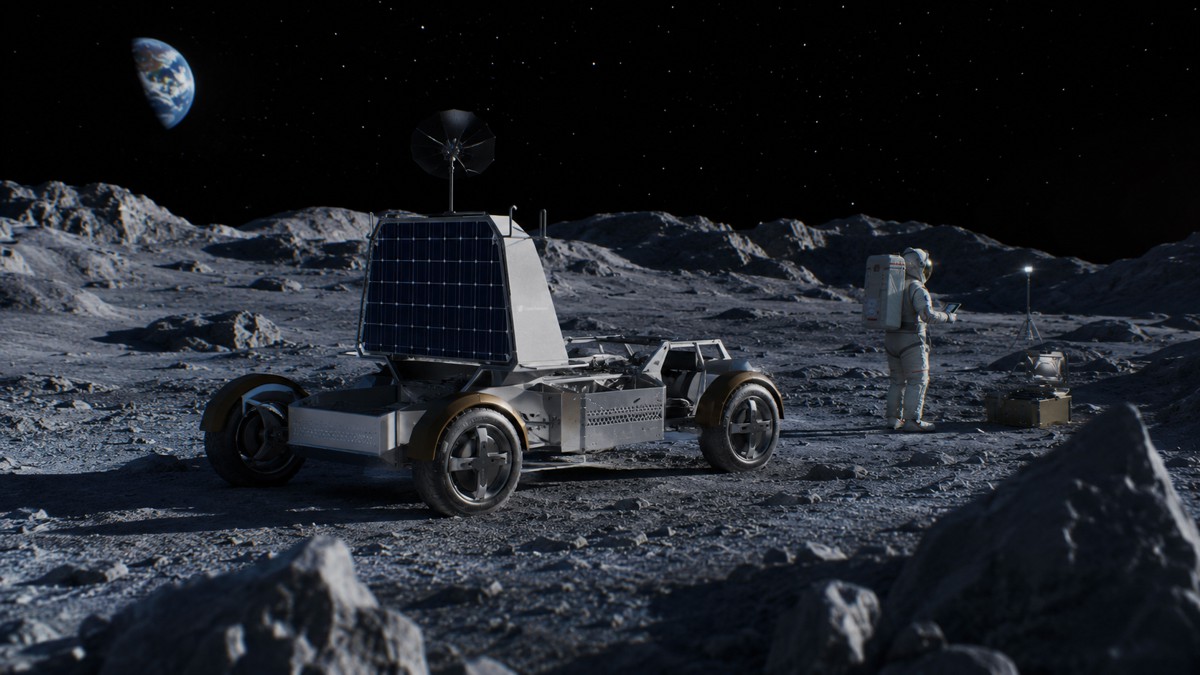
NASA’s broader lunar architecture includes the Gateway space station in lunar orbit, reusable lunar landers and surface infrastructure capable of supporting extended missions. Expandable habitats could play a key role in that architecture by providing large, lightweight living spaces for astronauts working on the Moon.
The concept of a permanent lunar base is no longer confined to government agencies. Commercial companies are increasingly involved in designing and supplying the infrastructure needed to support these missions. In this sense, Voyager’s investment in Max Space reflects the wider transition toward a commercialised space economy where private companies provide critical components of exploration systems.
Engineering Challenges of Building Homes in Space
Despite the promise of expandable habitats, significant engineering challenges remain. Structures operating on the lunar surface must withstand extreme temperature fluctuations, micrometeoroid impacts and high levels of cosmic radiation.
Lunar temperatures can swing from around minus 173 degrees Celsius during the night to more than 120 degrees Celsius in direct sunlight. Materials used in expandable habitats must therefore maintain structural integrity across an extraordinary thermal range.
Radiation exposure is another critical concern. Unlike Earth, the Moon lacks a protective magnetic field and thick atmosphere, leaving astronauts exposed to solar radiation and galactic cosmic rays. Engineers must ensure that habitat materials and structural designs provide adequate shielding.
Research suggests that multi-layered fabric structures may actually perform surprisingly well in this environment. The layered construction used in many expandable habitats can absorb and dissipate energy from micrometeoroid impacts while also providing a degree of radiation protection.
In practice, many lunar habitat designs combine expandable structures with additional shielding, such as covering modules with lunar regolith or integrating water storage layers that double as radiation barriers.
Building the Foundations of the Cislunar Economy
Beyond the immediate goals of lunar exploration, expandable habitats could play a crucial role in the broader cislunar economy that is beginning to take shape.
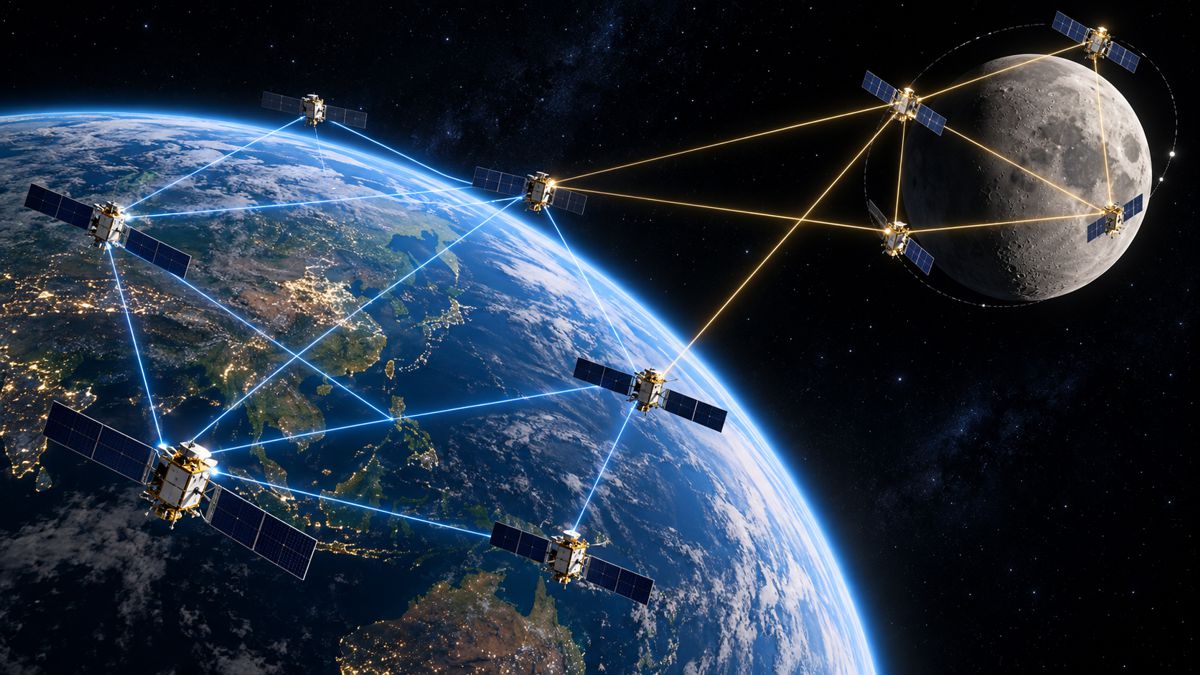
Cislunar space is increasingly viewed as a strategic and economic frontier. Governments see it as a region of growing geopolitical importance, while commercial companies are exploring opportunities ranging from satellite servicing and resource extraction to space tourism.
Habitat infrastructure will be essential to supporting these activities. Just as ports, airports and industrial zones underpin economic activity on Earth, space-based infrastructure will enable the development of new industries beyond our planet.
Expandable habitats offer an attractive pathway toward this future. Their scalability means that modules designed for lunar missions could also be adapted for orbital stations or even future Mars expeditions.
In effect, the technology could form the backbone of a new generation of space architecture where living, working and manufacturing in space becomes increasingly routine.
From Demonstration Missions to Operational Presence
For decades, human spaceflight has relied heavily on demonstration missions designed to test new technologies and explore unfamiliar environments. The next phase of space exploration, however, is likely to focus on operational capability.
This transition requires systems that are reliable, repeatable and economically sustainable. Infrastructure must support regular missions rather than one-off experiments.
Expandable habitats could play a central role in enabling this shift. By dramatically increasing usable living space while reducing launch mass, they help bridge the gap between experimental exploration and permanent presence.
Voyager’s investment in Max Space reflects growing confidence that the space industry is approaching this turning point. Instead of simply visiting the Moon, governments and companies are now planning how to stay there.
If those plans succeed, the lunar surface could soon host research facilities, logistics hubs and perhaps even the first off-world industrial infrastructure. Expandable habitats, once seen as futuristic concepts, may well become the homes and workplaces that make that future possible.