Sunlight Turns Plastic Waste Into Clean Fuel Opportunity
Plastic waste and clean energy are often treated as separate global headaches. One fills landfills, clogs rivers and drifts through oceans. The other demands vast investment, new infrastructure and urgent technological progress. Researchers at The University of Adelaide now argue that both challenges may be tackled through a single scientific route: using sunlight to convert discarded plastics into valuable fuels and industrial feedstocks.
In newly published research in Chem Catalysis, scientists examine how solar-powered conversion systems could transform waste plastics into hydrogen, syngas and other commercially useful chemicals. If scaled successfully, the process could help reduce plastic pollution while supplying cleaner fuels for transport, heavy industry and manufacturing.
That matters well beyond the laboratory. Global plastic production has climbed sharply over recent decades, with estimates from the Organisation for Economic Co-operation and Development indicating that plastic waste volumes could nearly triple by 2060 without decisive intervention. At the same time, governments and industry are racing to decarbonise sectors such as steel, cement, chemicals and freight, where electrification alone may not be enough.
The Adelaide-led paper positions waste plastic not simply as rubbish, but as a hydrocarbon-rich resource. Plastics contain substantial stores of carbon and hydrogen, both of which can be recovered if the chemistry is efficient enough. Instead of burying or burning waste, the material could become part of a circular industrial system that extracts value from what was once thrown away.
Briefing
- Scientists at The University of Adelaide are studying solar-driven conversion of waste plastics into fuels and chemicals.
- The process could generate hydrogen, syngas and other industrial feedstocks while reducing plastic pollution.
- Researchers say plastics are easier to oxidise than water, potentially lowering energy demand versus some hydrogen routes.
- Major hurdles include mixed plastic waste streams, catalyst durability and product purification costs.
- If commercialised, the technology could support circular economy and low-carbon infrastructure goals.
How Solar Photoreforming Works
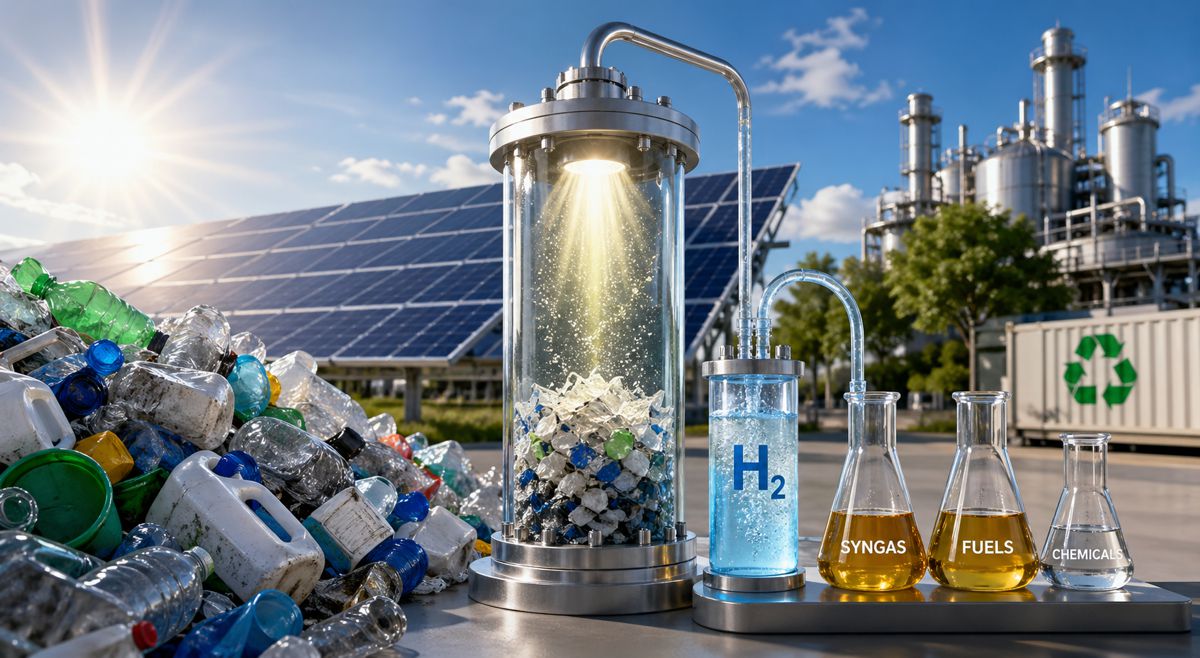
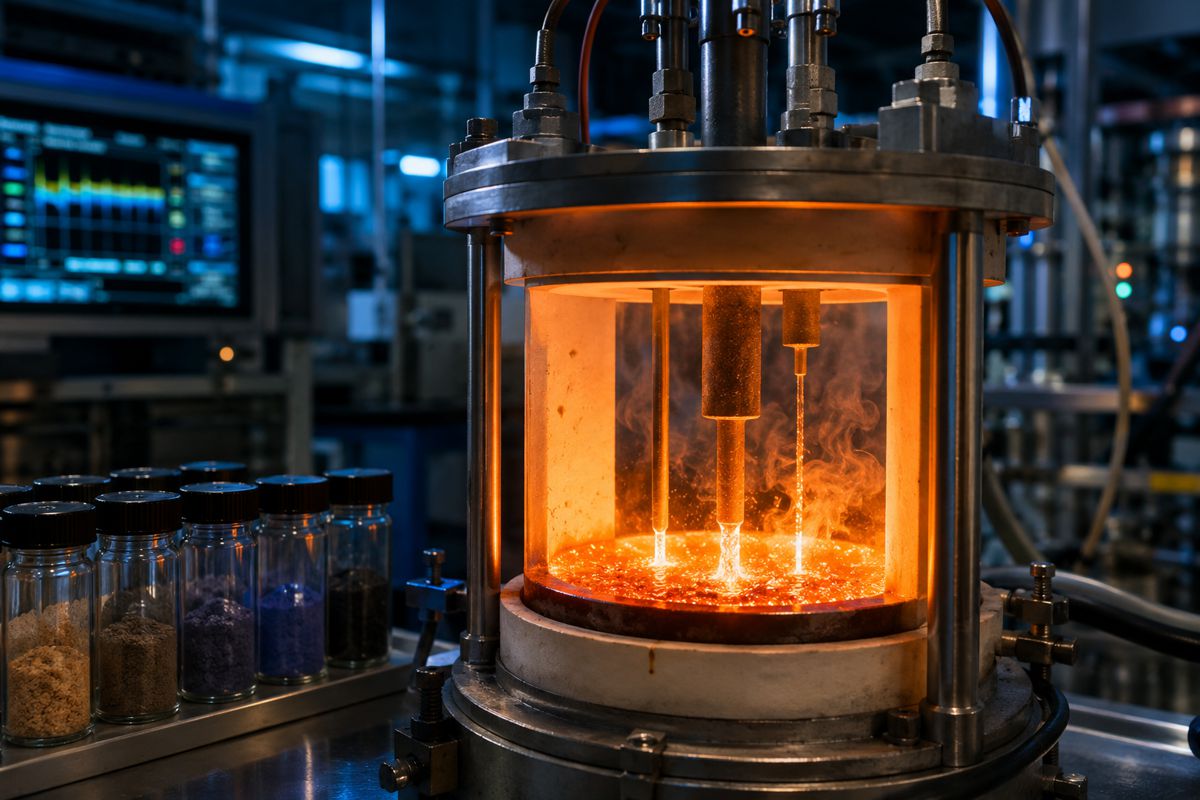
The technology at the centre of the study is known as solar-driven photoreforming. In simple terms, it uses photocatalysts, materials activated by light, to trigger chemical reactions that break down plastic polymers into smaller molecules. Those reactions can release hydrogen gas and create other compounds useful to industry.
Unlike conventional thermal recycling, which often requires high temperatures and significant energy input, photoreforming can operate under milder conditions. That lower-temperature pathway is one reason researchers see promise in the approach. It could reduce operating costs while using abundant solar energy rather than fossil-fuel heat.
Hydrogen is especially significant. It produces no carbon emissions at the point of use and is increasingly viewed as a strategic fuel for hard-to-abate sectors. Construction equipment, long-haul transport, shipping and industrial heat processes are among the areas where hydrogen may play a role if costs can be reduced and supply expanded.
Syngas, another possible output, is a mixture mainly containing hydrogen and carbon monoxide. It is already used globally as a building block for chemicals, synthetic fuels and refining operations. Turning plastic waste into syngas could therefore create an immediate industrial market if purity and economics are competitive.
For Infrastructure and Industry
Waste-to-fuel technologies sit at the crossroads of two expensive challenges: waste management and energy transition. Cities worldwide face mounting costs for waste collection, sorting and disposal. Meanwhile, industrial decarbonisation requires fresh energy sources, new logistics systems and resilient supply chains.
If solar plastic conversion matures, regional processing plants could be developed near urban centres, ports or industrial clusters. Waste streams from municipalities and manufacturers might be redirected into fuel production rather than landfill or export. That would reduce transport burdens and keep material value within domestic economies.
There is also a strategic resilience angle. Many nations rely heavily on imported fuels or petrochemical feedstocks. Recovering hydrogen and carbon-based molecules from local waste could strengthen supply security, particularly where sunlight is abundant and waste volumes are high.
For developing economies, the implications may be even broader. Rapid urbanisation often strains both waste systems and energy access. A modular technology that addresses both could prove attractive, especially where grid constraints limit other clean energy options.
What Researchers Have Already Achieved
According to the study, recent laboratory work has already produced encouraging results. Researchers have reported strong hydrogen generation rates alongside outputs such as acetic acid and diesel-range hydrocarbons. Some systems have reportedly operated continuously for more than 100 hours, suggesting growing technical stability.
Those figures do not yet mean commercial readiness, but they do indicate momentum. In many emerging energy technologies, sustained operation is a critical milestone. Systems that function only briefly in controlled conditions rarely survive scale-up economics.
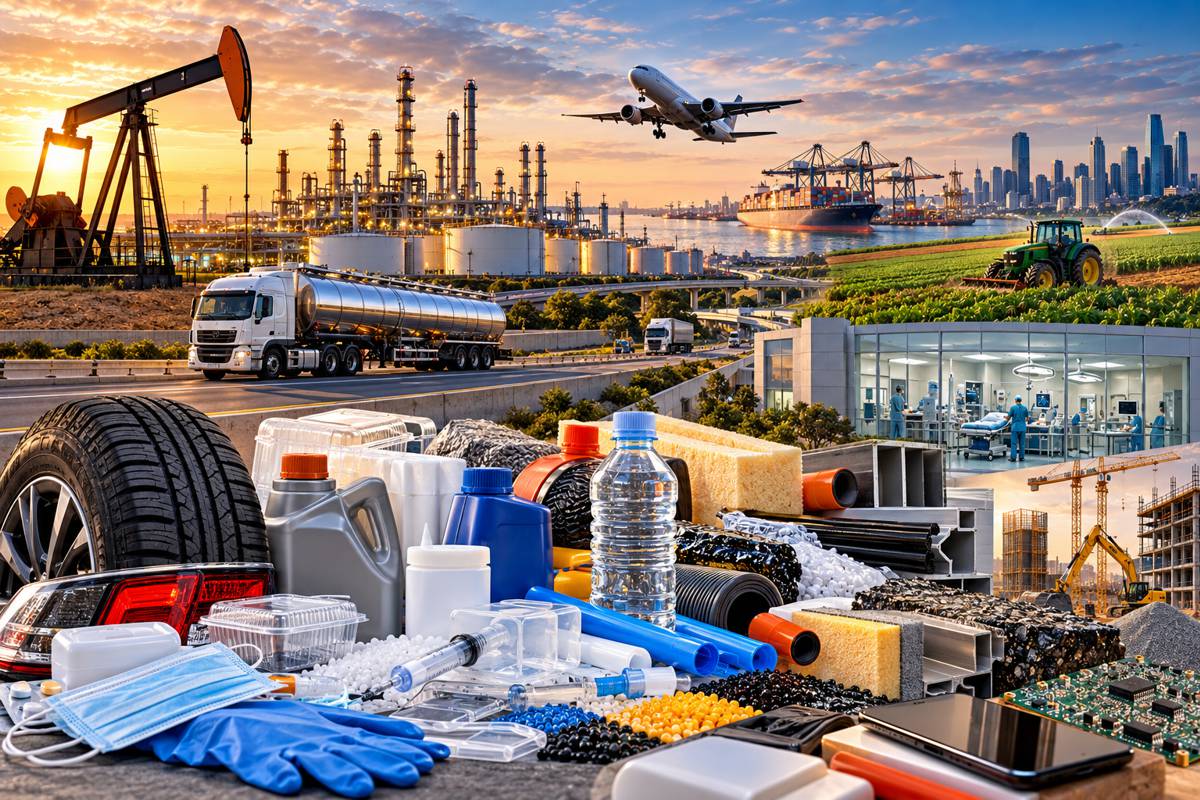
The fact that multiple useful products may be produced also improves commercial potential. A future plant that generates hydrogen alone might struggle financially. A plant able to recover hydrogen, liquid fuels and chemical feedstocks from waste plastic could diversify revenue streams and improve bankability.
The Barriers Standing in the Way
Still, no one should mistake scientific progress for an immediate market rollout. Mixed plastic waste remains a stubborn challenge. Packaging waste contains different polymer types, colours, fillers, dyes and stabilisers. Each behaves differently during conversion and can reduce reaction efficiency.
Sorting and pre-treatment therefore become essential. That means investment in waste infrastructure, optical sorting, washing systems and quality control. Without reliable feedstock preparation, downstream chemistry becomes inconsistent and expensive.
Catalyst durability is another major obstacle. Photocatalysts must remain active under harsh chemical conditions while exposed to repeated operating cycles. If performance degrades quickly, replacement costs rise and commercial viability weakens.
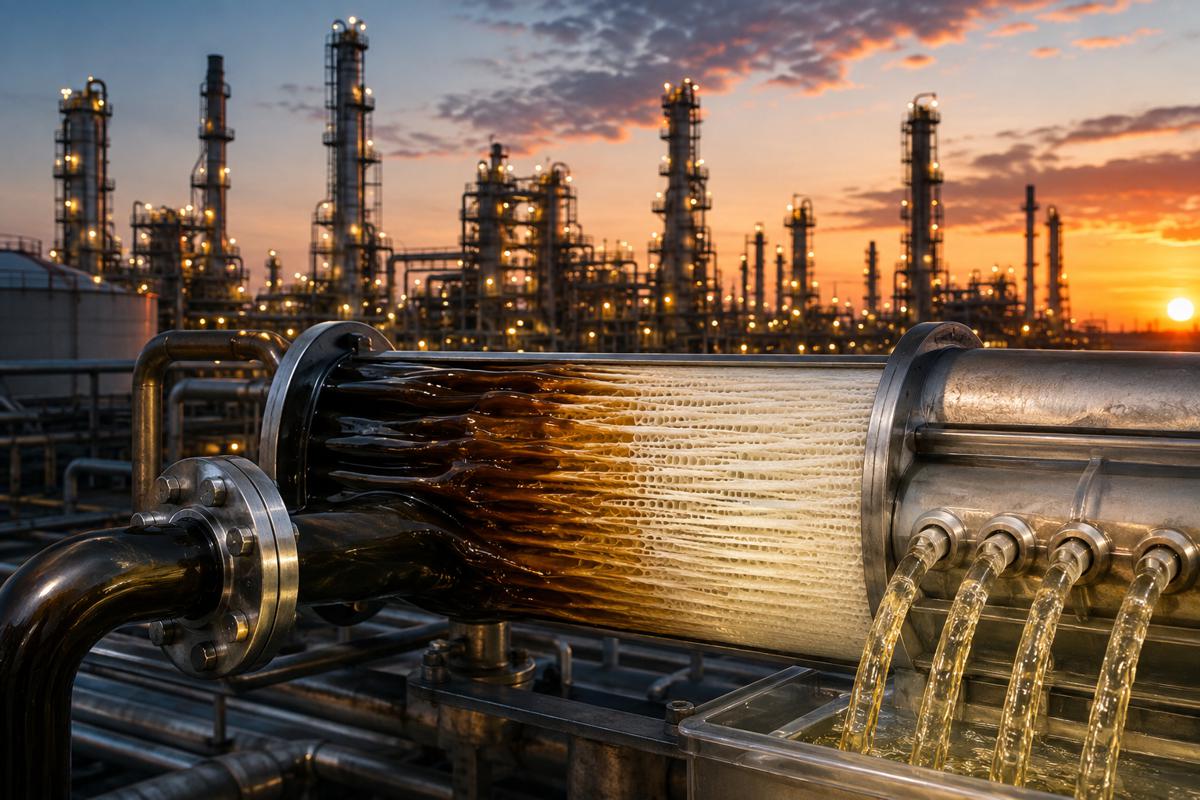
Then comes purification. Conversion processes can produce mixtures of gases and liquids that require separation. Those steps may consume significant energy, undermining sustainability gains unless process engineering improves sharply.
The Race to Commercial Scale
The Adelaide team calls for an integrated development strategy combining catalyst science, reactor design and system optimisation. That is sensible. Many technologies fail not because the chemistry is flawed, but because the total system never works economically.
Continuous-flow reactors are one promising direction. Instead of batch-style processing, waste plastic could move steadily through conversion units, improving throughput and consistency. Hybrid systems combining solar with thermal or electrical inputs may also help maintain performance when sunlight varies.
Digital monitoring, sensors and AI-driven controls could play a role too. Industrial operators increasingly rely on predictive analytics to optimise yield, reduce downtime and manage energy consumption. Waste-to-fuel plants would likely need the same sophistication.
A Practical Role in the Circular Economy
Recycling debates often focus on mechanical recycling versus incineration. Yet many plastics are contaminated, degraded or difficult to recycle conventionally. Chemical recovery routes such as photoreforming may provide an outlet for those lower-grade streams.
That does not replace the need to reduce unnecessary plastic use or improve reusable packaging systems. Rather, it adds another tool to the toolbox. High-quality plastics may still be mechanically recycled, while harder-to-handle waste could be diverted into fuel and chemical recovery.
For investors, the opportunity may lie where waste policy, renewable energy targets and industrial demand overlap. Regions with strong solar resources, growing hydrogen strategies and expensive landfill systems could become early adopters.
Turning Waste Into Industrial Value
The research from The University of Adelaide reflects a wider shift in thinking. Waste is increasingly viewed not as an end point, but as a misplaced resource. Plastic pollution remains a serious environmental threat, yet its chemical value is undeniable.
Solar-powered conversion is not a silver bullet. It still requires engineering breakthroughs, supportive policy, efficient waste collection and hard-nosed economics. Even so, the concept has genuine industrial logic. Use sunlight, recover value, reduce pollution and create cleaner fuels.
If researchers can bridge the gap between promising experiments and reliable industrial plants, tomorrow’s hydrogen hub may owe as much to yesterday’s packaging waste as to today’s natural resources.