PolyJoule Reinvents Battery Safety for the Energy Storage Era
The global energy transition is racing ahead, but the infrastructure supporting it continues to face an uncomfortable truth. As battery energy storage systems become larger, more widespread and increasingly embedded into cities, industrial sites and transport infrastructure, concerns over fire safety, thermal runaway and supply chain resilience are growing just as quickly as deployment figures.
Boston-based battery developer PolyJoule has just unveiled its third-generation conductive polymer battery chemistry, designed to self-extinguish under extreme thermal conditions while avoiding many of the material and engineering constraints associated with conventional lithium-ion systems.
The announcement carries implications far beyond laboratory innovation. Energy storage is rapidly becoming a foundational layer of modern infrastructure, underpinning renewable energy integration, grid balancing, EV charging networks, industrial resilience and backup power systems. Yet large-scale battery fires in the United States, Europe, South Korea and China have forced governments and insurers to re-examine the long-term risks tied to current chemistries.
PolyJoule’s latest development enters the market at a moment when safety standards, permitting challenges and public scrutiny are beginning to influence battery procurement decisions as heavily as energy density and cost. By introducing a chemistry designed to avoid thermal runaway while simplifying thermal management requirements, the company is targeting one of the sector’s most persistent engineering headaches.
Briefing
- PolyJoule has launched a third-generation conductive polymer battery chemistry designed to self-extinguish under extreme thermal conditions
- The MIT spinout claims its batteries avoid thermal runaway and eliminate the need for active thermal management systems
- The new chemistry reportedly delivers a tenfold improvement in energy density over the company’s first-generation systems while exceeding 10,000 cycles
- The technology uses conductive polymers and a liquid salt electrolyte rather than metal-based charge storage materials used in lithium-ion batteries
- PolyJoule is positioning the technology for commercial, industrial and residential energy storage applications using a domestic U.S. supply chain
Battery Fires Continue to Challenge the Energy Transition
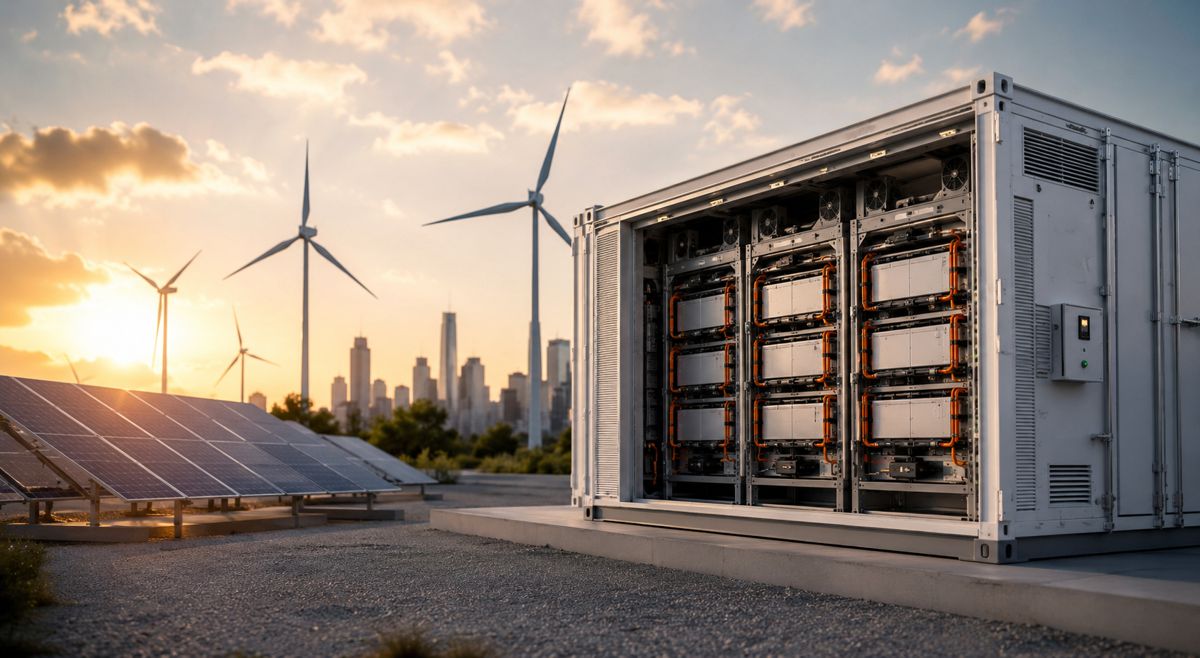
Battery energy storage systems are becoming essential to modern infrastructure planning. Grid operators increasingly rely on storage to smooth renewable power fluctuations, stabilise transmission networks and provide resilience during peak demand or outages. Governments across Europe, North America and Asia are investing heavily in large-scale storage deployments to support decarbonisation goals.
Yet safety incidents continue to shape public perception and regulatory oversight. Thermal runaway remains one of the defining technical risks associated with lithium-ion battery systems. Once triggered, the chain reaction can propagate rapidly between cells, producing fires that are difficult to extinguish and capable of releasing toxic gases.
Several high-profile incidents over the past decade have intensified scrutiny. Fire events at battery facilities in California, Arizona, South Korea and the United Kingdom prompted investigations into system design, thermal management and emergency response procedures. Regulators have since tightened testing requirements, while insurers and local authorities increasingly demand enhanced fire mitigation strategies before approving installations.
For infrastructure developers, these risks translate into additional costs and complexity. Thermal management systems, fire suppression equipment, exclusion zones and permitting delays can significantly increase deployment timelines and project budgets. In urban environments, public concerns surrounding battery fires have also become a growing political issue.
PolyJoule’s latest chemistry appears designed specifically to address these concerns through materials selection rather than relying solely on external fire protection systems.
Moving Beyond Metal-Based Battery Architectures
Most commercial battery chemistries depend on metallic active materials to store and release charge. Lithium-ion, lead-acid, nickel-metal hydride and many emerging sodium-ion systems all fundamentally rely on metals embedded within crystalline lattice structures.
PolyJoule’s approach differs substantially. Rather than storing charge within metallic compounds, conductive polymer batteries store electrical charge along an organic polymer backbone. According to the company, this architecture eliminates several of the underlying failure mechanisms associated with conventional battery chemistries, including dendrite formation and thermal instability.
The company’s third-generation chemistry introduces a proprietary conductive polymer cathode alongside a liquid salt electrolyte with extremely low vapour pressure. The absence of reactive metals and volatile electrolyte solvents forms the core of the system’s safety proposition.
“PolyJoule has always been at the forefront of energy storage safety,” says Eli Paster, PolyJoule’s co-founder and CEO. “We were the first company in the world to prove through UL 9540A testing that our conductive polymer cells do not go into thermal runaway. We approached this next-gen chemistry with a very simple thesis: Batteries shouldn’t start fires. Batteries shouldn’t spread fires. Batteries shouldn’t catch on fire.”
UL 9540A testing has become one of the most widely recognised benchmarks for evaluating thermal runaway behaviour in energy storage systems. Passing the test without propagating fire between cells represents a significant engineering milestone in the battery industry, particularly for stationary storage applications installed near occupied buildings.
Extreme Heat Testing Demonstrates Self-Extinguishing Behaviour
To demonstrate the safety characteristics of the new chemistry, PolyJoule released footage showing a full-size battery cell exposed directly to a propane blowtorch delivering temperatures approaching 3600°F, or roughly 1982°C.
The test targeted the internal battery components, including the cathode, anode, separator and electrolyte. While heat and gases were visibly generated during exposure, the company states the flames extinguished immediately once the external heat source was removed.
Although independent long-term field validation will ultimately determine commercial confidence, the demonstration addresses one of the most sensitive concerns surrounding modern energy storage deployment. Infrastructure operators are increasingly seeking technologies capable of limiting fire propagation without depending entirely on external suppression systems.
This is especially relevant as energy storage moves closer to residential developments, commercial buildings, transport hubs and critical infrastructure installations.
“Materials that have a propensity to catch fire often contain reactive metals that spontaneously react with air and volatile liquids,” says Timothy Swager, the John D. MacArthur Professor of Chemistry at the Massachusetts Institute of Technology and a co-founder of PolyJoule who serves as a technical advisor to the company.
“The advantage of PolyJoule’s batteries is that they have neither,” Swager said. “PolyJoule has created a product that can safely be put inside homes and businesses, using non-flammable conducting polymers and a liquid salt electrolyte that has a vapor pressure a billion times lower than that of the electrolytes used in Li-ion batteries.”
The reference to vapour pressure is particularly important. Conventional lithium-ion batteries typically use organic solvent electrolytes that can vaporise and ignite when exposed to elevated temperatures or physical damage. Lower vapour pressure substantially reduces the likelihood of flammable gas accumulation.
Simplifying Battery System Design
Beyond fire safety, PolyJoule’s design philosophy appears focused on reducing overall system complexity.
Conventional lithium-ion battery installations often require sophisticated thermal management systems involving pumps, cooling circuits, HVAC units, sensors and monitoring software to maintain safe operating temperatures. These subsystems add cost, maintenance requirements and additional failure points.
PolyJoule claims its conductive polymer cells can operate without active thermal management, even under high-temperature conditions. If validated at commercial scale, this could materially simplify stationary storage system architecture.
For construction and infrastructure projects, simpler systems often translate into faster installation, lower operational overheads and reduced maintenance demands over the project lifecycle. In remote locations, mining operations, temporary infrastructure sites and emerging markets with harsh environmental conditions, thermal resilience becomes particularly valuable.
The technology may also offer advantages in retrofitting older buildings or constrained urban environments where ventilation, cooling capacity and fire separation distances are limited.
Domestic Supply Chains Become Strategic Infrastructure Priorities
Battery supply chains have become a geopolitical issue as much as a technological one, with lithium-ion manufacturing heavily concentrated across Asia, particularly in China, which dominates critical mineral processing, cathode production and battery component manufacturing. Western governments have increasingly sought to reduce dependency on imported materials and strategic supply chain bottlenecks.
PolyJoule emphasises that its systems are built around domestic U.S. supply chains and avoid rare-earth materials. That positioning aligns closely with broader industrial policy trends emerging across North America and Europe, where governments are supporting regionalised energy manufacturing ecosystems.
Infrastructure developers are also becoming more sensitive to procurement risks. Delays linked to mineral shortages, geopolitical instability or export restrictions can significantly disrupt project schedules and financing arrangements.
A battery chemistry less reliant on globally constrained metals may therefore offer both commercial and strategic advantages as energy storage demand accelerates.
Energy Density Improvements Expand Commercial Potential
Earlier generations of alternative battery chemistries often struggled to compete with lithium-ion systems on energy density. Safety advantages alone rarely secured commercial adoption if installations required substantially larger footprints or heavier systems.
PolyJoule claims its third-generation chemistry achieves a tenfold increase in energy density compared with its first-generation platform while still exceeding 10,000 charge cycles.
Cycle life is particularly important in grid-scale and commercial storage markets where systems are expected to operate reliably over extended periods. Longer cycle life improves project economics by reducing replacement frequency and lowering total ownership costs.
Although the company has not publicly detailed exact energy density figures in the announcement, the improvement signals a significant step toward broader commercial competitiveness.
The company plans to begin accepting applications from qualified solar, battery and generator installers in selected markets later this year, targeting residential, commercial and industrial sectors.
Redefining Safety Expectations in Energy Storage
Battery developers have spent years chasing higher energy density, faster charging speeds and lower costs. Safety, while critically important, has often been treated as a mitigation challenge rather than a core chemistry design principle.
PolyJoule’s announcement reflects a wider shift now taking shape across the energy storage industry. Regulators, insurers, municipalities and infrastructure operators increasingly want technologies designed to minimise catastrophic failure risk from the outset rather than relying on increasingly elaborate containment systems.
For the construction and infrastructure sectors, that shift could prove significant. Energy storage is no longer a niche technology confined to specialist facilities. Batteries are becoming embedded within transport infrastructure, commercial buildings, renewable energy developments, logistics hubs and urban power networks.
As deployment scales further, technologies capable of simplifying installation while improving public safety may gain growing attention from developers and policymakers alike.
PolyJoule’s conductive polymer approach remains one of several emerging alternatives competing to redefine the next phase of battery infrastructure. Whether it ultimately reshapes the market will depend on manufacturing scalability, commercial economics and real-world operational performance.
Still, in an industry where safety concerns increasingly influence investment decisions, the ability to build batteries that resist ignition rather than merely survive it may mark a notable turning point.