monday.com Rebuilds SaaS Around AI Agents and Human Collaboration
Enterprise software is entering a new phase, and the race is no longer about who can bolt the most AI features onto an existing product. The focus has shifted toward execution. Businesses want systems that can automate real operational work without creating another layer of complexity, governance headaches, or disconnected tools. Into that increasingly crowded market, monday.com has unveiled what it describes as the most significant transformation in the company’s history, repositioning itself as an AI Work Platform built around collaboration between people and AI agents.
The announcement signals more than a branding refresh. It reflects a broader shift across the global SaaS market, where software providers are under mounting pressure to prove that artificial intelligence can deliver measurable productivity gains rather than experimental novelty. For infrastructure firms, contractors, logistics operators, manufacturers and engineering companies already wrestling with fragmented workflows, labour shortages and rising operational costs, the implications could be considerable.
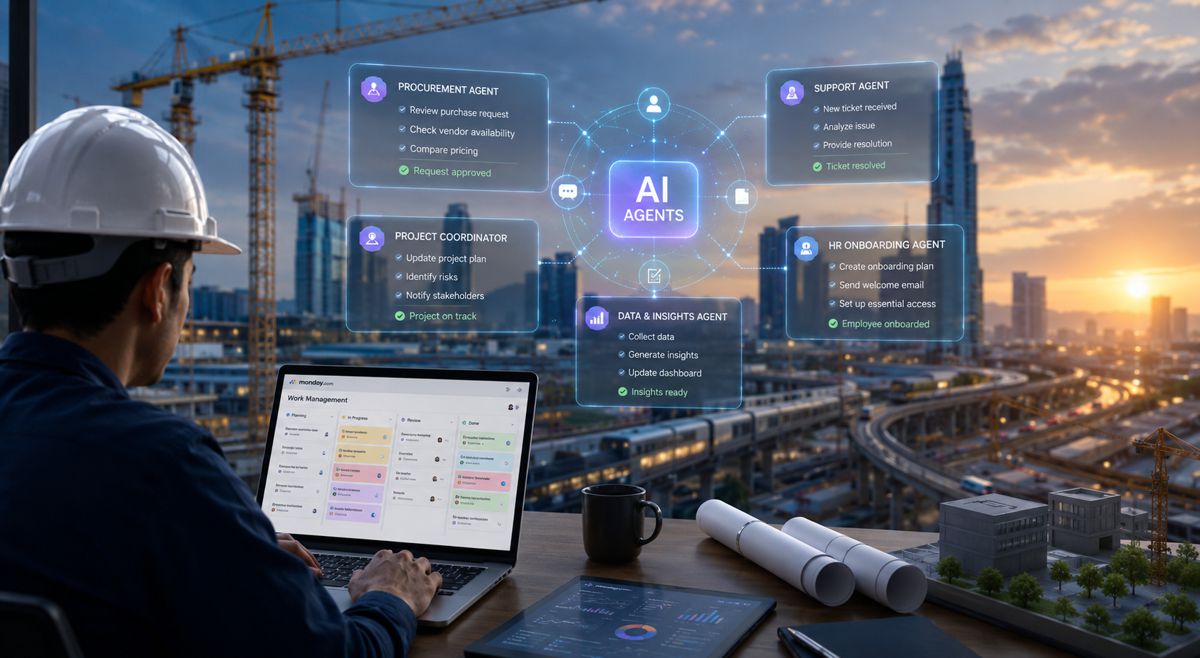
At the centre of monday.com’s new strategy are AI agents embedded directly inside operational workflows. Unlike standalone chatbots or isolated AI assistants, these agents are designed to act within the same governance structures, permissions systems and business processes companies already use daily. The idea is simple enough on paper: allow AI to participate in the execution of work, not merely analyse it from the sidelines.
That matters because the infrastructure and construction sectors rarely operate in neat, linear environments. A delayed shipment affects procurement, which affects project schedules, which affects subcontractors, cash flow and client reporting. Traditional SaaS systems have often struggled to bridge those operational silos without requiring armies of consultants and developers. monday.com is effectively betting that embedded AI agents can become the connective tissue across those workflows.
Briefing
- monday.com has repositioned itself as an AI Work Platform with embedded AI agents operating across enterprise workflows
- The platform allows non-technical users to configure and deploy AI agents directly inside existing business processes
- AI agents can support functions including procurement, HR onboarding, customer support, sales and project coordination
- The platform includes integrations with AI ecosystems such as ChatGPT, Claude and Microsoft 365 Copilot
- The launch reflects wider enterprise demand for operational AI tools capable of delivering measurable productivity gains
AI Moves Beyond the Pilot Phase
One of the biggest obstacles facing enterprise AI adoption has been the gulf between experimentation and operational deployment. Organisations worldwide have spent heavily on generative AI initiatives over the past two years, yet many projects remain trapped in proof-of-concept territory. According to research from consulting firms including McKinsey and Deloitte, many enterprises continue to struggle with governance, integration, data quality and workforce adoption.
monday.com’s leadership addressed that issue directly during the launch announcement. Roy Mann, co-founder and co-CEO of monday.com, framed the platform redesign as a response to rapidly changing business conditions.
“Our customers are running real businesses in a world that’s changing fast, and they need a platform built for that reality,” said Mann. “So we built it. monday.com is now a place where people and agents work side by side. The real measure of a platform isn’t what it does – it’s what it lets people do. When you put the right technology in someone’s hands, their sense of what they can accomplish, and even who they are at work, begins to change. That’s already the response we’re hearing from customers.”
The comments reflect a growing consensus across the enterprise technology sector. AI adoption is increasingly being judged on operational impact rather than technical sophistication alone. Businesses are asking tougher questions about return on investment, workforce productivity and scalability.
For sectors such as construction and infrastructure, where margins can tighten quickly and project delays carry enormous financial consequences, software capable of streamlining operational coordination carries obvious appeal. The ability to automate repetitive administrative functions while maintaining human oversight could free teams to focus on higher-value decision-making.
The Rise of Embedded AI Agents
The defining feature of monday.com’s new platform is the introduction of AI agents operating natively inside its work management ecosystem. These agents are intended to function as active participants within business operations rather than passive recommendation engines.
According to the company, users without technical backgrounds can configure agents to handle tasks including drafting campaigns, processing procurement requests, qualifying sales leads, onboarding employees and resolving support tickets. Crucially, those agents operate using live operational data already flowing through the platform.
That operational integration could prove particularly important in construction and industrial sectors where disconnected software environments remain commonplace. Large contractors often rely on multiple overlapping systems spanning procurement, scheduling, workforce management, fleet operations, compliance reporting and asset maintenance. The result is frequently duplicated work, fragmented visibility and delayed decision-making.
Embedded AI agents offer a potential mechanism for reducing those inefficiencies. An AI system capable of recognising procurement delays, flagging supply chain risks and automatically escalating issues to project stakeholders could substantially reduce administrative overhead on major projects.
The wider enterprise software market is moving in the same direction. Microsoft, Salesforce, ServiceNow and Atlassian have all accelerated investments in AI copilots and workflow automation. Yet many platforms still depend heavily on technical implementation teams or specialist configuration skills. monday.com appears to be targeting accessibility as a key differentiator.
The Construction and Infrastructure Angle
While monday.com serves organisations across multiple industries, the infrastructure and construction sectors represent fertile ground for workflow automation. Major projects increasingly involve geographically dispersed teams, multinational suppliers and immense volumes of operational data moving in real time.
Digital transformation has already reshaped many parts of the industry. Building Information Modelling, digital twins, IoT-connected equipment and cloud-based project management systems have become standard across major infrastructure developments. However, operational coordination often remains labour intensive.
AI agents could potentially help bridge some of those gaps by acting across departments rather than inside isolated software silos. Procurement teams, commercial managers, engineering consultants and field operations could theoretically work from the same operational layer while AI systems manage routine coordination tasks behind the scenes.
That possibility becomes increasingly relevant as labour shortages continue affecting engineering and construction markets worldwide. The Associated General Contractors of America and several European industry bodies have repeatedly warned about skilled workforce deficits affecting project delivery capacity. Automation capable of reducing administrative burdens may become less of a convenience and more of a necessity.
The logistics and transport sectors face similar pressures. Fleet operators, freight companies and infrastructure asset managers are all navigating rising operational complexity alongside escalating regulatory and sustainability requirements. AI-enabled workflow orchestration offers one route toward greater operational visibility without dramatically expanding headcount.
Integrating the Wider AI Ecosystem
Another notable aspect of monday.com’s announcement is its decision to embrace interoperability with major external AI platforms. Rather than attempting to lock customers into a single proprietary AI stack, the company is introducing one-click integrations with systems including OpenAI ChatGPT, Anthropic Claude and Microsoft
365 Copilot.
That flexibility reflects broader market realities. Many enterprises are already experimenting with multiple large language models simultaneously, balancing performance, cost, security and governance considerations across different use cases. Locking organisations into a single AI ecosystem increasingly looks commercially risky.
monday.com also announced access to multiple large language models through its AI Platform Gateway alongside AI-powered development capabilities within monday vibe, the company’s development environment.
For enterprise customers, that multi-model approach could provide valuable flexibility as AI technologies continue evolving rapidly. The AI landscape remains intensely competitive, with new models and capabilities emerging almost monthly. Organisations are understandably reluctant to commit entirely to a single vendor ecosystem while the market remains in flux.
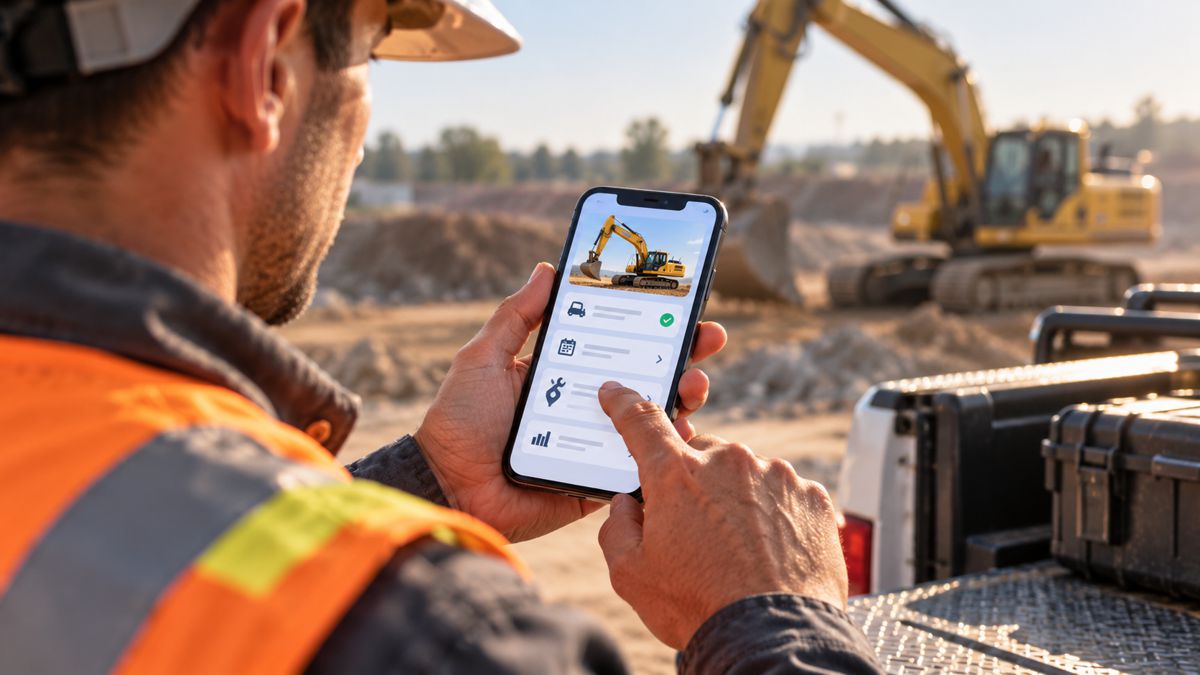
The platform’s redesigned mobile experience also reflects changing workplace expectations. Construction supervisors, field engineers, logistics coordinators and infrastructure managers increasingly operate in hybrid and mobile-first environments. Bringing AI agents and the Sidekick assistant together into a unified mobile interface suggests monday.com is prioritising operational accessibility beyond traditional office environments.
SaaS Enters a More Competitive Era
The broader significance of monday.com’s transformation lies in what it says about the future direction of enterprise software itself. SaaS platforms spent the past decade competing primarily on usability, integrations and workflow flexibility. AI is now becoming the defining competitive battleground.
Yet businesses are also growing more sceptical of superficial AI announcements. Investors and enterprise buyers alike are looking for evidence that AI can genuinely improve operational performance, reduce costs and accelerate delivery timelines.
Eran Zinman, co-founder and co-CEO of monday.com, acknowledged the scale of the company’s strategic pivot. “This is the biggest change in the history of our company, and we’re going all-in on the new vision,” said Zinman. “We have 250,000 customers running their business on monday.com, and we owe them more than another AI feature. We owe them a platform built for what comes next – and that’s what we’re launching today.”
That statement highlights the broader commercial stakes. SaaS vendors are no longer simply competing to provide digital tools. Increasingly, they are competing to become operational intelligence layers sitting at the centre of enterprise decision-making.
For infrastructure businesses already investing heavily in digital transformation, the next challenge will be determining which AI platforms genuinely integrate into operational reality and which remain little more than sophisticated demonstrations. The winners in this market are unlikely to be those with the flashiest AI branding. They will be the companies capable of embedding automation into the messy, unpredictable reality of how businesses actually function.
Building Operational Intelligence for the Next Decade
The shift toward AI-enabled workflow orchestration is unlikely to slow anytime soon. Analysts at Gartner forecast that agentic AI systems capable of autonomous task execution will become increasingly common across enterprise environments over the next five years. Meanwhile, IDC expects global spending on AI-centred enterprise software to continue climbing sharply throughout the decade.
For construction, infrastructure and industrial businesses, the implications reach well beyond office productivity. Operational intelligence platforms may eventually influence everything from project delivery and asset maintenance to procurement forecasting and workforce coordination.
Whether monday.com ultimately succeeds in redefining itself around that future remains to be seen. The enterprise AI market is becoming fiercely competitive, and businesses remain cautious about governance, security and real-world reliability. Still, the company’s decision to rebuild its platform around collaborative AI agents rather than isolated AI features places it firmly within the industry’s next major battleground.
The software industry spent years digitising workflows. Now it is trying to operationalise intelligence itself. That transition could reshape how infrastructure projects, industrial operations and global supply chains are coordinated over the next decade.