ASI Expands Industrial Autonomy with Scythe Robotics Acquisition
Autonomous machinery has steadily moved from experimental pilot programmes into everyday operations across construction, mining, agriculture and logistics. As labour shortages intensify and safety expectations tighten, companies across the infrastructure ecosystem are turning to robotics and artificial intelligence to keep projects running efficiently. The acquisition of Scythe Robotics by Autonomous Solutions, Inc. (ASI) signals a notable step forward in this industrial automation landscape.
The deal brings together ASI’s long-established autonomous vehicle systems with Scythe’s advanced AI-powered computer vision platform, creating a combined technology stack that could influence how off-road equipment evolves across several sectors. While Scythe has made its mark in the commercial landscaping market with electric autonomous mowers, its underlying autonomy technology carries implications well beyond turf maintenance.
For the construction and infrastructure industries, the real story lies in the merging of capabilities: proven autonomous fleet management systems combined with next-generation machine perception and artificial intelligence.
The Strategic Importance of Industrial Autonomy
The global construction sector is increasingly grappling with workforce shortages, productivity pressures and stricter safety requirements. According to research from McKinsey and the World Economic Forum, construction productivity has historically lagged behind other major industries, prompting renewed interest in automation technologies that can stabilise operations.
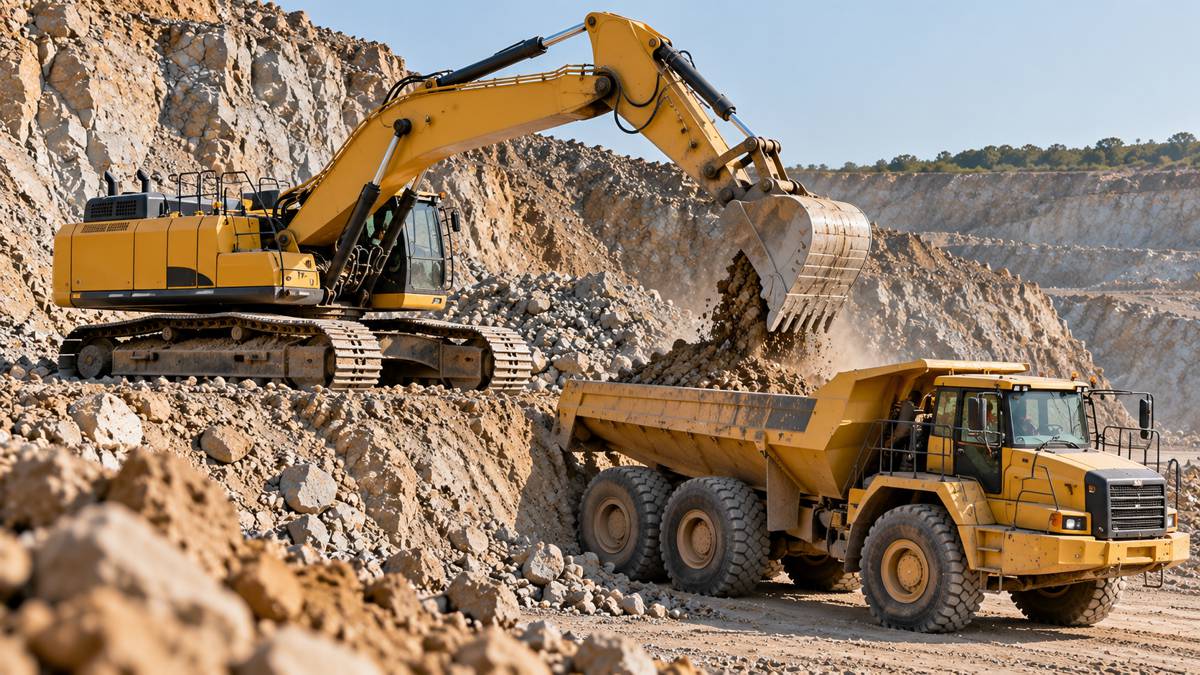
Autonomous vehicles have already begun reshaping mining and agriculture, where companies such as Caterpillar and John Deere have introduced self-driving equipment capable of operating continuously with minimal human supervision. The construction sector is now following suit, particularly for repetitive tasks performed in controlled environments.
ASI has spent more than two decades developing autonomous systems designed specifically for these demanding off-road applications. Its Mobius autonomous fleet management system allows operators to automate equipment ranging from haul trucks to utility vehicles while maintaining centralised control and safety monitoring.
The integration of Scythe’s AI vision platform strengthens that foundation by adding sophisticated environmental awareness capabilities that can enhance autonomy in complex real-world conditions.
Bringing AI Vision into the Industrial Equipment Ecosystem
One of the most significant assets in the acquisition is Scythe’s proprietary computer vision system known as Scythe Sight. The technology enables autonomous equipment to perceive its surroundings, identify obstacles and operate safely in dynamic environments.
Computer vision has become one of the most important enabling technologies in robotics. By combining cameras, machine learning models and real-time processing, autonomous systems can interpret complex visual data and respond appropriately without relying solely on pre-mapped environments.
For industries such as construction and agriculture, this capability is critical. Job sites rarely remain static. Equipment must navigate changing terrain, shifting materials and unpredictable human activity.
By incorporating advanced perception technology into its autonomy stack, ASI can extend the capabilities of its systems beyond controlled industrial settings into environments that demand higher levels of situational awareness.
The acquisition therefore strengthens ASI’s ability to deploy autonomous equipment across a wider range of applications while maintaining the reliability standards expected by industrial operators.
Scythe’s Electric Autonomous Mower as a Proof of Concept
Although the broader implications of the acquisition extend well beyond landscaping, Scythe’s flagship product offers an important demonstration of how autonomous equipment can operate at commercial scale.
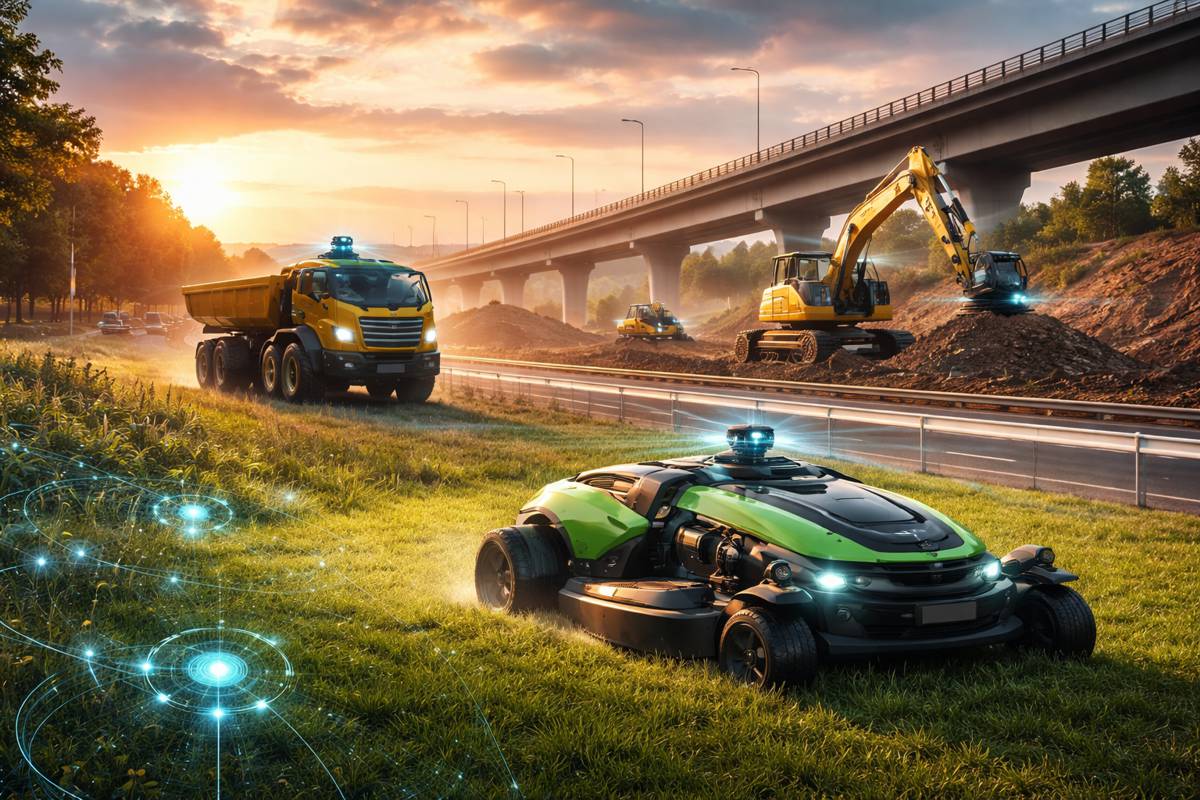
The Scythe M.52 autonomous mower is designed for professional landscape maintenance, offering an all-electric alternative to traditional diesel-powered mowing fleets. Its autonomous operation allows landscaping companies to maintain large areas of land with fewer operators while reducing emissions and noise.
By 2025, the system had already achieved substantial deployment, mowing nearly two billion square feet of terrain for customers across 30 U.S. states. That scale of operation demonstrates that autonomous machines can move beyond testing phases into everyday commercial use.
Scythe’s CEO and cofounder Jack Morrison highlighted the shared philosophy behind the partnership: “With complementary values and missions, both Scythe and ASI build autonomy that shows up every day, in the real world, and delivers labor leverage for customers who can’t afford downtime.”
His remarks point to a key challenge facing automation developers. Industrial customers are less interested in theoretical capability and far more concerned with reliability, uptime and measurable productivity improvements.
The Scythe platform has already proven capable of operating continuously in outdoor environments, a factor that likely made the company particularly attractive to ASI.
ASI’s Long History in Off Road Robotics
Founded in 2000 by engineers who commercialised technologies developed at Utah State University, Autonomous Solutions, Inc. has spent more than 25 years building autonomous vehicle systems for industrial environments.
Unlike many robotics start-ups focused on consumer applications or urban mobility, ASI concentrated on sectors where autonomy could immediately solve practical operational problems. Mining, agriculture, logistics yards and construction sites all present opportunities to automate repetitive and potentially hazardous tasks.
The company’s Mobius platform acts as the digital backbone of autonomous fleet operations. It integrates robotic hardware, sensors and control systems with centralised software that allows operators to monitor and coordinate entire fleets.
ASI CEO Mel Torrie emphasised the strategic value of integrating Scythe’s technology into this ecosystem: “ASI has over 25 years of deploying autonomy where reliability and safety aren’t just features but requirements. Scythe’s AI technology will play a critical role in helping us develop the next generation of autonomous equipment across diverse industrial sectors.”
In practical terms, the combination of ASI’s deployment experience and Scythe’s perception technology could accelerate the development of more capable autonomous machines across multiple industries.
Expanding Automation Across Infrastructure Sectors
While landscaping may appear far removed from heavy infrastructure, the technologies involved share many similarities with construction equipment automation.
Autonomous mowing systems must navigate terrain, detect obstacles, manage energy use and operate safely around people. These are the same challenges faced by autonomous construction vehicles operating on infrastructure projects.
As a result, the integration of Scythe’s AI perception platform could influence the next generation of autonomous equipment used in construction, agriculture and logistics.
Potential applications include:
- Autonomous site preparation equipment
- Self-driving haul trucks on infrastructure projects
- Automated agricultural machinery
- Robotics for large-scale land management
In each case, the ability to combine fleet management software with advanced machine perception could improve operational efficiency while reducing reliance on manual labour.
The Sustainability Angle of Electric Autonomy
Another dimension of the acquisition relates to sustainability. Scythe’s M.52 mower is fully electric, aligning with the broader push across infrastructure sectors to reduce emissions from off-road equipment.
Construction machinery remains a significant contributor to diesel emissions, particularly on large infrastructure projects. Many equipment manufacturers are now developing electric or hybrid machines as regulators introduce stricter emissions standards.
Autonomous electric equipment can further improve efficiency by optimising operational patterns and eliminating unnecessary idling. For landscaping, municipal maintenance and infrastructure corridors such as highways or railways, electric autonomous machines could help reduce environmental impact while maintaining productivity.
Scythe was founded with a mission to improve the sustainability of outdoor land management. That focus aligns with broader infrastructure industry trends toward electrification and smarter equipment operations.
Integrating Teams and Technologies
Following the acquisition, Scythe will continue operating as an equipment brand within ASI Landscaping. Its headquarters in Longmont, Colorado will remain active, alongside ASI’s existing facilities in Utah and Texas.
Leadership from Scythe will also assume roles within ASI to help guide the integration of technologies and accelerate commercial deployment across additional sectors.
This structure allows ASI to maintain the momentum of Scythe’s landscaping business while incorporating its technological innovations into the wider ASI robotics ecosystem.
Scythe’s experience managing nationwide equipment deployments also brings operational expertise that may benefit ASI’s broader customer base.
Autonomy Moving from Experiment to Infrastructure
Industrial automation has reached an inflection point. Advances in sensors, artificial intelligence and computing power have made autonomous equipment increasingly viable in real-world conditions.
For infrastructure operators, the appeal is straightforward. Autonomous systems can operate longer hours, reduce exposure to hazardous conditions and maintain consistent productivity.
At the same time, the technology still faces barriers. Integrating autonomous equipment into existing workflows requires careful planning, regulatory compliance and workforce adaptation.
Partnerships and acquisitions such as the ASI and Scythe deal represent a broader trend of consolidation within the robotics industry. Companies with proven deployment experience are increasingly combining forces with AI specialists to accelerate development.
For construction and infrastructure professionals, the message is clear. Autonomous machines are no longer experimental curiosities. They are becoming practical tools capable of reshaping how large-scale projects are delivered.
The Next Chapter for Autonomous Equipment
The combination of ASI’s fleet automation platform and Scythe’s computer vision technology highlights the rapid convergence of robotics, artificial intelligence and industrial equipment.
As the global infrastructure sector continues to digitise and automate, systems capable of operating safely in complex outdoor environments will play an increasingly central role.
For ASI, the acquisition strengthens its position as one of the established players in industrial autonomy. For Scythe, it provides the scale and operational infrastructure needed to expand its technology beyond landscaping.
Together, the two companies are positioning themselves at the intersection of robotics and infrastructure operations, where the next generation of autonomous machines is beginning to take shape.
If the trajectory of automation across mining, agriculture and logistics offers any indication, the construction and infrastructure sectors may soon find autonomous fleets becoming a routine part of the modern job site.