HP Connecting Digital Workflows to the Reality of Construction Delivery
The global construction sector has long wrestled with a stubborn problem: productivity. Despite decades of technological progress, output per worker has barely shifted in many mature markets, even as projects have become larger, more complex and more interconnected. Research from organisations such as McKinsey & Company has consistently pointed to fragmentation, poor coordination and rework as key culprits, with inefficiencies accounting for a significant share of project cost overruns.
At the heart of the issue lies a disconnect that the industry has yet to fully resolve. While design teams operate in increasingly sophisticated digital environments, the reality on site still depends heavily on physical drawings, manual processes and fragmented communication. It is this gap between digital intent and physical execution that continues to undermine performance across infrastructure, construction and engineering projects worldwide.
Into that space steps HP Inc., positioning itself not as a disruptor of existing workflows, but as a connector. Rather than replacing established practices, the company is focusing on integrating them, linking digital systems with the physical tools that remain central to how construction is delivered.
Briefing
- Construction productivity remains constrained by fragmentation and rework across digital and physical workflows
- HP is aligning printing, scanning and cloud collaboration into a unified AEC workflow ecosystem
- Connected plans with version control and QR validation aim to reduce errors and outdated drawings
- Integration across devices and AI-enabled workstations supports more efficient data handling and execution
- The strategy focuses on bridging, not replacing, the relationship between paper-based and digital processes
The Persistent Productivity Challenge in Construction
Construction’s productivity gap is not a new story, but it is becoming more urgent. As governments invest heavily in infrastructure and private developers pursue increasingly complex builds, the cost of inefficiency compounds quickly. Missed coordination, duplicated effort and outdated information often translate into delays, disputes and material waste.
Unlike manufacturing, where processes are standardised and controlled, construction remains inherently variable. Each project brings a new site, new stakeholders and new constraints. That variability makes coordination critical, yet it is precisely where many projects fall short. Digital tools have improved design precision, but they have not always translated into smoother execution on the ground.
The result is a paradox. The industry has more data, more software and more capability than ever before, yet struggles to consistently deliver projects on time and on budget. Bridging that gap requires more than new tools. It requires better alignment between the tools already in use.
Paper Still Anchors the Jobsite
For all the advances in digital modelling and cloud collaboration, paper drawings remain deeply embedded in construction workflows. They are portable, intuitive and universally understood across trades, languages and levels of technical expertise. On a busy site, a printed plan still offers a clarity that screens can struggle to match.
However, that reliance comes with trade-offs. Paper drawings are static, while digital designs evolve continuously. When updates occur, ensuring that every team is working from the latest version becomes a logistical challenge. Even small discrepancies can lead to costly errors, particularly on large infrastructure projects where coordination across disciplines is critical.
This tension between static documentation and dynamic design is one of the industry’s most persistent friction points. It is not a question of replacing paper altogether, but of making it part of a more responsive and connected workflow.
From Static Drawings to Connected Plans
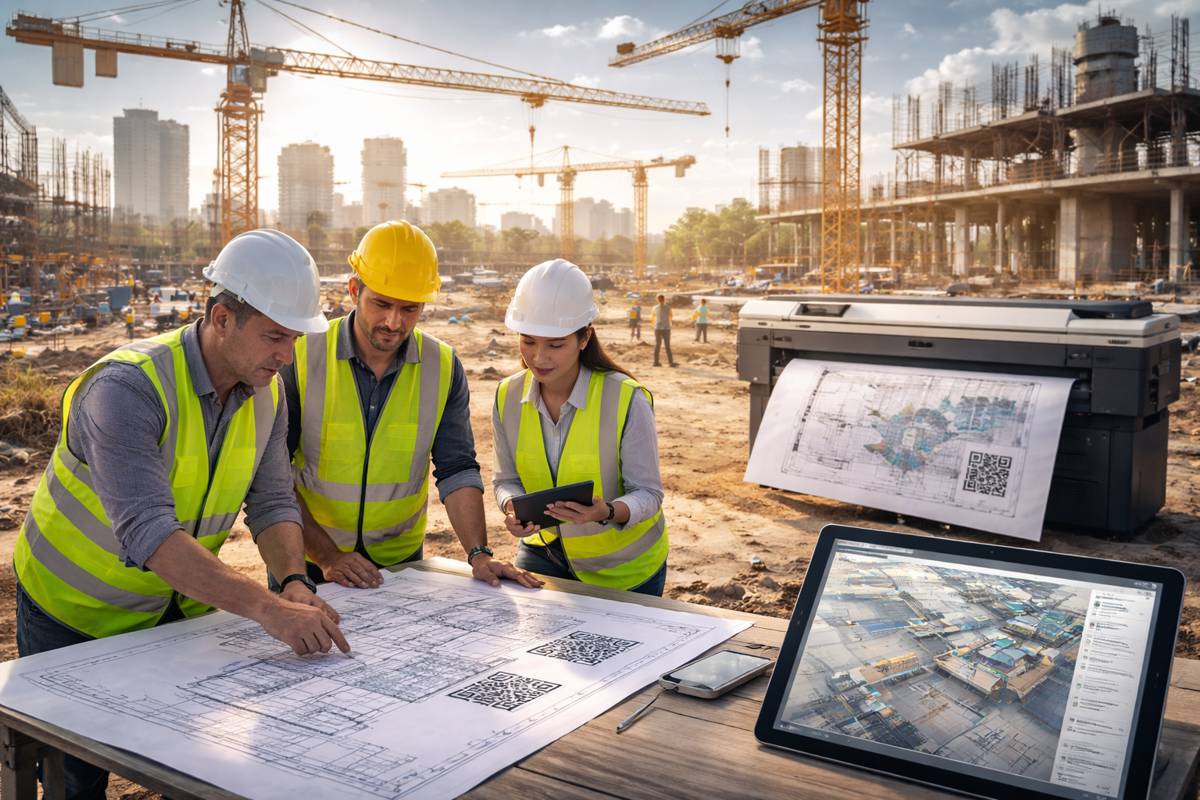
HP’s approach centres on turning traditional drawings into what it describes as connected plans. Through its cloud-based platform, HP Build Workspace, the company is introducing version control and change tracking capabilities that aim to bring greater visibility to drawing management.
Instead of treating drawings as isolated files, the system allows teams to upload successive versions, compare changes and maintain a clear audit trail. This provides a structured way to understand how designs evolve over time, reducing the risk of teams working from outdated information.
A notable feature is the embedding of QR codes into printed plans. These codes enable on-site teams to verify instantly whether a drawing reflects the latest approved version. In practice, this creates a link between the physical document and its digital counterpart, allowing workers to check accuracy without needing to navigate complex systems.
Equally important is the ability to close the loop from site back to office. Annotated paper drawings can be scanned and reintroduced into the digital workflow, where changes are recorded and shared. This ensures that field-level insights are not lost and that project documentation remains aligned with real-world conditions.
Integrating Devices Across the Workflow
The effectiveness of connected plans depends on more than software. It requires integration across the devices used throughout the project lifecycle. HP’s strategy brings together its large-format printing, scanning and computing technologies into a more unified ecosystem.
Devices such as HP DesignJet printers are evolving beyond their traditional role as output tools. By linking directly with cloud platforms, they become part of a continuous workflow where documents can be printed, updated and re-ingested with minimal friction. This reduces the likelihood of outdated prints circulating on site, a common source of errors and rework.
Scanning technologies also play a critical role. By digitising annotated plans quickly and accurately, they enable field updates to be captured and shared in near real time. This helps maintain alignment between teams working in different locations and disciplines.
The broader ambition is to ensure that every touchpoint, from design office to construction site, contributes to a coherent flow of information rather than a series of disconnected steps.
AI and Edge Processing Enter the Picture
Alongside workflow integration, HP is introducing artificial intelligence capabilities through systems such as HP Z Workstations. These machines are designed to handle complex processing tasks locally, reducing reliance on centralised computing resources and enabling faster decision-making.
One area of focus is vectorisation at the edge, which allows raster images to be converted into editable vector formats directly on the device. This can streamline the handling of legacy drawings and improve the usability of scanned documents within digital environments.
While AI in construction is often associated with analytics and automation, its role here is more practical. It supports the day-to-day management of drawings and data, helping teams work more efficiently without fundamentally changing how they operate.
This approach reflects a broader trend across the industry. Rather than pursuing fully autonomous systems, many organisations are focusing on incremental improvements that enhance existing workflows and deliver immediate value.
A Unified Large Format Strategy for AEC
HP’s current direction builds on a broader alignment of its architecture, engineering and construction portfolio. By bringing together platforms such as Build Workspace with printing and layout solutions, the company is aiming to create a more cohesive experience for professionals working across the project lifecycle.
This unified approach recognises that construction workflows do not exist in isolation. Decisions made during design have direct implications for execution, and feedback from site conditions can influence ongoing planning. Connecting these stages requires both technological integration and a clear understanding of how teams actually work.
Importantly, the strategy does not attempt to impose a single way of working. Instead, it focuses on interoperability, allowing different tools and processes to coexist while improving the flow of information between them.
Reducing Rework and Material Waste
One of the most tangible benefits of improved workflow integration is the potential reduction in rework. When teams operate from consistent, up-to-date information, the likelihood of errors decreases. This has direct implications for project timelines, cost control and resource efficiency.
Material waste is another critical consideration. Inaccurate or outdated drawings can lead to incorrect installations, requiring demolition and reconstruction. By ensuring that plans are validated and traceable, connected workflows can help minimise these occurrences.
From a sustainability perspective, this is increasingly important. The construction sector is under growing pressure to reduce its environmental footprint, and improving efficiency is one of the most effective ways to achieve that goal.
Aligning with Broader Industry Trends
The push towards connected workflows aligns with wider developments in the industry, including the adoption of digital twins, building information modelling and cloud-based collaboration platforms. These technologies all aim to create a more integrated view of projects, from design through to operation.
However, their effectiveness depends on how well they are integrated into everyday practice. Without alignment between digital systems and physical processes, their potential remains only partially realised.
By focusing on the interface between paper and digital, HP is addressing a part of the workflow that is often overlooked. It is not the most visible aspect of digital transformation, but it is one that has a direct impact on how projects are delivered.
Building a More Connected Construction Workflow
The construction industry is unlikely to abandon paper drawings anytime soon, nor does it need to. What is changing is the expectation that these drawings should be part of a connected, responsive system rather than static artefacts.
HP’s approach reflects a pragmatic understanding of the sector. By enhancing existing tools and linking them more effectively with digital platforms, it offers a pathway to improved productivity without requiring wholesale change.
As projects continue to grow in complexity, the ability to maintain alignment across teams, systems and locations will become increasingly critical. Connecting digital intent with physical execution is not just a technical challenge. It is a fundamental requirement for delivering infrastructure more efficiently, more sustainably and with greater confidence.