JCB Expands Low Carbon Pathways with B100 Biodiesel for Excavators
Across Europe’s construction sector, pressure to decarbonise is no longer theoretical. Contractors are now being asked to cut emissions on active projects, not just in long-term strategies. Into that reality steps JCB with a move that sidesteps infrastructure bottlenecks and goes straight to the fuel tank.
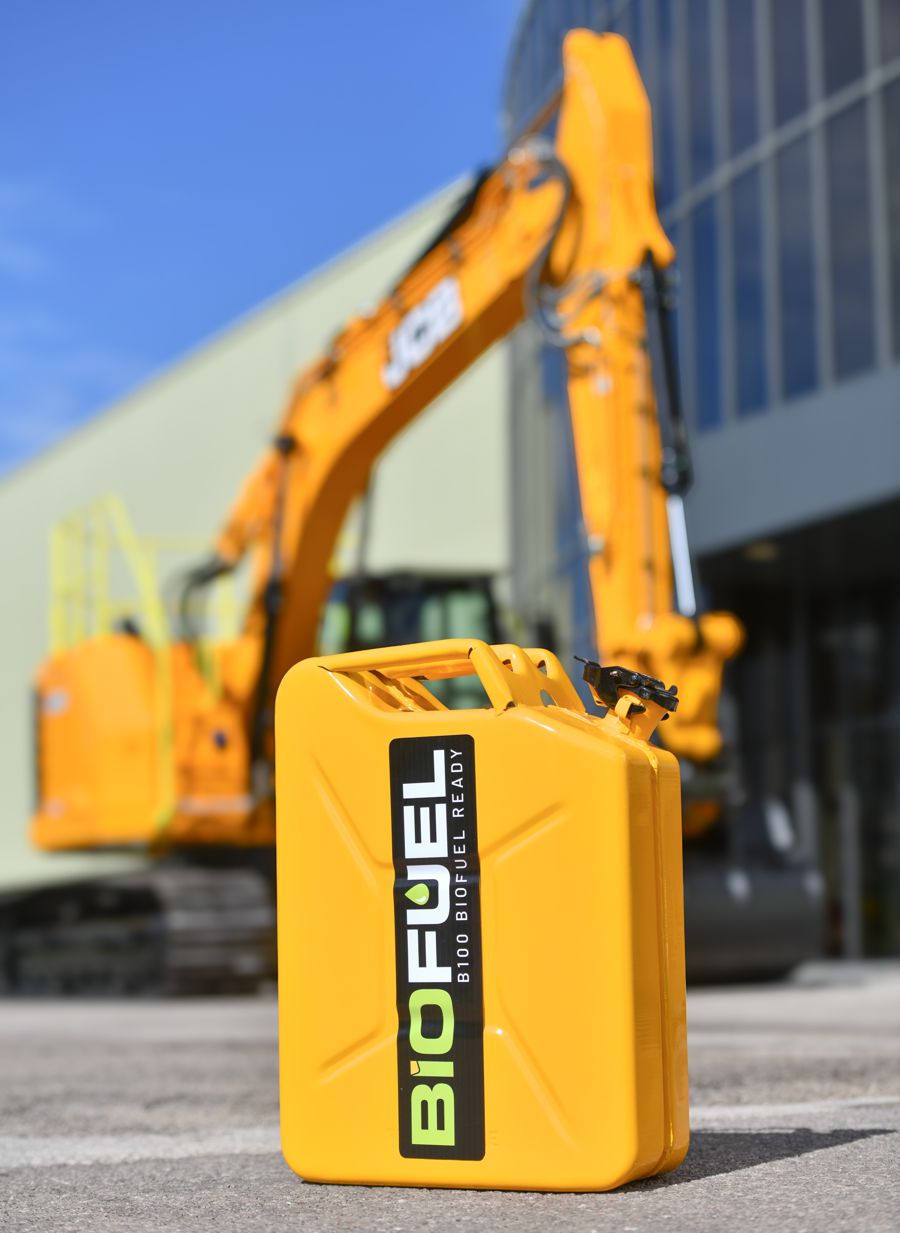
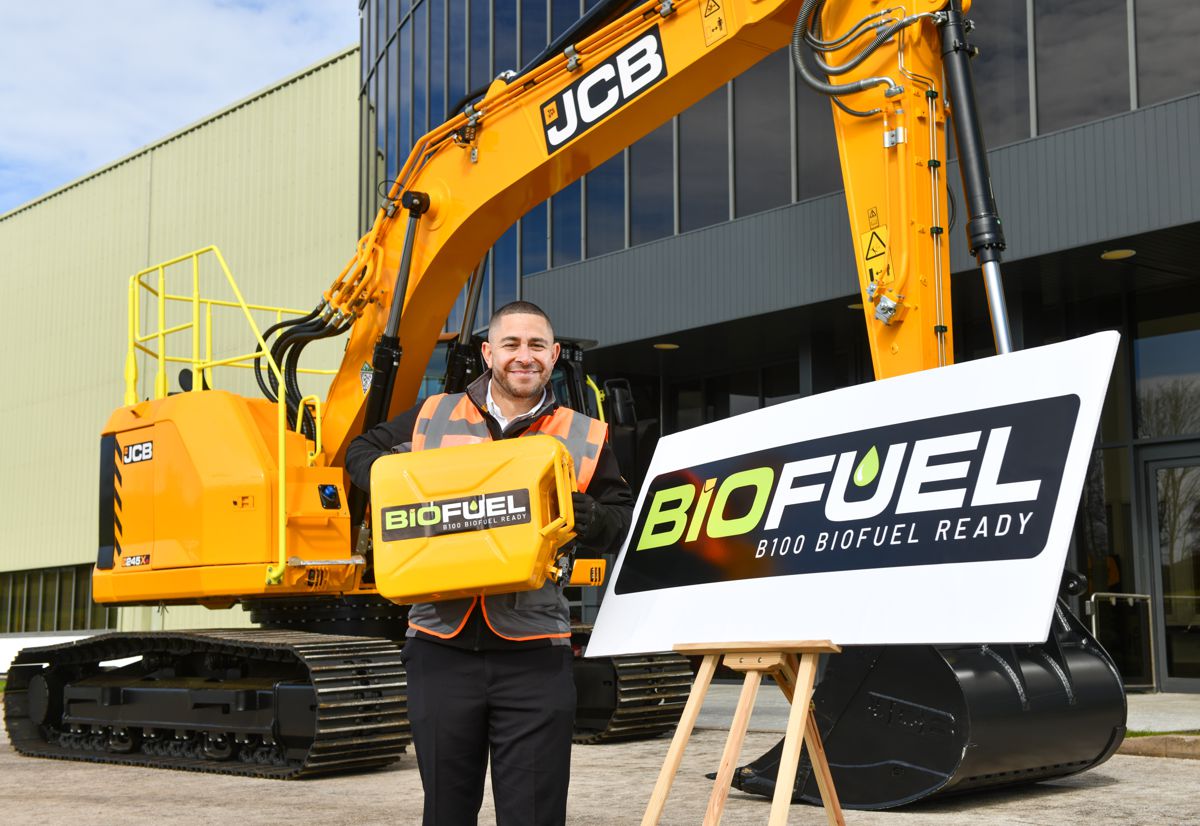
The company has approved the use of 100 percent renewable biodiesel, commonly referred to as B100, for a selection of its X Series tracked excavators. In doing so, it positions itself at the forefront of a pragmatic shift within heavy equipment, where immediate emissions reductions are increasingly valued alongside longer-term electrification and hydrogen strategies.
Unlike incremental fuel blends, this is a full substitution approach. B100 contains no fossil diesel and is derived from recycled biological feedstocks such as used vegetable oils. The implication is clear. Contractors can materially reduce emissions on existing job sites without waiting for charging infrastructure, grid upgrades or wholesale fleet replacement.
Briefing
- JCB approves B100 biodiesel for selected X Series tracked excavators in Europe
- Fuel derived from renewable biological sources, including recycled vegetable oils
- Potential greenhouse gas reductions of up to 93 percent compared to standard diesel
- Developed and validated in partnership with Syntech Biofuel
- Full warranty support available under defined conditions with conversion flexibility
A Practical Route to Immediate Carbon Reduction
For all the industry’s discussion around electrification, the majority of heavy construction equipment still relies on diesel engines. Excavators, in particular, operate in environments where high energy density and rapid refuelling remain essential. That’s where fuels like B100 begin to make commercial sense.
Traditional biodiesel adoption has largely been limited to blends such as B10 or B20, where only a fraction of the fuel is renewable. Many engine manufacturers have been cautious about approving higher concentrations due to concerns around compatibility, durability and long-term performance. JCB’s approval of B100 marks a departure from that cautious baseline.
The decision reflects a shift in contractor expectations. Major infrastructure projects, particularly those tied to public procurement, increasingly include carbon reporting requirements. In practical terms, that means emissions must be reduced during construction, not just offset or deferred. By enabling machines to run on fully renewable fuel, JCB offers a route that fits within existing operational models.
Engineering Validation and Fuel Standards
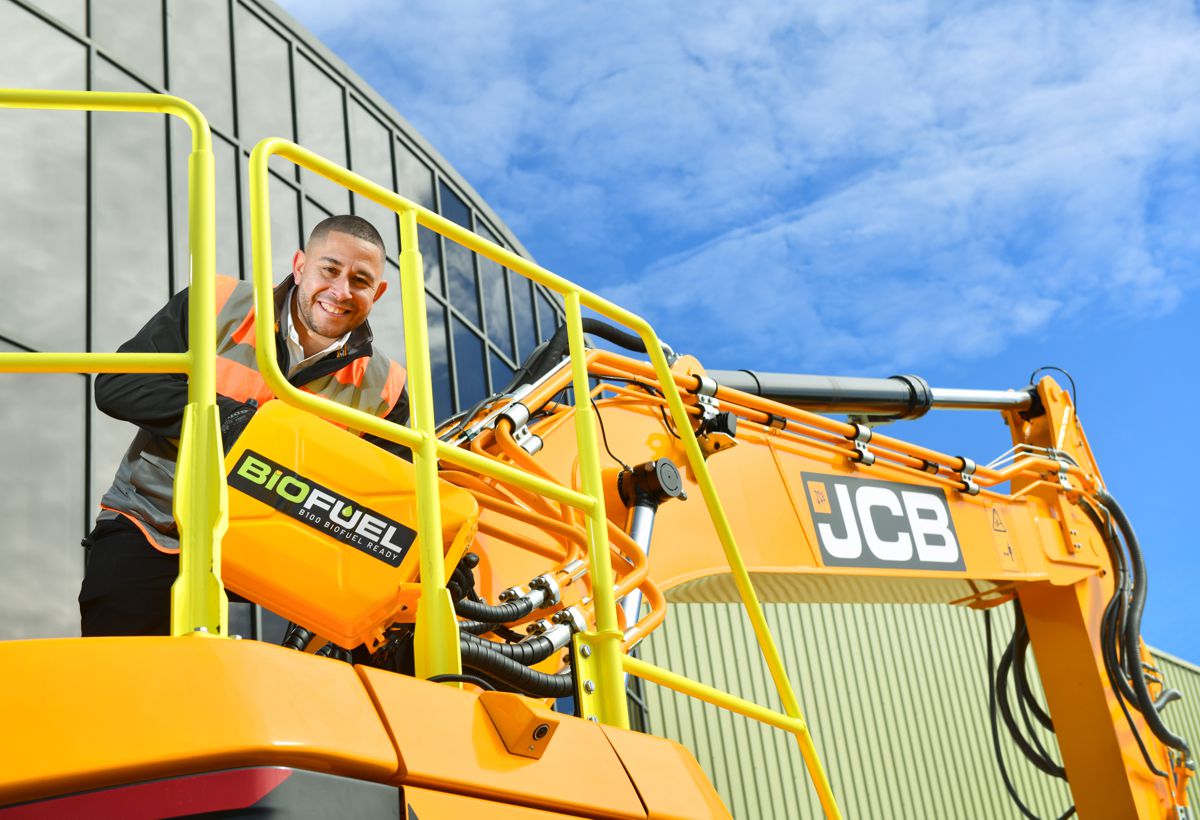
The move to B100 has not been taken lightly. JCB undertook an extensive testing and validation programme in collaboration with Syntech Biofuel to ensure compatibility with its X Series machines. This process focused on engine performance, fuel system integrity and long-term reliability under working conditions typical of construction sites.
The fuel itself complies with BS EN 14214, which defines the specifications for fatty acid methyl ester fuels used in diesel engines. It is also certified under the International Sustainability and Carbon Certification scheme, providing traceability and assurance around the sustainability of the feedstock.
These standards matter. Without them, claims of carbon reduction would be difficult to verify, and contractors would face uncertainty around compliance with environmental regulations. Certification ensures that the emissions savings are grounded in recognised methodologies rather than theoretical assumptions.
Integrating B100 into the X Series Platform
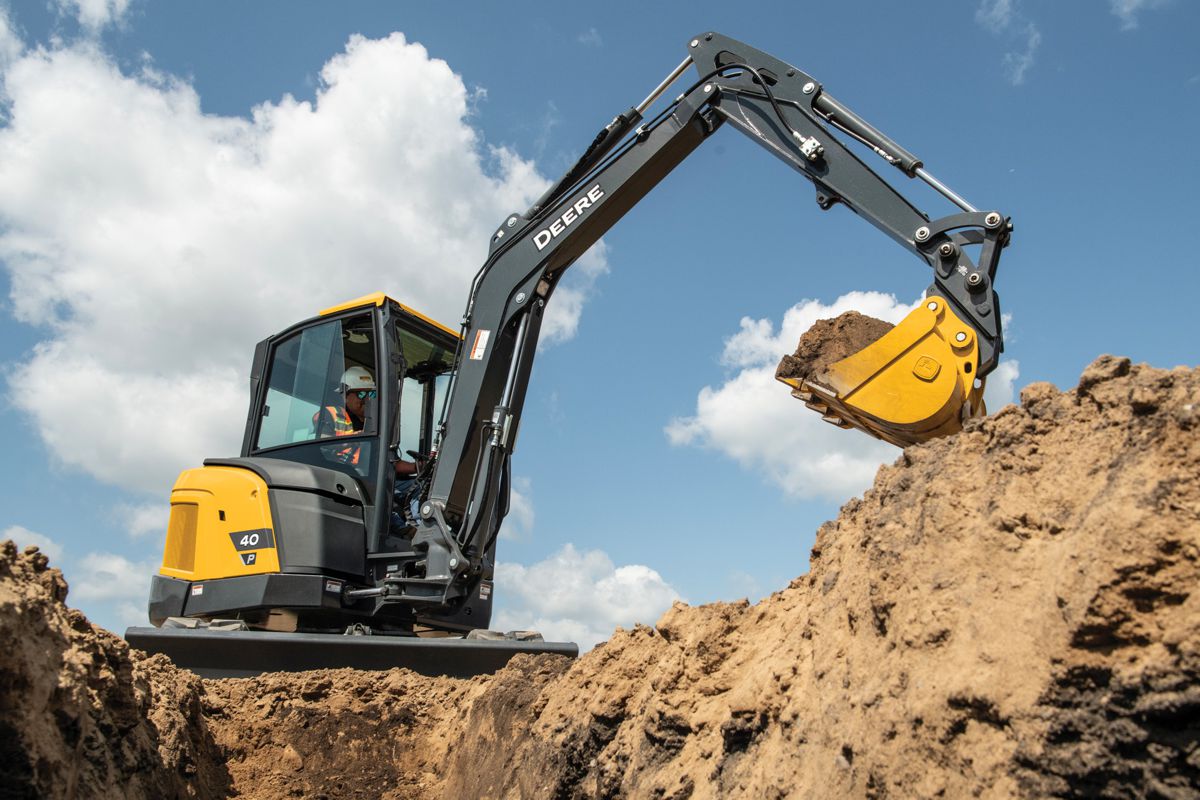
The approved models include the 140X, 145XR, 150X, 220X and 245XR tracked excavators, all part of JCB’s X Series line-up. These machines are widely used across infrastructure, utilities and earthmoving projects, making them a logical starting point for introducing alternative fuels.
From June 2026, newly manufactured units can be specified with a B100 configuration. Importantly, the integration does not require a complete redesign of the machine. Instead, it involves targeted modifications and calibration to ensure optimal combustion and system compatibility.
JCB will provide warranty coverage for machines operating on compliant B100 fuel, provided they are equipped with a dedicated B100 pack and supported by an enhanced service agreement through its dealer network. That level of backing is significant. It removes a key barrier for contractors who might otherwise hesitate to adopt alternative fuels due to concerns over maintenance and reliability.
Flexibility and Residual Value Considerations
One of the persistent challenges with alternative technologies in construction equipment is the impact on residual value. Contractors need assurance that machines will remain viable in the secondary market, particularly in regions where access to renewable fuels may be limited.
JCB has addressed this by enabling a straightforward conversion process back to conventional diesel operation. This flexibility ensures that machines can adapt to different market conditions over their lifecycle, preserving asset value and broadening resale potential.
It also reflects a pragmatic understanding of how equipment fleets operate globally. While some regions are accelerating towards low-carbon fuels, others remain dependent on traditional diesel supply chains. A reversible solution allows contractors to navigate that variability without locking themselves into a single pathway.
Positioning Within a Broader Decarbonisation Strategy
B100 is not being presented as a standalone solution. Rather, it sits alongside JCB’s ongoing work in battery electric and hydrogen combustion technologies. Each of these approaches addresses different segments of the construction market, depending on application, duty cycle and infrastructure availability.
Battery electric machines, for instance, are well suited to urban environments where noise and emissions restrictions are stringent, and charging infrastructure is accessible. Hydrogen combustion offers potential for high-power applications where electrification may be less practical in the near term.
B100 fills a different niche. It provides an immediate, scalable option for reducing emissions across existing diesel platforms. There is no need for new infrastructure, and adoption can be phased in as fuel supply becomes available. For contractors managing mixed fleets and diverse project requirements, that flexibility is likely to prove valuable.
Industry Context and Market Implications
The construction sector accounts for a significant share of global greenhouse gas emissions, both through material production and on-site activity. According to estimates from organisations such as the International Energy Agency, diesel-powered equipment remains a major contributor within that footprint.
Efforts to reduce emissions have often focused on electrification, but progress has been uneven. High upfront costs, limited charging infrastructure and operational constraints have slowed widespread adoption in heavy equipment segments.
In that context, renewable fuels are gaining renewed attention. They offer a transitional pathway that leverages existing engine technology while delivering measurable emissions reductions. The approval of B100 by a major manufacturer signals growing confidence in this approach.
It also raises questions for the wider industry. If full biodiesel compatibility becomes more common, fuel suppliers, contractors and policymakers will need to align around standards, supply chains and incentives. The shift will not happen in isolation. It will require coordination across multiple parts of the construction ecosystem.
Responding to Contractor Demand
JCB’s decision has been shaped, in part, by direct feedback from major contractors. As sustainability targets become embedded in project requirements, equipment capabilities are coming under closer scrutiny. Contractors are no longer just selecting machines based on performance and cost. Emissions profiles are becoming a factor in procurement decisions.
Group Product Innovation Director Richard Brooks said: “This milestone development is in direct response to major contractors asking for excavators capable of running on B100. They now have a practical fuel option that delivers genuine carbon savings and one that, in the future, could be extended to other products in JCB’s range, depending on demand.
“The use of B100 biodiesel complements JCB’s market-leading battery electric and hydrogen combustion technologies as alternatives to conventional diesel power, providing customers with another route to carbon reduction and sustainable operation. Customers operating machines with Syntech ASB B100 can reduce greenhouse gas emissions by up to 93% compared to standard diesel, delivering an immediate and significant step towards net zero without compromising performance.”
That demand-driven approach is likely to influence how quickly B100 adoption expands. If contractors begin specifying renewable fuel capability as a requirement, manufacturers will have a clear incentive to follow suit. Conversely, if uptake remains limited, the technology may remain a niche offering.
Balancing Performance and Sustainability
A recurring concern with alternative fuels is whether they compromise machine performance. In construction, reliability and productivity are non-negotiable. Delays or reduced output can quickly outweigh any environmental benefits.
JCB’s validation programme has focused on ensuring that B100 delivers comparable performance to conventional diesel. While specific performance metrics have not been publicly detailed, the company’s willingness to provide warranty support suggests a level of confidence in the technology.
If those performance expectations are met in real-world applications, B100 could become a practical tool for contractors seeking to balance operational efficiency with environmental targets.
A Step Forward in Construction Fuel Evolution
The introduction of B100 compatibility in tracked excavators does not signal the end of diesel, nor does it resolve all the challenges associated with decarbonising construction. What it does offer is a tangible step forward, grounded in existing technology and aligned with current industry constraints.
By focusing on a solution that can be deployed immediately, JCB is addressing a gap between long-term ambitions and short-term realities. Contractors need options that work today, not just in future scenarios shaped by infrastructure that may take years to materialise.
In that sense, B100 represents a shift towards practical decarbonisation. It acknowledges the complexity of the construction ecosystem and provides a pathway that fits within it. Whether it becomes a mainstream solution will depend on fuel availability, cost dynamics and continued validation in the field. For now, it adds another tool to the industry’s evolving toolkit, and one that arrives at a time when measurable progress is increasingly expected.