TRL Deploys iROADS to Strengthen Climate Resilient Roads in Vanuatu
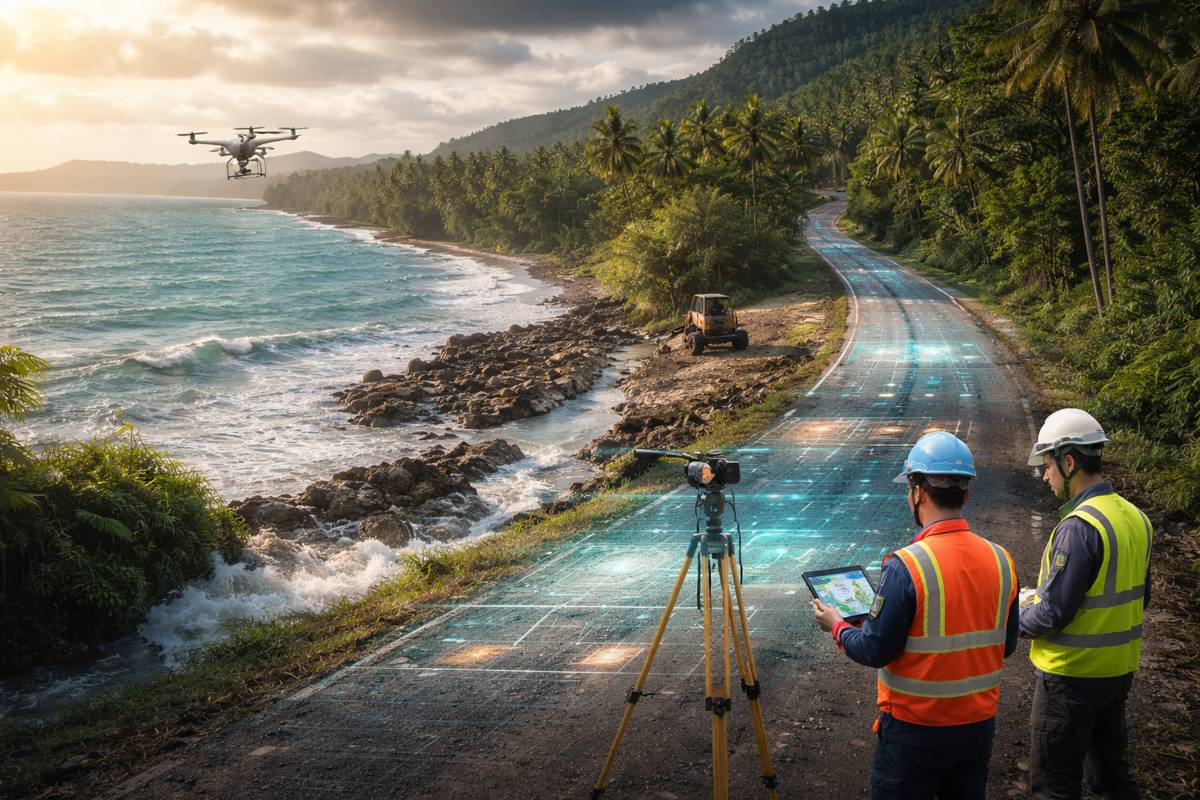
The Government of Vanuatu has taken a decisive step towards strengthening its transport infrastructure, appointing TRL to deploy its iROADS road asset management system across the national network. While at first glance this may appear to be a routine digital upgrade, the implications run far deeper. For a country routinely exposed to extreme climate events, this move signals a shift towards data-led resilience planning at a national scale.
Spread across a dispersed archipelago in the South Pacific, Vanuatu’s infrastructure challenges are as geographical as they are environmental. With around 2,900 kilometres of roads, most of them unsealed, the network is highly exposed to cyclones, flooding, seismic activity and coastal erosion. Maintaining connectivity under such conditions isn’t simply an engineering issue. It’s a matter of economic continuity, emergency access and social cohesion. That’s where structured asset intelligence begins to change the equation.
The deployment of iROADS introduces a systematised way to understand, prioritise and maintain road assets over time. Rather than reacting to damage after it occurs, authorities can anticipate vulnerabilities, allocate resources more efficiently and plan interventions that extend asset life. In regions where maintenance budgets are constrained and logistics are complex, that kind of foresight is not just valuable, it’s essential.
Briefing
- Vanuatu has appointed TRL to implement the iROADS road asset management system nationwide
- The programme is funded by the World Bank Group under a climate resilience initiative
- The project includes nationwide road data collection, system deployment and long-term maintenance planning
- Local capability building and institutional asset management practices form a core part of delivery
- The initiative strengthens resilience against climate risks while improving infrastructure investment efficiency
From Reactive Maintenance to Predictive Infrastructure Management
Historically, many island nations have operated on a reactive maintenance model. Roads are repaired when they fail, often after severe weather events disrupt access and damage critical links. That approach, while understandable given funding and capacity constraints, tends to be inefficient and costly over time. Rebuilding the same assets repeatedly under worsening climate conditions becomes a cycle that’s difficult to break.
The introduction of iROADS represents a deliberate move away from that cycle. By embedding structured asset management practices, the system enables engineers and policymakers to understand the condition of the network in detail. Surface degradation, drainage performance, structural weaknesses and usage patterns can all be assessed systematically, forming the basis of forward-looking maintenance plans.
Globally, this shift aligns with broader trends in infrastructure management. Organisations such as the World Bank Group and regional development banks have increasingly emphasised lifecycle asset management as a cornerstone of sustainable infrastructure investment. Studies have shown that proactive maintenance can reduce total lifecycle costs significantly, often by 20 to 40 percent compared to reactive approaches. For a nation like Vanuatu, where logistics inflate repair costs, those efficiencies are magnified.
Climate Resilience at the Core of Infrastructure Strategy
Climate exposure is not a peripheral issue for Vanuatu. It sits at the centre of national planning. The country is widely regarded as one of the most vulnerable in the world to natural hazards, with tropical cyclones, heavy rainfall events and rising sea levels posing ongoing threats to infrastructure reliability.
Against that reality, the iROADS implementation is not simply a digital transformation project. It is a resilience strategy. By integrating environmental risk factors into asset management, authorities can prioritise upgrades in areas most susceptible to damage. Roads in flood-prone zones, coastal corridors and landslide-prone terrain can be identified and reinforced accordingly.
This approach reflects a growing recognition across the infrastructure sector that resilience must be designed into systems from the outset. It is no longer sufficient to rebuild infrastructure to previous standards after each event. Instead, investments must anticipate future conditions, incorporating climate projections and risk modelling into planning frameworks.
The programme is being delivered under the Vanuatu Climate Resilient Transport Project, funded by the World Bank Group. This aligns the initiative with a wider global effort to integrate climate adaptation into transport infrastructure, particularly in small island developing states where exposure is acute and resources are limited.
Data as the Foundation for Smarter Investment Decisions
One of the most transformative aspects of the iROADS system lies in its ability to convert raw field data into actionable insights. As part of the programme, extensive data collection will be carried out across Vanuatu’s core road network. This includes condition assessments, traffic patterns and environmental factors, all of which feed into the system’s analytical models.
Once processed, this data supports the development of multi-year maintenance and investment plans. Instead of allocating budgets based on short-term priorities or political cycles, decision-makers can base investments on objective evidence. Roads that carry the highest economic value, or those most critical for emergency access, can be prioritised accordingly.
For investors and policymakers, this kind of transparency is increasingly important. Infrastructure funding, particularly from international institutions, is often contingent on robust planning frameworks and measurable outcomes. Systems like iROADS provide the evidence base needed to justify investment and demonstrate impact over time.
Moreover, as digital asset management becomes more widespread, interoperability with other systems is becoming a key consideration. Integrating road data with broader transport, logistics and urban planning platforms can unlock additional efficiencies, particularly as countries look to modernise infrastructure at scale.
Building Local Capability for Long-Term Sustainability
Technology alone does not deliver resilience. The success of any asset management system ultimately depends on the people and institutions that operate it. Recognising this, the Vanuatu programme places strong emphasis on training and institutional development.
TRL, working alongside National Transport Research Organisation and Experion Technologies, will provide extensive capacity-building support to the Vanuatu Public Works Department. This includes technical training, system integration and the establishment of standardised asset management practices.
The aim is to ensure that iROADS becomes embedded within national processes rather than remaining an externally driven initiative. By developing local expertise, the programme reduces dependency on external consultants and creates a foundation for continuous improvement.
This focus on institutionalisation reflects lessons learned from similar projects worldwide. Digital systems can deliver significant value, but only when supported by governance structures, skilled personnel and long-term commitment. Without those elements, even the most advanced tools risk underutilisation.
A Collaborative Model for Pacific Infrastructure Development
The delivery model for the iROADS implementation highlights the importance of collaboration in tackling complex infrastructure challenges. TRL brings expertise in transport research and asset management systems. NTRO contributes regional knowledge and experience across Australia, New Zealand and the Pacific. Experion Technologies adds capabilities in digital engineering and system development.
Together, this consortium combines technical depth with regional insight, an approach that is increasingly common in international infrastructure projects. No single organisation can address the full spectrum of challenges involved, particularly in environments where local conditions vary significantly.
The involvement of multiple partners also supports knowledge transfer, ensuring that best practices are shared across regions. For Pacific nations facing similar climate and infrastructure challenges, the outcomes of this project may serve as a reference point for future initiatives.
Aligning Infrastructure Investment with National Development Goals
The iROADS deployment is closely aligned with Vanuatu’s broader development agenda, particularly its National Sustainable Development Plan, known as Vanuatu 2030. Infrastructure plays a central role in this framework, underpinning economic growth, access to services and resilience to external shocks.
Improving road network performance has direct implications for sectors such as agriculture, tourism and trade. Reliable transport links enable goods to move efficiently between islands and markets, supporting livelihoods and economic diversification. At the same time, resilient infrastructure ensures that communities remain connected during and after extreme weather events.
The ability to plan and manage infrastructure effectively also strengthens Vanuatu’s position in securing international funding. Donors and development partners increasingly look for evidence of structured planning and measurable outcomes. By adopting a data-driven approach, the country enhances its credibility and capacity to attract investment.
Setting a Benchmark for Climate-Smart Infrastructure
While the immediate focus is on Vanuatu, the implications of this project extend across the wider Pacific region. Small island developing states share many of the same challenges, including limited resources, dispersed populations and high exposure to climate risks.
By implementing a comprehensive asset management system, Vanuatu is positioning itself at the forefront of climate-smart infrastructure planning in the region. The lessons learned from this initiative could inform similar programmes in neighbouring countries, creating a ripple effect of improved resilience and efficiency.
Globally, the project also reflects a broader shift in how infrastructure is managed. Digital tools, data analytics and integrated planning frameworks are becoming standard components of modern infrastructure systems. As these technologies continue to evolve, their role in supporting sustainable development will only grow.
For Vanuatu, the journey is just beginning. Yet the foundations being laid through this programme suggest a more resilient, informed and strategically managed infrastructure future. One where decisions are guided not by immediate pressures alone, but by a clear understanding of long-term needs and risks.