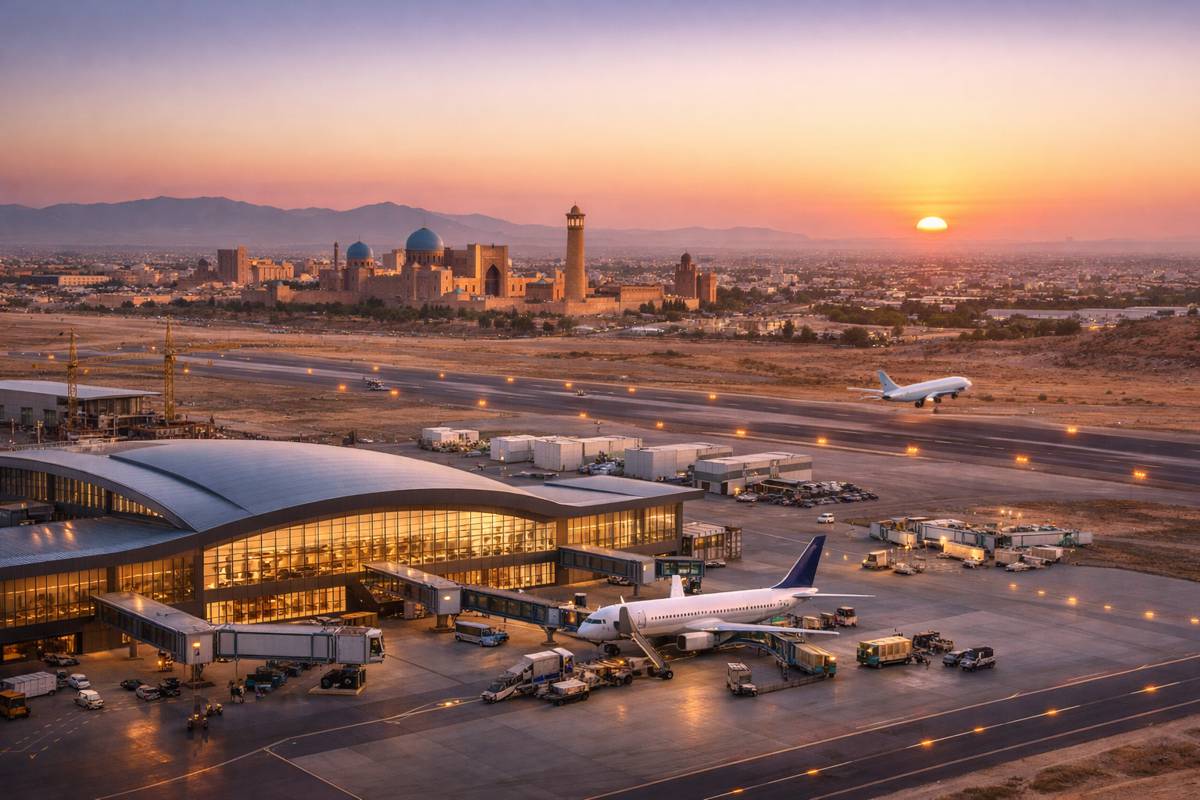
Uzbekistan Advances Aviation Ambitions with Yangi Bukhara Airport PPP
Uzbekistan has taken a decisive step in reshaping its regional connectivity strategy, launching an international tender for the construction and long-term management of the new Yangi Bukhara International Airport. Spearheaded by Uzbekistan Airports in collaboration with the Ministry of Transport of Uzbekistan and the Ministry of Economy and Finance of Uzbekistan, the project signals a clear intent to leverage private sector expertise to accelerate aviation infrastructure development.
Set in the historic Bukhara region, a UNESCO-recognised cultural destination and a key node along the ancient Silk Road, the proposed airport is far more than a standalone infrastructure scheme. It forms part of a broader national effort to modernise transport corridors, strengthen trade routes, and unlock tourism-driven economic growth. By positioning Yangi Bukhara as a modern aviation hub, Uzbekistan is aligning itself with regional competitors that have successfully used airport infrastructure to catalyse investment and mobility.
At its core, the initiative reflects a growing reliance on public private partnerships to deliver complex infrastructure in emerging markets. Uzbekistan has, in recent years, opened its economy to foreign investment, reformed regulatory frameworks, and prioritised logistics and connectivity. This tender sits squarely within that trajectory, offering international operators and investors an opportunity to participate in a strategically located, high-growth aviation market.
Briefing
- International tender launched for private partner to deliver and operate Yangi Bukhara International Airport
- New terminal designed for 1,200 international and 400 domestic passengers per hour
- Project includes cargo facilities, refuelling infrastructure and landside development
- Aims to boost tourism, trade and regional investment attractiveness in Bukhara
- Submission deadline set for April 25, 2026
A Strategic Pivot Towards Regional Aviation Hubs
Uzbekistan’s aviation sector has undergone a quiet but significant transformation over the past decade. Following economic liberalisation reforms initiated after 2016, the government has actively pursued infrastructure upgrades to support increased passenger volumes and international connectivity. Airports in Tashkent and Samarkand have already seen substantial investment, including terminal modernisation and operational upgrades delivered through partnerships with private operators.
The Yangi Bukhara project builds on that momentum but introduces a more comprehensive PPP structure. Rather than simply upgrading an existing facility, the government is seeking to develop a new airport ecosystem from the ground up. This approach allows for integrated planning across passenger services, cargo logistics, fuelling infrastructure and commercial development, ensuring that the airport can function as a multi-dimensional transport hub from day one.
Globally, similar models have proven effective in regions where governments aim to accelerate infrastructure delivery without placing excessive strain on public finances. Airports such as those in Turkey and parts of Southeast Asia have demonstrated how private sector participation can enhance operational efficiency, improve passenger experience and unlock ancillary revenue streams. Uzbekistan appears to be drawing from these precedents while tailoring its approach to local economic conditions.
Designing for Capacity and Growth
At the heart of the Yangi Bukhara development lies a 48,500 square metre passenger terminal, designed to accommodate both domestic and international operations. With a planned capacity of 1,200 passengers per hour for international flights and 400 passengers per hour for domestic services, the facility reflects a forward-looking assessment of demand growth rather than current traffic levels.
This capacity planning is particularly relevant given Uzbekistan’s tourism ambitions. Visitor numbers to the country have increased significantly in recent years, driven by visa liberalisation policies, improved air connectivity and targeted marketing of its cultural heritage sites. Bukhara, with its historic architecture and status as a Silk Road landmark, stands to benefit directly from enhanced air access.
Beyond passenger handling, the project incorporates a range of supporting infrastructure designed to ensure operational resilience and scalability. These include cargo handling areas to support growing trade volumes, catering facilities to meet airline service requirements, and extensive parking and landside development. The integration of these elements suggests a holistic approach to airport design, one that acknowledges the interdependence of aviation, logistics and commercial activity.
Fuel Infrastructure and Operational Self-Sufficiency
A notable component of the project is the development of a refuelling complex with a storage capacity of 8,000 cubic metres, situated on a dedicated four-hectare site. While such facilities are standard in modern airports, their inclusion at the planning stage highlights a focus on operational independence and long-term sustainability.
Fuel infrastructure plays a critical role in determining an airport’s competitiveness, particularly in regions where supply chains can be inconsistent. By ensuring on-site storage and efficient distribution systems, Yangi Bukhara can offer airlines greater reliability and potentially more competitive pricing. This, in turn, can influence route development decisions and attract carriers seeking stable operating conditions.
In a broader sense, the inclusion of such infrastructure reflects a shift towards integrated airport ecosystems, where operational efficiency is designed into the asset from the outset. Rather than retrofitting capabilities over time, the project aims to deliver a fully functional hub capable of supporting diverse aviation activities.
Unlocking Tourism and Trade Potential
The economic rationale behind the Yangi Bukhara airport extends well beyond aviation metrics. Improved connectivity is widely recognised as a catalyst for regional development, enabling increased tourist flows, facilitating trade and attracting foreign investment. For Bukhara, this is particularly significant given its reliance on cultural tourism and small to medium-sized enterprises.
Uzbekistan has made tourism a central pillar of its economic diversification strategy. According to international development institutions such as the World Bank, improved transport infrastructure is essential for unlocking the full potential of tourism assets in emerging economies. By reducing travel times and enhancing accessibility, airports can transform previously peripheral regions into viable destinations for international visitors.
At the same time, the inclusion of cargo handling facilities positions Yangi Bukhara as a potential logistics node. Uzbekistan’s landlocked geography has historically posed challenges for trade, making efficient air freight capabilities particularly valuable. As global supply chains continue to evolve, the ability to move high-value goods بسرعة and reliably becomes an increasingly important competitive advantage.
The PPP Model and Investor Appeal
The decision to structure the project finance as a PPP reflects both fiscal pragmatism and a desire to tap into global expertise. For international investors and operators, the tender offers a rare opportunity to participate in a greenfield airport development in a market that is actively liberalising and seeking foreign capital.
Uzbekistan has already demonstrated its willingness to engage with private partners in the aviation sector. The modernisation of Samarkand International Airport, delivered in partnership with private investors, serves as a recent example of how such collaborations can deliver tangible results. That project introduced new passenger facilities, improved operational standards and increased capacity, contributing to a notable rise in traffic.
For Yangi Bukhara, the PPP framework is expected to cover both construction and operational phases, allowing the selected partner to influence design decisions and implement best practices from the outset. This integrated approach can enhance efficiency and ensure that the asset is optimised for long-term performance rather than short-term delivery.
Regional Competition and Connectivity Dynamics
Central Asia is increasingly becoming a focal point for infrastructure investment, driven by its strategic location between Europe and Asia. Countries across the region are investing in transport corridors, logistics hubs and aviation infrastructure to capture a share of growing trade flows and passenger movements.
In this context, Uzbekistan faces competition from neighbouring countries that are also expanding their airport networks. However, it also benefits from a strong cultural tourism offering and a central geographic position. By developing Yangi Bukhara as a modern hub, the country can strengthen its position within regional connectivity networks and attract both transit and destination traffic.
The project also aligns with broader initiatives aimed at enhancing multimodal transport links. Improved road and rail connections to the airport will be essential for maximising its impact, ensuring that it functions as part of an integrated transport system rather than an isolated asset.
A Platform for Long Term Infrastructure Development
The launch of the Yangi Bukhara airport tender represents more than a single project milestone. It signals a maturing approach to infrastructure development in Uzbekistan, one that emphasises strategic planning, private sector engagement and alignment with economic objectives.
By combining modern design, integrated infrastructure and a PPP delivery model, the project sets a precedent for future developments across the country. It demonstrates how targeted investment in transport infrastructure can support broader goals, from tourism growth to trade expansion and regional integration.
As the April 2026 submission deadline approaches, attention will turn to the calibre of bidders and the structure of the final agreement. For industry stakeholders, the project offers a window into Uzbekistan’s evolving infrastructure landscape and its ambitions to position itself as a key player in Central Asia’s transport and logistics ecosystem.