Mobile Welding Meets Physical AI as Robotics Steps Beyond the Factory Floor
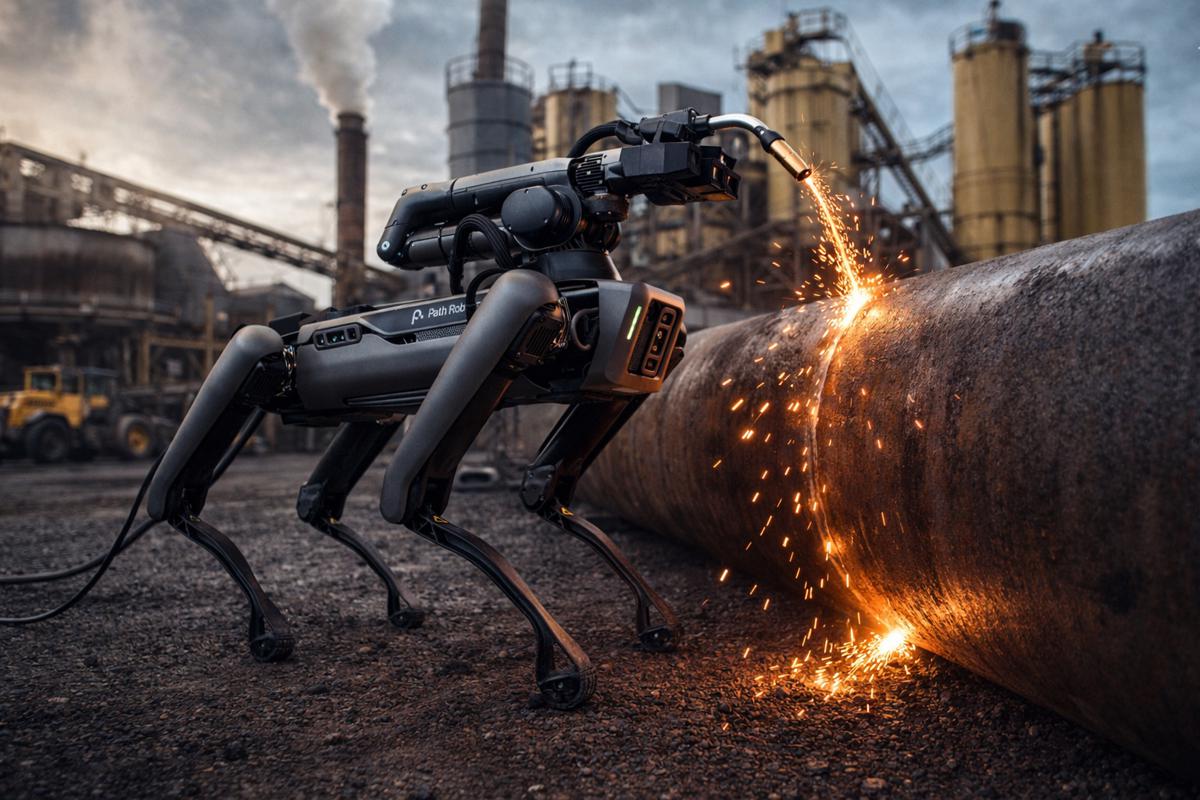
Manufacturing automation has long excelled in controlled environments, yet some of the most critical fabrication work still happens far from the tidy confines of robotic cells. Shipyards, bridge construction sites, heavy industrial plants and large-scale fabrication yards remain stubbornly resistant to automation, largely because the workpieces themselves are immovable. It is in this gap between ambition and reality that Path Robotics has introduced a system that shifts the paradigm, bringing intelligent welding directly to the job rather than forcing the job into a fixed system.
The launch of Rove, a mobile robotic welding platform powered by the company’s Obsidian physical AI model, signals a practical move towards automation in environments that have traditionally defied it. By combining advanced perception, adaptive control and a quadruped robotic base, the system is designed to operate across uneven terrain and complex geometries, tackling welding tasks in situ. For industries grappling with labour shortages and increasing project complexity, that shift is more than incremental. It has the potential to reshape how large infrastructure assets are built and maintained.
Briefing
- Mobile robotic welding brings automation directly to large, immovable structures
- Physical AI enables adaptive welding in high-variability environments
- Labour shortages in welding continue to constrain infrastructure delivery globally
- Early adoption in shipbuilding highlights real-world industrial deployment
- Expansion beyond fixed robotic cells marks a new phase in manufacturing automation
Breaking Free from the Limits of Fixed Automation
For decades, welding automation has relied on repeatability. Robotic arms excel when every component is identical and precisely positioned, but real-world construction rarely offers such predictability. Large steel assemblies in shipbuilding or infrastructure projects often suffer from misalignment, variable tolerances and inconsistent material conditions. These factors have traditionally kept automation at bay, forcing reliance on skilled welders working under demanding conditions.
The introduction of mobile robotic welding directly addresses this limitation. Instead of transporting components into controlled environments, the robot travels to the workpiece, adapting its operations in real time. This approach aligns with broader trends in construction technology, where flexibility and adaptability are becoming as valuable as raw automation capability.
The scale of the challenge is significant. According to the American Welding Society, the United States alone is projected to face a shortage of hundreds of thousands of welders within the next decade. Similar shortages are evident across Europe and Asia, driven by ageing workforces and declining entry into skilled trades. Without intervention, these shortages risk slowing down infrastructure delivery and increasing costs across multiple sectors.
Physical AI Moves into the Field
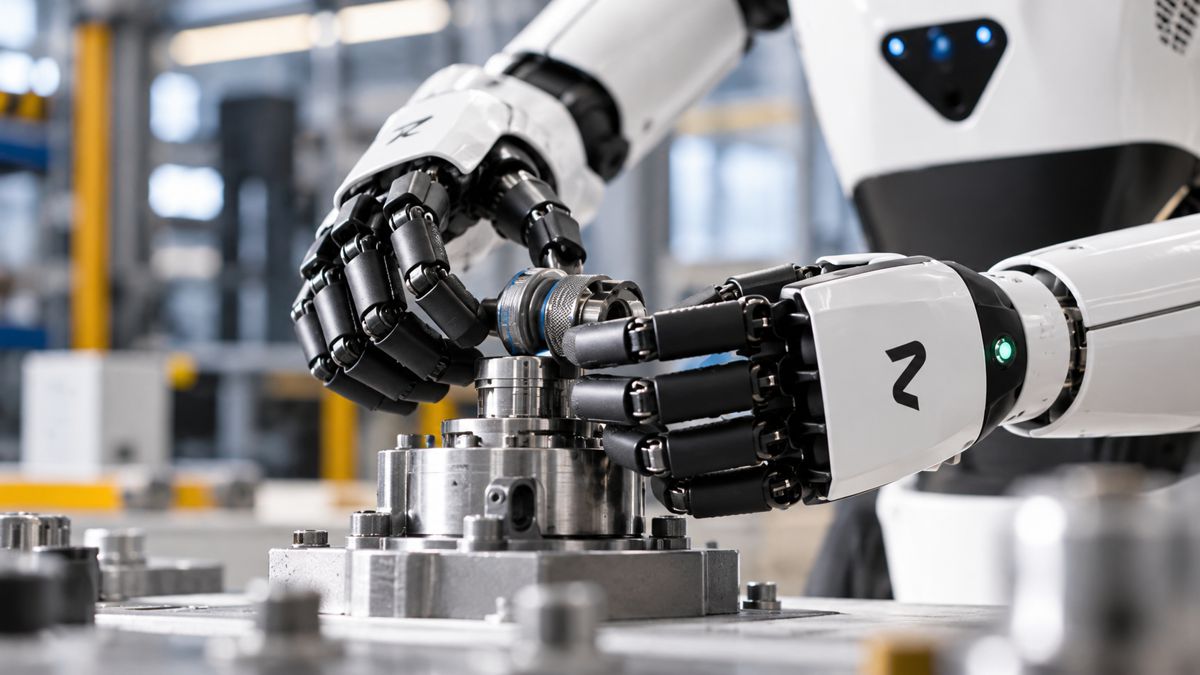
At the core of this development is the concept of physical AI, a term used to describe systems that integrate perception, decision-making and physical action in real time. Unlike traditional automation, which relies heavily on pre-programmed paths, physical AI systems interpret their surroundings and adjust accordingly. In welding, where slight variations in joint geometry can significantly affect quality, this capability is particularly valuable.
Obsidian, the AI model underpinning the system, has already demonstrated its ability to handle complex welds within fixed environments. Extending that intelligence to a mobile platform introduces a new layer of complexity. The robot must not only understand the weld itself but also navigate challenging terrain, maintain stability and coordinate movement with precision tasks.
Legged robotics, often associated with research and exploration, has historically been viewed as unsuitable for precision manufacturing tasks. Stability concerns and control challenges have limited their industrial application. By combining advanced sensing with AI-driven control, this new approach challenges those assumptions, suggesting that mobility and precision need not be mutually exclusive.
Implications for Shipbuilding and Heavy Industry
Few industries stand to benefit more from this development than shipbuilding. Modern vessels are assembled from massive steel sections, often in open environments where conditions vary from one weld to the next. Automation in such settings has been limited, leaving much of the work dependent on manual labour.
The involvement of Saronic Technologies as an early adopter highlights the relevance of mobile welding in next-generation manufacturing. As the company develops autonomous maritime vessels, it is also rethinking the production processes behind them. Integrating mobile robotic welding into shipyard operations offers a pathway to increased efficiency, improved quality and reduced reliance on scarce skilled labour.
“Building the next generation of autonomous vessels means rethinking not just how ships operate, but also how they’re made,” said John Morgan, Head of Manufacturing, Saronic. “Rove represents the kind of intelligent, adaptable tooling we need to bring shipyard operations into the modern era—we look forward to seeing what Rove can do and are excited to partner with Path Robotics as we scale production of the next generation of autonomous vessels.”
Beyond shipbuilding, the implications extend to bridge construction, energy infrastructure and large-scale fabrication. Any environment where components are too large or too complex to be easily moved could benefit from mobile, adaptive welding systems. This includes offshore structures, pipelines and heavy industrial installations, where on-site work is often unavoidable.
Addressing Labour Constraints Without Compromising Quality
The global shortage of skilled welders is not simply a numbers problem. Welding requires years of training and experience, particularly for high-specification work in critical infrastructure. As experienced workers retire, replacing that expertise becomes increasingly difficult. Automation offers a potential solution, but only if it can match or exceed human capability in complex scenarios.
Mobile robotic welding does not eliminate the need for skilled workers. Instead, it changes the nature of their role. Operators and technicians are required to oversee systems, manage workflows and handle exceptions, shifting the emphasis from manual labour to technical supervision. This transition mirrors broader trends in construction and manufacturing, where digital skills are becoming as important as traditional trades.
Quality is another critical factor. Poor welds can lead to structural failures, costly rework and safety risks. By leveraging AI to adapt to variations in real time, mobile systems aim to deliver consistent results even in challenging conditions. While widespread validation will take time, early deployments suggest that adaptive systems can achieve levels of precision that are difficult to maintain manually across large projects.
From Demonstration to Deployment
The unveiling of the system at Sea-Air-Space 2026 places it firmly within the context of defence and maritime innovation. As the largest maritime exposition in North America, the event provides a platform for technologies that have both commercial and strategic significance. The ability to automate shipyard operations, for example, carries implications not only for cost and efficiency but also for national industrial capacity.
Demonstrations at such events often serve as a bridge between concept and adoption. For potential users, seeing the system operate in realistic scenarios is essential. It allows them to assess not only technical performance but also integration challenges, safety considerations and return on investment.
For Path Robotics, the transition from fixed-cell solutions to mobile systems represents a strategic expansion. Since its founding in 2018, the company has focused on applying AI to welding, raising substantial investment to develop its technology. Extending that capability into field applications broadens its addressable market, bringing it closer to sectors where automation has yet to take hold.
A Shift in How Infrastructure Gets Built
The introduction of mobile, AI-driven welding systems reflects a broader shift in construction and manufacturing. Automation is no longer confined to controlled environments. Instead, it is moving into the field, adapting to the realities of large-scale projects. This shift is driven by necessity as much as innovation. Labour shortages, increasing project complexity and the demand for higher quality are forcing the industry to rethink established practices.
There is still work to be done. Integration with existing workflows, regulatory approval and workforce training all present challenges. Yet the direction of travel is clear. As AI systems become more capable and robotics more versatile, the boundary between factory and field will continue to blur.
What emerges is a more flexible model of production, one where intelligent machines operate alongside human workers, each complementing the other’s strengths. For construction professionals, investors and policymakers, the implications are far-reaching. Productivity gains, improved safety and more resilient supply chains all come into play.
Mobile welding, once considered impractical, is now stepping onto the jobsite with a level of sophistication that demands attention. If it delivers on its promise, it could quietly become one of the most significant shifts in industrial automation in years, not by replacing existing systems, but by extending them into the places where they were previously absent.