The Next Giant in Gold Mining Takes Shape in Australia
The global gold sector is no stranger to consolidation, but every so often a transaction emerges that reshapes the competitive landscape. The proposed merger between Regis Resources and Vault Minerals falls squarely into that category. Announced on 5 May 2026, the deal would combine two established Australian gold producers into a single entity with the scale, financial strength and operational breadth to compete on a global stage.
At its core, this is a merger of equals. Under the agreed scheme, Vault shareholders will receive 0.6947 new Regis shares for each Vault share held, resulting in a combined ownership split of roughly 51 percent for existing Regis shareholders and 49 percent for Vault shareholders . That balance is telling. It reflects not only comparable asset quality and production capacity, but also a shared strategic ambition to move beyond mid-tier status.
The proposed entity is expected to produce more than 700,000 ounces of gold annually, supported by a portfolio of operating assets concentrated in Western Australia and complemented by development exposure in Canada . In a market where scale increasingly determines access to capital, index inclusion and investor attention, that production threshold marks a significant step-change.
Briefing
- Regis Resources and Vault Minerals have agreed to merge, creating a new senior gold producer
- Combined production expected to exceed 700,000 ounces annually from multiple operating assets
- The merged entity will hold approximately 6.0 million ounces in Ore Reserves and 20.5 million ounces in Mineral Resources
- A debt-free balance sheet with around A$1.9 billion in cash and bullion underpins growth potential
- The deal positions the company as one of the largest ASX-listed gold producers with global relevance
Scale as Strategy in a Competitive Gold Market
Gold mining has entered a phase where scale is no longer optional. Rising input costs, stricter regulatory environments and the growing complexity of ore bodies mean that larger, diversified producers are better placed to manage risk and sustain margins. Against this backdrop, the Regis-Vault merger reads as a strategic response to structural shifts rather than a simple growth play.
The combined company is expected to rank as the third largest primary gold producer listed on the Australian Securities Exchange, with a pro forma market capitalisation of approximately A$10.7 billion . That level of market presence matters. Larger capitalisation improves liquidity, broadens institutional ownership and increases the likelihood of inclusion in global mining indices.
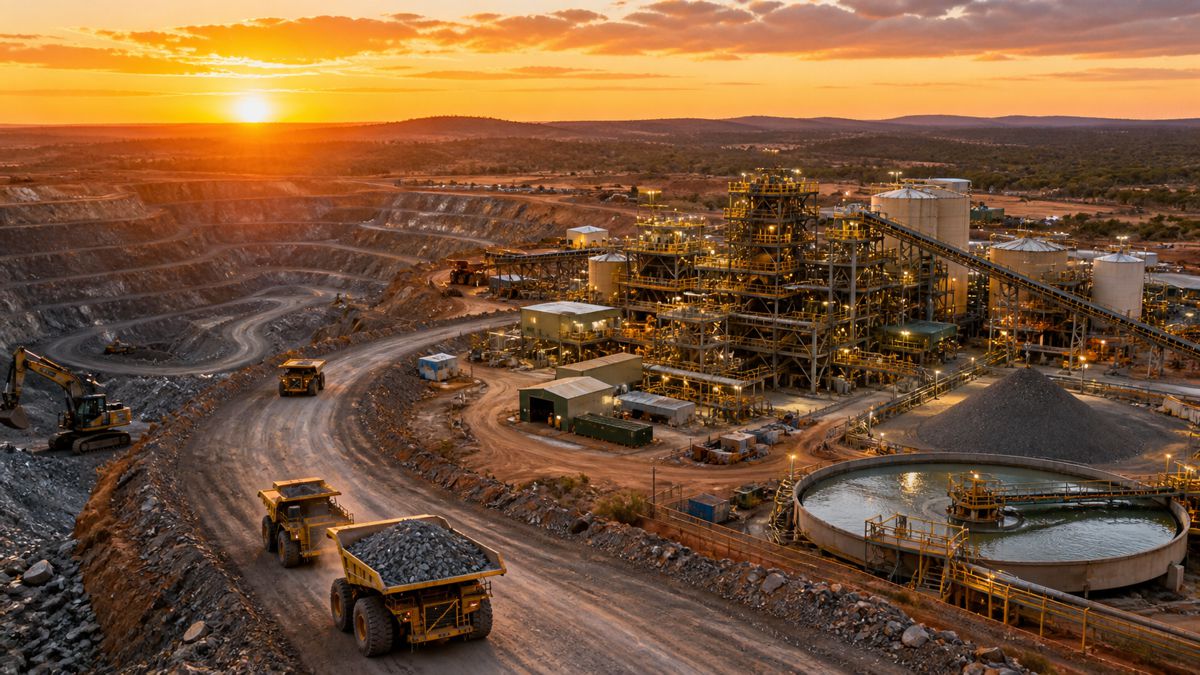
Beyond investor optics, scale delivers operational resilience. The merged portfolio will include five major operating hubs across Western Australia, supported by extensive processing infrastructure with milling capacity exceeding 22 million tonnes per annum . That network provides flexibility in ore sourcing, blending and throughput optimisation, which becomes critical as grades fluctuate and mine plans evolve.
Financial Strength and Capital Discipline
Perhaps the most striking aspect of the transaction is the financial position of the combined entity. Both Regis and Vault enter the merger with debt-free balance sheets, a relatively rare position in the mining sector. Together, they bring approximately A$1.9 billion in cash and bullion, alongside significant free cash flow generation estimated at around A$1.7 billion on an annualised basis.
That level of liquidity offers options. It enables the company to fund development projects internally, reducing reliance on external debt or equity dilution. It also provides a buffer against commodity price volatility, which remains an ever-present risk in gold mining despite strong long-term fundamentals.
Cost of capital is another consideration. Larger, diversified producers typically benefit from lower financing costs, both in debt markets and through equity issuance. By combining their operations, Regis and Vault aim to position the new entity within that more favourable capital bracket, potentially unlocking further growth opportunities.
Resource Depth and Long-Term Production Visibility
Production scale alone does not guarantee longevity. What underpins the long-term viability of any mining company is its resource base. In this respect, the merged entity appears well-positioned, with a combined mineral endowment of approximately 6.0 million ounces in Ore Reserves and 20.5 million ounces in Mineral Resources.
These figures provide a foundation for sustained production over multiple decades, assuming successful conversion of resources into reserves and ongoing exploration success. The breadth of the portfolio also introduces optionality. With multiple deposits at different stages of development, the company can prioritise projects based on market conditions, capital availability and operational considerations.
The presence of advanced development projects, including McPhillamys and Sugar Zone, adds another layer of strategic flexibility. With sufficient funding capacity, both projects could be progressed without external financing, accelerating growth timelines while preserving shareholder value.
Operational Synergies and Efficiency Gains
Mergers in the mining sector often promise synergies, though realising them can be more complex in practice. In this case, the potential benefits appear grounded in tangible operational overlap rather than abstract cost-cutting assumptions.
The combined asset base allows for procurement efficiencies across a larger network, potentially reducing input costs for consumables, equipment and services. Corporate overheads can also be streamlined, particularly where duplicated functions exist across the two organisations.
One notable financial benefit highlighted in the transaction is the potential to realise over A$500 million in corporate tax advantages . These arise primarily from the uplift in tax values of depreciable assets and inventory following the merger. While not an immediate cash gain, such benefits can enhance long-term profitability and cash flow.
Operationally, the integration of technical teams and expertise may prove just as valuable. Both companies bring established capabilities in exploration, mine development and processing. Combining these strengths could accelerate innovation and improve project execution across the portfolio.
Leadership and Governance Structure
Leadership continuity and governance balance are often decisive factors in merger success. The proposed structure reflects the merger-of-equals approach, with representation from both companies at board and executive levels.
Russell Clark is set to become Non-Executive Chairman, while Jim Beyer will take on the role of Managing Director and Chief Executive Officer. The board will comprise eight directors, split evenly between the two companies . This arrangement aims to maintain strategic alignment while ensuring that both legacy organisations retain influence over key decisions.
Such balance can help mitigate integration risks, particularly in the early stages following completion. It also signals to investors that the transaction is not a takeover in disguise, but a genuine combination of complementary businesses.
Market Timing and Gold Sector Dynamics
Timing is everything in commodities. The merger comes at a point when gold prices have remained relatively strong, supported by macroeconomic uncertainty, inflation concerns and central bank demand. For producers, this environment translates into robust cash flows and improved margins, creating favourable conditions for consolidation.
At the same time, the industry faces mounting pressures. Labour shortages, rising energy costs and increasing environmental scrutiny are all pushing up operating expenses. In this context, larger, better-capitalised companies are better equipped to absorb shocks and invest in efficiency improvements.
The Regis-Vault merger aligns with a broader trend of consolidation among mid-tier producers seeking to bridge the gap to major status. Similar moves have been observed globally, as companies aim to achieve the scale required to remain competitive in a changing market.
Regulatory Pathway and Transaction Timeline
While the strategic rationale appears clear, the transaction still faces a series of regulatory and shareholder approvals. The scheme of arrangement structure requires approval from Vault shareholders, as well as court and regulatory clearances.
An indicative timetable suggests that key milestones, including shareholder meetings and court hearings, will take place between July and September 2026, with implementation expected shortly thereafter . As with any transaction of this scale, delays remain possible, particularly if regulatory reviews extend beyond initial expectations.
Importantly, the boards of both companies have expressed unanimous support for the merger, subject to customary conditions such as the absence of superior proposals and a favourable independent expert report . That alignment reduces the likelihood of internal opposition derailing the deal.
A Defining Move for Australia’s Gold Industry
The proposed merger between Regis Resources and Vault Minerals represents more than a simple expansion of production capacity. It reflects a deliberate effort to reposition both companies within the global gold hierarchy, moving from mid-tier status towards the ranks of senior producers.
For the broader industry, the deal underscores the ongoing importance of scale, financial strength and asset quality. As the sector continues to evolve, companies that can combine these attributes will be best placed to navigate uncertainty and capitalise on opportunities.
Should the transaction proceed as planned, the resulting entity would not only reshape the Australian gold landscape but also strengthen the country’s position as a leading player in global gold mining. In an industry where longevity and resilience are paramount, that combination could prove decisive.