ADB Invests $70 Billion for Asia’s Connected Energy and Digital Future
Asia’s race to modernise infrastructure is no longer centred solely on roads, ports and rail corridors. Increasingly, the region’s economic resilience will depend on whether electricity and data can move seamlessly across borders. That reality sits at the heart of the latest strategy unveiled by the Asian Development Bank, which plans to mobilise $70 billion by 2035 to strengthen regional energy connectivity and digital infrastructure across Asia and the Pacific.
The initiative arrives at a pivotal moment for the global infrastructure sector. Governments across Asia are facing surging electricity demand, mounting pressure to decarbonise national grids, rapid urbanisation, and an accelerating digital economy driven by artificial intelligence, automation and cloud computing. Many countries are also grappling with ageing power networks, uneven internet access, and widening economic disparities between urban centres and remote regions.
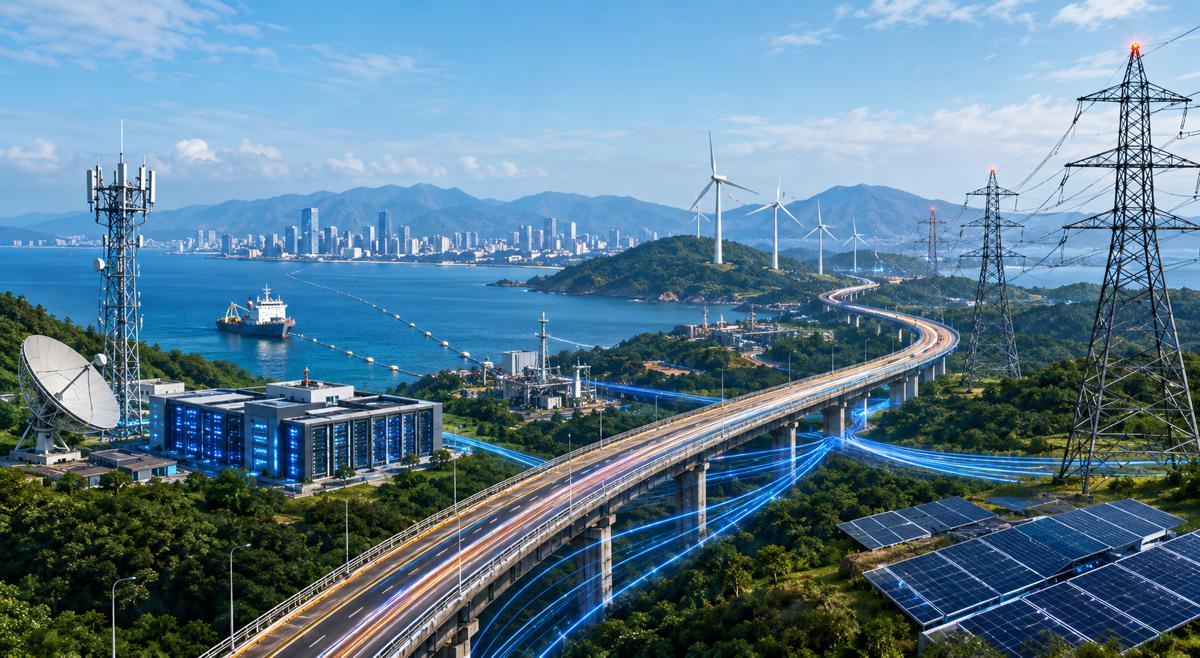
Rather than treating these challenges separately, the ADB is framing energy and digital infrastructure as twin pillars of long-term economic competitiveness. The multilateral lender’s strategy combines cross-border electricity transmission, renewable energy integration, broadband expansion, subsea connectivity, satellite systems, cybersecurity support and AI readiness into one regional investment push.
“Energy and digital access will define the region’s future,” said ADB President Masato Kanda. “These two initiatives build the systems Asia and the Pacific need to grow, compete, and connect. By linking power grids and digital networks across borders, we can lower costs, expand opportunity, and bring reliable power and digital access to hundreds of millions of people.”
For construction firms, engineering consultants, utilities, technology providers and investors, the implications are considerable. The programme points towards a decade of major transmission projects, data infrastructure expansion, subsea cable deployment, smart grid upgrades and large-scale renewable integration works stretching across some of the world’s fastest-growing economies.
Briefing
- Asian Development Bank plans to mobilise $70 billion for regional energy and digital infrastructure by 2035
- $50 billion will support cross-border electricity grids and renewable energy integration
- $20 billion will fund digital corridors, broadband expansion, subsea fibre and AI-ready infrastructure
- The programme aims to connect 200 million people to electricity access improvements and 200 million people to first-time broadband access
- Regional infrastructure investment is increasingly shifting towards interconnected energy and data systems rather than isolated national projects
Power Grids Become Strategic Infrastructure
Electricity interconnection has long been discussed in Asia, but progress has often been fragmented by political boundaries, differing regulations and uneven technical standards. The ADB’s Pan-Asia Power Grid Initiative attempts to push the region beyond isolated bilateral arrangements towards a more coordinated continental approach.
The bank intends to mobilise $50 billion by 2035 for transmission and grid integration projects that allow renewable electricity to flow more efficiently between countries. The initiative covers cross-border transmission lines, substations, energy storage systems and grid digitalisation technologies, alongside renewable generation projects linked directly to regional electricity trade.
That shift matters because renewable energy production is rarely located where electricity demand is highest. Countries with abundant solar, wind or hydropower resources often lack sufficient domestic demand or transmission capacity to fully exploit them. Regional interconnection changes the equation entirely by allowing surplus clean energy to move across borders to industrial centres and urban populations.
According to the International Energy Agency, electricity demand in Southeast Asia alone is expected to grow by roughly 4% annually through the coming decade, driven by manufacturing expansion, electrification and rising living standards. At the same time, governments across the region are under increasing pressure to reduce dependence on imported fossil fuels and lower carbon emissions.
ADB estimates the initiative could integrate around 20 gigawatts of renewable energy capacity across borders by 2035 while connecting 22,000 circuit-kilometres of transmission infrastructure. The programme also aims to improve energy access for 200 million people and reduce regional power sector emissions by 15%.
For contractors and infrastructure specialists, the scope of work extends far beyond conventional transmission towers. Modern interconnected grids require sophisticated digital management systems, advanced balancing technologies, storage integration and cybersecurity protections capable of managing increasingly complex power flows.
Renewable Energy Trade Reshapes Regional Economics
Cross-border electricity trading has become one of the more important emerging trends in infrastructure finance. As renewable generation costs continue to fall, countries are increasingly exploring regional power exchanges to improve energy security and stabilise pricing volatility.
Existing frameworks already provide a foundation. The ASEAN Power Grid has been under discussion for decades, while regional programmes such as the South Asia Subregional Economic Cooperation initiative and the Central Asia Regional Economic Cooperation Energy Strategy 2030 have laid technical groundwork for future interconnections.
Still, implementation has been uneven. Political sensitivities, financing challenges and regulatory inconsistencies have slowed progress on many proposed transmission schemes. The ADB’s involvement could provide greater financial certainty and institutional coordination for projects that might otherwise struggle to advance.
The bank also intends to allocate up to $10 million in technical assistance to support regulatory alignment, technical standards development and feasibility studies. That administrative work may sound less glamorous than new transmission corridors, but it is often the factor that determines whether regional infrastructure projects actually move from concept to construction.
Private investors are likely to watch closely. The ADB expects to finance around half of the $50 billion programme from its own resources while securing the remainder through co-financing arrangements, including private sector participation. Given the scale of infrastructure investment required across Asia over the next decade, multilateral institutions increasingly see blended finance as essential for accelerating delivery.
Digital Infrastructure Moves to the Centre of Economic Planning
Alongside energy connectivity, the ADB is committing $20 billion to what it calls the Asia-Pacific Digital Highway. The programme reflects growing concern that uneven digital infrastructure is becoming a structural barrier to economic development across parts of Asia and the Pacific.
While major cities across the region are embracing AI, cloud computing and digital services, millions of people in remote, rural and island communities still lack reliable broadband access. Landlocked economies also continue to face disproportionately high connectivity costs due to limited international network access.
The ADB initiative will focus on terrestrial and subsea fibre networks, satellite connectivity and regional data centre infrastructure designed to support AI-driven economic growth. The strategy also includes cybersecurity risk management support and digital skills development programmes.
By 2035, the bank expects the programme to provide first-time broadband access to 200 million people while improving connectivity quality for another 450 million users. Connectivity costs in remote and landlocked regions are expected to fall by around 40%.
That matters commercially because digital infrastructure is increasingly tied directly to industrial productivity. Construction companies now depend heavily on cloud-based project management platforms, BIM systems, remote equipment diagnostics, drone surveys and AI-assisted workflows. Manufacturing, logistics and mining operations are also becoming more reliant on real-time data processing and automation technologies.
Reliable digital connectivity has effectively become core economic infrastructure rather than a secondary utility.
Data Centres and AI Drive New Construction Demand
One of the less discussed consequences of Asia’s AI expansion is the growing demand for physical infrastructure to support it. AI systems require vast processing power, high-capacity data centres and resilient electricity supplies, all of which create significant construction and engineering opportunities.
The Asia-Pacific region is already experiencing rapid data centre growth. Markets including Singapore, Malaysia, Indonesia, India and South Korea are seeing substantial investment in hyperscale facilities as cloud providers and technology firms expand regional capacity.
ADB’s digital initiative appears designed partly to support that momentum by improving regional fibre connectivity and strengthening digital infrastructure ecosystems. The establishment of a new Centre for AI Innovation and Development in Seoul further underlines the institution’s long-term focus on AI readiness.
Backed by a $20 million contribution from the Government of the Republic of Korea, the centre will support responsible AI adoption and help train around 3 million people in digital and AI-related skills by 2035.
For infrastructure contractors, this creates a broad pipeline extending beyond telecoms. Data centres require specialised civil engineering, high-performance cooling systems, resilient backup power, advanced fire protection systems and complex energy management solutions. The convergence between energy infrastructure and digital infrastructure is becoming increasingly difficult to separate.
Infrastructure Investment Priorities Continue to Shift
The announcement also highlights how infrastructure financing priorities are evolving globally. Traditional transport megaprojects remain important, but investors and development institutions are increasingly prioritising energy transition infrastructure and digital connectivity.
According to the World Bank and International Telecommunication Union, roughly 2.6 billion people worldwide still lack meaningful internet access, while many developing economies continue to face unreliable electricity systems that constrain industrial growth.
Asia sits at the centre of both challenges. Rapid urbanisation and industrial expansion are increasing electricity demand at the same time governments are attempting to decarbonise energy systems. Simultaneously, AI adoption and digital transformation are creating new pressure on network infrastructure and computing capacity.
ADB’s strategy reflects recognition that these systems are now deeply interconnected. Renewable-heavy electricity grids depend on digital management systems. AI infrastructure requires resilient energy supplies. Economic competitiveness increasingly relies on both.
The scale of planned investment also signals confidence that regional cooperation will remain economically necessary despite broader geopolitical tensions. Cross-border infrastructure projects are inherently complex, particularly when they involve energy security and digital sovereignty concerns. Yet the financial and commercial incentives for integration continue to grow.
Building the Systems That Will Shape Asia’s Next Decade
For Asia and the Pacific, the next era of infrastructure development may look very different from the last. Massive highways, ports and airports will still matter, certainly, but the infrastructure likely to define economic influence over the coming decade could be less visible to the public eye.
Transmission corridors carrying renewable electricity across borders, subsea fibre cables linking digital economies, satellite networks reaching remote communities, and AI-ready data infrastructure may ultimately prove just as strategically important as physical trade routes.
The Asian Development Bank is effectively betting that the region’s future competitiveness will depend on how efficiently energy and information move between countries. If the programme succeeds, it could reshape investment patterns, construction priorities and regional cooperation across Asia and the Pacific for years to come.